What Is Amazigh (Berber) Culture in Morocco?
Quick answer
The Amazigh (commonly called Berbers) are the indigenous people of Morocco and North Africa, with their own language (Tamazight, written in Tifinagh script), traditions, music and crafts. Amazigh is an official language of Morocco, and the culture is strongest in the Atlas Mountains, the Rif and the south.
Long before Arab and European influences arrived, North Africa was home to the Amazigh — and their culture remains a living, central part of Morocco today. Understanding it adds real depth to a trip.
Here’s a respectful introduction.
Who the Amazigh are
The Amazigh (singular Amazigh, plural Imazighen, meaning roughly “free people”) are the indigenous inhabitants of Morocco and the wider Maghreb, predating the Arab arrival. “Berber” is the widely-used exonym (from the Greek/Latin for “foreigner”) — many prefer “Amazigh,” though both are commonly used. Millions of Moroccans identify as Amazigh, especially in the mountains and rural areas.
Tamazight became an official language of Morocco (alongside Arabic) in 2011, and you’ll now see its Tifinagh script — an ancient alphabet — on signage nationwide.
Language, symbols and crafts
There are several Tamazight dialects (Tashelhit, Tarifit, Central Atlas Tamazight). The Amazigh flag — blue, green and yellow stripes with a red Tifinagh “yaz” symbol (ⵣ) representing the “free man” — is a proud emblem you’ll spot on homes and stalls.
Amazigh heritage shines in crafts (Berber rugs like Beni Ourain, silver jewellery, pottery), in vibrant music and dance (Ahwash and Ahidous), and in distinctive architecture — the kasbahs and fortified villages (ksour) of the south.
Where to experience it
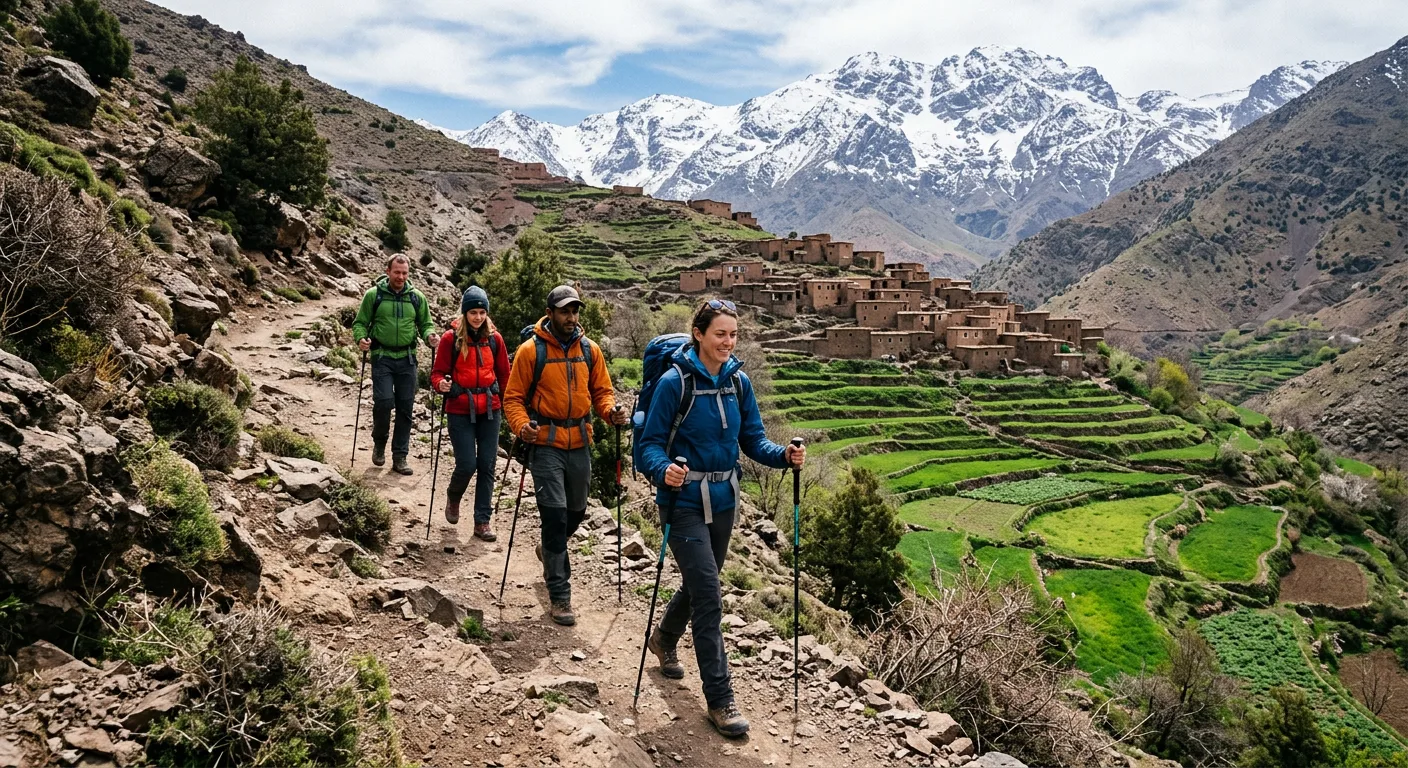
The High Atlas (around Imlil, the Ourika and Aït Bouguemez valleys), the Rif in the north, and the southern oasis and desert regions are the heartlands. A village stay, a guided Atlas trek with Berber hosts, a shared meal, or a Berber-run desert camp offer genuine, respectful encounters — and famous Amazigh hospitality.
A few words go a long way: “azul” means hello in Tamazight. Buying directly from village cooperatives supports the culture and its artisans.
Key takeaways
- The Amazigh (Berbers) are Morocco’s indigenous people.
- Tamazight is an official language, written in Tifinagh script.
- Rich in rugs, silver, music and kasbah architecture.
- Experience it in the Atlas, Rif and southern valleys; “azul” = hello.
Frequently asked questions
Are Berber and Amazigh the same thing?
Yes — “Amazigh” (plural Imazighen) is the people’s own name; “Berber” is the common outside term. Many prefer Amazigh, but both are widely used for the indigenous people of Morocco and North Africa.
Is Berber a language in Morocco?
Yes — Tamazight (with dialects like Tashelhit and Tarifit) is an official language of Morocco, written in the Tifinagh script you’ll see on signage.
Where can you experience Amazigh culture in Morocco?
The High Atlas (Imlil, Ourika), the Rif and the southern valleys. Village stays, Atlas treks with Berber hosts and Berber-run desert camps offer genuine experiences.
Plan it with a local expert
Travel Morocco with Serenity Morocco Tours
Crafting extraordinary journeys through Morocco's timeless landscapes. 100% private journeys, handcrafted around you.
 from $2,011
Sahara Desert Luxury Expedition
 from $2,054
Essential Morocco: Imperial Cities Circuit
 from $5,978
Sahara to Sea: Morocco Complete