What Is Jemaa el-Fnaa?
Quick answer
Jemaa el-Fnaa is the huge main square at the heart of Marrakech’s medina — a UNESCO-recognised cultural space that transforms from a daytime hub of juice carts and performers into an electric nighttime feast of food stalls, musicians, storytellers and crowds. It is the beating heart of the city and a must-experience.
If Marrakech has one essential sight, it is Jemaa el-Fnaa — less a monument than a living spectacle that changes through the day. Here is what to expect.
It is the city’s stage.
What it is
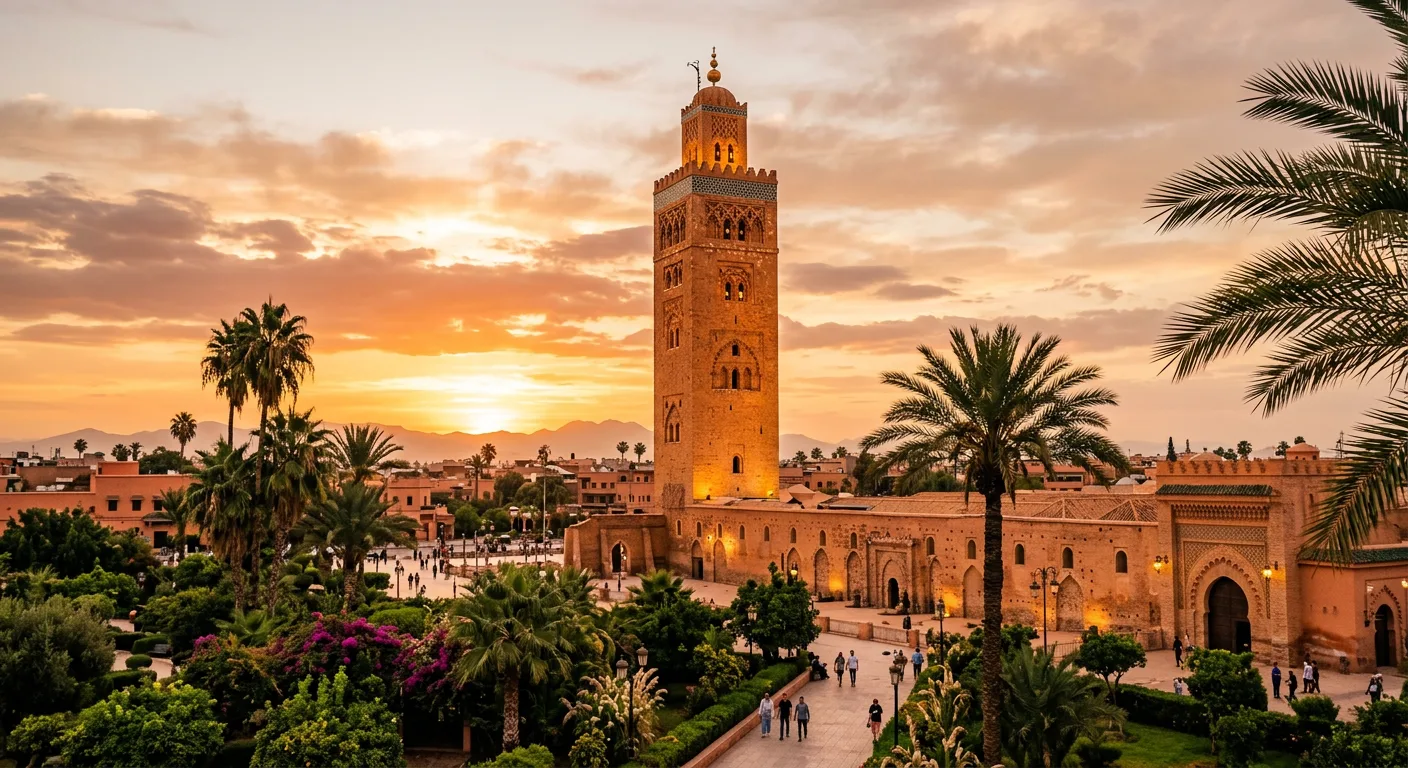
Jemaa el-Fnaa (roughly "assembly of the dead/the square") is the vast open square at the entrance to Marrakech’s medina and souks, ringed by cafés with rooftop terraces and the Koutoubia minaret nearby. UNESCO recognises it as a "Masterpiece of the Oral and Intangible Heritage of Humanity" for its living tradition of storytellers, musicians and performers.
It has been the social and commercial heart of Marrakech for centuries, and remains so today.
Day vs night
By day it is busy but calmer: fresh orange-juice carts, snake charmers, henna artists, water sellers in colourful costumes, monkey handlers and small stalls (note: animal acts raise welfare concerns, and performers expect payment for photos — agree first). Climb to a rooftop café for a tea and a view over the square.
At dusk it transforms: dozens of food stalls fire up grills, musicians (Gnaoua and others) play, storytellers and acrobats draw circles of onlookers, and the whole square becomes a smoky, lively open-air feast — the experience most people remember.
Tips and safety
Eat at the busy night food stalls full of locals (point at what you want); it is cheap and atmospheric. Agree prices for photos with performers or you may be chased for payment, watch your belongings in the crowds (pickpocketing is the main risk), and be firm with persistent vendors and henna artists who grab your hand.
It is generally safe and lively well into the night, with families and a police presence. Visit a rooftop terrace at sunset for the best overview, then dive into the square after dark.
Key takeaways
- Jemaa el-Fnaa is Marrakech’s famous main square and living cultural space.
- Day: juice carts, performers; night: food stalls, music, storytellers.
- A UNESCO-recognised must-experience at the medina’s heart.
- Agree photo prices, mind pickpockets, eat at busy local stalls.
Frequently asked questions
What happens at Jemaa el-Fnaa?
By day: juice carts, snake charmers, henna artists and performers. By night: dozens of food stalls, musicians, storytellers and crowds turn it into an electric open-air feast — Marrakech’s must-experience spectacle.
Is Jemaa el-Fnaa safe at night?
Generally yes — it stays busy with families, food stalls and a police presence into the night. Mind your belongings in the crowds and agree prices for photos with performers to avoid hassle.
Can you eat at Jemaa el-Fnaa?
Yes — the night food stalls are a highlight. Choose busy ones full of locals, point at what you want, and agree the price. It is cheap and atmospheric.
Plan it with a local expert
Travel Morocco with Serenity Morocco Tours
Crafting extraordinary journeys through Morocco's timeless landscapes. 100% private journeys, handcrafted around you.
 from $2,011
Sahara Desert Luxury Expedition
 from $2,054
Essential Morocco: Imperial Cities Circuit
 from $5,978
Sahara to Sea: Morocco Complete