Discovering...
Hiking & Trekking in Morocco
Morocco Hiking Guide:
Best Treks & Trails 2026
From the summit of Toubkal at 4,167 meters to gentle valley walks near Marrakech. Difficulty ratings, guided vs independent options, packing lists, and costs from 300 MAD per day.
Why Hiking in Morocco Is Extraordinary
Morocco is one of the most diverse hiking destinations on earth. Within a few hours' drive you can move from the snow-capped peaks of the High Atlas, where North Africa's highest summit pierces the sky at 4,167 meters, to volcanic desert mountains where the Sahara begins, to lush green forests in the Rif where waterfalls cascade through cedar groves. No other country in North Africa offers such variety of terrain, altitude, and landscape in such a compact area.
What makes Moroccan hiking truly special is the human dimension. Trails pass through ancient Berber villages where hospitality is a way of life, not a tourism product. You will be invited for mint tea by families who have lived in these mountains for generations. Mule trains carry your gear while you walk unburdened through gorges, over passes, and across high plateaus that feel like the roof of the world. Whether you are a seasoned mountaineer targeting Toubkal in winter or a first-time hiker seeking a gentle valley walk, Morocco has a trail waiting for you.
This guide covers the six best hikes in Morocco, from multi-day traverses to easy day walks. You will find difficulty ratings, guided versus independent options, a complete packing list, the best season for each trek, a detailed cost breakdown, and answers to every common question about hiking in Morocco.
4,167 m
Highest peak (Toubkal)
6 Regions
Distinct trekking areas
300 MAD
Starting cost per day
Year-round
Trekking season (varies by area)
Top 6 Hikes in Morocco
From North Africa's highest summit to gentle valley strolls, these are the essential hikes every trekker should know about.
All prices are starting prices per person. Seasonal pricing applies and costs may vary by group size and guide.
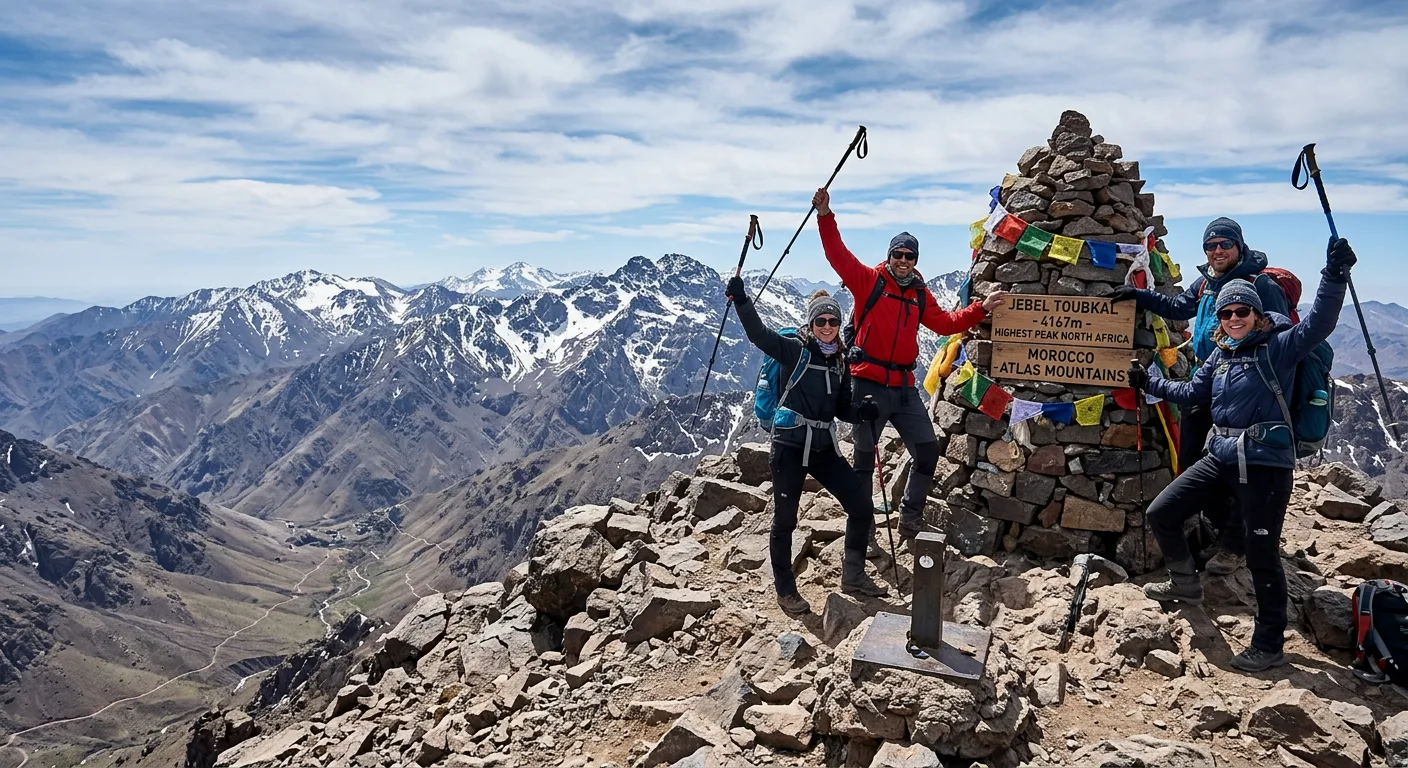
Mount Toubkal
North Africa's highest peak at 4,167 m
Moderate to Challenging
Duration
2-3 days
Distance
22 km round trip
Elevation
4,167 m summit
Price
From 2,500 MAD guided (2 days)
The crown jewel of Moroccan hiking. Toubkal is the highest peak in North Africa and a bucket-list summit for trekkers worldwide. The standard route from Imlil passes through Berber villages, walnut groves, and alpine scree before reaching the Toubkal Refuge at 3,207 meters. The pre-dawn summit push rewards you with panoramic views stretching from the Sahara to the Atlantic on clear days.
Highlights
Highest point in North Africa at 4,167 meters
No technical climbing required in summer months
Stunning views of the entire Atlas range from the summit
Overnight at the Toubkal Refuge with fellow trekkers
Berber village of Imlil as a charming base camp
Trail Tips
Acclimatize in Imlil (1,740 m) for at least one night before ascending
Start the summit push before dawn to reach the top by mid-morning
Bring layers: temperatures drop below freezing at the summit year-round
Winter ascents require crampons, ice axe, and alpine experience
High Atlas May-October (summer ascent), Dec-March (winter with crampons) Moderate to Challenging
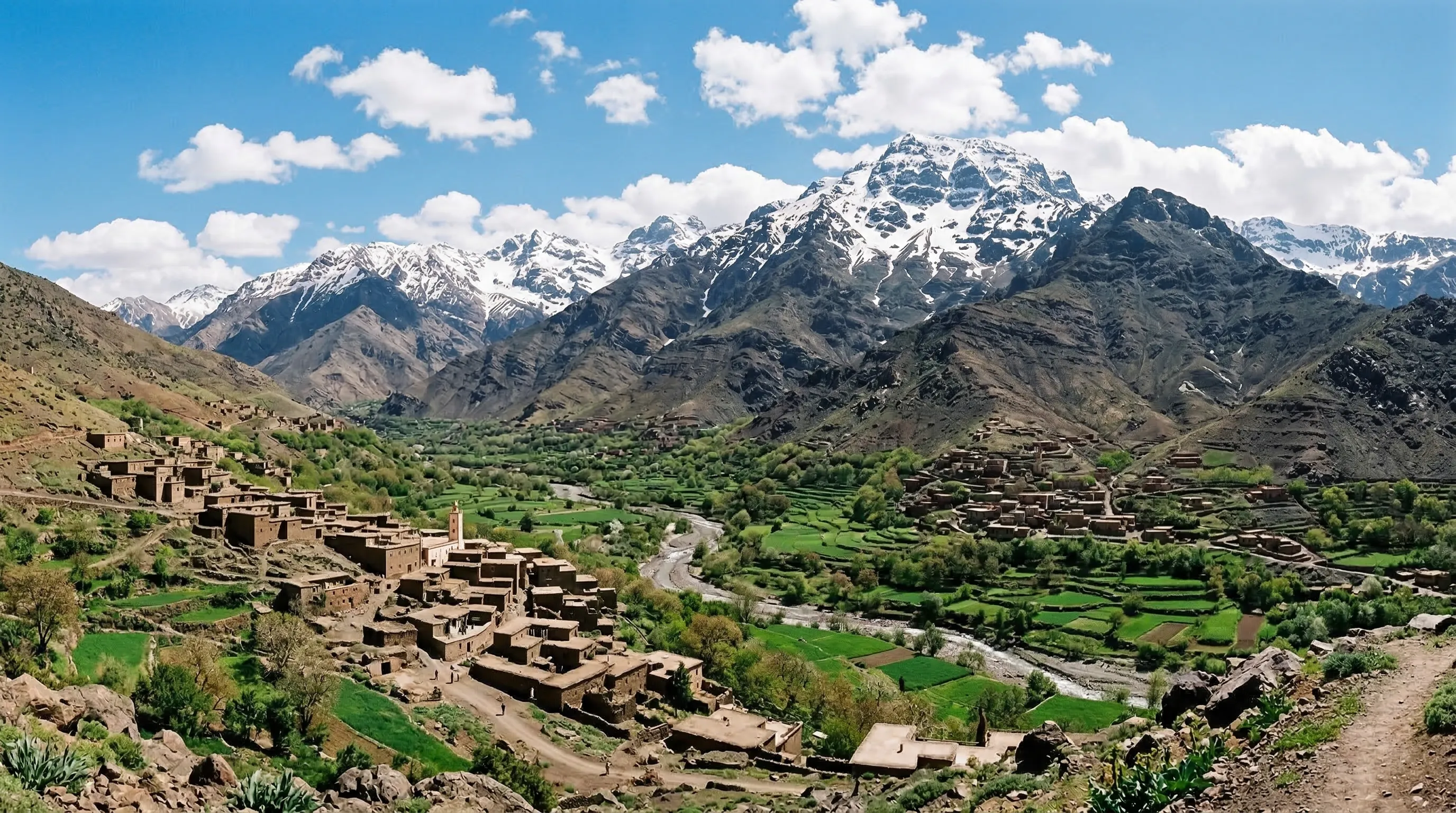
M'Goun Traverse
Morocco's premier multi-day trek across the High Atlas
Challenging
Duration
5-7 days
Distance
70-90 km
Elevation
4,071 m (M'Goun summit)
Price
From 5,000 MAD guided (6 days)
The M'Goun traverse is widely considered the finest multi-day trek in Morocco. Crossing the Central High Atlas from Ait Bouguemez (the Happy Valley) to the Rose Valley, the route winds through dramatic gorges, past nomadic Berber camps, over high passes exceeding 3,500 meters, and offers the option to summit M'Goun, Morocco's third-highest peak. This is remote, wild, and profoundly beautiful.
Highlights
Morocco's third-highest peak at 4,071 meters
Traverse through the spectacular Ait Bouguemez Valley
Dramatic canyon sections with river crossings
Far fewer trekkers than Toubkal for a true wilderness feel
Trail Tips
A licensed guide and mule support are essential for this remote route
River crossings can be knee-deep in early summer after snowmelt
Carry water purification as natural sources may need treatment
Book a guide who knows the route well; trails are unmarked in places
Central High Atlas June-September Challenging
Jebel Saghro
Volcanic desert mountains between the Atlas and Sahara
Moderate
Duration
4-6 days
Distance
50-80 km
Elevation
2,712 m (Jebel Amlal)
Price
From 4,000 MAD guided (5 days)
Jebel Saghro is Morocco's best-kept trekking secret. This volcanic massif between the High Atlas and the Sahara offers dramatic rock formations, deep gorges, and a landscape that feels like another planet. Unlike the High Atlas, Saghro is at its best in winter when the higher mountains are snow-covered, making it a year-round trekking destination. The Ait Atta Berber people call these mountains home.
Highlights
Spectacular volcanic rock formations and pinnacles
Perfect winter trekking when the High Atlas has snow
Encounter nomadic Ait Atta Berber communities
Dramatic desert-meets-mountain landscape unlike anywhere else
Trail Tips
This is the ideal trek for November to March when other routes are closed
Nights are cold in winter: bring a sleeping bag rated to minus 5 degrees
Water sources are scarce; your guide will know where to refill
Wind can be fierce on exposed ridges: pack a windproof layer
Anti-Atlas / Pre-Sahara October-April (winter trekking) Moderate
Todra Gorge
Dramatic canyon walls rising 300 meters from the riverbed
Easy to Moderate
Duration
1-2 days
Distance
10-20 km (day hikes)
Elevation
1,400-2,200 m
Price
From 300 MAD independent day hike
Todra Gorge is one of Morocco's most dramatic natural wonders: a narrow canyon where limestone walls soar 300 meters on either side, barely 10 meters apart at the narrowest point. While rock climbers flock here for the world-class routes, hikers enjoy the gorge floor walk and the network of trails climbing above the canyon to Berber villages perched on the clifftops. A perfect introduction to Atlas hiking.
Highlights
Towering 300-meter limestone canyon walls
Easy gorge floor walk accessible to all fitness levels
Trails above the gorge to hidden Berber villages
World-class rock climbing routes (150+ routes)
Palm-lined river oasis at the gorge entrance
Trail Tips
Visit early morning for the best light and fewer crowds
The gorge floor is flat and easy; the cliff-top trails are steeper
Combine with nearby Dades Gorge for a two-gorge hiking day
Rock climbing gear can be rented locally for experienced climbers
Eastern High Atlas March-May, September-November Easy to Moderate
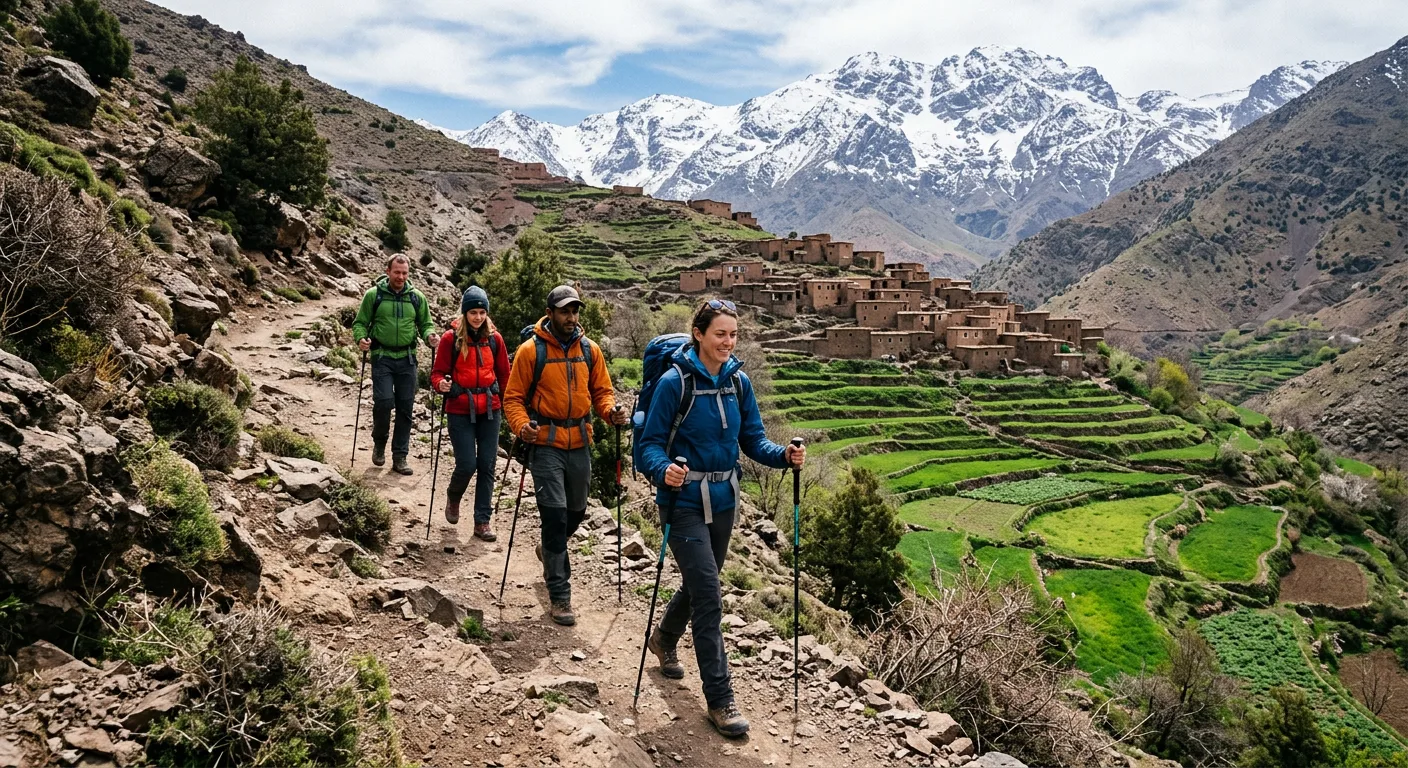
Rif Mountains
Lush green peaks above the blue city of Chefchaouen
Easy to Moderate
Duration
2-4 days
Distance
15-50 km
Elevation
2,448 m (Jebel Tidiquin)
Price
From 400 MAD per day guided
The Rif Mountains are Morocco's green lung: lush cedar and pine forests, cascading waterfalls, wildflower meadows, and panoramic views of the Mediterranean coast. Based from the enchanting blue city of Chefchaouen, hikers can explore Talassemtane National Park, climb to the God's Bridge natural rock arch, and trek through landscapes that feel more like the Swiss Alps than North Africa. The Rif offers a completely different hiking experience from the Atlas.
Highlights
Lush green forests of cedar, pine, and fir trees
God's Bridge (Pont de Dieu) natural rock arch
Akchour waterfalls: a popular and photogenic day hike
Talassemtane National Park with endemic species
Trail Tips
Base yourself in Chefchaouen for easy access to multiple trails
The Akchour waterfalls hike is the most popular: go early to avoid crowds
Trails can be muddy after rain; waterproof boots are recommended
Hire a local guide for anything beyond the main marked trails
Northern Morocco April-June, September-October Easy to Moderate
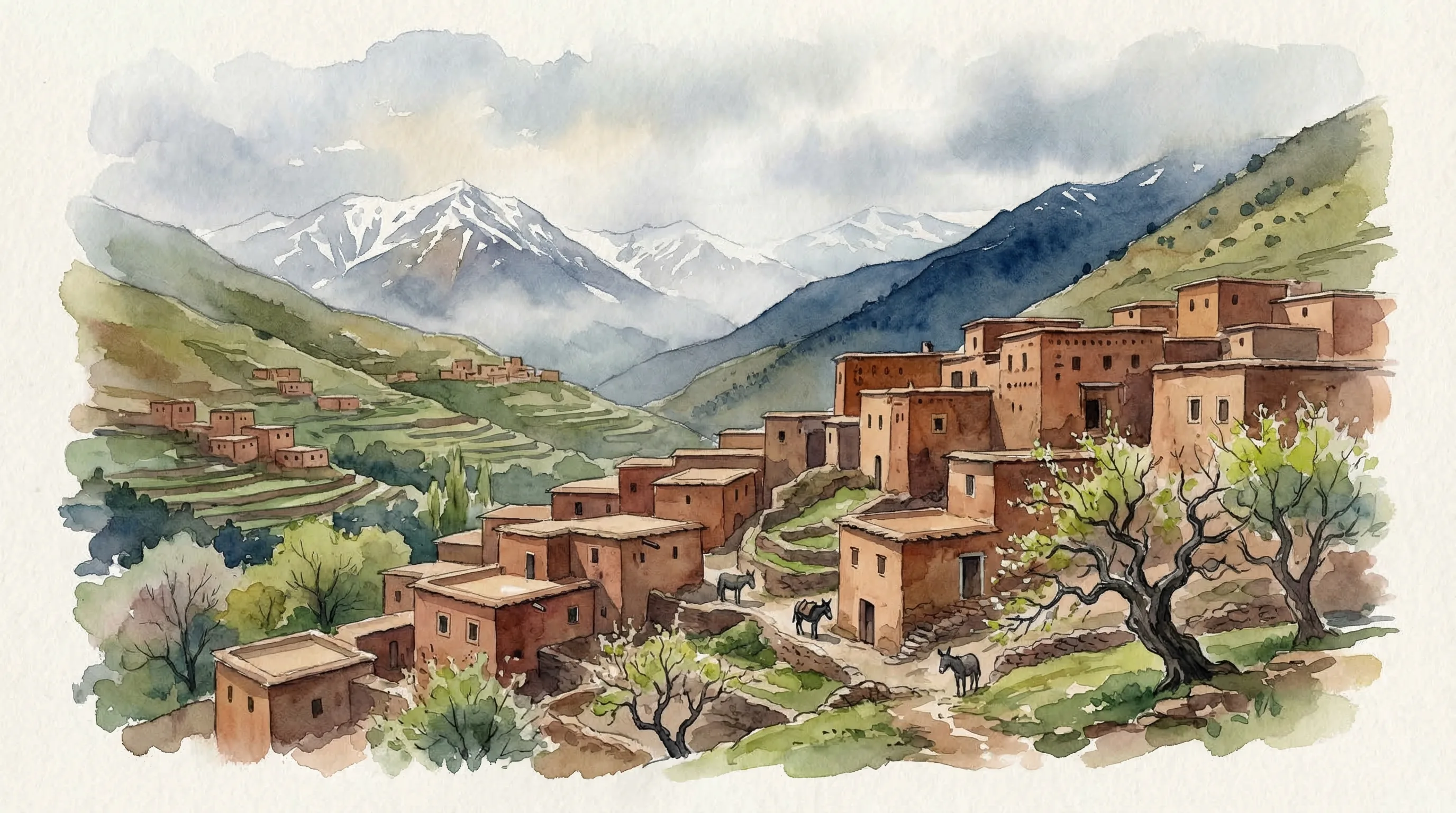
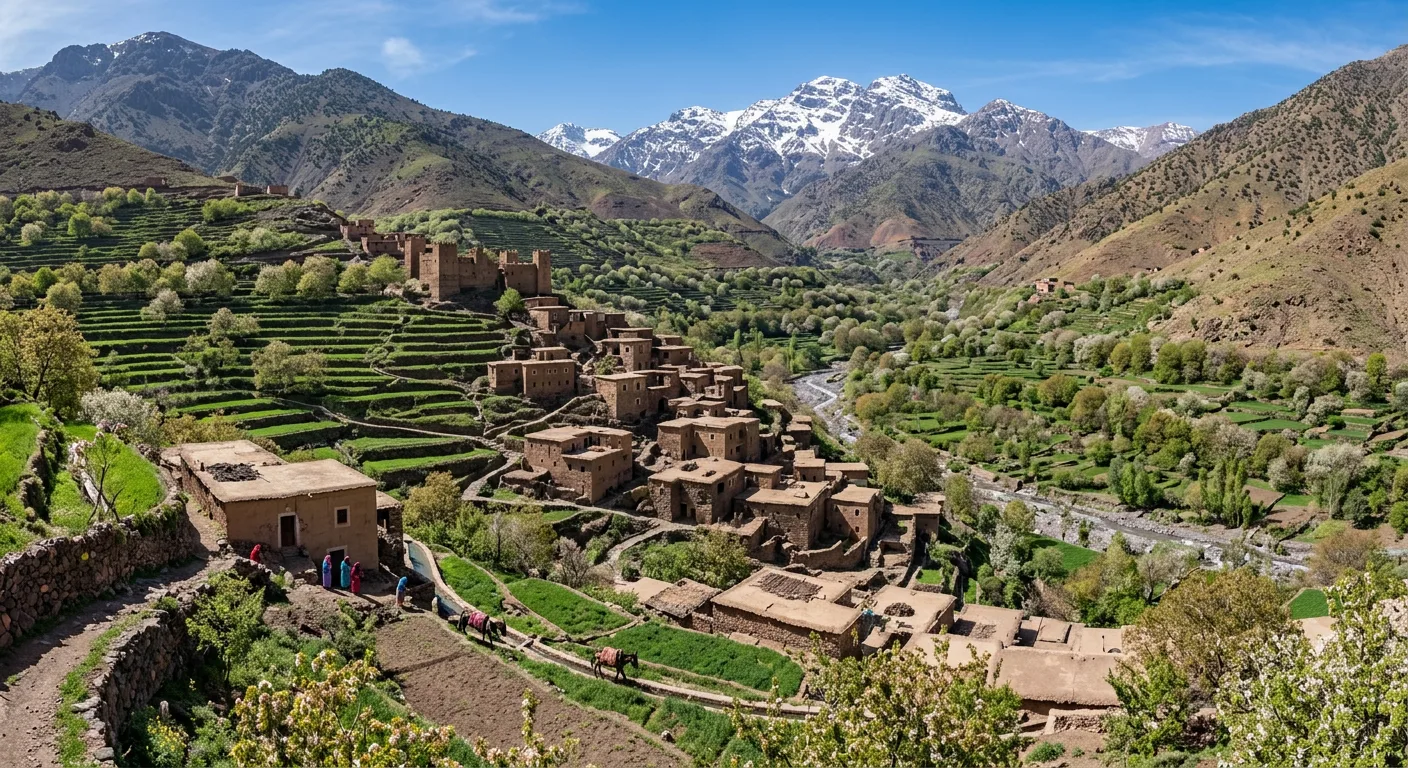
Ouirgane Valley
Gentle hills and Berber villages in the western High Atlas
Easy
Duration
1-3 days
Distance
8-25 km
Elevation
1,000-2,000 m
Price
From 300 MAD independent, from 600 MAD guided
Just 60 kilometers south of Marrakech, the Ouirgane Valley is the perfect introduction to Atlas hiking for beginners and families. Rolling hills dotted with olive and almond groves, quiet Berber villages where donkeys carry goods along ancient paths, and the sparkling Ouirgane reservoir create a gentle, pastoral landscape. Several excellent eco-lodges make this an ideal base for day walks without the commitment of a multi-day trek.
Highlights
Only 60 km from Marrakech: easy day trip or overnight
Gentle terrain suitable for families and beginners
Authentic Berber villages with traditional hospitality
Excellent eco-lodges and guesthouses for overnight stays
Trail Tips
Perfect for travelers who want Atlas scenery without a strenuous trek
Combine with a visit to the Tin Mal Mosque (12th-century Almohad ruin)
Local guides from the village offer the most authentic experience
A great acclimatization walk before attempting Toubkal
Western High Atlas Year-round (best March-May, October-November) Easy
Difficulty Ratings Explained
Choose the right trek for your fitness level. Morocco has hikes for absolute beginners through to experienced mountaineers.
Easy
Daily Hiking Time
3-5 hours per day
Fitness Required
Basic fitness, comfortable walking for 2-3 hours
Terrain
Well-defined paths, gentle gradients, village trails
Example Routes
Ouirgane Valley, Todra Gorge floor, Imlil day walks
Moderate
Daily Hiking Time
5-7 hours per day
Fitness Required
Regular exercise, able to walk 5+ hours with a daypack
Terrain
Mountain paths, some steep sections, uneven ground, possible river crossings
Example Routes
Jebel Saghro, Rif Mountains, Toubkal (summer)
Challenging
Daily Hiking Time
7-10 hours per day
Fitness Required
Strong fitness, hiking experience, comfortable at altitude
Terrain
Steep ascents, high altitude (3,500+ m), scree, exposure, possible snow
Example Routes
M'Goun traverse, Toubkal (winter), multi-day High Atlas circuits
Guided vs Independent Hiking
Three ways to hike Morocco, each with distinct advantages. Your choice depends on experience, budget, and the route you want to tackle.
Guided Group Trek
From 800-1,500 MAD per day per person
Group: 4-12 trekkers
Join a group with a licensed mountain guide, muleteers for luggage, a camp cook, and pre-arranged accommodation. The most popular and hassle-free way to trek in Morocco. Everything is organized: you just walk and enjoy.
Includes
Licensed mountain guide (English or French speaking)
Mule support for luggage and equipment
All meals prepared by a camp cook
Accommodation in gites, refuges, or tents
Camping equipment if bivouacking
Best for: First-time trekkers in Morocco, solo travelers, those wanting a social experience
Private Guided Trek
From 2,000-4,000 MAD per day (for the group)
Group: 1-6 trekkers (your own group)
Your own dedicated guide and support team, with a fully customizable itinerary. Set your own pace, choose your route variations, and enjoy a more personal experience with deeper cultural immersion.
Includes
Private licensed guide exclusively for your group
Mule support and dedicated cook
Flexible itinerary adjusted to your pace
Choice of accommodation type
All meals and camping equipment
Best for: Couples, families, experienced trekkers wanting flexibility, photographers
Independent Hiking
From 300-500 MAD per day (gite + meals)
Group: Solo or your own group
Navigate trails yourself using maps, GPS tracks, and local knowledge. Possible on well-marked routes like the Toubkal standard path or Todra Gorge. Not recommended for remote multi-day routes where trails are unmarked and conditions change rapidly.
Includes
Freedom to set your own pace and schedule
Lower daily cost (accommodation and meals only)
Guesthouses and refuges welcome independent hikers
GPS tracks available for popular routes
Village shops provide basic supplies
Best for: Experienced hikers, well-marked routes only, budget travelers, day hikes near villages
Our Recommendation
If this is your first trek in Morocco, choose a guided group trek. The cost is reasonable (from 800 MAD per day all-inclusive), the logistics are handled for you, and walking with a knowledgeable local guide transforms a good hike into an unforgettable cultural experience. Save independent hiking for well-marked day routes or after you have gained experience on Moroccan trails.
Essential Packing List
What to bring for hiking in Morocco. Adjust based on season, altitude, and trek duration.
Footwear & Clothing
Sturdy hiking boots (ankle-supporting, broken in)
Rocky terrain demands ankle support; blisters ruin treks
Moisture-wicking base layers
Cotton retains sweat and causes chafing on long days
Insulating mid-layer (fleece or down)
Temperatures at altitude drop rapidly after sunset
Waterproof and windproof jacket
Weather changes quickly in the mountains; rain is possible in spring and autumn
Lightweight trekking trousers (zip-off)
Convertible for varying conditions; avoid shorts on thorny trails
Warm hat and sun hat
Sun is intense during the day; cold bites at altitude in the evening
Trekking socks (merino wool)
Prevent blisters and wick moisture better than cotton
Gear & Equipment
Daypack (30-40 liters)
Carry water, snacks, layers, and camera for each day's hike
Trekking poles (collapsible)
Reduce knee strain on steep descents and improve stability on scree
Headlamp with spare batteries
Essential for pre-dawn summit starts and dark gites
Sleeping bag (rated to 0 degrees Celsius)
Mountain refuges provide mattresses but not always warm bedding
Refillable water bottle (1.5L minimum)
Stay hydrated at altitude; dehydration causes altitude sickness
Water purification tablets
Natural water sources may need treatment on remote trails
Sun & Health
Sunscreen SPF 50+
UV intensity increases 10% per 1,000 m of elevation gained
UV-protection sunglasses (Category 3+)
Snow glare and high-altitude sun can damage eyes permanently
Lip balm with SPF
Dry mountain air and sun crack lips within hours
First aid kit
Plasters, antiseptic, ibuprofen, altitude sickness medication, personal prescriptions
Insect repellent
Mosquitoes present near water sources in warmer valleys
Best Season for Hiking in Morocco
Morocco offers year-round trekking, but the best route for you depends entirely on the season.
Spring (March-May)
Excellent15-25 C (valleys), 5-15 C (high altitude)
The best overall season for hiking in Morocco. Wildflowers carpet the valleys, waterfalls flow with snowmelt, and temperatures are ideal for trekking at all elevations. April and May offer the widest range of accessible routes. Snow may linger on Toubkal until late May.
Recommended routes: Ouirgane, Todra Gorge, Rif Mountains, lower Atlas routes
Summer (June-August)
Good (high altitude only)30-40 C (valleys), 15-25 C (high altitude)
Too hot for low-elevation hikes but perfect for high-altitude trekking. This is prime Toubkal and M'Goun season when snow has melted from the passes. Start early each day to avoid afternoon heat and thunderstorms. The Rif Mountains and Ouirgane are uncomfortably warm.
Recommended routes: Toubkal summit, M'Goun traverse, high passes above 3,000 m
Autumn (September-November)
Excellent18-28 C (valleys), 8-18 C (high altitude)
Warm stable weather, fewer crowds than spring, and golden autumn light make this an ideal trekking season. October is arguably the single best month for hiking in Morocco. Jebel Saghro becomes accessible as temperatures cool. High passes remain snow-free until late November.
Recommended routes: All routes at all elevations; Jebel Saghro starts in late October
Winter (December-February)
Limited (low altitude) to Advanced (high altitude)10-18 C (valleys), -5 to 5 C (high altitude)
Snow covers the High Atlas above 2,500 meters, closing many passes and summit routes. However, Jebel Saghro and lower Todra Gorge hikes are at their best in winter: crisp, clear days with pleasant temperatures. Toubkal in winter is a serious mountaineering objective requiring technical gear.
Recommended routes: Jebel Saghro, Todra Gorge, Ouirgane Valley, Anti-Atlas
Morocco Hiking Costs Breakdown
A detailed breakdown of what hiking in Morocco costs. Prices are starting figures and may vary by season, route, group size, and negotiation.
ItemCostNotes
Licensed mountain guideFrom 500-1,000 MAD per dayRequired for remote routes; recommended for all multi-day treks
Mule and muleteerFrom 200-350 MAD per dayCarries up to 40 kg of gear and supplies per mule
Gite accommodationFrom 100-200 MAD per nightBasic village guesthouse with mattress, blankets, and meals
Mountain refuge (Toubkal)From 150-250 MAD per nightDormitory bed; meals available from 80-150 MAD
Meals at gitesFrom 60-120 MAD per mealTagine, couscous, bread, and mint tea are standard fare
Transport to trailheadFrom 150-500 MADGrand taxi from Marrakech to Imlil from 150-200 MAD
Toubkal National Park feeFrom 20 MAD per personPaid at the park entrance in Imlil
Tips for guide and muleteerFrom 100-200 MAD per dayCustomary; guides earn modest base wages
Budget (Independent)
From 300-500 MAD/day
Gite + meals, self-guided
Mid-Range (Guided Group)
From 800-1,500 MAD/day
Guide, mules, meals, accommodation
Premium (Private Guide)
From 2,000-4,000 MAD/day
Private guide, full flexibility
Frequently Asked Questions
Everything you need to know about hiking in Morocco, answered by experienced trekkers.
How much does hiking in Morocco cost?
Budget independent hiking costs from 300-500 MAD per day for gite accommodation and meals. Guided group treks cost from 800-1,500 MAD per day per person, all-inclusive. The Toubkal 2-day guided trek costs from 2,500 MAD. Private guided treks run from 2,000-4,000 MAD per day for the entire group. Costs vary by season, group size, and route remoteness.
Do I need a guide for hiking in Morocco?
A guide is strongly recommended for multi-day treks, summit attempts, and remote routes where trails are unmarked. Day hikes near Imlil, Todra Gorge, and the Ouirgane Valley can be done independently. Licensed mountain guides cost from 500-1,000 MAD per day and provide navigation, cultural insight, and logistical support. For Toubkal, a guide is practically essential.
What is the best time of year for hiking in Morocco?
Spring (March-May) and autumn (September-November) offer the best conditions: mild temperatures, clear skies, and the widest range of accessible routes. Summer (June-August) is ideal for high-altitude treks like Toubkal and M'Goun. Winter (December-February) is perfect for Jebel Saghro and lower-elevation hikes, but the High Atlas has snow above 2,500 meters.
How difficult is the Toubkal trek?
The standard summer route is moderate to challenging. It takes 2 days: 5-6 hours hiking on day one to the refuge at 3,207 meters, then a 4-5 hour summit push to 4,167 meters and descent. No technical climbing is needed in summer. Good fitness, proper boots, and acclimatization are essential. In winter, it becomes a serious mountaineering route requiring crampons and ice axes.
Can beginners hike in Morocco?
Absolutely. Morocco has hikes for every level. Beginners should start with the Ouirgane Valley, Todra Gorge floor, or gentle day walks around Imlil. These require no technical skill and can be done independently or with a guide. Many guided group treks are paced for average fitness. Build up to Toubkal or the M'Goun traverse after gaining confidence on easier routes.
Related Guides
Continue planning your Morocco hiking adventure with these in-depth guides.
Atlas Mountains Complete Guide
Everything about the High Atlas, Middle Atlas, and Anti-Atlas: villages, passes, culture, and how to explore.
Read guide
Trekking in Morocco
Detailed trekking routes, multi-day itineraries, and trail maps across Morocco's diverse landscapes.
Read guide
Morocco National Parks Guide
Toubkal, Talassemtane, Ifrane, and more: Morocco's protected areas and the best trails within them.
Read guide
Best Time to Visit Morocco
Month-by-month climate guide to help you choose the perfect time for your hiking trip.
Read guide
Morocco Road Trip Routes
Self-drive itineraries that combine hiking trailheads with scenic drives across the Atlas and beyond.
Read guide
Ready to Hike Morocco?
From the summit of Toubkal to gentle valley walks, Morocco's trails are calling. Start planning your trek with our detailed guides, or explore more of what this extraordinary country has to offer.
Plan it with a local expert
Travel Morocco with Serenity Morocco Tours
Crafting extraordinary journeys through Morocco's timeless landscapes. 100% private journeys, handcrafted around you.
ONMT Licensed 100% Private Tours 100% private tours since 2018
 from $2,011
 5 days Marrakech → Erg Chebbi
Sahara Desert Luxury Expedition
 from $2,054
 7 days Marrakech · Fes · Meknes · Rabat
Essential Morocco: Imperial Cities Circuit
 from $5,978
 14 days Full-country circuit
Sahara to Sea: Morocco Complete