Discovering...
Markets & Souks
Morocco Markets & Souks:
The Complete Guide
City-by-city souk breakdowns, step-by-step haggling tactics, artisan workshops to visit, and everything you need to shop Moroccan markets with confidence.
Understanding Moroccan Souks
Moroccan souks have operated continuously for centuries, organized by trade in a system that dates back to medieval times. Spice sellers cluster in one quarter, leatherworkers in another, metalworkers in a third. This layout was designed so that guilds could self-regulate quality and buyers could compare goods from competing stalls within a few steps. That same structure survives today across every major Moroccan city.
The experience changes dramatically depending on which city you visit. Marrakech delivers maximum spectacle: 3,000+ stalls radiating from Jemaa el-Fna in a maze of narrow alleys where lanterns, leather, and spices compete for your attention. Fes el-Bali is rawer and more authentic, with 9,000 workshops spread across the world's largest car-free urban zone. Essaouira and Chefchaouen are gentle introductions for travelers who want the souk experience without the sensory overload.
This guide covers six key souk cities, a step-by-step haggling strategy, the best items to buy (with fair prices in MAD), artisan workshops worth visiting, market hours, tourist traps to sidestep, and how to ship your purchases home.
All prices listed are starting prices in Moroccan dirhams (MAD). Seasonal pricing can change during peak tourist months (October-April) and holidays, when souk prices tend to run 10-20% higher.
Best Souks by City
Six cities, six completely different market experiences. Here is what each one offers.
Marrakech
The Grand Labyrinth
Theatrical, intense, sensory overloadPrice: Higher (tourist premium applies)
Marrakech has the most famous souks in Morocco, sprawling outward from Jemaa el-Fna in a maze of over 3,000 stalls organized by trade. The energy is unmatched. Leather goods cluster in one alley, copper lanterns in the next, mountains of spices around the corner. Prices run 20-40% higher than cities like Fes or Meknes because of tourist volume, but the variety and sheer spectacle justify a visit. The deeper you push past the main entrances, the lower prices drop and the more authentic the goods become.
Key Souks & Specialty Areas
Souk Semmarine: Main artery from Jemaa el-Fna; textiles, clothing, general goods
Souk el-Attarine: Spices, perfumes, dried herbs, and aromatic oils
Souk des Teinturiers: Dyers' quarter; freshly dyed fabrics draped overhead in brilliant colors
Souk Haddadine: Blacksmiths forging wrought iron lanterns and decorative metalwork
Souk Cherratine: Leather workers and bookbinders; bags, wallets, belts
Souk des Bijoutiers: Jewelry quarter; silver, gold, Berber amber, and bead necklaces
Insider tip: Use Place des Epices as your north-souk anchor point. Enter via Souk Semmarine and head deeper in. Mornings before 11 AM mean fewer crowds and cooler temperatures. Vendors near Jemaa el-Fna charge the highest premiums.
Fes el-Bali
The Artisan Capital
Medieval, raw, overwhelmingPrice: Moderate (fewer tourists, better value)
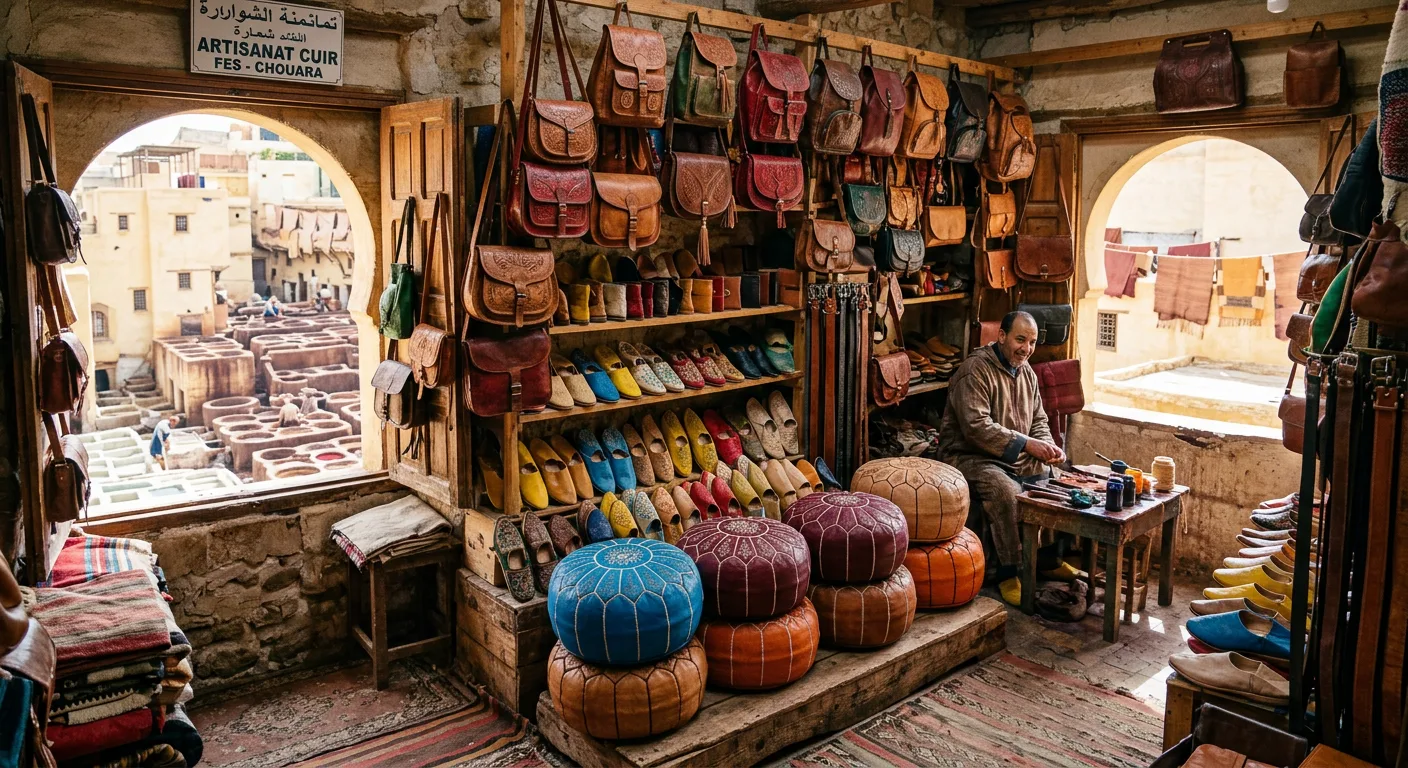
Fes el-Bali is the world's largest car-free urban zone, home to over 9,000 workshops and the oldest continuously operating souks in Africa. This is where Morocco's artisan traditions run deepest. Leather tanning at Chouara uses methods unchanged for 900 years. Coppersmiths at Place Seffarine hammer brass by hand in workshops passed through generations. Prices are genuinely lower than Marrakech because fewer package tourists make it here, and the city's craft traditions mean quality is consistently high.
Key Souks & Specialty Areas
Chouara Tannery Quarter: World-famous leather tanneries; bags and goods at source prices
Souk el-Attarine: Spices and perfumes near the Al-Attarine Madrasa
Place Seffarine: Coppersmith square; hammered brass platters, teapots, and trays
Ain Nokbi Quarter: Blue-and-white Fassi ceramics, plates, bowls, and zellige tiles
Souk el-Nejjarine: Woodworkers' souk; carved furniture, thuya wood boxes, cedar pieces
Insider tip: Hire a licensed guide for your first visit (from 300 MAD for a half-day). The medina has 9,400 alleys and GPS can struggle with the covered passages. After your guided tour, return solo to revisit shops you spotted.
Meknes
The Local's Market
Authentic, unhurried, genuinePrice: Low (genuine local prices)
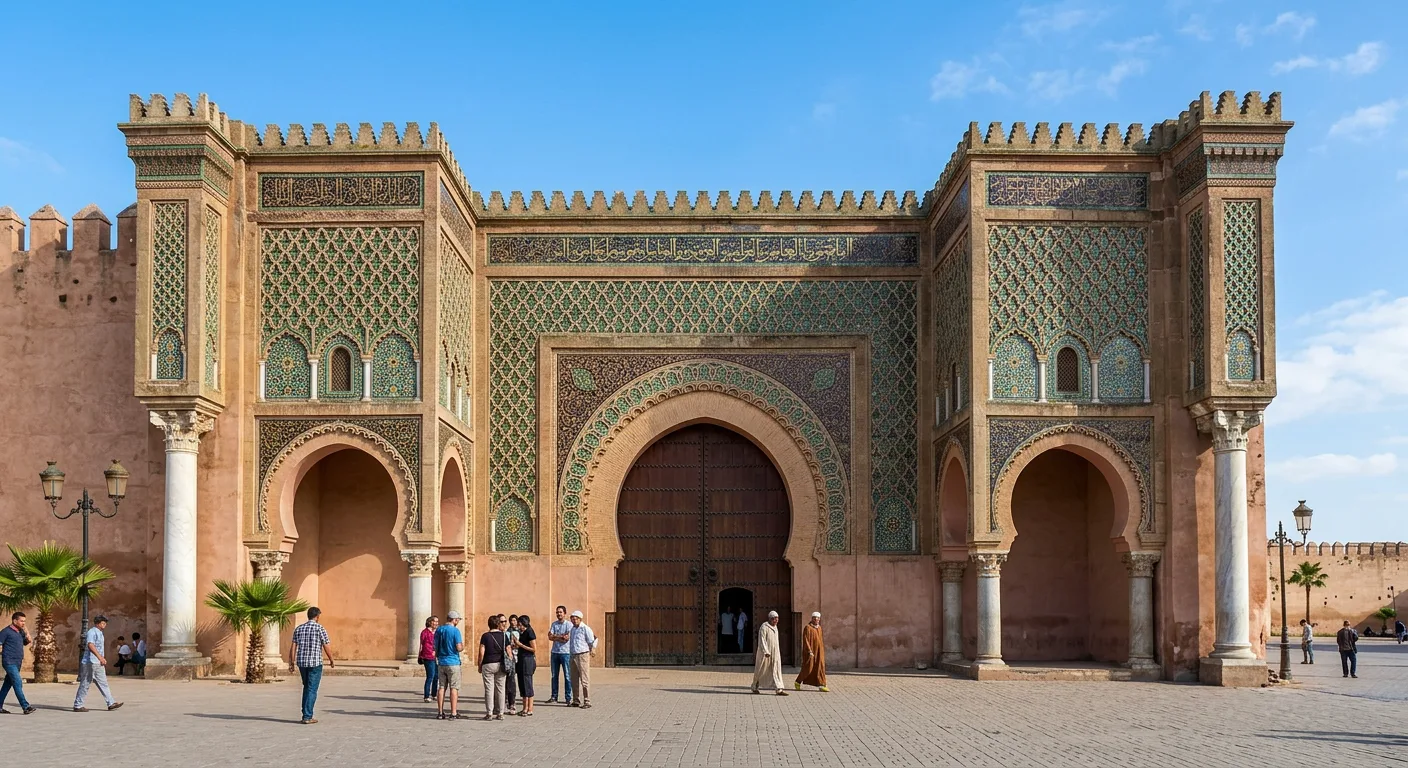
Meknes is the most underrated souk city in Morocco. Few international tourists make it here, which means prices reflect what locals actually pay. The souk unfolds south of the monumental Place el-Hedim in a series of covered passages that stay cool even in summer. This is an ideal city to calibrate your price expectations before tackling Marrakech or Fes. If a vendor quotes you a price in Meknes, it is probably only 50-100% above the real value, compared to the 300-500% markups common in tourist hotspots.
Key Souks & Specialty Areas
Grand Souk (Souk Sebbat): Covered market under stone archways; textiles, household goods
Souk Nejjarine: Woodworkers' quarter with carved furniture and painted doors
Place el-Hedim: Open square with food stalls, juice stands, and olive vendors
Souk des Bijoux: Jewelry shops selling silver Berber pieces at local prices
Insider tip: Visit the olive market near Bab Mansour for the freshest olives in Morocco. Buy a kilogram of mixed olives for from 20-30 MAD and eat them in Place el-Hedim while watching street performers.

Essaouira
The Relaxed Coastal Souk
Laid-back, artistic, breezyPrice: Moderate (fair but not cheap)
Essaouira offers the most relaxed souk experience in Morocco. The compact medina is easy to navigate, vendors are noticeably less pushy than in Marrakech, and the Atlantic breeze keeps things comfortable. The specialties here are thuya wood craftsmanship (a local tree whose burled root produces beautiful grain patterns), silver Berber jewelry, and argan oil from nearby cooperatives. Women's argan cooperatives on the road to Marrakech offer the most authentic oil at fair fixed prices.
Key Souks & Specialty Areas
Avenue de l'Istiqlal: Main souk street; argan oil, silver jewelry, general crafts
Thuya Wood Market: Carved boxes, chess sets, and ornamental items from local thuya wood
Skala du Port: Fresh fish market at the harbor; watch the daily catch come in
Spice Souk: Compact spice section with argan oil cooperatives nearby
Insider tip: Buy thuya wood products here and nowhere else. Essaouira is the center of this craft, and prices are lower than in Marrakech. The fish market at Skala du Port lets you buy fresh fish and have it grilled on the spot for from 30-50 MAD.

Chefchaouen
The Blue-Walled Gem
Calm, photogenic, small-town charmPrice: Low to moderate
Chefchaouen's souk is small, walkable, and completely different from the big-city markets. The blue-painted walls of the medina make it one of the most photographed towns in Africa, and the shopping reflects the Rif Mountain culture rather than the mainstream Moroccan tourist market. Specialties include hand-woven blankets and rugs with distinctive Rif geometric patterns, round goat cheese (jben), mountain honey, and handmade leather sandals. Vendor pressure is minimal. Prices are reasonable, and the pace is slow enough to browse without feeling hurried.
Key Souks & Specialty Areas
Plaza Uta el-Hammam: Central square with craft shops, restaurants, and the kasbah
Main Souk Street: Woven blankets, goat cheese, Rif Mountain crafts, leather goods
Artisan Cooperative: Fixed-price woven goods and traditional Rifian textiles
Insider tip: The woven blankets here have patterns unique to the Rif region and are not available in Marrakech or Fes. Prices for a quality handwoven blanket start from 200 MAD, half what you would pay in larger cities.
Tangier
The Gateway Souk
Cosmopolitan, gritty, crossroads energyPrice: Moderate
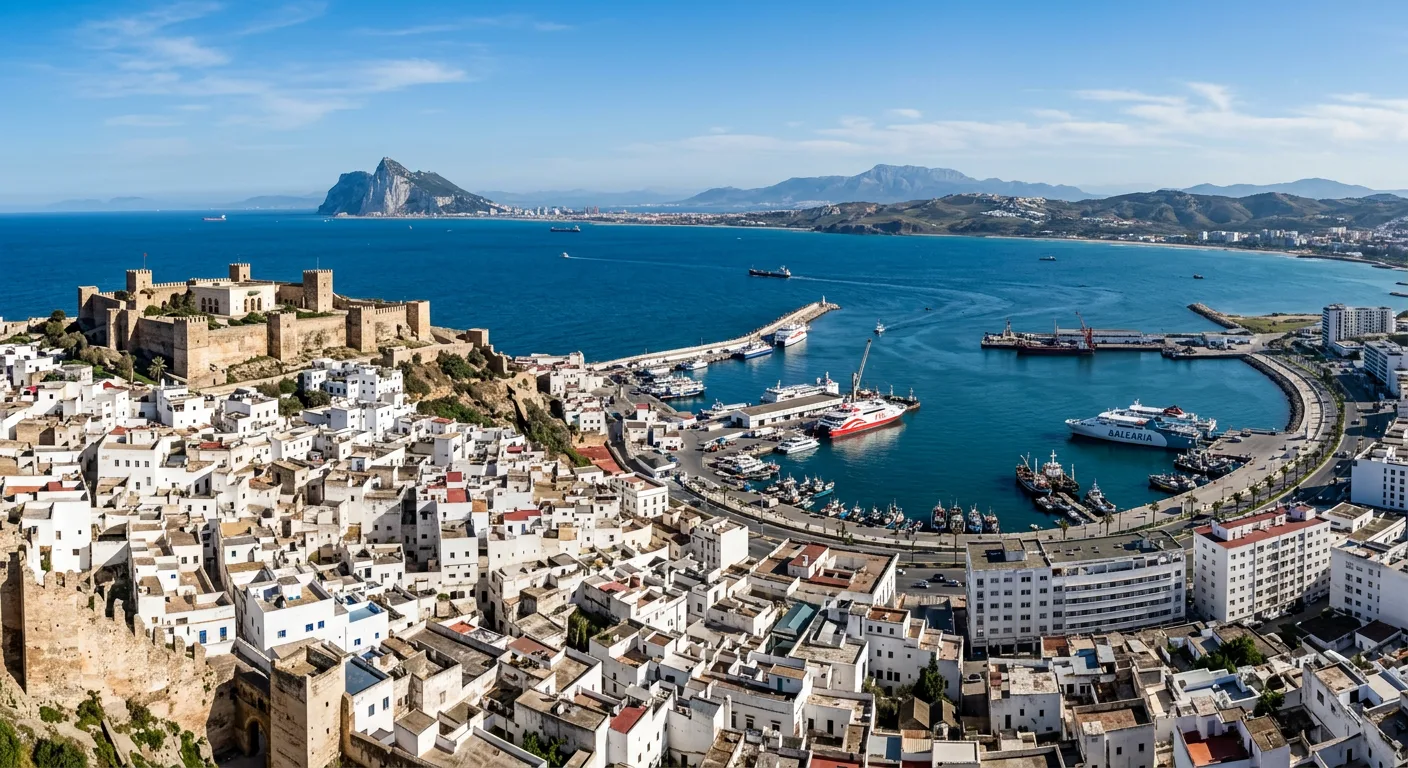
Tangier sits at the crossroads of Africa and Europe, and its souks reflect that dual identity. The Grand Socco is a bustling open square where the old medina meets the modern city, ringed by fruit sellers, spice vendors, and café terraces. Deeper inside the medina, Petit Socco is a compact square where Beat Generation writers once drank coffee alongside Moroccan merchants. Tangier's souk specialties lean toward antiques, vintage items, and a blend of Andalusian-Moroccan crafts you will not find elsewhere.
Key Souks & Specialty Areas
Grand Socco (Place du Grand 9 Avril): Open-air market square connecting old and new Tangier
Petit Socco: Historic café-lined square deep in the medina; leather and textiles
Rue d'Italie area: Antiques, vintage goods, and European-Moroccan fusion crafts
Central Market (Marché Central): Fresh produce, fish, spices, and everyday Moroccan goods
Insider tip: The Central Market (Marché Central) near Boulevard Pasteur is one of Morocco's best produce markets. Arrive before 10 AM for the freshest fish, direct from the Strait of Gibraltar fishing boats.
How to Haggle in Moroccan Souks
Bargaining is expected in every souk. Here is a seven-step strategy that works.
1
Research Fair Prices First
Before entering the souk, visit an Ensemble Artisanal (government fixed-price shop found in most cities). These shops show you baseline values for leather, ceramics, rugs, and textiles. Knowing what items actually cost is the single most powerful bargaining tool you have.
2
Browse the Full Section Before Buying
Walk through the entire souk zone for your target item. Compare quality and starting prices at five or six stalls before engaging seriously with any vendor. Shops deeper inside the souk, away from main tourist routes, almost always have lower starting prices.
3
Open at 30-40% of the Asking Price
If a vendor says 1,000 MAD, counter with 300-400 MAD. This is not rude; it is expected. Both sides know the first number is inflated. The counter-offer signals you are a serious buyer who understands the game. For rugs or large items, you can start at 20-25%.
4
Stay Warm, Patient, and Unhurried
Haggling in Morocco is a social exchange, not a fight. Smile. Chat about the weather, football, or family. Accept the mint tea. Vendors who enjoy the interaction are more likely to give you a good price. Rushing or acting aggressive will cost you money.
5
Use the Walk-Away When Stuck
If negotiation stalls above your target price, say "shukran" (thank you), smile, and start walking toward the exit. Most vendors call you back with a lower number. If they do not, you were likely already near their floor price, and the next stall sells the same item.
6
Bundle Purchases for Better Deals
Buying three scarves? Negotiate them together, not one at a time. Vendors almost always offer a discount on multiple items. Say "what is your price for all of these?" after establishing the individual prices.
7
Pay Cash in Small Dirhams
Cash gets better prices than cards. Carry small denominations (20 and 50 MAD notes) so you can pay the exact agreed amount. Handing over a 200 MAD note for a 120 MAD purchase invites the "no change" problem.
Where NOT to Haggle
Bargaining applies to souk goods, metered taxis, and private tours. Do not haggle at pharmacies, supermarkets, restaurants with displayed prices, fixed-price shops (marked "prix fixe"), Ensemble Artisanals, or when buying bread and basic produce from vendors with price tags. Attempting to haggle in these settings is considered disrespectful.
What to Buy in Moroccan Souks
Seven categories of goods worth buying, with fair prices, best cities, and quality checks.
Leather Goods
From 80 MAD (slippers) to 800 MAD (jacket)
Best: Fes (Chouara Tannery Quarter)
Morocco has tanned leather by hand for over a millennium. Babouche slippers, bags, poufs, belts, wallets, and jackets are all strong buys. Goatskin is softer; cowhide is more durable. Fes prices run 20-30% below Marrakech for equivalent quality because you are buying at the source.
Quality Check
Real leather has a natural scent. Synthetic copies smell chemical and have uniform texture. Check stitching tightness and zipper quality on bags.
Hand-Knotted Rugs & Carpets
From 800 MAD (small kilim) to 8,000+ MAD (large Beni Ourain)
Best: Marrakech or Fes carpet souks
Berber rugs from the Atlas Mountains are world-renowned. Beni Ourain rugs (cream with black geometric patterns) have become design icons globally. Kilims (flat-weave) are lighter and less expensive. Azilal rugs feature bold colors and abstract motifs. Every rug tells the story of its weaver through unique symbols.
Quality Check
Flip the rug over: handmade rugs show individual knots on the reverse. Pull a fringe thread; real wool feels rough and organic, synthetics feel slick. Count knots per square inch for density.
Ceramics & Pottery
From 50 MAD (small bowl) to 400 MAD (large serving plate)
Best: Fes (Ain Nokbi) or Safi
Fes is known for blue-and-white geometric designs inspired by Andalusian art. Safi produces colorful, painterly ceramics. Tamegroute (near Zagora) makes distinctive green-glazed pottery. Plates, tagines, bowls, and zellige tile coasters make practical gifts with real character.
Quality Check
Tap ceramics gently; a clear ring means solid construction. Ask if tagines are for cooking (lead-free glaze) or decorative only. Handmade pieces have slight asymmetries.
Spices & Ras el Hanout
From 20 MAD per 100g
Best: Marrakech or Fes Souk el-Attarine
Ras el hanout (meaning "head of the shop") is Morocco's signature spice blend, with up to 30 ingredients including cumin, coriander, ginger, cinnamon, and cardamom. Saffron from Taliouine is among the world's best. Prices for spices are dramatically lower than what you pay back home.
Quality Check
Real saffron has thin red threads and tastes bitter. Ask vendors to vacuum-seal bags for travel. Avoid pre-mixed "tourist special" blends with vague labeling.
Argan Oil
From 80 MAD per 100ml (cosmetic grade)
Best: Essaouira cooperatives
Cosmetic argan oil is cold-pressed from raw nuts and nearly odorless. Culinary argan is pressed from roasted nuts with a rich, nutty flavor. Women's cooperatives between Essaouira and Marrakech produce the most authentic oil and ensure fair wages for the workers. This is one product where buying from a cooperative beats souk shopping.
Quality Check
Real cosmetic argan oil absorbs into skin within a minute. If it sits greasy on the surface, it has been diluted with cheaper oils. Culinary argan should smell distinctly nutty.
Textiles & Woven Goods
From 80 MAD (scarf) to 500 MAD (Berber blanket)
Best: Chefchaouen (Rif textiles) or Marrakech
Berber handira blankets, sabra (cactus silk) cushion covers, cotton scarves, and embroidered caftans are all sold across Moroccan souks. Each region produces distinctive patterns. Chefchaouen specializes in Rif Mountain geometric weaving. Marrakech has the widest selection.
Quality Check
Handwoven textiles show subtle irregularities on the reverse side. Machine-made items have perfectly uniform patterns. Real sabra (agave fiber) feels slightly rough; synthetic "cactus silk" feels plasticky.
Brass Lanterns & Metalwork
From 200 MAD (small lantern) to 2,000+ MAD (floor lamp)
Best: Marrakech (Souk Haddadine)
Moroccan pierced-brass lanterns cast intricate shadow patterns and have become a global interior design staple. The souk Haddadine in Marrakech is where blacksmiths still hand-punch the designs. Smaller lanterns are easy to pack; larger floor lamps can be shipped.
Quality Check
Handmade lanterns have slightly irregular piercing patterns. Machine-stamped versions are perfectly uniform. Heavier brass is more durable than thin sheet metal.
Artisan Workshops to Visit
Go beyond shopping and watch master craftspeople at work. Five workshops where you can see Moroccan artisan traditions firsthand.
Leather Tanning
Chouara, Fes
The Chouara tannery has operated since the 11th century. Watch workers treat hides in stone vats using pigeon droppings, quicklime, and natural dyes including saffron (yellow), indigo (blue), poppy (red), and mint (green). Access via surrounding leather shops that have rooftop terraces overlooking the pits.
Vendors offer mint sprigs to hold under your nose against the smell. Expect from 10-20 MAD entry through a shop. Mornings have the best light for photos.
Coppersmithing
Place Seffarine, Fes
Artisans hand-hammer brass and copper into platters, teapots, trays, and decorative pieces at this ancient square. The rhythmic hammering of metal fills the air, and you can watch an entire teapot take shape over the course of an hour.
Buying directly from the workshop skips middleman markup. A hand-hammered brass tray starts from 150 MAD here versus from 300 MAD in a Marrakech souk.
Zellige Tilework
Near Bab el-Ftouh, Fes
Zellige artisans cut geometric tile shapes from larger clay pieces by hand, then assemble them into intricate mosaic patterns. Each tile is chipped to shape with a small hammer. The skill takes years to master, and master zellige craftspeople are increasingly rare.
Small zellige coasters and trivets (from 30 MAD each) make lightweight, packable souvenirs. Watching the cutting process is free; workshops welcome curious visitors.
Thuya Woodcarving
Essaouira medina
Thuya is a conifer native to the Essaouira region whose burled root produces rich, swirling grain patterns. Woodworkers carve boxes, chess sets, picture frames, and decorative objects. The scent of freshly carved thuya fills the workshops.
Essaouira is the only place to buy genuine thuya at fair prices. Identical-looking pieces sold in Marrakech are marked up 50-100%. A small jewelry box starts from 60 MAD.
Textile Dyeing
Souk des Teinturiers, Marrakech
The dyers' souk is one of the most photogenic spots in Marrakech's medina. Skeins of freshly dyed wool and silk hang from wooden poles overhead, dripping color in reds, yellows, blues, and purples. Workers dip fabrics in stone vats using both natural and synthetic dyes.
This is a working souk, not a tourist attraction, so be respectful. Some dyers are happy to explain the process. Photos of the hanging fabrics are generally fine, but ask before photographing the workers directly.
Market Hours & Best Times to Shop
| Period | Hours | Note |
|---|---|---|
| Regular Hours | 9:00 AM - 7:00/8:00 PM | Most souk stalls follow this schedule daily |
| Friday Prayers | 12:00 - 2:00 PM | Many shops close; quieter browsing for those remaining open |
| Ramadan Hours | Shifted later; many open until 10:00 PM | Mornings are quieter; evenings are busiest after iftar |
| Best Shopping Window | 9:00 - 11:00 AM | Fewer crowds, cooler temperatures, and first-sale-of-the-day goodwill |
| Summer Siesta | 1:00 - 3:00 PM | Some vendors close during peak heat in July and August |
Souk Etiquette
Respect the culture and you will have a better shopping experience. Six rules that matter.
Ask Before Photographing People
Always ask permission before pointing a camera at vendors, artisans, or locals. Most are happy to be photographed. Some are not. A tip of from 5-10 MAD is appropriate when someone poses for you. Never photograph without asking first.
Dress Modestly in the Medina
Souks are conservative spaces. Cover shoulders and knees. Women do not need to cover their hair, but modest clothing earns noticeable respect from vendors and reduces unwanted attention. Loose, breathable layers work best in the heat.
Accept Tea Without Feeling Obligated
Mint tea is hospitality, not a sales contract. You can drink the tea, chat, and walk away without buying anything. However, sitting for tea does signal serious interest to the vendor, so accept it when you genuinely want to browse their goods.
Decline with "La Shukran" and Keep Moving
A firm "la shukran" (no thank you) with a smile and continued walking is the most effective way to disengage from vendors. Making eye contact and stopping invites conversation. If you are not interested, keep your pace and your eyes forward.
Respect Prayer Times
Many vendors close briefly during the five daily prayers, especially Friday noon prayer from 12:00-2:00 PM. Do not try to force a transaction during the call to prayer. Use the pause to eat lunch, rest at a café, or explore the quieter parts of the medina.
Yield to Donkeys and Carts
In Fes especially, donkeys and hand-pushed carts are the only delivery vehicles that fit through narrow medina alleys. When you hear "balak!" (watch out), press yourself flat against the wall and let them pass. They always have the right of way.
Tourist Traps to Avoid
Most souk vendors are honest business owners. But these five scams do exist, and knowing them protects your wallet.
Unsolicited "Guides" to Special Shops
What happens: A friendly local offers to show you a "secret shop" or "my cousin's workshop" with "special local prices." The guide collects a 10-30% commission added directly to your purchase price. The shop is neither secret nor special.
Defense: Politely decline with "la shukran" and navigate independently using offline maps. If you do want a guide, hire a licensed one through your riad or the tourist office.
Fake Saffron at Bargain Prices
What happens: Dyed safflower, corn silk, or plastic threads sold as premium Taliouine saffron. Real saffron costs from 20-40 MAD per gram. Anything dramatically cheaper is fake.
Defense: Taste a thread before buying; real saffron is distinctly bitter. Look for thin red threads that slowly turn water golden-yellow when soaked. Buy from established spice shops, not street vendors.
Machine-Made Rugs Sold as Handmade
What happens: Factory-produced carpets marketed as hand-knotted Berber originals at handmade prices. Machine-made rugs have perfectly uniform knots and a flat, synthetic-feeling backing.
Defense: Flip the rug over. Handmade rugs show visible individual knots on the reverse. Pull a fringe thread; real wool feels organic and slightly rough, while synthetic fibers feel smooth and plasticky.
Entrance-Stall Price Inflation
What happens: Shops positioned at souk entrances near tourist landmarks charge 3-5x more than identical shops further inside. They pay premium rent and rely on visitors who do not venture deeper.
Defense: Walk past the first 200 meters of any souk entrance before engaging with vendors. The same goods appear at lower prices in the interior stalls where local customers also shop.
The "Closed Riad" Misdirection
What happens: Someone near your accommodation tells you it is "closed today" or "moved to a new location" and offers to take you to an alternative. Your riad is fine; they earn a commission from the replacement hotel.
Defense: Ignore this completely. Walk directly to your riad. Call them if you feel uncertain. This scam targets newly arrived visitors near accommodation areas inside the medina.
Shipping Your Purchases Home
Bought something too big for your suitcase? Here are four ways to get it home safely.
Barid Al-Maghrib (Moroccan Post)
From 150 MAD2-4 weeks
Best for: Spices, small leather goods, textiles, lightweight items
Reliable for non-fragile items. Available in every major city. Track parcels online.
DHL / FedEx / UPS
From 500 MAD3-7 days
Best for: Ceramics, valuable items, fragile goods, jewelry
Most reliable for breakables. Insurance available. Offices in Marrakech, Casablanca, and Fes.
Shop Shipping (Dealer-Arranged)
From 200 MAD1-6 weeks
Best for: Carpets, large lanterns, furniture, heavy items
Established rug and furniture dealers have their own international shipping channels. Ask for tracking and insurance. Read reviews before committing.
Checked Luggage
Free (within airline limits)Immediate
Best for: Spices, small ceramics, leather goods, textiles
Wrap ceramics in clothing. Argan oil bottles over 100ml must go in checked bags, not carry-on. Vacuum-sealed spice bags prevent leaks.
Customs & Packing Tips
Argan oil bottles over 100ml must go in checked luggage, not carry-on
Get receipts for valuable items to declare at customs if needed
Wrap ceramics in clothing or bubble wrap and pack in the center of your bag
Vacuum-seal spice bags to prevent odors from permeating your luggage
Frequently Asked Questions
What is the difference between a souk and a medina in Morocco?
A medina is the entire old walled city center, while souks are the market areas located within the medina. Souks are organized by trade, with dedicated sections for leather, spices, carpets, metalwork, and other goods. Every medina contains souks, but the medina also includes residential neighborhoods, mosques, riads, hammams, and public spaces.
Which Moroccan souk is best for first-time visitors?
Essaouira offers the most relaxed souk atmosphere with lower vendor pressure and fairer starting prices. Chefchaouen is similarly calm with a compact, walkable layout. Both are good places to build your haggling confidence. Save Fes el-Bali for when you have some souk experience, as its 9,000+ workshops spanning 9,400 alleys can feel overwhelming on a first visit.
How much should I offer when haggling in a Moroccan souk?
Start your counter-offer at 30-40% of the vendor's asking price. For expensive items like rugs, open at 20-25%. The final agreed price typically settles between 40-60% of the initial ask. Research fair prices before shopping so your counter-offer is grounded in real value rather than arbitrary percentages.
What are the best things to buy in Moroccan souks?
Strong buys include leather goods (bags from 200 MAD, babouche slippers from 80 MAD), hand-knotted rugs (from 800 MAD), ceramics (plates from 50 MAD), spices like ras el hanout and saffron (from 20 MAD per 100g), argan oil from cooperatives (from 80 MAD per 100ml), brass lanterns (from 200 MAD), and woven textiles (Berber blankets from 300 MAD).
What time do Moroccan souks open and close?
Most souks open between 9:00-10:00 AM and close by 7:00-8:00 PM. Many shops close during Friday prayers from 12:00-2:00 PM. During Ramadan, hours shift later with some souks staying open past 10:00 PM. Early morning from 9:00-11:00 AM is the best time to shop: fewer crowds, cooler air, and some vendors offer favorable prices for the first sale of the day.
How do I avoid getting ripped off in Moroccan markets?
Research fair prices beforehand. Visit an Ensemble Artisanal (government fixed-price shop) to learn baseline values. Shop deeper inside the souk where prices normalize. Decline unsolicited guides who lead you to "special shops" where commissions inflate your purchase price. Verify materials: real saffron is bitter, real leather has a natural scent, and handmade rugs show individual knots on the reverse.
Can I visit artisan workshops inside Moroccan souks?
Yes. Fes is the best city for workshop visits: coppersmith workshops at Place Seffarine, leather tanning at Chouara, zellige tile cutting near Bab el-Ftouh, and woodworking at Souk el-Nejjarine. In Marrakech, the dyers' souk (Souk des Teinturiers) and blacksmiths' quarter (Souk Haddadine) have active artisans. Tipping from 10-20 MAD is appropriate when watching craftspeople at work.
How do I ship large purchases home from Morocco?
Four options: Barid Al-Maghrib (Moroccan Post) from 150 MAD for parcels taking 2-4 weeks. DHL, FedEx, or UPS from 500 MAD with delivery in 3-7 days. Established dealers (especially rug shops) offer their own international shipping with insurance. Or pack items in checked luggage. For fragile ceramics and large carpets, courier services or dealer shipping with tracking and insurance are recommended.
Related Guides
Morocco Leather Goods
Complete guide to buying Moroccan leather: bags, babouche, poufs, jackets, and how to spot quality.
Read moreMorocco Pottery & Ceramics
Fes blue, Safi colorwork, Tamegroute green. How to buy authentic Moroccan pottery and ceramics.
Read moreMorocco Spice Guide
Ras el hanout, saffron, cumin, and more. Buying spices in Moroccan souks with fair prices.
Read moreMorocco Traditional Clothing
Caftans, djellabas, and Berber textiles. Guide to buying traditional Moroccan garments.
Read moreReady to Explore Moroccan Souks?
From the leather tanneries of Fes to the spice stalls of Marrakech, every souk tells a story. Plan your market adventure with our city guides and start shopping with confidence.