Discovering...
Travel Protection
Morocco Travel Insurance Guide:
Plans, Coverage & Claims
From 350 MAD/month for basic coverage to comprehensive plans protecting your Sahara trek, Atlas hike, and everything in between. Do not travel to Morocco without it.
Why Travel Insurance Is Essential for Morocco
Morocco is one of the safest countries in Africa for tourists, with a well-developed tourism infrastructure and generally welcoming communities. But no destination is without risk, and Morocco's unique geography -- from the 4,167m peak of Mount Toubkal to the vast Sahara desert -- means that medical emergencies can happen far from hospitals.
Morocco's public healthcare system is improving but remains under-resourced, particularly outside major cities. Private clinics provide excellent care but charge accordingly: a single night in a private hospital starts from 5,000 MAD, and emergency surgery can easily exceed 100,000 MAD. An air ambulance evacuation from the Sahara can cost upward of 200,000 MAD.
Travel insurance is not a luxury for Morocco -- it is a necessity. Whether you are trekking the Atlas, surfing in Taghazout, exploring the medinas of Fes and Marrakech, or riding camels into the Sahara, the right policy gives you peace of mind and financial protection against the unexpected. The cost of coverage is a tiny fraction of what you would pay out of pocket for a serious medical event.
Key Risks for Travelers in Morocco
Understanding the specific risks helps you choose the right coverage level for your Morocco trip.
Adventure Activity Injuries
Atlas trekking, camel riding, surfing, quad biking, and sandboarding are popular but carry inherent risks. A broken bone on Mount Toubkal means helicopter evacuation at enormous cost.
Food & Waterborne Illness
Traveler's diarrhea is the most common insurance claim in Morocco. Street food and unfamiliar cuisine can trigger stomach issues that occasionally require clinic visits and IV fluids.
Remote Locations
The Sahara desert, High Atlas villages, and rural Draa-Tafilalet are far from hospitals. Medical evacuation from remote areas is the only option and costs from 50,000 MAD by helicopter.
Petty Theft
Pickpocketing and phone snatching occur in busy medinas, train stations, and tourist hotspots. Replacement costs for electronics and travel documents add up quickly without coverage.
Road Safety
Morocco's mountain passes, rural roads, and intercity highways require cautious driving. Road accidents involving tourists -- whether driving or as passengers -- are a significant risk factor.
Flight Disruptions
Fog at Fes airport, airline strikes, and seasonal overbooking can disrupt travel plans. Trip delay coverage helps cover accommodation and rebooking costs during unexpected disruptions.
Compare 6 Top Insurance Providers
We reviewed the most popular travel insurance providers used by Morocco-bound travelers. Here is how they compare.
All prices are starting prices in MAD. Actual premiums depend on age, trip duration, coverage level, and home country. Seasonal pricing may apply.
SafetyWing
From 350 MAD/monthComprehensive travel medical insurance designed for nomads and long-term travelers. Covers 185 countries including Morocco. No fixed end date required; renews every 4 weeks automatically.
Medical Limit
From 2,500,000 MAD per injury/illness
Adventure Sports
Basic adventure activities covered (hiking, snorkeling). Excludes extreme sports like skydiving, paragliding, and motorsports.
Evacuation
From 1,000,000 MAD emergency medical evacuation to nearest adequate facility. Repatriation of remains included.
Pros
- Affordable for long trips
- No fixed end date needed
- Easy online purchase
- Covers home country visits (15 days per 90)
- COVID-19 covered as any other illness
Cons
- Limited adventure sports coverage
- From 2,500 MAD deductible per claim
- No trip cancellation coverage
- Electronics theft cap at 5,000 MAD
World Nomads
From 650 MAD/monthThe go-to insurer for adventure travelers. Two plan levels: Standard and Explorer. Covers over 200 activities in Morocco from camel trekking to sandboarding. Purchase or extend while already abroad.
Medical Limit
From 10,000,000 MAD (Standard) to unlimited (Explorer)
Adventure Sports
Standard covers 150+ activities. Explorer covers 200+ including paragliding, quad biking, rock climbing, and mountain biking in the Atlas.
Evacuation
From 5,000,000 MAD emergency evacuation and repatriation. Helicopter rescue for remote Atlas trekking included on Explorer.
Pros
- Best adventure sports coverage
- Buy or extend while traveling
- Trip cancellation included
- Gear and electronics covered up to 30,000 MAD
- Helicopter evacuation on Explorer plan
Cons
- More expensive than basic plans
- Claims process can be slow (30-60 days)
- Age limit: 69 years
- Deductible from 1,000 MAD per claim
Allianz
From 500 MAD/monthOne of the world's largest insurers with strong claim processing infrastructure. Multiple plan tiers from basic medical to comprehensive travel. 24/7 multilingual assistance hotline with operators who speak Arabic and French.
Medical Limit
From 5,000,000 MAD to 50,000,000 MAD depending on plan tier
Adventure Sports
Standard plan covers hiking and swimming. Premier plan adds camel trekking, surfing, and organized adventure tours. Extreme sports require supplemental rider.
Evacuation
From 2,500,000 MAD medical evacuation. Search and rescue up to 500,000 MAD on Premier plan.
Pros
- Strong global network of hospitals
- Fast claims processing (7-14 days)
- Arabic and French-speaking support
- Direct billing at partner hospitals in Casablanca and Marrakech
- Multiple plan tiers for every budget
Cons
- Requires pre-authorization for non-emergency treatment
- Adventure sports need higher-tier plan
- Phone claims only (no app submission)
- Cancel for any reason not available on basic plan
AXA
From 450 MAD/monthMajor insurer with physical offices in Morocco (Casablanca, Marrakech, Rabat, Tangier). This local presence means faster claim resolution and direct hospital partnerships. Schengen-compliant plans available for those combining Morocco with Europe.
Medical Limit
From 3,000,000 MAD to 30,000,000 MAD depending on plan
Adventure Sports
Covers organized trekking, surfing, and camel rides. Higher tiers include quad biking and sandboarding. Motorsports excluded on all plans.
Evacuation
From 2,000,000 MAD evacuation. Air ambulance included on Comfort and Premium tiers.
Pros
- Physical offices in 4 Moroccan cities
- Direct billing at Moroccan private hospitals
- Claims processed in Morocco (faster)
- Schengen-compliant plans available
- Local phone support in French and Arabic
Cons
- Online purchase interface less intuitive
- Basic plan has limited coverage ceiling
- Adventure sports surcharge from 50 MAD/month
- Dental emergency cap at 5,000 MAD
IATI
From 400 MAD/monthSpanish insurer popular with European travelers to Morocco. Known for excellent customer service and straightforward claims. Plans range from Backpacker to Star, covering all travel styles. App-based claims with photo submission.
Medical Limit
From 3,000,000 MAD (Backpacker) to 10,000,000 MAD (Star)
Adventure Sports
Standard plan covers trekking up to 4,000m (covers Toubkal). Adventure plan adds surfing, quad biking, camel trekking, and organized desert tours.
Evacuation
From 3,000,000 MAD evacuation and repatriation. Search and rescue included on Adventure and Star plans.
Pros
- App-based claims with photo upload
- Zero deductible on Star plan
- Covers trekking up to 4,000m on all plans
- Trip cancellation from 20,000 MAD
- Excellent customer reviews
Cons
- Support primarily in Spanish and English
- Less name recognition outside Europe
- No direct billing network in Morocco
- Baggage delay minimum 12 hours to claim
Heymondo
From 380 MAD/monthModern digital-first travel insurer with a highly rated mobile app. 24/7 medical chat and video consultation included at no extra cost. Transparent pricing with no hidden fees. Growing rapidly among younger travelers.
Medical Limit
From 5,000,000 MAD to 100,000,000 MAD depending on plan
Adventure Sports
Covers hiking, surfing, snorkeling, and camel trekking on all plans. Premium plan adds quad biking, sandboarding, paragliding, and mountain biking.
Evacuation
From 5,000,000 MAD evacuation. Air ambulance and helicopter rescue included on Premium plan.
Pros
- Best mobile app in the industry
- 24/7 medical chat and video calls included
- Transparent pricing, no hidden fees
- Fast digital claims (average 5 days)
- High coverage limits on Premium plan
Cons
- Newer company, smaller hospital network
- No physical offices anywhere
- Pre-existing conditions excluded on all plans
- Trip cancellation requires documentation within 48 hours
5 Coverage Types You Need for Morocco
Not all travel insurance is created equal. Here are the five coverage categories that matter most for a Morocco trip and why each one is important.
Medical Coverage
The most important coverage for Morocco. Covers hospitalization, doctor visits, prescription medications, emergency dental, and ambulance transport. Morocco's private hospitals deliver excellent care but charge international prices. A single night in a private hospital can cost from 5,000 MAD. Surgery can exceed 100,000 MAD.
Why this matters in Morocco
Public hospitals in Morocco are overcrowded and under-resourced. Any serious medical issue will require a private clinic, where costs add up fast. Without insurance, a simple fracture treatment can cost from 15,000 MAD.
Minimum recommended: From 5,000,000 MAD medical coverage
Hospital stays
Surgery
Prescription medications
Ambulance transport
Emergency dental
Follow-up care
Trip Cancellation
Reimburses non-refundable trip costs if you must cancel before departure due to illness, injury, family emergency, or other covered reasons. Also covers trip interruption if you must cut your Morocco trip short and return home early.
Why this matters in Morocco
Morocco trips often involve non-refundable riad bookings, internal flights, desert camp reservations, and guided tour deposits. A family emergency or illness before departure could mean losing thousands of MAD in bookings.
Minimum recommended: From 50,000 MAD trip cancellation coverage
Pre-departure cancellation
Trip interruption
Travel delay compensation
Missed connection coverage
Rebooked flights
Non-refundable accommodation
Adventure Sports
Morocco is an adventure destination: Atlas trekking, Sahara camel treks, surfing in Taghazout, quad biking in Merzouga, paragliding in Agadir, sandboarding in Erg Chebbi, and rock climbing in Todra Gorge. Standard policies often exclude these activities.
Why this matters in Morocco
A broken ankle while trekking Toubkal means helicopter evacuation from 4,167m. A surfing injury in Taghazout means an ambulance ride to Agadir. Without adventure sports coverage, you pay every dirham out of pocket.
Minimum recommended: Ensure your specific activities are listed on the policy
Atlas trekking
Camel riding
Surfing
Quad biking
Sandboarding
Rock climbing
Emergency Evacuation
Covers the cost of emergency transport to the nearest adequate medical facility or repatriation to your home country. In Morocco, this is critical for travelers in remote areas like the Sahara desert, the High Atlas mountains, or rural Draa-Tafilalet region.
Why this matters in Morocco
A medical emergency in the Sahara or High Atlas may require helicopter evacuation. Air ambulance from Merzouga to Casablanca can cost from 200,000 MAD. International medical repatriation by air can exceed 1,000,000 MAD.
Minimum recommended: From 5,000,000 MAD evacuation coverage
Helicopter rescue
Air ambulance
Medical repatriation
Repatriation of remains
Escort travel costs
Ground ambulance transport
Baggage & Theft
Covers loss, theft, or damage to personal belongings during your trip. Morocco's medinas are generally safe, but petty theft can occur in crowded souks, bus stations, and tourist areas. Delayed baggage compensation provides funds for essentials while you wait.
Why this matters in Morocco
Pickpocketing and bag snatching do occur in busy Moroccan cities, especially in Marrakech's Jemaa el-Fnaa and Casablanca's train stations. Replacement costs for electronics, cameras, and personal items add up quickly.
Minimum recommended: From 20,000 MAD baggage coverage with single item limit of 5,000 MAD
Theft of personal belongings
Lost luggage
Delayed baggage
Damaged items
Travel documents replacement
Emergency purchases
5 Most Common Insurance Claims in Morocco
Real scenarios that travelers face in Morocco, with average costs, prevention tips, and advice for filing successful claims.
#1
Food Poisoning & Stomach Illness
Frequency: Most common
Traveler's diarrhea and food poisoning are the number one insurance claims in Morocco. Street food, unfamiliar spices, and tap water (which is safe in cities but can upset unaccustomed stomachs) contribute to this. Most cases are mild and resolve with rehydration, but severe cases require IV fluids at a private clinic.
Average Cost
From 500 MAD (pharmacy) to 5,000 MAD (clinic visit with IV fluids)
Prevention
Drink bottled water, eat at busy stalls with high turnover, avoid raw salads at questionable venues, and carry oral rehydration salts.
Claim Tip
Keep all pharmacy and clinic receipts. Get a medical report from the treating doctor even for minor visits.
#2
Adventure Activity Injuries
Frequency: Common
Sprains, fractures, and muscle injuries from Atlas trekking, surfing in Taghazout, quad biking in the desert, and camel riding are frequent claims. Camel falls are more common than you might expect, and Atlas trails can be loose and uneven, especially in wet conditions.
Average Cost
From 3,000 MAD (minor sprain treatment) to 50,000 MAD+ (fracture with surgery)
Prevention
Use reputable tour operators, wear proper footwear for trekking, always wear a helmet on quad bikes, and do not ride camels if you have back problems.
Claim Tip
Photograph the accident scene and get a written incident report from your tour operator. This speeds up the claim significantly.
#3
Theft & Pickpocketing
Frequency: Common
Phone snatching on mopeds, pickpocketing in crowded souks, and theft from parked vehicles or hotel rooms. Jemaa el-Fnaa in Marrakech, Casablanca train stations, and crowded bus terminals are hotspots. Petty theft rarely involves violence.
Average Cost
From 5,000 MAD (phone) to 30,000 MAD+ (camera, laptop, multiple items)
Prevention
Use a money belt or cross-body bag, keep phones in front pockets, never leave valuables in parked cars, and use hotel safes.
Claim Tip
File a police report (proces-verbal) at the nearest commissariat within 24 hours. Without a police report, most insurers will deny the claim.
#4
Flight Delays & Cancellations
Frequency: Moderate
Weather disruptions, airline strikes, and overbooking can delay or cancel flights to and within Morocco. Domestic flights between Casablanca, Marrakech, Fes, and Ouarzazate are occasionally delayed. Fog at Fes-Saiss airport causes delays in winter.
Average Cost
From 1,000 MAD (meals, accommodation during delay) to 20,000 MAD+ (rebooking international flights)
Prevention
Build buffer days into your itinerary, especially around connecting flights. Download your airline's app for real-time notifications. Consider travel insurance with trip delay coverage.
Claim Tip
Keep all boarding passes, delay notifications, and receipts for meals and accommodation. Request a written delay confirmation from the airline.
#5
Vehicle Accidents & Road Injuries
Frequency: Less common but costly
Morocco's roads, particularly mountain passes in the Atlas and rural highways, can be dangerous. Self-drive tourists, motorcycle renters, and even passengers in taxis or buses can be involved in accidents. Medical costs from serious road accidents can be substantial.
Average Cost
From 10,000 MAD (minor injuries) to 500,000 MAD+ (serious injuries requiring surgery and rehabilitation)
Prevention
Rent from reputable agencies with comprehensive insurance, avoid driving at night on rural roads, and always wear seatbelts. Consider hiring a private driver for mountain roads.
Claim Tip
Call the Gendarmerie Royale (177) for any road accident. Their official report is essential for insurance claims. Photograph the scene from multiple angles.
Healthcare in Morocco: What Travelers Need to Know
Understanding Morocco's healthcare system helps you make informed decisions about coverage levels and know where to go if something goes wrong.
Private Clinics (Cliniques)
Private clinics are the best option for travelers in Morocco. They offer modern equipment, shorter wait times, and English or French-speaking doctors. Major cities have excellent private facilities. Consultation fees start from 300 MAD.
Where to Find
Available in all major cities: Casablanca, Marrakech, Rabat, Fes, Tangier, Agadir
Cost
Consultation from 300 MAD, ER visit from 1,000 MAD, overnight stay from 5,000 MAD
Key Facilities
Clinique du Parc, Casablanca
Clinique Internationale de Marrakech
Hôpital Cheikh Zayd, Rabat
Clinique Atlas, Fes
Pharmacies (Pharmacies)
Moroccan pharmacists are highly trained and can diagnose and treat minor ailments. Many medications that require prescriptions elsewhere are available over the counter. Pharmacies are identified by a green crescent sign and are found on nearly every main street.
Where to Find
Ubiquitous in all cities and towns. Duty pharmacies (pharmacie de garde) operate 24/7 on rotation.
Cost
Consultation free, medications from 20 MAD. Antibiotics from 50 MAD. Most common medications are very affordable.
Key Facilities
Pharmacie de garde (rotating 24/7 duty pharmacy in each district)
Pharmacie Centrale in most city centers
Hospital-attached pharmacies for specialized medications
Public Hospitals (CHU)
Morocco's public hospitals (Centre Hospitalier Universitaire) provide free or low-cost care but are often overcrowded with long wait times. They are best used only for genuine emergencies when no private clinic is available. Staff may only speak Arabic or French.
Where to Find
Every city and most towns have a public hospital. Major CHUs in Casablanca, Rabat, Fes, Marrakech.
Cost
Free to from 200 MAD for Moroccan citizens. Foreigners may be charged from 500 MAD for emergency care.
Key Facilities
CHU Ibn Sina, Rabat (largest and most advanced)
CHU Ibn Rochd, Casablanca
CHU Mohammed VI, Marrakech
CHU Hassan II, Fes
Emergency Services
Morocco's emergency number is 150 (SAMU ambulance) or 190 (fire/rescue). Response times vary: 10-20 minutes in major cities, potentially much longer in rural areas. For serious emergencies, consider arranging private ambulance transport directly to a private clinic.
Where to Find
SAMU and fire services cover all urban areas. Rural response times are slower.
Cost
Public ambulance from 500 MAD. Private ambulance from 2,000 MAD. Helicopter evacuation from 50,000 MAD.
Key Facilities
SAMU (dial 150) for medical emergencies
Fire/Rescue (dial 190)
Gendarmerie Royale (dial 177) for road accidents
Police (dial 19) in urban areas
What to Do in a Medical Emergency
Follow these steps if you or a travel companion experience a medical emergency in Morocco. Preparation and quick action can make all the difference.
1
Assess the Situation & Call for Help
For life-threatening emergencies, call SAMU (150) or fire/rescue (190) immediately. In remote areas with no phone signal, send someone to the nearest town for help. If you are with a tour group, alert your guide immediately as they will know the fastest local response.
Important: Save these numbers in your phone before your trip: SAMU 150, Fire 190, Police 19, Gendarmerie 177.
2
Contact Your Insurance Provider
Call your insurer's 24/7 emergency hotline as soon as possible. They can authorize treatment, arrange direct billing with hospitals, coordinate evacuation, and guide you to the nearest approved medical facility. Most providers have multilingual operators.
Important: Keep your policy number, emergency hotline number, and a copy of your insurance card both digitally (phone) and physically (printed in your bag).
3
Get to the Nearest Private Clinic
Unless the emergency is life-threatening and requires the nearest hospital, head to a private clinic (clinique). They offer better care, shorter waits, English/French-speaking staff, and are more familiar with international insurance procedures. Ask your hotel or riad for the nearest recommended clinic.
Important: Research private clinics near your accommodation before you need them. Your riad or hotel staff will know exactly where to go.
4
Document Everything
From the moment the incident occurs, start documenting. Photograph injuries, the accident scene, and damaged property. Keep every receipt (pharmacy, clinic, taxi to hospital, replacement essentials). Request a detailed medical report in French or English from the treating physician.
Important: Ask for itemized bills, not just totals. Insurers require detailed breakdowns of charges for claim processing.
5
File Your Claim Promptly
Most insurers require claims to be filed within 30 to 90 days of the incident. Gather your medical reports, receipts, police reports (for theft), flight delay confirmations, and any correspondence with providers. Submit via the insurer's app or online portal for fastest processing.
Important: Do not wait until you return home to start the process. Begin organizing documents immediately and contact your insurer for claim guidance while still in Morocco.
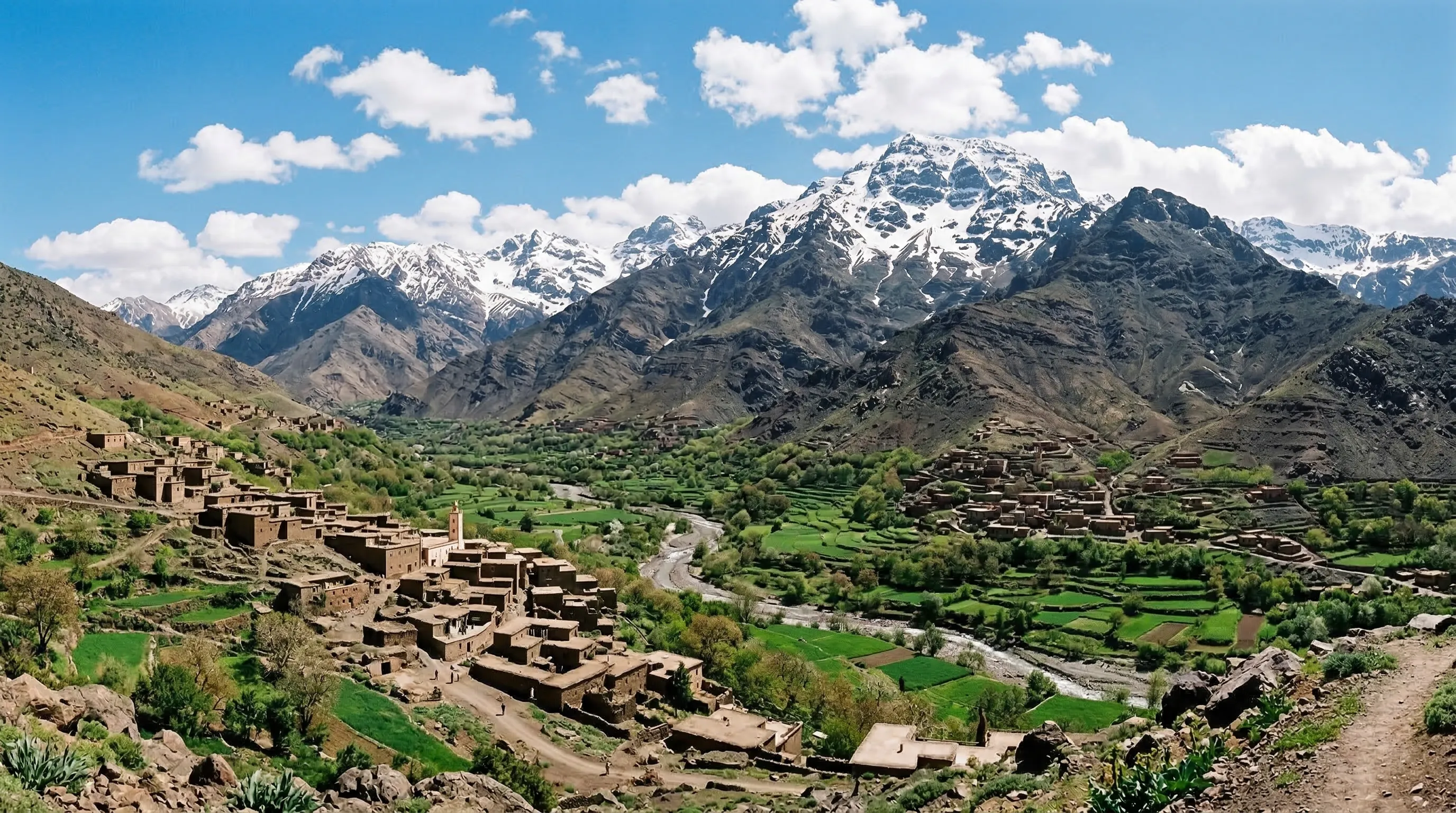
Atlas Mountain Trekking
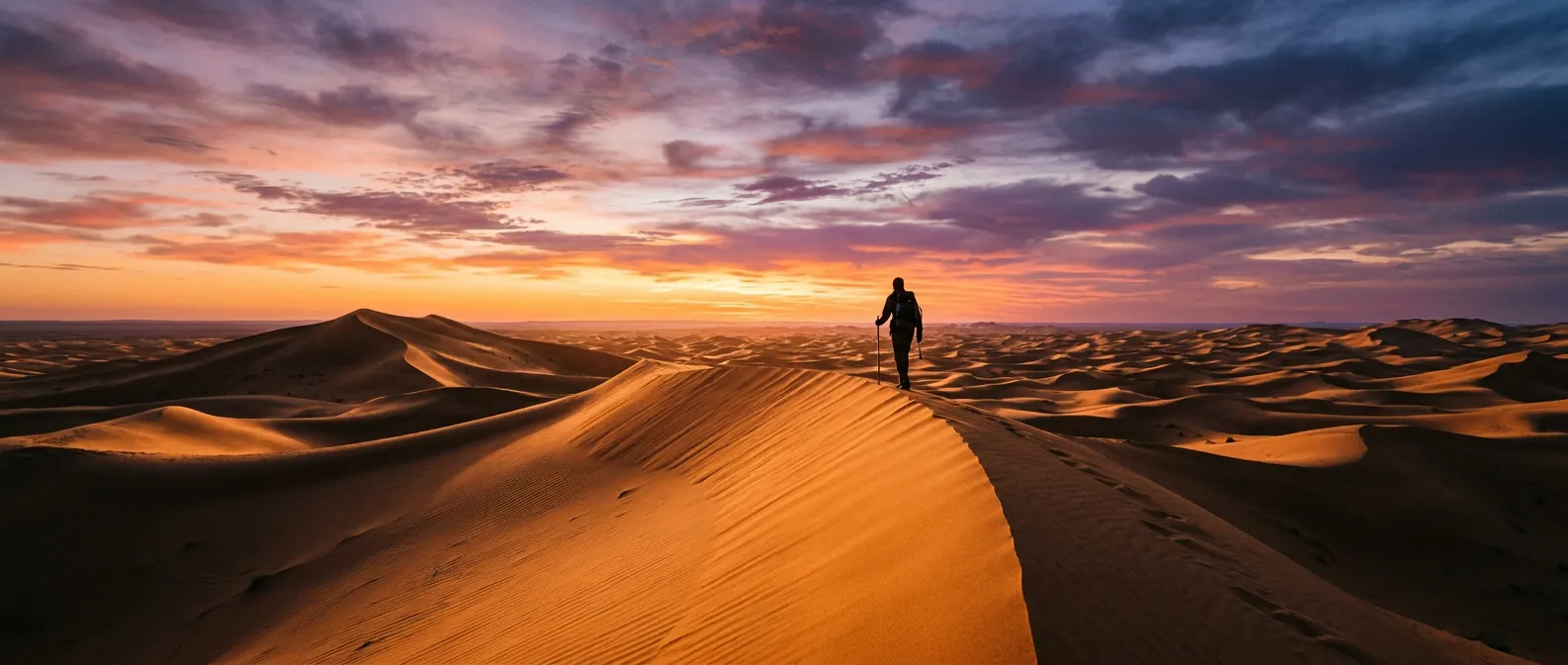
Remote Sahara Adventures
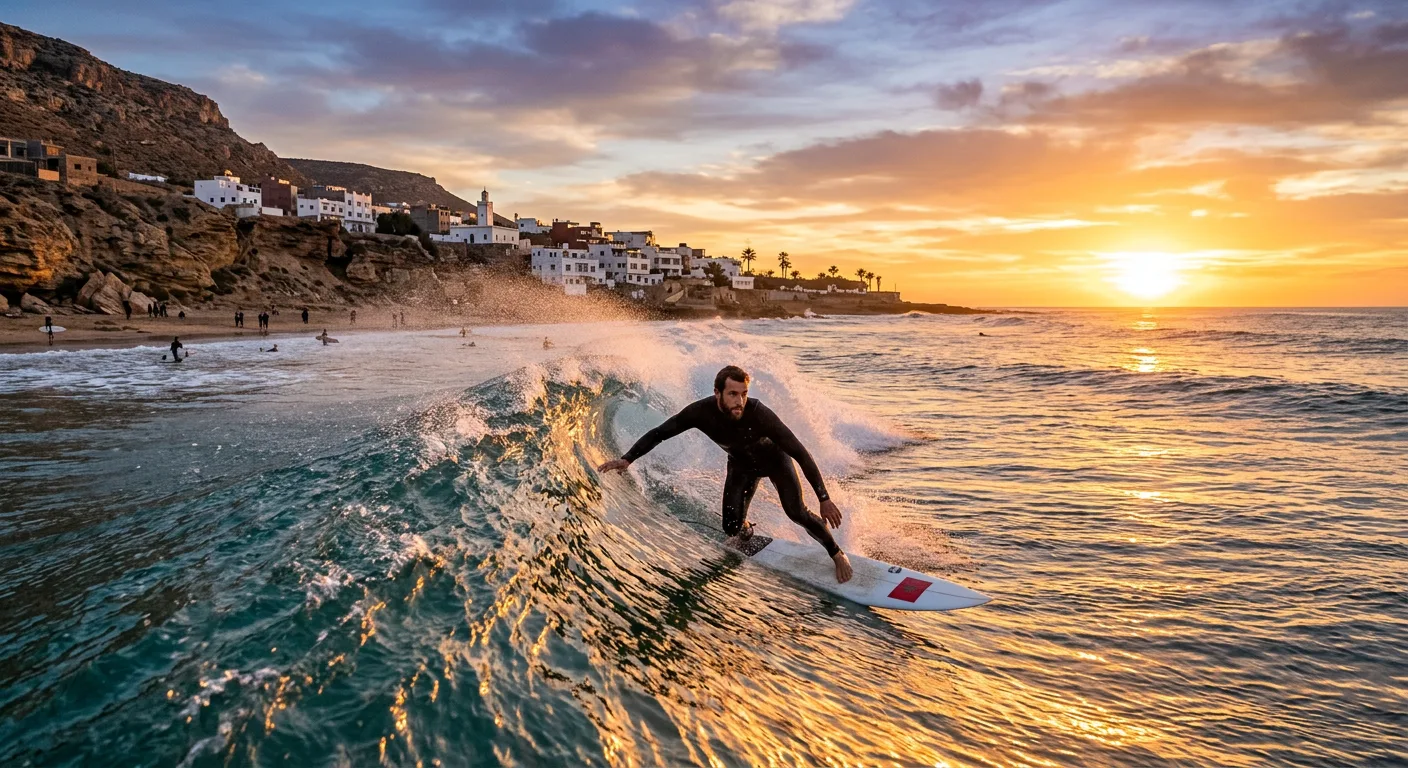
Surfing at Taghazout
Insurance Tips for Popular Morocco Adventures
Atlas Trekking & Toubkal
Ensure your plan covers trekking above 4,000m and includes helicopter evacuation. The standard plan from most providers covers trekking up to 3,000m; you need an upgraded plan for Toubkal (4,167m). IATI covers up to 4,000m on their basic plan. World Nomads Explorer covers high-altitude trekking.
Surfing in Taghazout & Essaouira
Most mid-tier plans cover recreational surfing. If you plan to kitesurf in Dakhla or Essaouira, check that kitesurfing is specifically listed. Board rental damage is not typically covered. Consider insuring expensive personal surfboards separately under a specialist sports equipment policy.
Sahara Desert Tours
Desert excursions into the Sahara (Merzouga, Zagora, M'Hamid) are remote, with the nearest hospital potentially 2-3 hours away. Camel riding is covered by most adventure plans, but quad biking and sandboarding require higher-tier coverage. Ensure evacuation coverage is at least from 5,000,000 MAD for Sahara trips.
Quad Biking & Buggy Tours
Quad biking in the Palmeraie of Marrakech or the desert near Merzouga is extremely popular but classified as a motor sport by many insurers. SafetyWing excludes it; World Nomads Explorer and Heymondo Premium cover it. Always wear a helmet even if the operator does not require one. Get the operator's written confirmation of safety briefing.
Rock Climbing in Todra Gorge
Todra Gorge is a world-class climbing destination but remote. Standard plans usually exclude rock climbing. World Nomads Explorer and Heymondo Premium cover it. Ensure your policy includes search and rescue, as crag evacuations require specialist rope teams. Carry an emergency satellite communicator if climbing off the beaten path.
Hot Air Ballooning & Paragliding
Hot air ballooning over Marrakech is generally covered as a passenger activity by all plans. Paragliding in Agadir or the Atlas is considered extreme and requires World Nomads Explorer, Heymondo Premium, or a supplemental rider on Allianz. Always book with licensed, insured operators who provide safety equipment.
Frequently Asked Questions
Is travel insurance mandatory for visiting Morocco?
Morocco does not legally require proof of travel insurance for entry. However, it is strongly recommended by all major travel advisory services. Without insurance, you are personally liable for all medical costs, which can be substantial at private clinics. Some premium riad and tour operators now request proof of insurance before booking adventure activities.
Can I buy travel insurance after I have already arrived in Morocco?
Yes, several providers allow purchase while traveling. SafetyWing, World Nomads, and Heymondo all allow you to buy or extend coverage after departure. However, trip cancellation coverage typically only applies if purchased before departure. Medical and evacuation coverage usually begins 24-48 hours after purchase to prevent fraud.
Does my credit card travel insurance cover Morocco?
Some premium credit cards (Visa Platinum, Mastercard World, Amex Gold and above) include basic travel insurance. However, coverage is usually limited to from 500,000 MAD medical, does not cover adventure sports, has strict eligibility requirements (must have paid for the trip with the card), and excludes pre-existing conditions. For Morocco specifically, dedicated travel insurance provides significantly better protection.
What if I need to see a doctor for something minor?
For minor issues (traveler's stomach, minor cuts, allergies), visit a pharmacy first. Moroccan pharmacists can dispense many medications without prescriptions and provide basic medical advice at no charge. If you need a doctor, private clinics charge from 300 MAD for a consultation. Keep receipts and file a claim afterward; most plans have no minimum claim amount though deductibles may apply.
Are pre-existing medical conditions covered?
Most standard travel insurance policies exclude pre-existing conditions or require a stability period (typically 60-120 days of no treatment changes). If you have a pre-existing condition, look for providers that offer pre-existing condition waivers (usually available if you buy the policy within 14-21 days of your first trip payment). Allianz and World Nomads offer this on premium plans. Always disclose conditions honestly -- undisclosed conditions will void your entire policy.
How do I file a claim from Morocco?
Start by calling your insurer's 24/7 hotline to report the incident. For theft claims, obtain a police report (proces-verbal) from the local commissariat within 24 hours. For medical claims, keep all receipts and request a medical report from the treating doctor. Most insurers now accept digital claims via app or website. Heymondo and IATI have the fastest digital claims processes (averaging 5-7 days). Submit all documentation within 30-90 days of the incident depending on your provider.
Continue Exploring Morocco
Morocco Safety Guide
Comprehensive safety tips for traveling in Morocco, from medina navigation to scam prevention.
Read moreAdventure Activities
Trekking, surfing, quad biking, and more. Complete guide to adventure sports in Morocco.
Read moreBudget Travel Morocco
How to explore Morocco on a budget. From 200 MAD/day including accommodation, food, and transport.
Read more