Discovering...
Trekking in Morocco
From the 4,167m summit of Toubkal to desert canyons in Jebel Saghro, Morocco packs an extraordinary range of trekking terrain into a country the size of California. This is your complete guide to hiking Morocco's mountains.
4,167m Highest Peak 5 Mountain Ranges Year-Round Trekking
Why Trek in Morocco?
Morocco sits at the crossroads of the Sahara, the Mediterranean, and the Atlantic, and its mountains reflect that collision of worlds. The High Atlas runs 750km northeast to southwest like a spine, separating the green, fertile north from the arid pre-Sahara. Peaks above 4,000m carry snow eight months of the year. Thirty kilometers south, Jebel Saghro bakes under desert sun and looks more like Arizona than Africa.
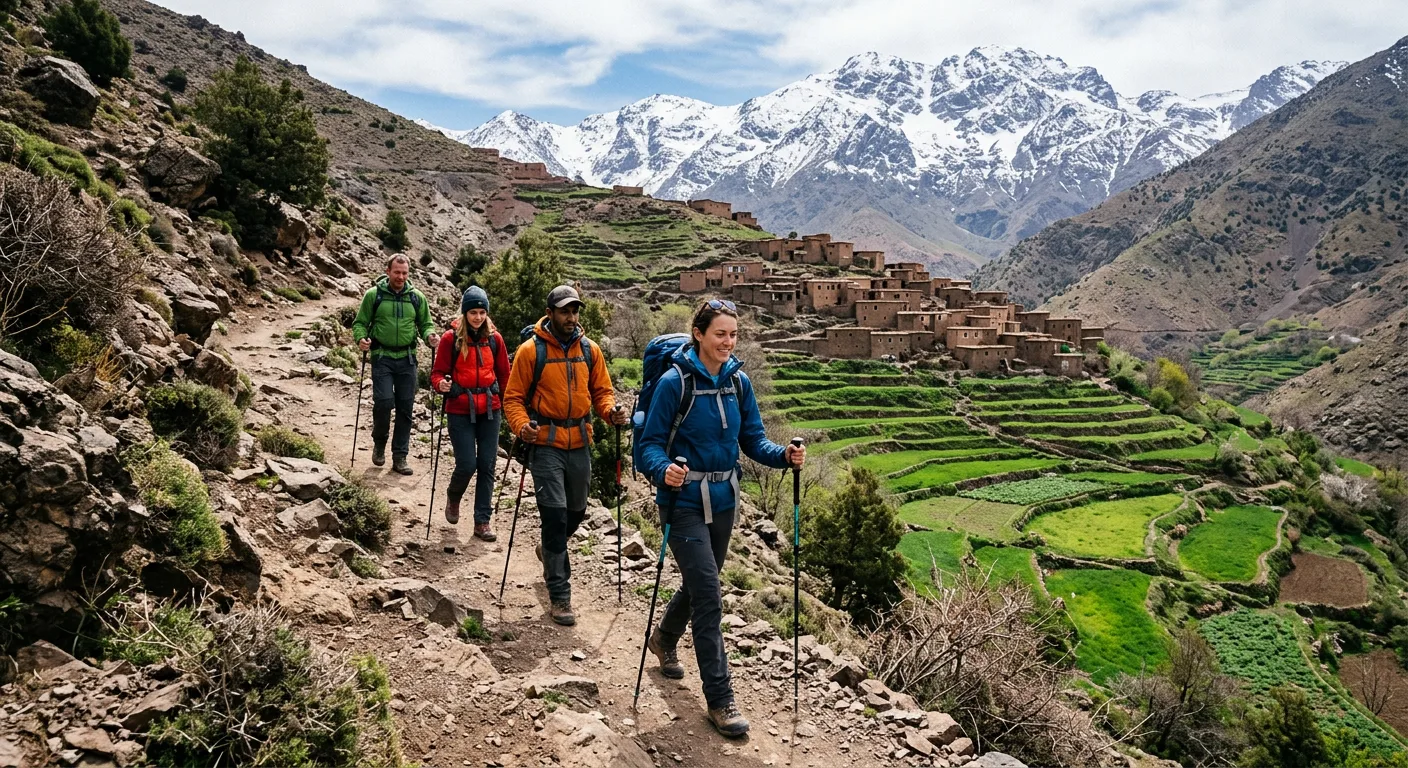
What makes trekking here different from the Alps or the Himalayas is the human landscape. Berber villages cling to every habitable slope. Stone-walled terraces climb impossible gradients. Mule paths centuries old connect communities that still run on seasonal rhythms. You don't just walk through scenery here — you walk through a living culture.
And the logistics are surprisingly accessible. Imlil, the main trailhead for Toubkal, is 90 minutes by taxi from Marrakech's Jemaa el-Fnaa. Guides, mules, and refuges are well-established. Costs are a fraction of comparable treks in Nepal or Patagonia. A two-day Toubkal summit trip starts from 1,500 MAD per person in a group — roughly $150 USD.
Morocco's Best Multi-Day Treks
Five classic routes spanning the full spectrum of Moroccan mountain terrain — from the country's highest summit to gentle valley walks.
Moderate-Strenuous
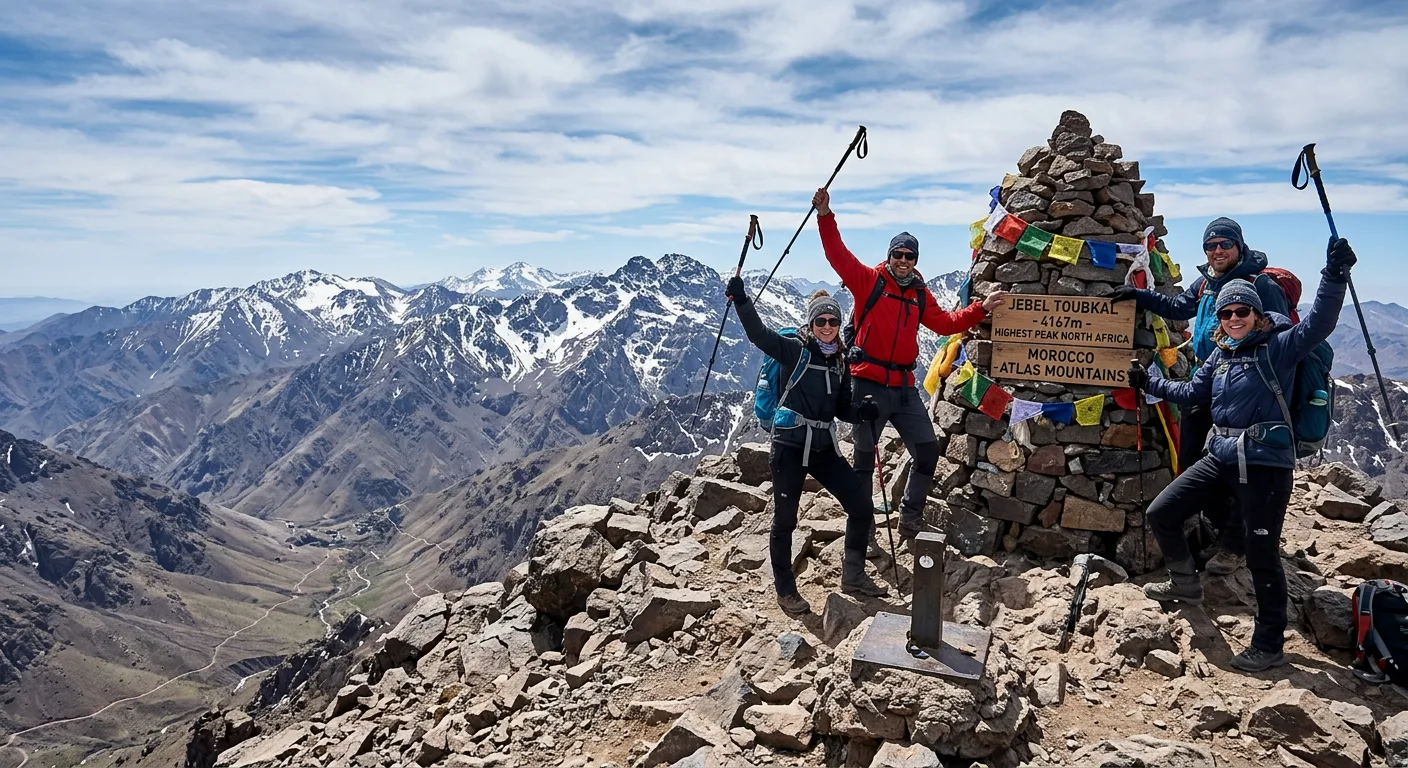
Mount Toubkal Summit
4,167m 2-3 days June to September (snow-free); April-May and October with crampons
North Africa's highest peak sits just 65km south of Marrakech. The standard route starts from Imlil (1,740m), climbs through walnut groves to the Toubkal Refuge at 3,207m on day one (5-6 hours), then tackles the summit via the South Cwm on day two. The final 960m of ascent crosses steep, loose scree that demands patience and steady footing. Clear days reward you with views stretching from the Sahara to the Atlantic. A three-day itinerary via the Azzaden Valley adds variety and better acclimatization.
Highest peak in North Africa No technical climbing in summer Stunning Sahara-to-sea panoramas Accessible from Marrakech in 90 minutes
From 1,500 MAD per person (group), from 4,000 MAD (private)
Strenuous
M'Goun Traverse
4,071m 5-7 days June to September (high passes); gorge section possible April-October
Morocco's second-highest peak and a far wilder experience than Toubkal. The classic traverse runs from Ait Bougmez Valley over the M'Goun massif and down through the spectacular M'Goun Gorge to Kelaat M'Gouna in the Valley of Roses. You cross passes above 3,800m, camp beside rivers, and walk through a gorge so narrow you wade through ankle-deep water. Very few other trekkers. This is the trek for those who want Morocco's backcountry all to themselves.
Morocco's second-highest summit Dramatic gorge walking Almost no other trekkers Valley of Roses endpoint
From 4,500 MAD per person for 6 days (group of 4+)
Moderate
Jebel Saghro Circuit
2,712m (Amalou n'Mansour) 4-6 days October to April (too hot May-September)
A desert mountain range between the High Atlas and the Sahara, Jebel Saghro delivers volcanic pinnacles, basalt towers, and vast plateaus dotted with nomad camps. The terrain looks like something from another planet. Daytime temperatures stay pleasant in winter when the High Atlas is buried in snow, making this the perfect cold-season alternative. Nights are bitingly cold, dropping below freezing, but skies are crystalline. Camp among the rock formations and share tea with semi-nomadic Ait Atta families still herding goats across these ancient landscapes.
Perfect winter trek Volcanic rock formations Nomadic Ait Atta encounters Clear skies and zero crowds
From 3,500 MAD per person for 5 days (group)
Easy-Moderate
Ait Bougmez Valley Walks
1,800-2,200m 2-5 days April to November (road can close in winter snow)
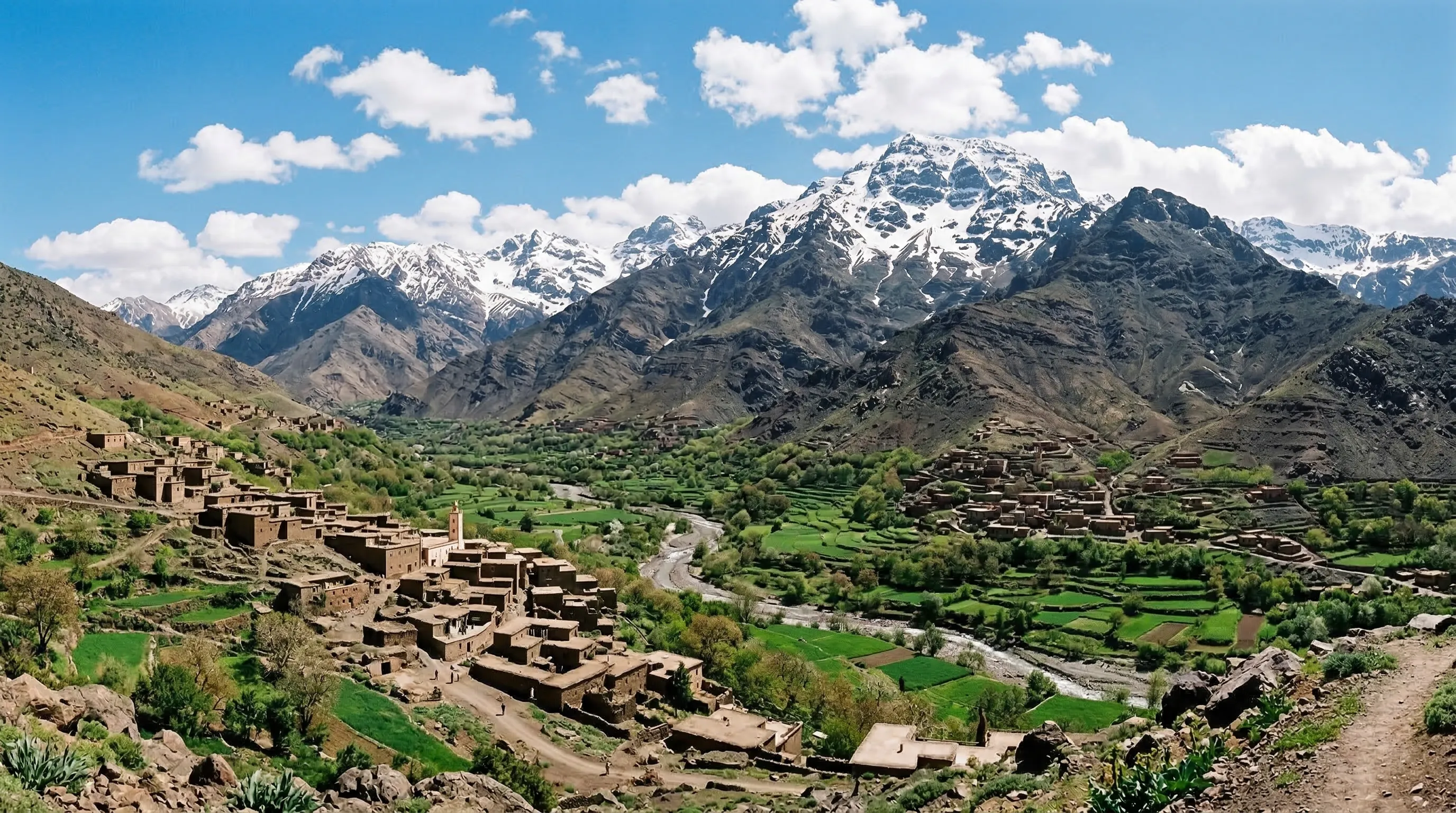
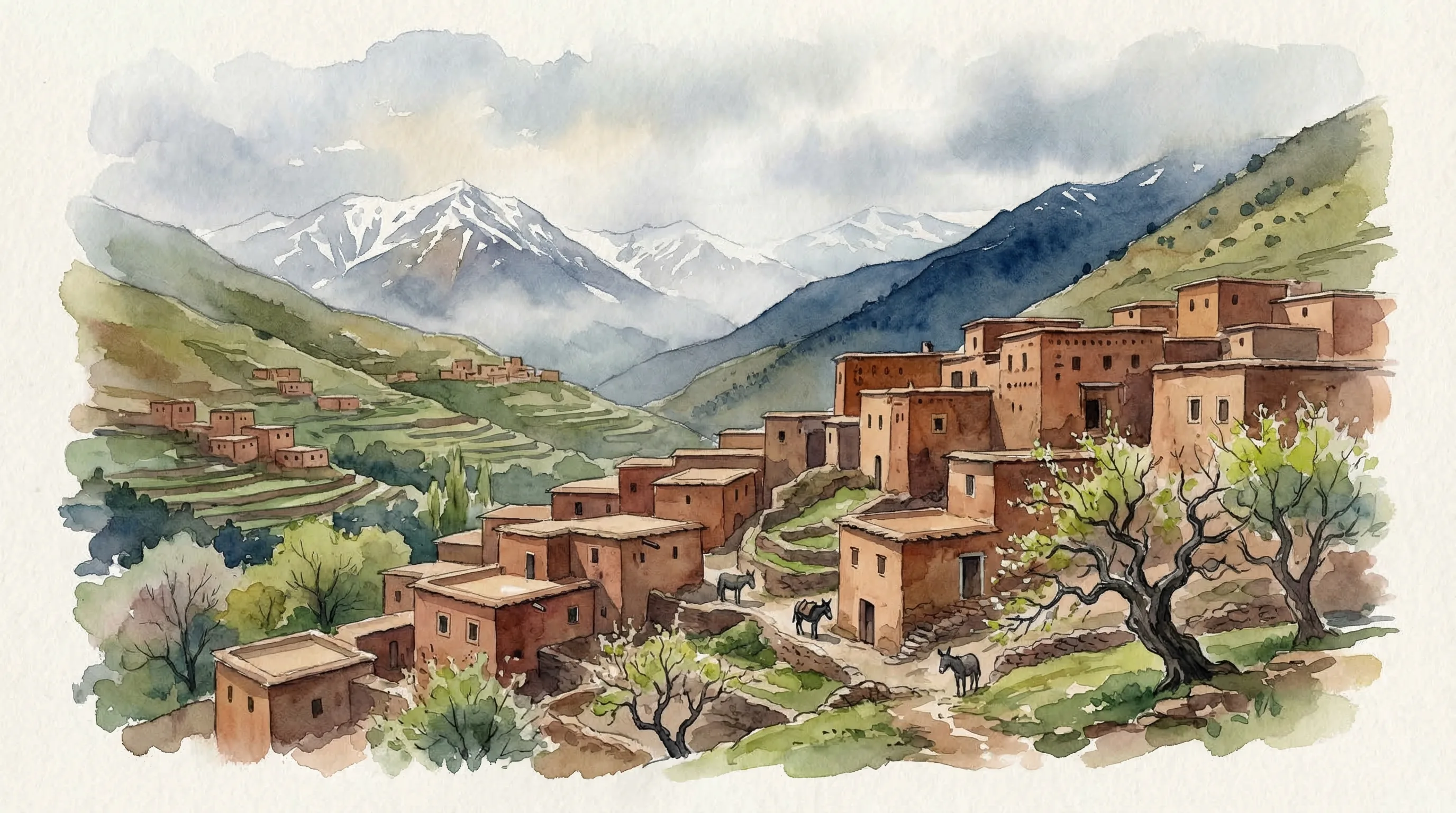
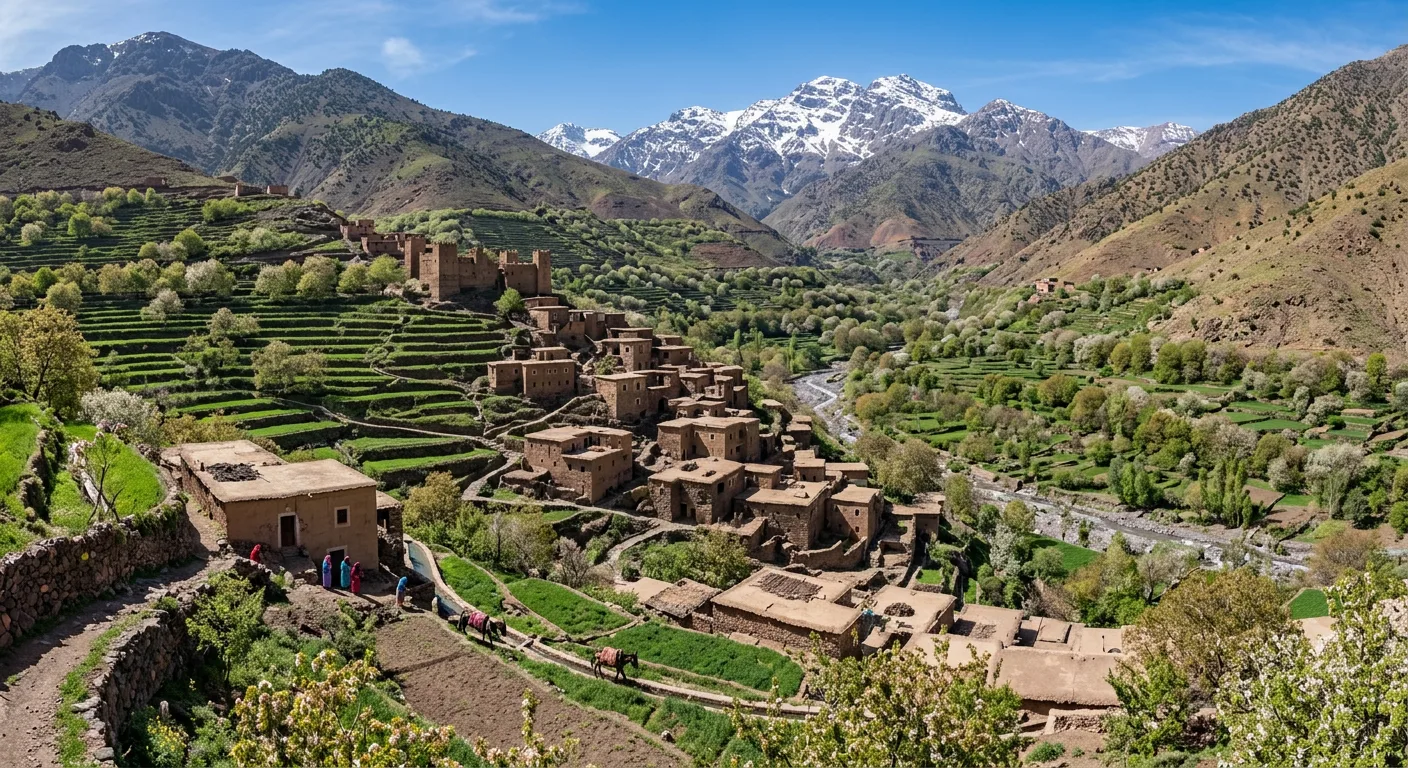
Called the "Happy Valley" by locals, Ait Bougmez stretches 30km through the Central High Atlas. The walking here is gentler: terraced wheat fields, walnut orchards, ancient communal granaries perched on hilltops, and Berber villages where daily life has barely changed in centuries. A network of mule paths connects villages, and you can string together day walks or do a point-to-point traverse. The valley also serves as a base for tackling M'Goun. Less tourist infrastructure means more authentic interactions.
Gentle terrain for all levels Centuries-old Berber villages Ancient granary visits Base camp for M'Goun
From 300 MAD per day for guide; gite stays from 200 MAD with meals
Easy-Moderate
Rif Mountains & Chefchaouen
2,448m (Jebel Tidiquin) 1-4 days March to June, September to November (wet winters, hot summers)
The Rif range running along Morocco's northern Mediterranean coast stays green year-round, draped in cedar and cork oak forests. Chefchaouen, the famous blue city, sits at 600m and makes an ideal base for day hikes into the surrounding hills. The Talassemtane National Park shelters endangered Barbary macaques and the rare Moroccan fir. Trails climb to the "Bridge of God" natural rock arch and through the Akchour waterfalls. Multi-day treks connect mountain villages where Tarifit Berber is the first language.
Green forests and waterfalls Akchour falls day hike Bridge of God rock arch Barbary macaque sightings
From 250 MAD per day for a local guide
Day Hikes Near Marrakech
No multi-day commitment needed. These hikes start within 90 minutes of Marrakech and get you back in time for dinner in the medina.
Imlil to Aremd Village
5km round trip 2-3 hours Easy
A gentle walk from Imlil up to the traditional Berber village of Aremd at 1,940m. The path follows irrigation channels through walnut terraces with Toubkal looming above. Stop for mint tea on a rooftop terrace. Perfect first-day acclimatization walk or standalone half-day outing from Marrakech.
Ourika Valley Waterfalls
7km round trip 3-4 hours Easy-Moderate
Just 45 minutes from Marrakech, the Ourika Valley narrows into a gorge with seven cascading waterfalls. The trail follows the riverbed upward, crossing the water several times on stepping stones. The first two falls are straightforward; reaching the seventh requires scrambling over boulders. Local guides at the trailhead charge from 100 MAD. Avoid after heavy rain — flash floods are a real danger.
Azzaden Valley Loop
18km 7-8 hours Moderate-Strenuous
A full-day circuit from Imlil dropping into the spectacular Azzaden Valley via the Tizi n'Mzik pass (2,489m). You descend past isolated hamlets, cross the Azzaden river, and return via a different trail. Longer and more demanding than the Aremd walk, but far quieter. Pack lunch and plenty of water. Can be split into two days with an overnight in the Azzaden Trekking Lodge.
Oukaaimeden Plateau
10km 4-5 hours Moderate
Morocco's ski resort at 2,600m transforms into excellent hiking terrain from May to October. Rock engravings dating back 3,000 years dot the plateau, and the 360-degree views over the High Atlas are hard to beat. Drive 75 minutes from Marrakech, park at the resort, and walk the ridge trails. Altitude makes this more tiring than it looks on paper.
Guides, Mules & Logistics
Morocco has a well-organized trekking infrastructure. Here's how it works.
Licensed Mountain Guides
Since 2015, a licensed guide is legally required for treks above 3,000m and in national park areas. Licensed guides complete a rigorous two-year training program at CFAMM in Tabant, covering first aid, mountain rescue, languages, and cultural heritage. They carry official ID cards. Insist on seeing one.
From 500 MAD per day for a licensed mountain guide. Seasonal pricing may vary.
Local Village Guides
For lower-altitude walks and day hikes, local village guides know every path, shortcut, and family in the valley. They may not have official mountain guide certification, but their local knowledge is unbeatable. Hire through guesthouses or the Bureau des Guides in Imlil.
From 300 MAD per day for a local guide. Seasonal pricing may vary.
Mule Support
Mules carry gear, food, and camping equipment on multi-day treks. A single mule hauls up to 80kg and is led by a muleteer who also helps with camp setup and cooking. This lets you walk with just a daypack. Mule transport is arranged through your guide. Tip the muleteer separately at the end of the trek — from 50 MAD per day is standard.
From 200 MAD per day per mule (includes muleteer). Seasonal pricing may vary.
Fitness Preparation
You don't need to be an ultramarathon runner, but some preparation goes a long way — especially for high-altitude treks.
8 Weeks Before
Start with 30-minute walks four times per week. Build to 60-minute sessions including hills or stairs. Add a loaded daypack (8-10kg) twice a week. Cardiovascular fitness matters more than strength.
4 Weeks Before
Do one long walk per week (3-5 hours) on hilly terrain. Practice in the boots you'll wear in Morocco. Two shorter sessions mid-week. Target 15-20km on your longest walk. Break in boots completely.
Altitude Awareness
Above 3,000m, altitude affects everyone regardless of fitness. Ascend gradually. Sleep no more than 500m higher than the previous night. Drink 3-4L of water daily. Headache and nausea are warning signs — descend if they worsen. Diamox (consult your doctor) can help prevent symptoms.
Gear & Packing List
Morocco's mountains demand respect. Temperatures swing 30+ degrees between midday sun and pre-dawn cold at altitude. Pack for both extremes.
Footwear & Clothing
- Sturdy hiking boots (ankle support, broken in)
- Lightweight trail shoes for camp
- Moisture-wicking base layers (2-3)
- Fleece or insulating mid-layer
- Waterproof shell jacket
- Trekking trousers (zip-off recommended)
- Warm hat and sun hat
- Buff or neck gaiter for dust
- Gloves (essential above 3,000m)
Equipment
- Daypack 30-40L (or 60L for multi-day if no mules)
- Sleeping bag rated to -5C (refuges provide mattresses)
- Trekking poles (highly recommended)
- Headlamp with spare batteries
- Water bottles or hydration bladder (3L capacity)
- Water purification tablets or filter
- Sunglasses (UV400, Category 3-4)
- Sunscreen SPF 50+
Safety & Navigation
- Basic first-aid kit (blister plasters, painkillers, Imodium)
- Altitude sickness medication (Diamox, consult your doctor)
- Map of the area (paper backup)
- Phone with offline maps (maps.me or AllTrails)
- Emergency whistle
- Emergency foil blanket
- Travel insurance with mountain rescue coverage
Buying Gear in Morocco
Imlil has a few shops selling basic trekking supplies — gloves, hats, water bottles, snacks — but selection is limited and prices are tourist-inflated. Marrakech has Decathlon (in the Menara Mall) with good-quality budget gear. Bring specialized items from home. Crampons and ice axes can sometimes be rented from guides in Imlil for winter treks (from 100 MAD per item per day).
Mountain Accommodation
Forget luxury hotels. Up here, it's refuges, gites, and starlit camping. Each has its charm.
CAF Toubkal Refuge
Toubkal base, 3,207m Mountain refuge
The main staging post for Toubkal summit attempts. Dormitory bunks, basic kitchen, dining area, cold water only. Gets extremely crowded July-August with 80+ people. Book ahead in peak season through the CAF (Club Alpin Francais) or arrange through your guide.
From 150 MAD per night (members), from 200 MAD (non-members)
Les Mouflons Refuge
Near Toubkal Refuge, 3,207m Mountain refuge
A newer, privately run alternative to the CAF refuge. Cleaner facilities, smaller dormitories, and better food. Slightly more expensive but worth it for the improved comfort. Fills up fast — reservations essential in summer.
From 250 MAD per night with dinner and breakfast
Village Gites
Throughout the Atlas Guesthouse
Family-run guesthouses found in every trekking village. Mattresses on the floor in shared rooms, communal bathrooms, and home-cooked tagine for dinner. The best part of staying in gites is the cultural exchange — you eat with the family and hear stories over mint tea. Quality varies enormously.
From 150 MAD with dinner and breakfast, from 200 MAD half-board
Wild Camping
Above the tree line Tent
Legal and free above the cultivated zone. Multi-day treks on M'Goun and Saghro rely on camping. Guides arrange mules to carry tents and cooking equipment. You provide your sleeping bag; the team handles everything else. Falling asleep under the Atlas stars with zero light pollution is one of Morocco's great experiences.
Equipment included in guided trek packages
Best Trekking Seasons by Region
Morocco's trekking regions operate on different seasonal clocks. Pick the right region for the right month and you'll have ideal conditions.
High Atlas (Toubkal, M'Goun)
Best:June - September
Shoulder:April - May, October
Avoid:November - March (snow, ice)
Snow lingers above 3,500m until late May. Summer days reach 30C at altitude but nights drop to 0C. Crampons and ice axes needed October-May for summits.
Jebel Saghro & Anti-Atlas
Best:October - April
Shoulder:September, May
Avoid:June - August (extreme heat)
Winter daytime temps 15-20C, perfect for walking. Night temps plummet below 0C. Zero shade — carry extra water. This is your winter trekking destination.
Rif Mountains
Best:March - June, September - November
Shoulder:July (hot), February (wet)
Avoid:December - January (heavy rain/snow)
Wettest mountains in Morocco. Green and lush but trails get muddy. Spring wildflowers are spectacular. Summer can be humid.
Ait Bougmez Valley
Best:April - November
Shoulder:March (unpredictable)
Avoid:December - February (road closures)
The valley road from Azilal can close after heavy snow. Autumn harvest season (September-October) is culturally rich. Spring brings almond blossoms.
Safety on the Trail
Sun & Heat
UV intensity at 3,000m+ is ferocious. Apply SPF 50 every two hours, wear a wide-brimmed hat, and drink at least 3L of water per day. Start early — be walking by 7am to avoid the midday blaze.
Cold & Altitude
Temperatures above 3,500m can drop to -15C in winter and below freezing year-round overnight. Layer up. Hypothermia catches underprepared trekkers every season, even in summer.
Travel Insurance
Standard travel insurance rarely covers trekking above 2,500m. Check your policy carefully. Get coverage that includes helicopter evacuation and mountain rescue. World Nomads and Global Rescue are popular with Atlas trekkers.
Water & Food Safety
Never drink untreated stream water — livestock graze upstream. Use purification tablets or a filter. Guided treks include meals, but carry energy bars and dried fruit as backup. Village shops sell basics but stock is unpredictable.
Morocco's Trekking Landscapes
Mount Toubkal Summit
M'Goun Traverse
Ait Bougmez Valley
Frequently Asked Questions
Do I need a guide to trek in Morocco?
For Toubkal and all treks above 3,000m, a licensed mountain guide is legally required since 2015. Day hikes in the Ourika Valley or lower-altitude walks around Imlil can be done independently on marked trails. A guide is still recommended for safety, navigation, and cultural connection. Official mountain guides cost from 500 MAD per day; local village guides from 300 MAD per day.
What is the best time for trekking in Morocco?
It depends on the region. High Atlas summits (Toubkal, M'Goun) are best from mid-June through September when passes are snow-free. Jebel Saghro and the Anti-Atlas are ideal October through April — too hot in summer. The Rif Mountains peak in spring (March-June) with wildflowers and comfortable temperatures. Morocco has a trekking option for every month of the year.
How difficult is the Toubkal trek?
The standard two-day route rates moderate to strenuous. No technical climbing is required in summer — just steep scree and sustained uphill. The main challenge is altitude at 4,167m, where thin air slows everyone. Expect 5-6 hours to the refuge on day one and 4-5 hours to the summit on day two. A reasonable fitness level and comfortable walking 6-8 hours per day are needed. Winter ascents require crampons, ice axes, and mountaineering skills.
How much does a Toubkal trek cost?
A two-day guided group trek costs from 1,500 MAD to 3,000 MAD per person, covering guide, mule transport, refuge accommodation, and meals. Private guided treks start from 4,000 MAD for two days. Budget trekkers can arrange a guide in Imlil (from 500 MAD/day) and pay refuge beds (from 150 MAD/night) and meals separately. Seasonal pricing can change, especially in peak summer months.
What gear do I need for trekking in Morocco?
Essentials: sturdy hiking boots (broken in), 30-40L daypack, sun protection (SPF 50, hat, quality sunglasses), layered clothing for 30-degree temperature swings, a headlamp, water purification, and a first-aid kit. Multi-day treks need a sleeping bag rated to -5C for refuges. Trekking poles help enormously on steep descents. Bring rain gear in spring. Crampons and ice axes are necessary October through May for high summits.
Can beginners trek in Morocco?
Yes. Day hikes in the Ourika Valley (2-3 hours, easy terrain) and Imlil to Aremd (5km, gentle slopes) suit complete beginners. The Ait Bougmez Valley offers flat to rolling walks with stunning mountain backdrops. Even Toubkal is achievable for fit beginners who prepare with regular cardio training for 6-8 weeks. Start with shorter hikes and build up during your trip.
Are mountain refuges in Morocco comfortable?
Expect functional, not fancy. The CAF Toubkal Refuge at 3,207m has dormitory bunks for 80, basic toilets, cold showers, and a dining area. It gets packed in July-August. Les Mouflons refuge nearby is newer and cleaner. Village gites offer floor mattresses, shared bathrooms, and home-cooked meals. Always bring your own sleeping bag for warmth and hygiene. The experience is part of the adventure.
Continue Exploring Morocco
Atlas Mountains Guide
Complete guide to the High, Middle, and Anti-Atlas ranges including villages, drives, and cultural highlights.
Read moreCamping in Morocco
Wild camping rules, established campsites, desert bivouacs, and everything for sleeping under Moroccan skies.
Read moreBerber Culture Guide
Amazigh heritage, traditions, village life, crafts, and music — the culture you experience on every mountain trek.
Read moreBackpacking Morocco
Budget routes, hostel tips, transport hacks, and itineraries for independent travelers exploring Morocco.
Read moreReady to Hit the Trail?
Morocco's mountains are calling. Plan your Toubkal summit attempt, explore hidden valleys, or simply walk between Berber villages in the Atlas. The trails are waiting.