Discovering...
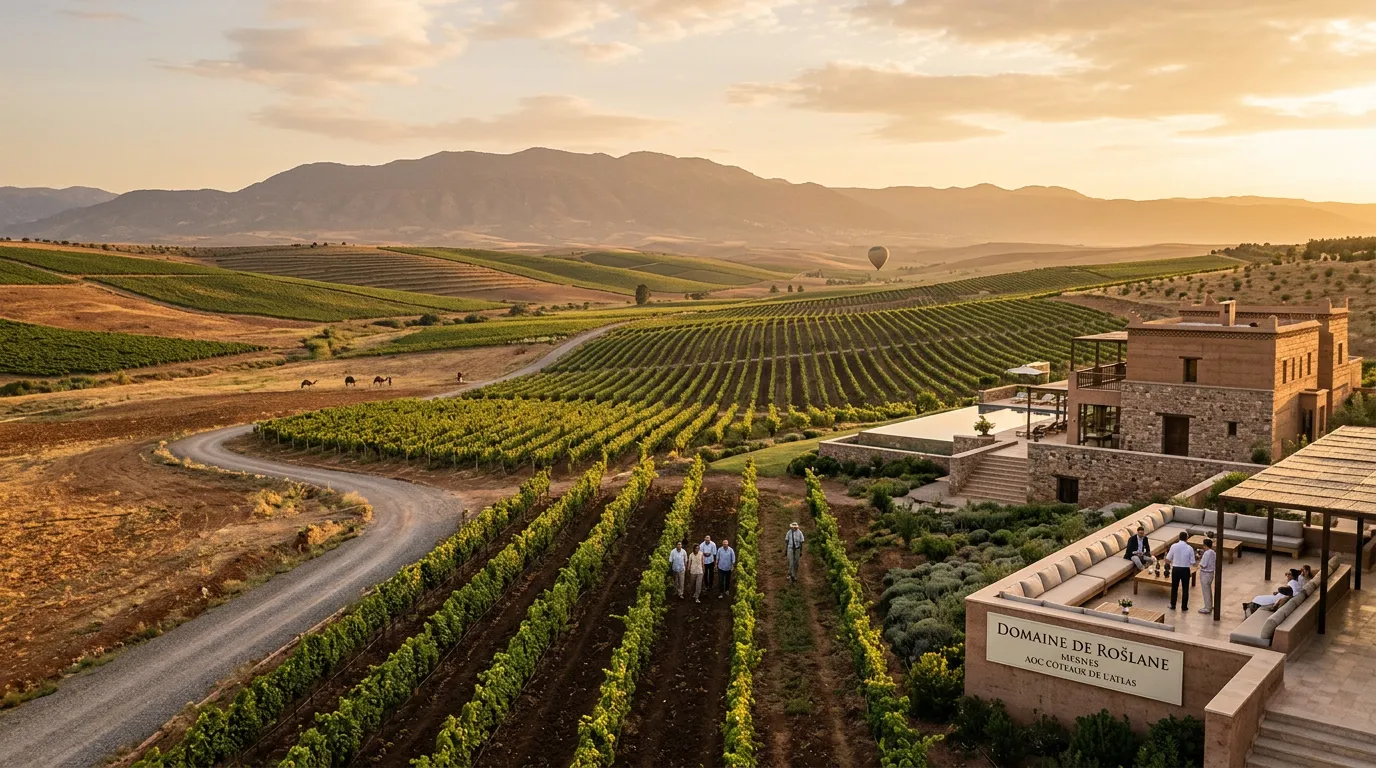
Morocco Wine Guide 2026
Five wine regions, world-class estates, and centuries of winemaking tradition. Everything you need to explore Moroccan wine — from vineyard visits and cellar tastings to finding the right bottle for your tagine.
A Brief History of Moroccan Wine
From Roman amphoras to French colonial estates to a modern renaissance.
Winemaking in Morocco predates Islam by over a thousand years. The Romans planted vineyards around the city of Volubilis — their westernmost outpost — in the 2nd century AD. Archaeological finds at the site include grape presses and amphorae fragments, confirming that the Meknes-Fes corridor has been wine country for nearly two millennia.
After the Arab conquests, viticulture continued on a reduced scale. Grapes were grown for table fruit and raisins, but winemaking persisted in pockets, particularly among Jewish and Christian communities. The tradition never fully disappeared.
The French Protectorate (1912-1956) transformed Moroccan wine into an industry. French settlers planted Cinsault, Carignan, and Grenache across the Meknes plateau, the Gharb plain, and the Berkane region near Algeria. By 1956, Morocco had over 55,000 hectares under vine — more than many European countries. Most of this production was bulk wine shipped to France for blending.
Independence brought upheaval. The Moroccan government nationalized many estates, and vineyard acreage dropped by more than half. Quality suffered for decades. The turnaround began in the late 1990s when private investors — both Moroccan and foreign — started planting premium grape varieties, importing modern equipment, and hiring trained enologists. Estates like Chateau Roslane, Domaine de la Zouina, and Val d'Argan now produce wines that win medals at international competitions.
Today Morocco has roughly 30,000 hectares of vineyards and produces around 35 million bottles annually. The country holds two AOG designations (Guerrouane and Berkane), modeled on the French appellation system. While most Moroccan wine is consumed domestically, exports to Europe are growing, and several labels are available in specialty wine shops from London to New York.
Five Wine Regions of Morocco
Morocco's winemaking geography spans from Atlantic coastal vineyards to high-altitude Atlas foothill estates.
Meknes / Guerrouane
~60% of national output
The heartland of Moroccan winemaking. The Saiss Plain around Meknes and the Guerrouane AOG (Appellation d'Origine Garantie) produce roughly 60% of Morocco's wine. High-altitude vineyards benefit from cool nights that preserve acidity in the grapes. Chateau Roslane and Domaine de la Zouina are both located here.
Elevation: 500-700m
Climate: Continental with hot dry summers and cold winters
Key Grapes: Cabernet Sauvignon, Merlot, Syrah, Cinsault, Grenache
Berkane / Oriental
~15% of national output
The eastern region near the Algerian border has a long viticultural history. Hot summers produce concentrated, high-alcohol reds and robust rosés. Berkane also grows excellent table grapes and Muscat for dessert wines. Les Celliers de Meknes sources considerable fruit from this area.
Elevation: 200-400m
Climate: Mediterranean with Saharan influence
Key Grapes: Cinsault, Carignan, Grenache, Muscat
Gharb / Northern Plains
~12% of national output
The flat, fertile Gharb plain between Rabat and Kenitra produces bulk wine grapes for everyday table wine. High yields and moderate quality characterize this region. Most production feeds the mass-market Boulaouane and Sidi Brahim labels rather than premium bottlings.
Elevation: 50-200m
Climate: Oceanic influence, mild and humid
Key Grapes: Cinsault, Carignan, Grenache
Zenata / Casablanca Hinterland
~8% of national output
The area around Zenata and Benslimane, east of Casablanca, benefits from Atlantic fog and moisture. Thalvin operates major vinification facilities here. The maritime climate produces softer, more elegant reds than the continental Meknes region.
Elevation: 100-300m
Climate: Atlantic maritime, foggy mornings
Key Grapes: Cabernet Sauvignon, Merlot, Cinsault
Beni M'tir / Atlas Foothills
~5% of national output
The highest-altitude vineyards in Morocco sit in the Middle Atlas foothills south of Fes. Cool nights and well-drained volcanic soils produce structured reds with firm tannins and good aging potential. This small region is attracting renewed investment from producers seeking premium terroir.
Elevation: 700-1,000m
Climate: Cool continental, significant diurnal temperature swing
Key Grapes: Syrah, Cabernet Sauvignon, Tempranillo
Top Wineries to Visit
Morocco's best estates welcome visitors for tours, tastings, and vineyard lunches. Advance booking is required at all of them.
Chateau Roslane (Les Celliers de Meknes)
Meknes| Founded 1999 (estate); Celliers de Meknes since 1964
Morocco's most celebrated winery. The Premier Cru — a blend of Cabernet Sauvignon, Merlot, and Syrah — has collected medals at Decanter, Brussels, and Mundus Vini. The modern estate sits on 2,000 hectares near the Roman ruins of Volubilis. Tours include vineyard walks, barrel cellar visits, and a five-wine tasting on a terrace overlooking the vines.
Flagship: Chateau Roslane Premier Cru (red blend)
Tours: From 200 MAD with tasting; lunch pairing from 500 MAD
Booking: Book at least 3 days ahead via their website or by phone.
Domaine de la Zouina
Meknes| Founded 2001
A French-Moroccan joint venture producing some of Morocco's most approachable wines. The 700-hectare estate near El Hajeb grows Syrah, Cabernet, Grenache, and Chardonnay at 600m elevation. Their Volubilia label is the entry point, while Epicuria targets the premium market. The on-site restaurant pairs wines with Moroccan-Mediterranean fusion dishes.
Flagship: Volubilia Rouge, Volubilia Rosé, Epicuria
Tours: From 150 MAD for a guided tasting; full visit with lunch from 450 MAD
Booking: Reservations required. Email or book through the website.
Thalvin / Domaine de la Ferme Rouge
Zenata / Benslimane| Founded 1923 (Thalvin); Ferme Rouge launched 2010
One of Morocco's oldest producers. Thalvin operates one of the largest vinification plants in the country and distributes brands including Beauvallon and Ksar. Their premium project, Domaine de la Ferme Rouge, near Benslimane, produces single-varietal Syrah and blends that rival anything from Meknes. Limited-production wines sell out quickly.
Flagship: Terre Rouge, La Ferme Rouge Syrah, Ait Souala
Tours: From 200 MAD by appointment only
Booking: Contact via Thalvin's Casablanca office. Very limited visitor availability.
Val d'Argan
Essaouira| Founded 1994
Morocco's only Atlantic coastal winery. French winemaker Charles Melia planted vines 30 km from Essaouira, where argan trees and Atlantic breezes create a unique terroir. The wines — particularly the rosé — carry saline minerality and fresh acidity that pair beautifully with the local seafood. The estate has an excellent on-site restaurant.
Flagship: Val d'Argan Rouge, Rosé, Le Comptoir du Vin
Tours: From 200 MAD with vineyard walk and tasting; lunch from 400 MAD
Booking: Book through their website. Closed Sundays.
Volubilia (Diana Holding)
Meknes| Founded 2003
Named after the nearby Roman city of Volubilis, this estate focuses on modern winemaking techniques with temperature-controlled stainless steel fermentation and French oak aging. Their Prestige range blends Cabernet Sauvignon with Syrah for a rich, structured red. Production is smaller than the big Meknes houses, so bottles are harder to find outside Morocco.
Flagship: Volubilia Prestige, Ait Souala, CB Signature
Tours: From 180 MAD; limited availability
Booking: Call ahead. Tours arranged for small groups only.
Grape Varieties of Morocco
French grapes dominate, but the North African terroir gives them a distinct character — riper fruit, softer tannins, and warm spice notes.
Syrah
Red
Morocco's star red grape. Thrives in the heat of the Meknes plateau and produces dark, peppery wines with blackberry and violet notes. Used as a single varietal and as the backbone of top blends like Chateau Roslane Premier Cru.
Cabernet Sauvignon
Red
Widely planted across Meknes and Zenata. Moroccan Cabernets tend to be ripe and full-bodied with cassis, cedar, and warm spice. Often blended with Merlot and Syrah. Tannins soften quickly in the hot climate, making young wines more approachable than their European counterparts.
Cinsault
Red / Rosé / Vin Gris
The traditional workhorse grape of Moroccan viticulture. Drought-resistant and prolific, Cinsault is the primary grape for vin gris — Morocco's signature copper-pink wine. Also used in bulk rosés and as a blending partner in everyday reds. Light-bodied with strawberry and melon flavors.
Grenache
Red / Rosé
Brought to Morocco from southern France and Spain. Grenache loves heat and poor soils, making it well suited to the Berkane and Meknes regions. Produces generous, fruity reds with raspberry and dried herb character. Frequently blended with Syrah and Carignan.
Chardonnay
White
The leading white grape in Morocco, planted mostly around Meknes. Moroccan Chardonnays are typically unoaked or lightly oaked, citrus-driven, and meant to be drunk young. Domaine de la Zouina produces one of the more complex examples with partial barrel fermentation.
Vermentino
White
A Mediterranean grape that Val d'Argan has pioneered near Essaouira. The Atlantic influence gives the wine crisp acidity, citrus peel, and a saline finish. Still rare in Morocco but gaining attention as white wine demand grows among younger urban consumers.
Moroccan Wine Styles
Four distinct styles make up the Moroccan wine landscape.
Red (Rouge)
Morocco's strength. Full-bodied blends of Cabernet Sauvignon, Syrah, and Merlot dominate the premium segment. Expect ripe dark fruit, warm spice, and soft tannins. The best reds come from the Meknes plateau where altitude keeps nights cool. Serve at 16-18 C with tagine, grilled lamb, or aged cheese.
Vin Gris (Grey Wine)
Morocco's signature style. Paler than rosé, vin gris is made by pressing red grapes (usually Cinsault or Grenache) with almost no skin contact. The result is copper-pink with strawberry and melon notes. Boulaouane vin gris is Morocco's best-selling wine. Serve chilled at 8-10 C with salads, seafood, or pastilla.
Rosé
Deeper in color and flavor than vin gris. Moroccan rosés — often from Grenache and Syrah — show red berry fruit, a dry finish, and enough body to stand up to spiced dishes. Val d'Argan and Domaine de la Zouina produce the standout bottlings. Serve at 10-12 C with chicken tagine, grilled vegetables, or briouats.
White (Blanc)
A small but growing category representing less than 15% of production. Chardonnay and Sauvignon Blanc from Meknes, and Vermentino from Val d'Argan near Essaouira, produce crisp whites with citrus and floral notes. Quality has improved dramatically since 2010. Serve cold at 8-10 C with grilled fish and Moroccan salads.
Pairing Wine with Moroccan Food
Moroccan cuisine — with its balance of sweet, savory, and spice — pairs remarkably well with local wines. The key is matching weight and intensity.
Vin Gris (Boulaouane, Celliers de Meknes)
Serve at 8-10 C
Pair with: Grilled sardines, Moroccan salads, pastilla au poulet, couscous with seven vegetables, light tagines
Rosé (Val d'Argan, Zouina)
Serve at 10-12 C
Pair with: Seafood bastilla, grilled prawns, zaalouk, briouats, harira soup, chicken tagine with olives
Full-Bodied Red (Chateau Roslane, Epicuria)
Serve at 16-18 C
Pair with: Lamb tagine with prunes, tangia, mechoui, grilled merguez, aged goat cheese, trid
Medium Red (Volubilia Rouge, Terre Rouge)
Serve at 14-16 C
Pair with: Chicken tagine with preserved lemons, kefta tagine, Moroccan beef brochettes, rfissa
White (Zouina Chardonnay, Val d'Argan Blanc)
Serve at 8-10 C
Pair with: Grilled fish, oysters from Dakhla, shrimp tagine, fresh goat cheese, fruit-based desserts
Pairing Tip
Moroccan dishes with dried fruit (tagine with prunes, pastilla) work best with medium-bodied reds that have some residual sweetness perception. Heavily spiced dishes (ras el hanout, harissa) can overwhelm delicate whites — reach for a vin gris or rosé instead. When in doubt, Boulaouane vin gris pairs with nearly everything on a Moroccan table.
Wine Bars & Venues by City
Where to drink Moroccan wine in the country's major cities. All venues are licensed and serve alcohol legally.
Casablanca
Le Petit Rocher
Seafront wine bar with an extensive Moroccan wine list. Glass from 50 MAD.
La Sqala
Atmospheric restaurant inside an 18th-century bastion. Good Moroccan wine selection.
Sky 28 (Hotel Kenzi Tower)
Rooftop bar with panoramic views and premium Moroccan wines by the glass.
Marrakech
Barometre
Popular wine bar in Gueliz with a strong Moroccan and French list. Glass from 60 MAD.
Le Comptoir Darna
Dinner and live entertainment with a curated selection of Moroccan labels.
Grand Cafe de la Poste
Colonial-era brasserie serving wine in a relaxed garden terrace setting.
Rabat
Le Dhow
A converted wooden boat on the Bou Regreg river serving Moroccan wines. Glass from 50 MAD.
Dar Zaki
Upscale restaurant with a strong Meknes-focused wine list.
Essaouira
Le Comptoir du Vin (Val d'Argan)
The winery's own wine bar in the medina. Tasting flights from 100 MAD.
Taros
Rooftop terrace overlooking the port. Serves Val d'Argan and other Moroccan wines.
Buying Wine in Morocco
A practical guide to finding, purchasing, and taking home Moroccan wine.
Supermarkets
Carrefour, Marjane, and Acima supermarkets stock wine in a dedicated (often curtained-off) alcohol section. Selection varies by location — Marjane stores in Casablanca and Rabat carry the widest range. Prices start from 50 MAD for Boulaouane vin gris and from 80 MAD for mid-range reds. Imported French and Spanish wines from 120 MAD. The alcohol section typically closes during Ramadan.
Specialist Wine Shops (Cavistes)
Casablanca, Marrakech, and Rabat each have a handful of dedicated wine merchants. These cavistes stock the full range of premium Moroccan labels alongside imported bottles. Staff can recommend wines and help assemble mixed cases. Expect to pay from 80 to 400 MAD for Moroccan bottles and from 150 MAD for imports. Some offer delivery within the city.
Winery Tasting Rooms
Buying direct from the winery is the best way to access limited-production wines and older vintages. Chateau Roslane, Domaine de la Zouina, and Val d'Argan all sell bottles from their tasting rooms, often at cellar-door prices slightly below retail. Ask about mixed cases and shipping if you want to take bottles home.
Taking Wine Home
Morocco allows export of wine in personal luggage. Check your airline's liquid rules for checked baggage — most allow wine if properly wrapped. Duty-free shops at Casablanca and Marrakech airports stock a limited selection. Be aware of your home country's import limits: the EU allows 4 liters of still wine, the US allows 1 liter duty-free, and the UK allows £390 worth of goods.
Alcohol Laws & Etiquette
Morocco has a nuanced relationship with alcohol. These rules will keep you informed and respectful.
Wine is legal
Morocco produces, sells, and exports wine legally. It is one of the few Muslim-majority countries with an active domestic wine industry. Tourists can buy and drink wine without restriction at licensed venues.
No public drinking
Consuming alcohol in public spaces — streets, parks, beaches — is illegal. Drink only in licensed restaurants, bars, hotels, or private residences. Public intoxication can result in fines or detention.
Ramadan restrictions
During Ramadan, many shops and supermarkets close their alcohol sections. Hotels and licensed tourist restaurants usually continue serving wine to non-Muslim guests. If visiting during Ramadan, stock up beforehand or rely on hotel bars. Drinking alcohol in public is especially disrespectful during this period.
Social sensitivity
Many Moroccans abstain from alcohol for religious reasons. Do not offer wine to Muslim hosts or assume it is welcome. In rural areas and conservative towns, alcohol may not be available or visible. In cosmopolitan cities like Casablanca, Marrakech, and Rabat, wine culture is more open — many Moroccans do drink socially.
Tipping at wine venues
At restaurants, tip 10-15% on the total bill including wine. At winery tasting rooms, tipping is appreciated but not expected — from 20 to 50 MAD for your guide is a kind gesture. Wine bars follow standard restaurant tipping customs.
Driving laws
Morocco's blood alcohol limit for drivers is 0.02% — effectively zero tolerance. Police set up checkpoints, especially on highways near wine regions and outside cities at night. If you plan to visit wineries and taste, hire a driver or arrange transport through your hotel. From 500 MAD for a half-day driver in the Meknes area.
Planning a Wine Tour
Practical logistics for visiting Morocco's wine country.
Best Time to Visit
September through November is harvest season — the most exciting time to visit wineries. Spring (March-May) offers mild weather and green vineyards. Summer is hot in the Meknes region (35-40 C) but tastings rooms are air-conditioned. Avoid Ramadan if wine is a priority, as some venues reduce service.
Getting to Wine Country
The Meknes wine region is 2.5 hours from Rabat and 3 hours from Casablanca by car. Trains run to Meknes from both cities (from 90 MAD). From Meknes, hire a driver (from 500 MAD half-day) to reach the estates, which are scattered across the countryside with limited public transport. Val d'Argan is 30 minutes from Essaouira by taxi (from 150 MAD).
Sample Itinerary: Meknes Wine Day
Morning: drive to Chateau Roslane for a vineyard tour and tasting (from 200 MAD). Midday: lunch at Domaine de la Zouina's restaurant with wine pairing (from 450 MAD). Afternoon: visit the Roman ruins of Volubilis (from 70 MAD entry), just 30 minutes from the vineyards. Evening: return to Meknes medina for dinner. Total budget from 1,200 MAD including driver.
Organized Wine Tours
Several tour operators offer guided wine experiences from Marrakech, Fes, and Casablanca. Full-day wine tours including transport, two winery visits, tastings, and lunch start from 1,500 MAD per person. Multi-day wine and culture itineraries combining Meknes, Fes, Volubilis, and the Middle Atlas start from 4,000 MAD. Seasonal pricing can change during peak travel months.
Wine Price Guide
What to expect to pay across different venues. Seasonal pricing can change, especially for limited releases and during peak tourist season.
| Item | Price Range |
|---|---|
| Entry-level bottle (supermarket) | From 50 MAD |
| Mid-range bottle (Volubilia, Médaillon) | From 80 to 150 MAD |
| Premium estate bottle | From 150 to 400 MAD |
| Glass of wine at a restaurant | From 40 to 100 MAD |
| Bottle at a restaurant | From 150 to 600 MAD |
| Winery tasting (per person) | From 150 to 500 MAD |
| Winery lunch pairing | From 400 to 800 MAD |
| Full-day wine tour (with transport) | From 1,500 MAD |
| Imported French/Spanish bottle | From 120 MAD |
Frequently Asked Questions
Answers to the most common questions travelers ask about wine in Morocco.
Is wine legal in Morocco?
Yes. Morocco is a Muslim-majority country, but wine production and consumption are fully legal. Licensed restaurants, hotels, bars, and supermarkets sell wine throughout major cities. Non-Muslim tourists can purchase and drink wine freely. Public intoxication, however, is illegal and socially unacceptable.
What is the best Moroccan wine to try first?
Start with Chateau Roslane Premier Cru, an award-winning red blend from the Meknes region. Domaine de la Zouina Volubilia Rouge is another excellent pick — approachable, fruit-forward, and widely available. For rosé, try Val d'Argan Rosé from Essaouira. For a genuine Moroccan experience, order Boulaouane vin gris, the country's most popular wine.
How much does wine cost in Morocco?
Moroccan wine starts from 50 MAD per bottle in supermarkets for entry-level labels like Boulaouane. Mid-range bottles from Volubilia or Médaillon cost from 80 to 150 MAD. Premium estate wines (Chateau Roslane Premier Cru, Val d'Argan) run from 150 to 400 MAD. In restaurants, expect from 150 to 600 MAD per bottle. A glass of wine at a licensed restaurant costs from 40 to 100 MAD. Seasonal pricing can change for limited releases.
Can I visit Moroccan wineries for tastings?
Several estates welcome visitors. Chateau Roslane, Domaine de la Zouina, and Val d'Argan all offer tours and tastings. Booking ahead is essential because most do not accept walk-ins. Tours cost from 150 to 500 MAD per person and include a vineyard walk, cellar visit, and multi-wine tasting. Some estates also offer lunch pairings from 400 MAD.
Where can I buy wine in Morocco?
Licensed supermarkets like Carrefour, Marjane, and Acima stock Moroccan and imported wines in a dedicated (often curtained-off) section. Specialized wine shops called cavistes in Casablanca, Marrakech, and Rabat carry a wider selection. You can also buy direct from winery tasting rooms. Note: most alcohol sections close during Ramadan. In smaller towns, wine may not be available at all.
What is Moroccan vin gris (grey wine)?
Vin gris is a Moroccan specialty — a very pale rosé made by pressing red grapes (typically Cinsault or Grenache) with minimal skin contact. The result is a copper-pink wine lighter than standard rosé, with strawberry, white peach, and melon notes. Boulaouane produces the most popular version, starting from 50 MAD per bottle. It pairs well with tagines, grilled fish, and salads.
Can I drink wine during Ramadan in Morocco?
During Ramadan, many shops and supermarkets close their alcohol sections. Hotels and licensed tourist-oriented restaurants usually continue serving wine to non-Muslim guests. If visiting during Ramadan, stock up before the holy month begins or rely on hotel bars and international restaurants. Drinking in public spaces is illegal year-round.
What grape varieties grow in Morocco?
Morocco grows mostly French grape varieties introduced during the Protectorate era. For reds: Cabernet Sauvignon, Merlot, Syrah, Grenache, Carignan, and Cinsault. For whites: Chardonnay, Sauvignon Blanc, Muscat, Clairette, and Vermentino. A few estates experiment with indigenous Moroccan varietals, but commercial bottlings remain dominated by international grapes.
Related Travel Guides
Morocco Nightlife Guide
Bars, clubs, rooftop lounges, and live music venues across Casablanca, Marrakech, and Rabat.
Read GuideMorocco Restaurants Guide
The best restaurants in Morocco — from riad dining to street food stalls to fine dining.
Read GuideMoroccan Food Guide
Tagines, couscous, pastilla, street food, and 50+ must-try dishes across the country.
Read GuideMeknes City Guide
The imperial city at the heart of Morocco's wine country — Bab Mansour, Moulay Ismail, and Volubilis.
Read GuideReady to Explore Moroccan Wine Country?
From the Meknes plateau to the Atlantic coast, Morocco's wine regions are waiting. Plan your vineyard visits, book your tastings, and discover a winemaking tradition that stretches back to the Romans.