Discovering...
Surfing in Morocco
From Taghazout's legendary right-hand point breaks to the longest wave in Africa at Imsouane, Morocco is one of the world's premier surf destinations. Consistent Atlantic swell, warm culture, and unbeatable value.
Why Surf Morocco?
Morocco sits at the crossroads of Atlantic power and African warmth, creating one of the most complete surf destinations on the planet.
Morocco's position at the northwestern tip of Africa makes it a natural magnet for North Atlantic swell. Every winter, powerful storm systems spinning across the Atlantic send consistent groundswells directly at Morocco's 2,900-kilometer coastline. These swells wrap around headlands and reefs, creating an extraordinary variety of waves from gentle beach breaks to world-class point breaks that can rival anything in Portugal, Indonesia, or California.
But waves alone do not make a great surf destination. What sets Morocco apart is the complete package: a warm, sunny climate that rarely drops below 18C even in winter, a rich culture steeped in Berber and Arabic hospitality, some of the best food in Africa (tagine, fresh seafood, mint tea), and prices that make even budget-conscious surfers feel wealthy. A week-long surf trip to Morocco, including flights from Europe, accommodation, meals, and board rental, can cost less than a weekend at many European surf spots.
Consistent Atlantic Swell
October to March delivers reliable 3-15ft swells from North Atlantic storm systems, with 250+ surfable days per year along the coast.
Warm Climate Year-Round
Air temperatures of 18-30C and 300+ sunshine days per year. Even in winter, post-surf lounging on the terrace is standard.
Incredible Value
Board rental from 100 MAD/day (10 EUR), surf camps from 1,500 MAD/week, tagine dinners for 40-60 MAD. A fraction of European prices.
Rich Culture
Berber hospitality, UNESCO medinas, hammam rituals, souk shopping, and some of the best food in Africa surround every surf session.
Top Surf Spots in Morocco
From world-class point breaks to mellow longboard waves, Morocco's coast has a wave for every level.
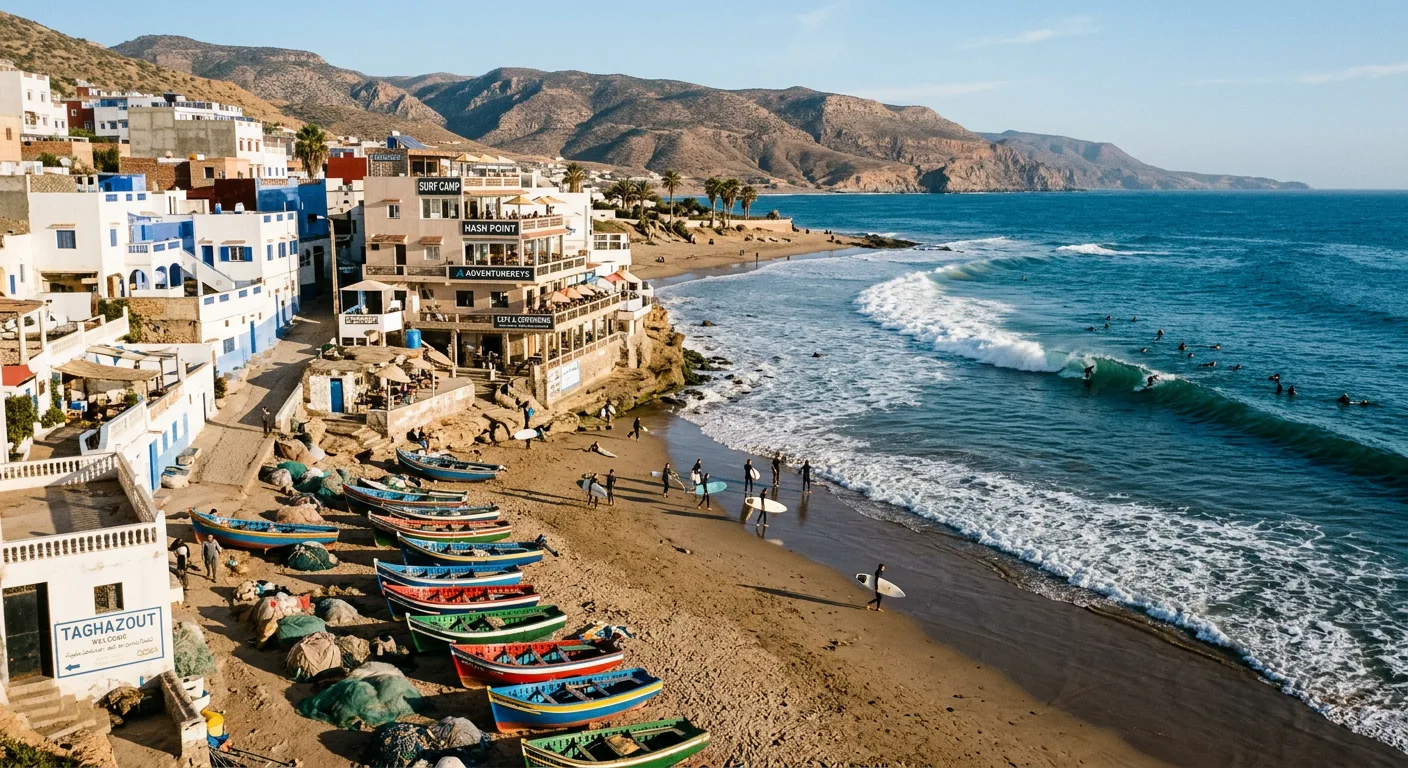
Morocco's Surf Capital
Taghazout
A former fishing village transformed into a world-class surf hub, with more quality breaks per kilometer than almost anywhere on Earth.
The Breaks
The 30-kilometer stretch between Taghazout and Tamraght contains a remarkable concentration of world-class waves. Anchor Point, just north of the village, is the headliner: a long, fast, mechanical right-hand point break peeling for up to 300 meters over a boulder reef. It needs a solid northwest swell to fire, and when it does, it draws surfers from around the globe.
North of Anchor lies Killer Point, a heavy, powerful right that needs even bigger swell to break. Beyond that, Boilers is Taghazout's heaviest wave, a dredging slab that only works on the biggest winter swells. For less experienced surfers, Panoramas and Hash Point offer friendlier waves closer to the village.
Seasons at Taghazout
Oct - Dec — Early Season
First swells arrive. Water still warm (20C). Fewer crowds. Great for intermediates as swell builds gradually.
Jan - Mar — Peak Season
Biggest, most consistent swells. Cooler water (16-17C). Most crowded. World-class conditions at all breaks.
Apr - Jun — Late Season
Swell decreasing but still surfable. Warmer weather. Great for beginners at mellow spots.
Jul - Sep — Off-Season
Small, inconsistent surf. Good for absolute beginners at beach breaks. Surf camps offer discounts.
Taghazout Surf Breaks
Anchor Point
Advanced Right-hand point break October - March
One of Africa's most celebrated waves. A long, fast, mechanical right-hander that peels over a boulder-strewn reef for up to 300 meters on a solid swell. The wave has multiple sections including a steep takeoff, a racing wall section, and a reforming inside. On big days the paddle-out alone is a serious challenge. This is Morocco's marquee wave and draws surfers from across the world during winter.
Up to 300m ridesConsistent in winterWorld-class qualityPhotogenic setting
Hash Point
Intermediate - Advanced Right-hand point break October - April
Located just south of Anchor Point, Hash Point is a more accessible right-hand point break that picks up more swell and works on smaller days. The wave offers long, workable walls ideal for progressing surfers, with multiple sections that allow for maneuvers. It can get crowded as it is one of the more user-friendly quality waves in the area, but the atmosphere is generally friendly.
More consistent than AnchorLong workable wallsGood progression waveClose to village
Killer Point
Advanced - Expert Right-hand reef break November - February
Named, legend says, after orcas once spotted offshore, Killer Point is a heavy, powerful right that breaks over a shallow rock shelf just north of Anchor Point. It needs a solid 6ft+ swell to start working, but when it does it produces some of the longest, most powerful barrels in Morocco. Access is via a cliff path and the paddle-out can be treacherous. For experienced surfers only.
Heavy barrelsBig wave potentialLess crowded than AnchorRaw, powerful wave
Panoramas
Beginner - Intermediate Beach break / reef October - March
A mellow, user-friendly wave just south of Taghazout village. The inside section is sandy and forgiving, perfect for beginners and intermediate surfers building confidence. The outside offers more powerful sections for those looking to progress. This is where most surf schools take their students and where many surfers warm up before heading to the point breaks.
Beginner-friendlySandy bottom insideSurf school baseVillage location
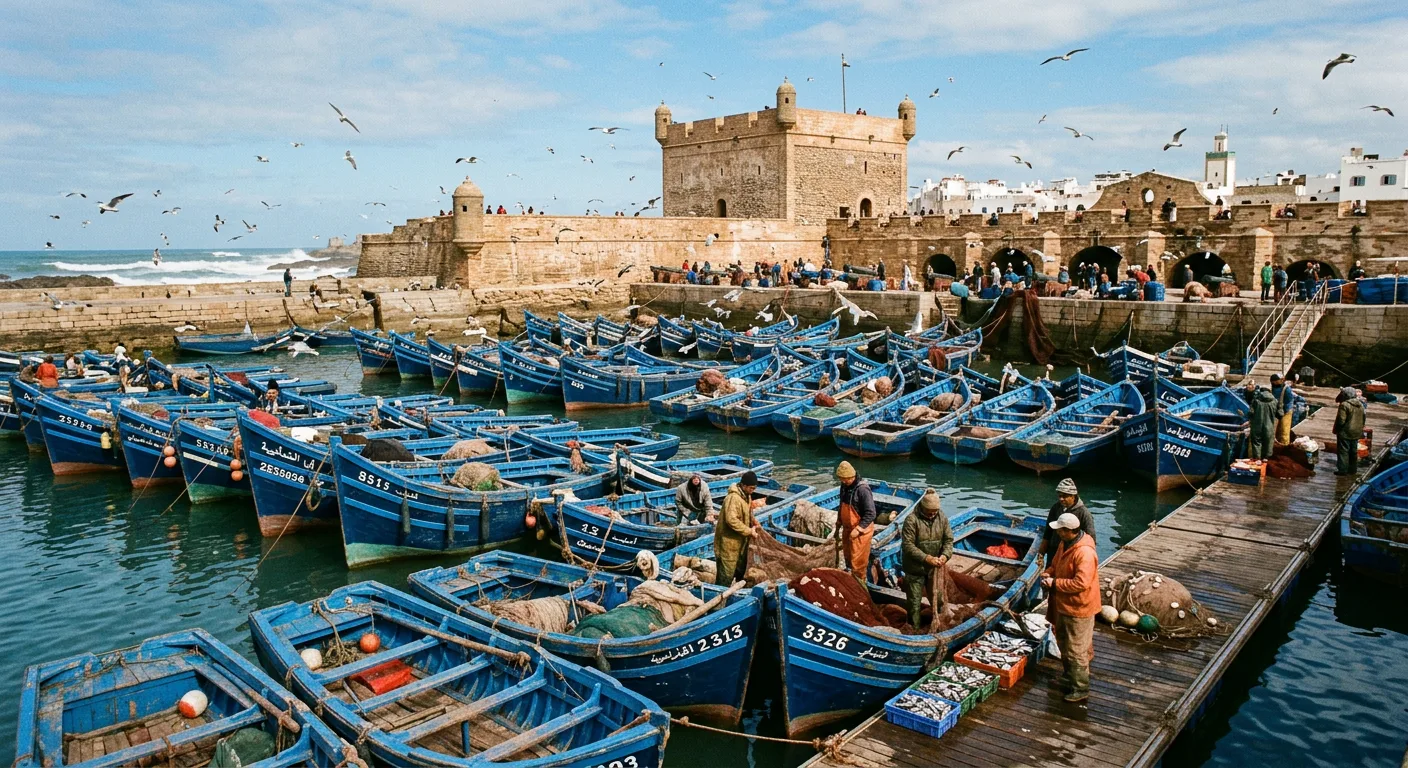
Longest Wave in Africa
Imsouane
Tucked into a sheltered bay between Essaouira and Agadir, Imsouane is home to what is considered the longest right-hand wave in Africa. On a good swell, rides of 600 meters or more are possible as the wave wraps endlessly around the bay. The wave is gentle and forgiving, making it a longboarder's paradise. The tiny fishing village remains beautifully uncommercialized, with fresh sardines grilled at the port each evening.
Wave Length
600m+
Best Season
Sep - Apr
Level
All levels
Vibe
Longboard soul
Getting there: 95 km south of Essaouira, 85 km north of Taghazout. A scenic coastal drive through argan forests, with a stop at a women's argan oil cooperative along the way.
Essaouira Beach
BeginnerEssaouira
Beach break Year-round (best Oct - Apr)
The wide beach at Essaouira picks up swell from multiple directions and offers gentle, crumbly waves perfect for absolute beginners. Wind can be a factor as Essaouira is called the Wind City of Africa, so mornings tend to be glassier. Multiple surf schools operate from the beach, making it one of the most accessible places to try surfing for the first time.
Gentle beginner wavesMultiple surf schoolsUNESCO medina backdropYear-round surfing
Sidi Kaouki
Beginner - IntermediateSouth of Essaouira
Beach break September - April
A wild, windswept beach 25 km south of Essaouira with consistent beach-break waves that work on most tide states. The vibe is mystical and off-grid, centered around a whitewashed marabout on the bluff. Far less crowded than Taghazout, it attracts surfers seeking solitude and a simpler experience. Camel rides along the beach at sunset have become an iconic image.
Consistent wavesUncrowded lineupsMystical atmosphereBudget-friendly
Devil's Rock
Intermediate - AdvancedTamraght
Right-hand reef break October - March
Located in the village of Tamraght, just south of Taghazout, Devil's Rock is a punchy right-hand reef break that offers hollow, fast sections over a rocky bottom. The wave is more powerful than nearby beach breaks and less crowded than the famous Taghazout points. The village of Tamraght has a growing surf scene with several camps and a laid-back Berber village atmosphere.
Hollow fast sectionsLess crowdedBerber village vibeClose to Taghazout
Dakhla (Atlantic Side)
Intermediate - AdvancedDakhla
Beach break / reef October - April
While Dakhla is world-famous for kitesurfing, the Atlantic-facing coast outside the lagoon offers excellent surf breaks that see very few surfers. The remote location in the deep south of Morocco means consistent swell with zero crowd pressure. Several reef setups and beach breaks dot the peninsula, offering everything from mellow walls to punchy hollow waves.
Zero crowdsConsistent swellRemote adventureCombine with kitesurfing
Mehdia Beach
Beginner - IntermediateNear Rabat / Kenitra
Beach break September - May
One of Morocco's most consistent beach breaks, located near the city of Kenitra and an easy day trip from Rabat. Mehdia picks up virtually every swell that hits the Moroccan coast and offers powerful, punchy beach-break peaks. Less touristic than the southern surf spots, this is where Moroccan locals surf. The nearby Mehdia forest and the kasbah add cultural interest.
Very consistentLocal surf sceneEasy from RabatPowerful beach break
Mirleft
IntermediateMirleft / Legzira
Beach break / reef October - April
The stretch of coast between Mirleft and Legzira in the Souss-Massa region offers a series of uncrowded beach breaks and rocky reefs backed by dramatic red cliffs. Legzira is famous for its natural stone arch, one of Morocco's most photographed landmarks. The surf here is consistent, the crowds are minimal, and the scenery is breathtaking. Several small guesthouses cater to surfers.
Dramatic Legzira archUncrowded wavesRed cliff sceneryOff the beaten path
Moulay Bouzerktoune
Intermediate - Advanced25 km north of Essaouira
Right-hand point break October - March
A powerful right-hand point break 25 km north of Essaouira that works best on solid northwest swells. The wave peels along a rocky headland, offering long rides with powerful wall sections. This spot is also famous as a kitesurfing and windsurfing destination due to the strong, consistent trade winds. When the wind drops and a clean swell arrives, the surfing can be world-class.
Long right-hand pointPowerful wave faceCombined kite and surfDramatic headland setting
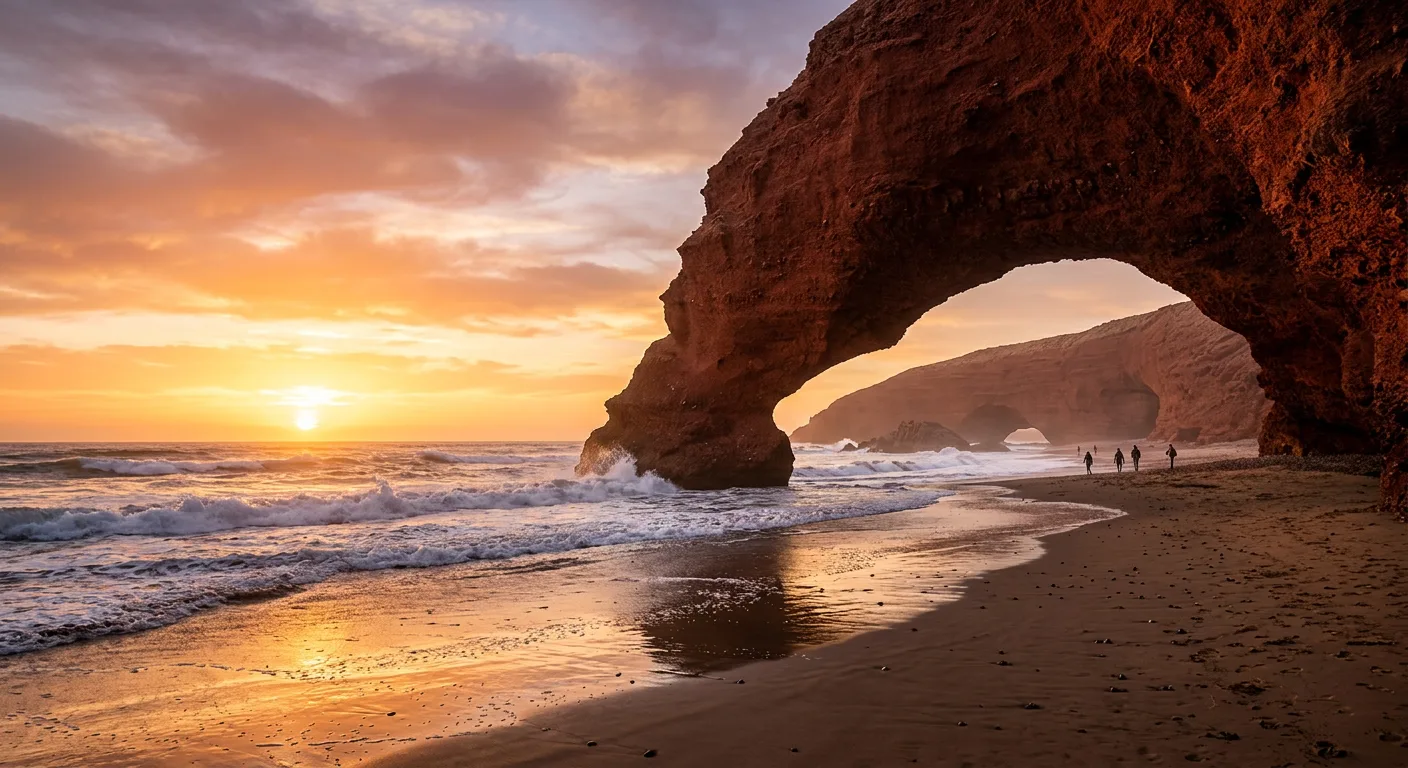
Mirleft & Legzira
Dramatic red cliffs, uncrowded reef breaks, and one of Morocco's most photographed landmarks. The coast between Mirleft and Legzira offers adventure surfing at its finest, far from the crowds of Taghazout.
Surf Seasons in Morocco
October to March delivers the big swells, but Morocco offers something for surfers of every level year-round.
October - December
Early SeasonThe first consistent swells of the season arrive from the North Atlantic. Water is still relatively warm from summer. Fewer crowds than peak season but all the quality spots are firing. This is the sweet spot for many experienced surfers: good waves, warm water, and room to move in the lineup.
Swell Size
3-8 ft
Water Temperature
19-21C
Wetsuit
3/2mm full
Crowds
Moderate
Best for: Intermediate surfers
January - March
Peak SeasonThe biggest and most consistent swells of the year. North Atlantic storms send powerful groundswells that light up every break from Mehdia to Dakhla. Anchor Point, Killer Point, and Boilers are at their best. Taghazout is at its most crowded, but the wave quality compensates. Cooler water temperatures require a proper 4/3mm wetsuit.
Swell Size
5-15 ft
Water Temperature
16-17C
Wetsuit
4/3mm full
Crowds
Busy
Best for: Advanced surfers, big wave seekers
April - June
Late SeasonSwell frequency decreases but there are still surfable days, especially in April. Warmer weather arrives, prices drop, and the vibe becomes more relaxed. Beach breaks and more sheltered spots like Imsouane Bay continue to work well. An excellent time for beginners to visit as conditions are more forgiving and instructors have more availability.
Swell Size
2-5 ft
Water Temperature
17-19C
Wetsuit
3/2mm full or shorty
Crowds
Low
Best for: Beginners and intermediates
July - September
Summer / Off-SeasonThe quietest period for surf. Small, inconsistent waves make this challenging for shortboarders, but longboarders and beginners can find fun sessions at beach breaks. The warm water and pleasant weather make for enjoyable ocean time even without big waves. Surf camps offer their lowest prices. This is also peak kitesurfing season for Essaouira and Dakhla.
Swell Size
1-3 ft
Water Temperature
20-22C
Wetsuit
Shorty or spring suit
Crowds
Very low
Best for: Absolute beginners, longboarders
Surf Camps Ranked by Budget
From 1,500 MAD/week backpacker dorms to luxury villa retreats, Morocco has a surf camp for every budget.
Budget
1,500 - 2,000 MAD/week
150 - 200 EUR
What's included
- Shared dorm room (4-8 beds)
- Self-catering kitchen access
- Board storage
- Surf spot guidance
- Common area with WiFi
Example Camps
Hashpoint Surf House (Taghazout)Dynamic Lézard (Tamraght)Magic Surf Hostel (Taghazout)
Best for: Solo travelers, backpackers, long-stay surfers on a budget
Mid-Range
2,500 - 3,500 MAD/week
250 - 350 EUR
What's included
- Shared or twin room
- Daily breakfast included
- Daily surf guiding to best spots
- Board and wetsuit rental included
- WiFi, terrace, communal areas
- Surf photography
Example Camps
Surf Maroc (Taghazout)Amouage Surf House (Tamraght)Taghazout Surf Shack
Best for: Most travelers, couples, small groups wanting a social experience
Premium
3,500 - 5,000 MAD/week
350 - 500 EUR
What's included
- Private or semi-private room
- Full board (3 meals daily)
- Daily surf lessons or coaching
- Equipment included
- Yoga sessions
- Airport transfer
- Surf video analysis
- Excursions (souk, hammam)
Example Camps
Surf Berbere (Taghazout)Surf Paradise Morocco (Tamraght)Sol House Taghazout Bay
Best for: Those wanting an all-inclusive experience, beginners wanting daily instruction
Luxury
5,000+ MAD/week
500+ EUR
What's included
- Boutique riad or villa accommodation
- Gourmet meals with local ingredients
- Private surf coaching
- Premium equipment
- Spa and wellness treatments
- Concierge service
- Photography package
- Cultural excursions
Example Camps
Hyatt Place Taghazout BayMunga Guesthouse (Imsouane)Paradis Plage (Agadir coast)
Best for: Luxury travelers, honeymooners, those combining surf with wellness
Surf Schools & Lessons
Certified instructors, small groups, and warm water make Morocco one of the best places in the world to learn to surf.
Surf Berbere
Taghazout
From 300 MAD / 2h group lesson
All levels, group and private lessons
- ISA-certified instructors
- Video analysis included
- Multilingual staff (EN, FR, AR, DE)
- Combined lesson and camp packages
Tamraght Surf School
Tamraght
From 250 MAD / 2h group lesson
Beginners and intermediates
- Small group sizes (max 6)
- Berber-run, authentic local experience
- Theory and ocean safety included
- Budget-friendly packages
Essaouira Surf School
Essaouira
From 250 MAD / 2h group lesson
Beginners, SUP, and bodyboarding
- Beach location in front of medina
- Equipment for all ages
- Also offers SUP and bodyboarding
- Year-round operation
Imsouane Surf School
Imsouane
From 250 MAD / 2h group lesson
Longboarding, all levels
- Teaches on the longest wave in Africa
- Longboard specialist
- Small authentic fishing village setting
- Patient, experienced instructors
Sidi Kaouki Surf Station
Sidi Kaouki
From 250 MAD / 2h group lesson
Beginners, women-only options
- Uncrowded beach break teaching environment
- Women-only sessions available
- Combined surf and yoga retreats
- Relaxed, non-competitive atmosphere
Dakhla Attitude
Dakhla
From 500 MAD / 3h kite lesson
Kitesurfing (IKO certified)
- IKO Level 2+ certified school
- Flat-water lagoon teaching area
- Newest equipment fleet
- Beginner through advanced programs
Equipment Rental Costs
Morocco offers some of the most affordable surf equipment rental in the world. Prices are as of 2025 and may vary by season.
| Item | Price (MAD) |
|---|---|
| Shortboard rental (per day) | 100 - 200 MAD |
| Longboard / Foamie rental (per day) | 100 - 200 MAD |
| Wetsuit rental (per day) | 50 - 100 MAD |
| Surfboard + Wetsuit combo (per day) | 150 - 250 MAD |
| Surf lesson (2h group) | 250 - 400 MAD |
| Surf lesson (2h private) | 500 - 800 MAD |
| Kite equipment rental (per day) | 500 - 800 MAD |
| Kite lesson (3h group) | 500 - 800 MAD |
| Windsurf equipment rental (per day) | 400 - 600 MAD |
| Reef booties (purchase) | 150 - 300 MAD |
| Surfboard purchase (used) | 800 - 2,000 MAD |
| Weekly board rental | 500 - 1,000 MAD |
Pro tip: Negotiate weekly rates for significant discounts (often 30-40% off daily prices). If staying more than two weeks, consider buying a used board from surf shop notice boards (800-2,000 MAD) and selling it when you leave.
Spots by Skill Level
Choosing the right spot for your level is essential for safety and progression. Here is where to go based on your experience.
Beginner
First time to 6 months experience
- Panoramas, TaghazoutSandy bottom, gentle waves, multiple surf schools on-site, close to the village
- Imsouane BayLongest wave in Africa, gentle and forgiving, longboard paradise, no sharp reef
- Sidi KaoukiConsistent beach break, uncrowded, relaxed atmosphere, budget-friendly camps
- Essaouira BeachSmall crumbly waves, multiple schools, UNESCO medina to explore after surfing
- Mehdia BeachConsistent beach break, local feel, easy access from Rabat, sandy bottom
Intermediate
6 months to 2+ years experience
- Hash Point, TaghazoutWorkable right-hand point break, long walls for practicing turns, more forgiving than Anchor
- Imsouane CathedralHollow reef break, step-up from beach breaks, good barrel practice
- Devil's Rock, TamraghtPunchy reef break, fast sections, less intimidating than Killer Point
- Moulay BouzerktouneLong right-hand point break, powerful walls, tests positioning skills
- MirleftMix of beach and reef breaks, uncrowded, scenic backdrop, variety of options
Advanced
Years of experience, reef-confident
- Anchor Point, TaghazoutWorld-class right, mechanical point break, up to 300m rides, competitive lineup
- Killer Point, TaghazoutHeavy, shallow reef break, big swell only, powerful barrels, cliff access
- Boilers, TaghazoutSlab-style barrel, extremely shallow reef, biggest days only, expert-level commitment
- Dakhla Atlantic ReefsRemote, powerful reef breaks, zero crowds, requires self-sufficiency
Kitesurfing & Windsurfing
Dakhla and Essaouira rank among the world's best wind sports destinations, with consistent thermal winds and stunning settings.
Dakhla Lagoon
All LevelsOne of the top 3 kitesurfing destinations on the planet. A 40-km-long lagoon between the Sahara Desert and the Atlantic Ocean creates a vast, shallow, flat-water paradise. Thermal winds average 20-30 knots with an astonishing 90%+ wind reliability. The lagoon is often waist-deep, making it extraordinarily safe for beginners. Dragon Beach, a sand spit shaped like a dragon from above, is the iconic spot.
Certified Schools
Dakhla Attitude (IKO certified)Ocean VagabondPK25 Kite CampDakhla SpiritWestpoint Dakhla
Wind Speed
20-30 knots
Best Months
March - November
Water
Flat water, shallow lagoon
Location
Dakhla
Essaouira
Intermediate - AdvancedThe Wind City of Africa has been a wind sports mecca since the 1980s. The Alizee trade winds funnel reliably through the bay from April to September. The main beach offers wave riding in the chop, while Moulay Bouzerktoune 25 km north provides flatter conditions for freestyle. The wind is strong and gusty, better suited for intermediate and advanced riders. The historic UNESCO medina provides a stunning backdrop.
Certified Schools
ION Club EssaouiraExplora WatersportsMagic Fun AfrikaOcean Vagabond Essaouira
Wind Speed
15-25 knots
Best Months
April - September
Water
Choppy ocean, variable
Location
Essaouira
Moulay Bouzerktoune
Intermediate - AdvancedA raw, exposed stretch of coast that catches the full force of the trade winds. Conditions are more powerful and less sheltered than Essaouira, with a strong shore break and big Atlantic swell. Popular with wave kiters looking for aerial sections and powerful turns. Not for beginners, but experienced riders will find some of Morocco's most exhilarating kite conditions.
Certified Schools
ION Club (satellite)Independent local instructors
Wind Speed
18-28 knots
Best Months
April - September
Water
Powerful shore break, open ocean
Location
25 km north of Essaouira
Dakhla Speed Spot
AdvancedAt the southern end of the Dakhla lagoon lies a stretch of ultra-flat, shallow water that has become a magnet for speed chasers and record attempts. Wind acceleration effects create the strongest sustained winds in the region, combined with mirror-flat water and a sandy bottom. Several speed records have been set or attempted here.
Certified Schools
Dakhla Attitude (speed clinics)PK25 Speed Spot
Wind Speed
25-35 knots
Best Months
June - September
Water
Ultra-flat, shallow, speed-optimized
Location
Dakhla Lagoon (southern end)
Surf Culture & Lifestyle
Surfing in Morocco is more than waves. It is a lifestyle shaped by Berber hospitality, Atlantic rhythms, and a growing community.
The Taghazout Scene
Taghazout has evolved from a sleepy fishing village into Morocco's most vibrant surf town. The main street is lined with surf shops, juice bars, yoga studios, and cafes serving avocado toast alongside traditional msemen pancakes. International surfers mix with local Moroccan riders who have grown up on these waves. The communal rooftop terraces of the surf hostels are where friendships form over sunset mint tea. Despite the growth, the town retains a laid-back charm. Fishermen still mend nets on the beach, the call to prayer echoes from the mosque, and the pace of life revolves around the tides.
A Typical Day
6:30 AM
Dawn patrol at Anchor Point or Hash Point before the wind picks up and the crowds arrive.
9:00 AM
Breakfast at a local cafe: msemen with honey, eggs, fresh orange juice, and strong Moroccan coffee.
10:30 AM
Yoga session on the rooftop terrace overlooking the ocean, or a second surf session at a different spot.
1:00 PM
Tagine lunch at a local restaurant (40-60 MAD) followed by a hammock nap.
3:30 PM
Afternoon session as the glass-off hour delivers clean waves before sunset.
6:00 PM
Sunset from the clifftop with mint tea, sharing wave stories with fellow travelers.
8:00 PM
Communal dinner at the surf camp or a seafood feast at the fishing port.
Moroccan Surf Community
Morocco's local surf community has grown enormously over the past two decades. Moroccan surfers are increasingly competitive on the international stage, and local groms (young surfers) rip at spots like Anchor Point and Imsouane. Organizations like the Moroccan Surfing Federation host competitions, and several programs provide boards and instruction to local kids who might not otherwise have access. Supporting these initiatives, either by donating old equipment or volunteering, is a meaningful way to give back to the community that makes your surf trip possible.
Growing local talentAnnual competitionsCommunity surf programsEquipment donation welcomedWomen surfers emergingBerber surf heritage
Where to Stay Near the Waves
From barefoot hostels to boutique riads, accommodation options along Morocco's surf coast suit every style and budget.
Surf Hostels
80 - 200 MAD/night
Budget-friendly dorms and shared rooms steps from the surf. Most include board storage, communal kitchens, rooftop terraces with ocean views, and a social atmosphere. This is where solo travelers meet surf buddies.
Available at
TaghazoutTamraghtImsouaneEssaouiraSidi Kaouki
Surf Camps (all-inclusive)
200 - 700 MAD/night
The most popular option for surf travelers. Packages typically include accommodation, meals (at least breakfast), surf guiding to the best spots, and equipment rental. Many also offer yoga, excursions, and airport transfers.
Available at
TaghazoutTamraghtImsouaneSidi Kaouki
Riads and Guesthouses
300 - 800 MAD/night
Traditional Moroccan accommodation with more charm and privacy. Riads in Essaouira's medina combine cultural immersion with easy beach access. Small guesthouses in Mirleft and Taghazout offer personalized hospitality.
Available at
EssaouiraTaghazoutMirleft
Apartments and Villas
400 - 2,000 MAD/night
Ideal for groups and families or longer stays. Self-catering apartments along the coast offer independence and value, especially when shared. Many come with ocean views, terraces, and kitchen facilities.
Available at
Taghazout BayTamraghtEssaouiraDakhla
Kite Camps and Eco-Lodges
500 - 1,500 MAD/night
Specialized wind sports accommodation in Dakhla ranges from tented eco-camps on the lagoon edge to comfortable hotels with pools and restaurants. Most Dakhla kite camps offer all-inclusive packages with equipment and instruction.
Available at
DakhlaEssaouira
Getting to the Surf Spots
Transport logistics from airports and cities to Morocco's best surf destinations.
| Route | Method | Duration | Cost |
|---|---|---|---|
| Agadir Airport to Taghazout | Taxi / Transfer | 45 minutes | 250 - 350 MAD |
| Marrakech Airport to Taghazout | Supratours / CTM Bus | 3 - 3.5 hours | 120 - 160 MAD |
| Marrakech to Essaouira | Supratours Bus | 2.5 - 3 hours | 90 - 130 MAD |
| Essaouira to Sidi Kaouki | Local Taxi / Bus | 30 minutes | 50 - 80 MAD (taxi) |
| Taghazout to Imsouane | Grand Taxi / Rental Car | 1.5 hours | 200 - 300 MAD (taxi) |
| Casablanca to Dakhla | Flight (Royal Air Maroc) | 2 hours | 800 - 2,000 MAD |
| Rabat to Mehdia | Train + Taxi | 1 hour total | 40 - 80 MAD |
| Agadir to Mirleft / Legzira | Grand Taxi / Bus | 2.5 hours | 80 - 150 MAD |
Rental cars: Renting a car is the most flexible option for exploring multiple surf spots. Prices start at 250 MAD/day from agencies in Agadir or Marrakech. A compact car is fine for coastal roads. Roof racks for boards can sometimes be arranged at surf shops.
Board transport: Most buses accept surfboards in the luggage hold for a small surcharge (20-50 MAD). Grand taxis can carry boards on the roof rack. Airlines flying to Agadir and Essaouira often have surfboard baggage policies (check before booking).
Safety in the Water
Being aware of potential hazards will keep your surf trip safe and enjoyable. Morocco is generally safe for surfers, but knowledge of local conditions is essential.
Strong Currents and Rip Tides
Many Moroccan surf spots have powerful rip currents, especially during large swells. Beach breaks like Mehdia and Sidi Kaouki can develop strong rips that pull swimmers and surfers out to sea.
Prevention
Always observe the water for 10-15 minutes before entering. Look for channels of darker, calmer water indicating rips. Paddle perpendicular to the current if caught. Surf with others and tell someone where you are going.
Rocky Reefs and Sea Urchins
Point breaks like Anchor Point, Killer Point, and Devil's Rock break over sharp, barnacle-covered rocks. Sea urchins are common in the shallows, especially in warmer months.
Prevention
Wear reef booties at all rocky spots (150-300 MAD from local shops). Learn the entry and exit points from other surfers before paddling out. Avoid walking on exposed reef. Carry tweezers and vinegar for urchin spines.
Localism
Some spots, particularly Anchor Point during peak season, can have a competitive lineup with local surfers who have priority. Dropping in on locals or paddling aggressively for waves can lead to confrontations.
Prevention
Show respect in the lineup. Wait your turn and do not paddle past locals for waves. A friendly greeting goes a long way. If a spot feels tense, try a less crowded break nearby. Most Moroccan surfers are welcoming to respectful visitors.
Jellyfish
Portuguese man-of-war and other jellyfish occasionally wash in, particularly in spring and early summer. Their stings can be painful and in rare cases cause allergic reactions.
Prevention
Check for jellyfish on the beach before entering. If stung, rinse with seawater (not fresh water), remove any tentacles with a stick or tweezers, and apply heat. Seek medical attention for severe reactions.
Sun Exposure
The Moroccan sun is intense, especially in the south. Hours spent in the water can lead to severe sunburn, even on overcast days. Reflected UV from the water intensifies exposure.
Prevention
Apply waterproof SPF 50+ sunscreen before every session, especially on face, ears, and neck. Wear a rash vest or surf top. Reapply after long sessions. A surf hat can help for longboard sessions.
Dehydration and Ear Infections
Surfing in warm climates leads to dehydration that is easy to overlook. Surfer's ear (exostosis) and ear infections are common with repeated exposure to cold water and wind.
Prevention
Drink plenty of water before and after surfing. Use surf ear plugs, especially in winter when the water is coldest. Dry ears thoroughly after each session. Carry swimmer's ear drops.
Emergency Numbers
General Emergency
19 (Police) / 15 (Ambulance)
Tourist Police
+212 524 38 46 01 (Agadir)
Fire / Rescue
15
Frequently Asked Questions
What is the best time to surf in Morocco?
The prime surf season runs from October to March when consistent North Atlantic swells deliver powerful waves along the entire coast. January to March sees the biggest swells with wave faces reaching 6-15 feet at spots like Anchor Point and Killer Point. Summer (June-September) offers smaller, gentler waves ideal for beginners at beach breaks. Water temperatures range from 16C in winter to 22C in summer.
Where is the best place to surf in Morocco?
Taghazout is Morocco's undisputed surf capital, with world-class breaks like Anchor Point, Hash Point, Killer Point, and Panoramas all within walking distance. For the longest rides, Imsouane Bay offers 600m+ waves. Beginners should head to Sidi Kaouki or Essaouira for gentle beach breaks. For uncrowded adventure surfing, Mirleft and Legzira deliver consistent waves with dramatic scenery.
How much does a surf camp cost in Morocco?
Surf camps range from 1,500 MAD (about 150 EUR) per week for basic hostel-style camps with shared rooms and self-catering, to 5,000+ MAD (500 EUR) per week for premium camps with private rooms, daily lessons, meals, yoga, and airport transfers. The sweet spot for most travelers is 2,500-3,500 MAD per week, which typically includes shared accommodation, breakfast, surf guiding, and equipment.
Do I need a wetsuit to surf in Morocco?
Yes, a wetsuit is recommended year-round. In winter (October-March), a 4/3mm full suit is standard as water temperatures drop to 16-17C along the central coast. In summer (June-September), a 3/2mm or shorty wetsuit suffices, with water at 20-22C. Dakhla in the far south is slightly warmer year-round. Wetsuits can be rented at all surf towns for 50-100 MAD (5-10 EUR) per day.
Is Morocco good for beginner surfers?
Morocco is one of the best places in the world to learn to surf. Spots like Panoramas in Taghazout, Imsouane Bay, Sidi Kaouki, and Essaouira beach offer gentle, forgiving waves with sandy bottoms. Dozens of surf schools operate along the coast with certified instructors, and a 2-hour group lesson costs just 250-400 MAD (25-40 EUR). The warm climate, affordable accommodation, and relaxed Berber culture create an ideal learning environment.
Can I go kitesurfing in Morocco?
Absolutely. Morocco is a world-class kitesurfing destination. Dakhla is ranked among the top 3 kite spots globally, with a vast shallow lagoon, 90%+ wind reliability from March to November, and 20-30 knot thermal winds. Essaouira is the windsurfing and kitesurfing capital of Africa, with reliable trade winds from April to September. Multiple IKO-certified schools at both locations offer beginner to advanced programs.
How do I get to the surf spots from the airport?
Agadir Al Massira Airport (AGA) is the main gateway for Taghazout (45 min by taxi, 250-350 MAD). Marrakech Menara Airport (RAK) connects via Supratours or CTM bus to Agadir (3 hours, 120-160 MAD). For Essaouira, fly to Essaouira Mogador Airport or take a bus from Marrakech (2.5-3 hours). Dakhla has its own airport with daily flights from Casablanca. Many surf camps include airport transfers in their packages.
Is it safe to surf in Morocco?
Surfing in Morocco is generally safe, but awareness of hazards is important. Reef breaks like Anchor Point and Killer Point have sharp rocks and sea urchins, so reef booties are recommended. Strong currents exist at many spots during big swells. Always surf with others, respect the lineup hierarchy, check conditions with locals before paddling out, and wear appropriate protection at rocky spots. The biggest non-ocean risk is sun exposure.
Surf and Water Sports Gallery
Morocco's Atlantic coastline delivers world-class waves, wind, and aquatic adventures.
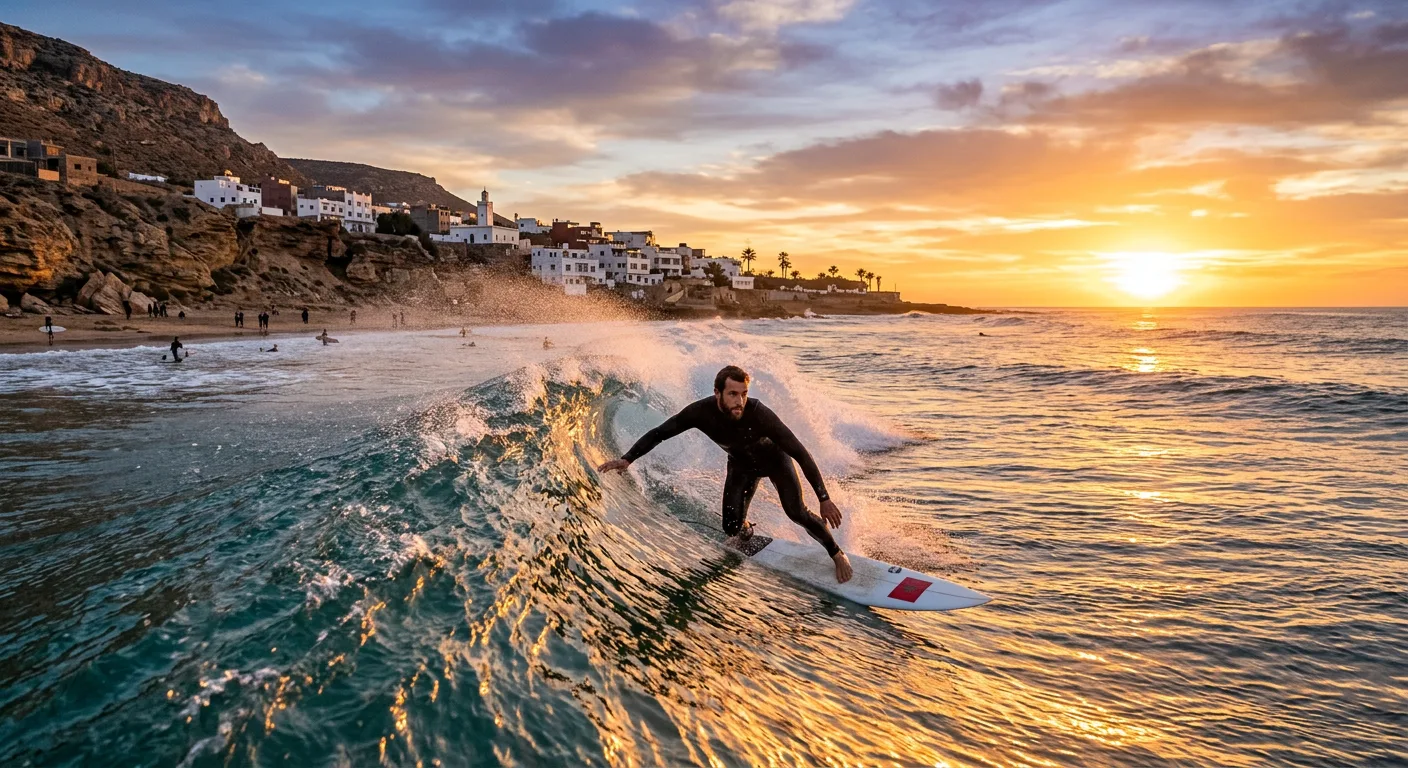
Surfer riding a wave at Taghazout, Morocco premier surf destination
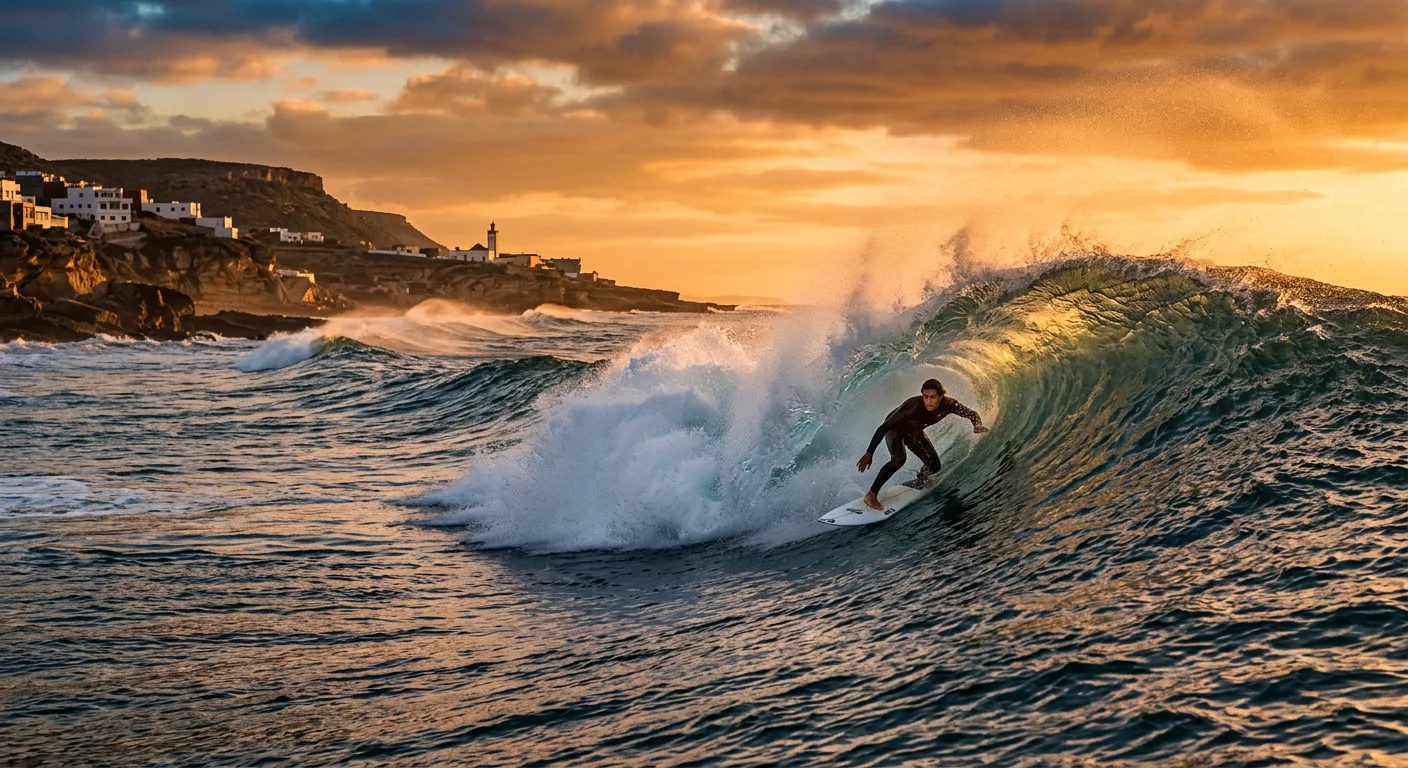
Perfect barrel wave breaking at Anchor Point near Taghazout
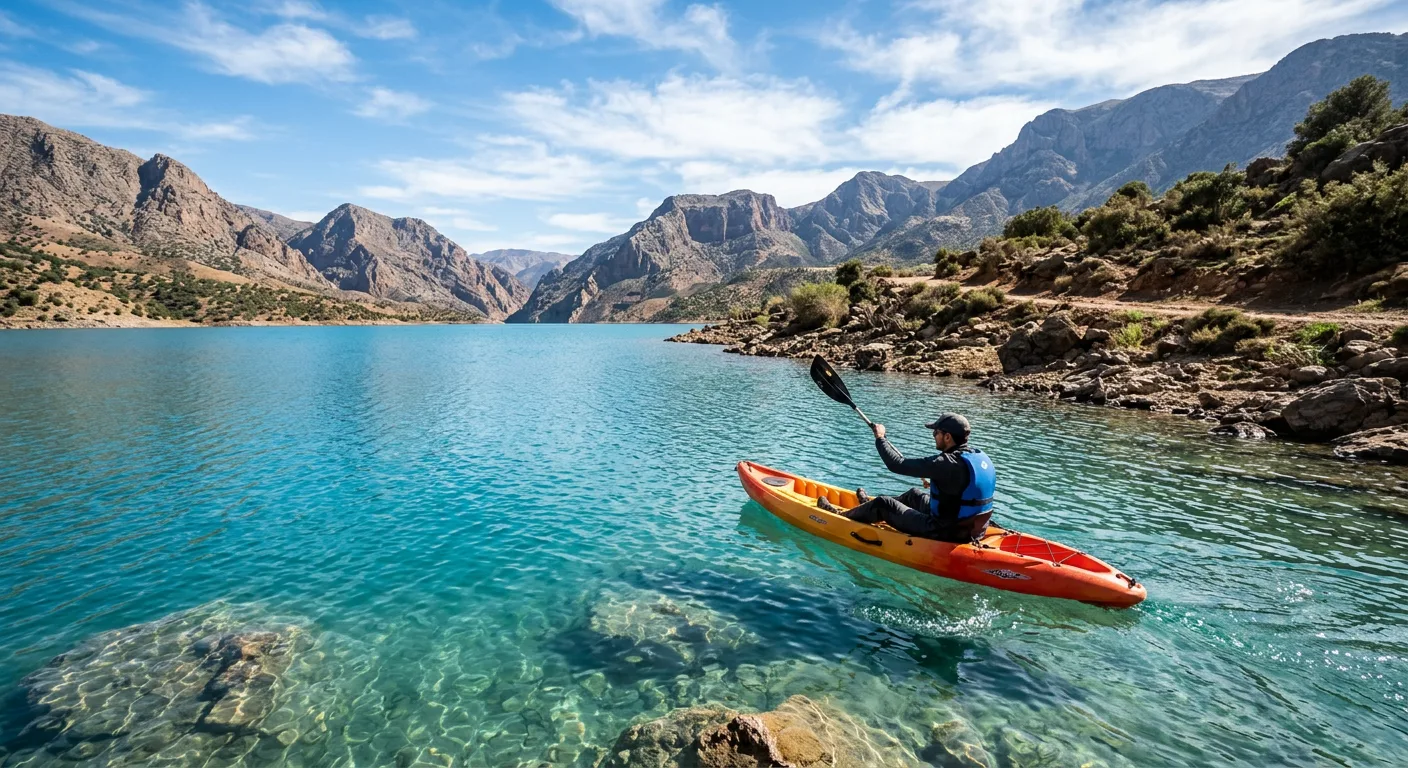
Sea kayaking along the dramatic Moroccan Atlantic coastline
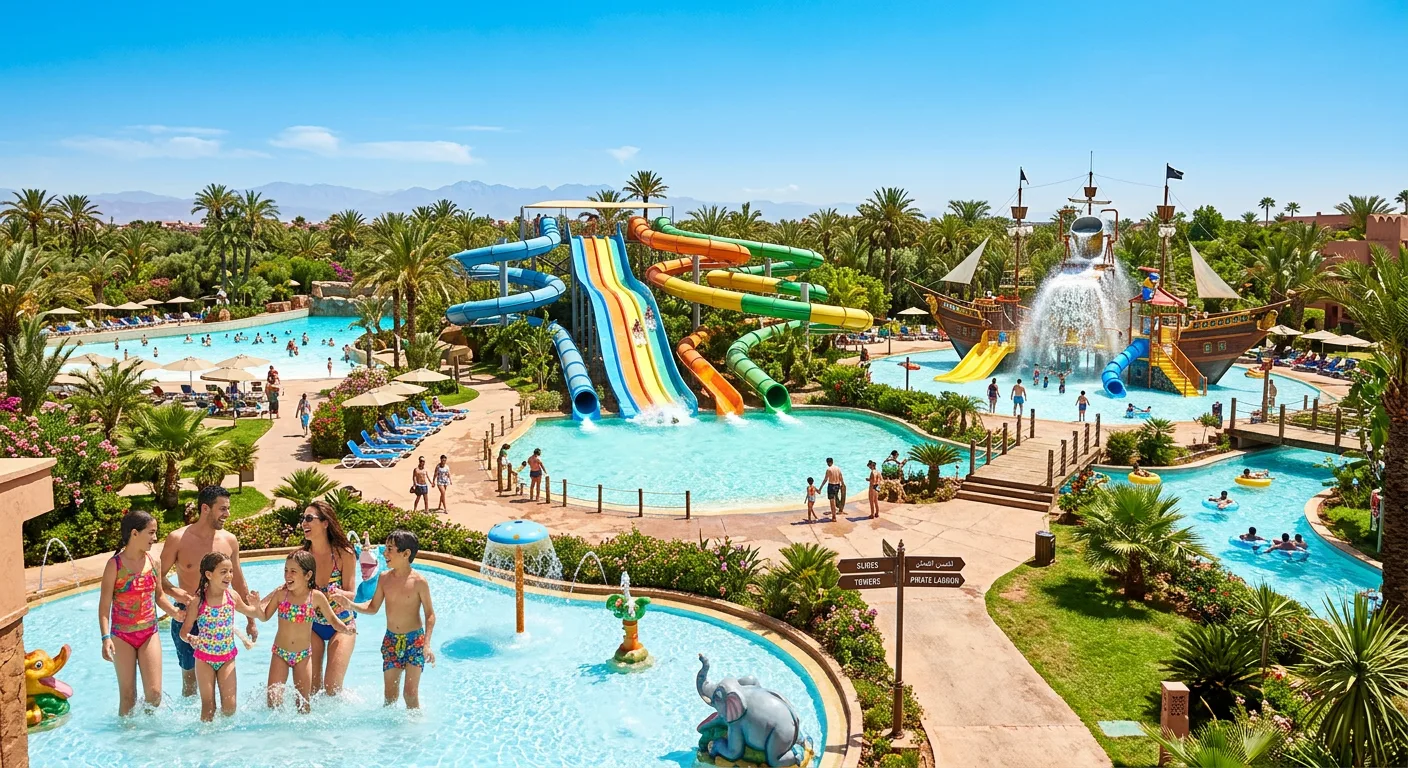
Exciting water park slides and pools in Morocco
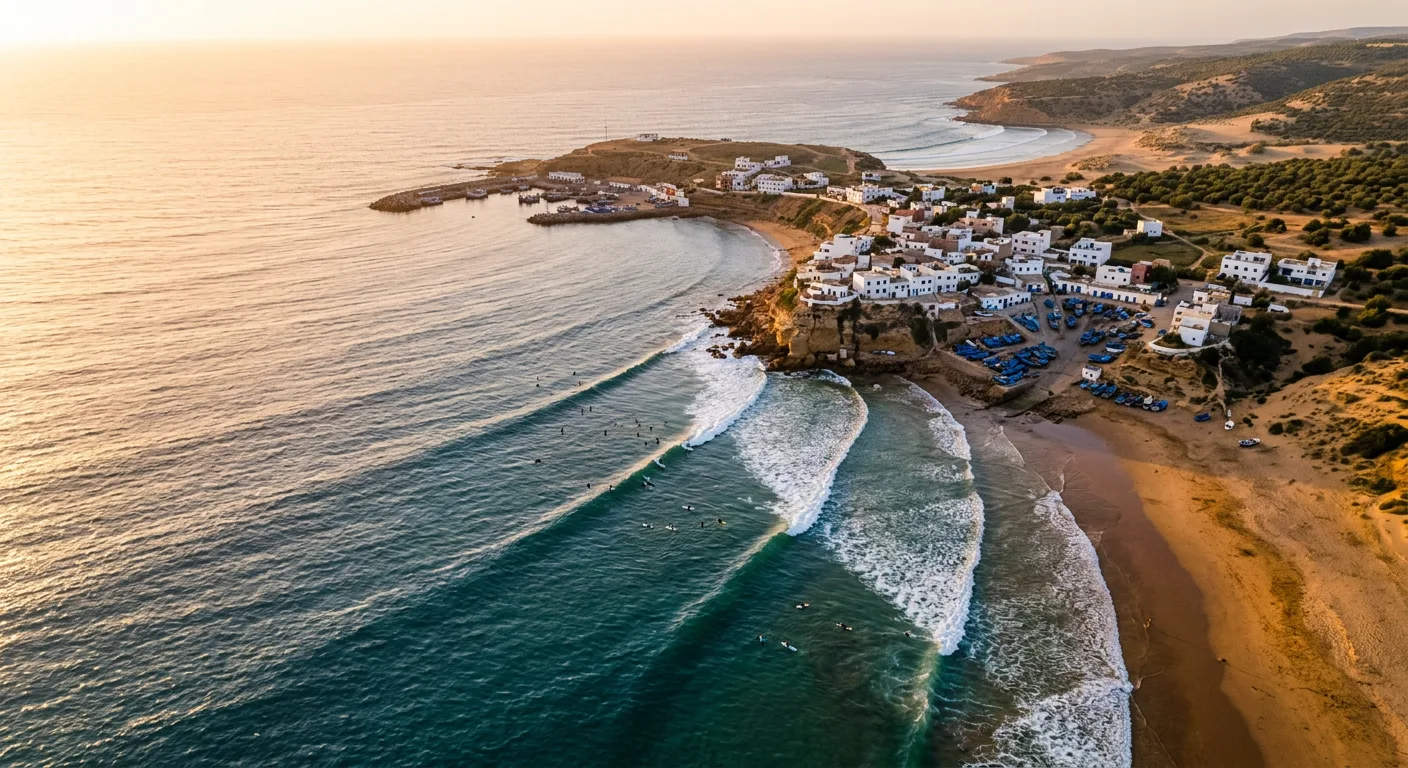
Long right-hand wave at Imsouane Bay, known for the longest rideable wave in Morocco
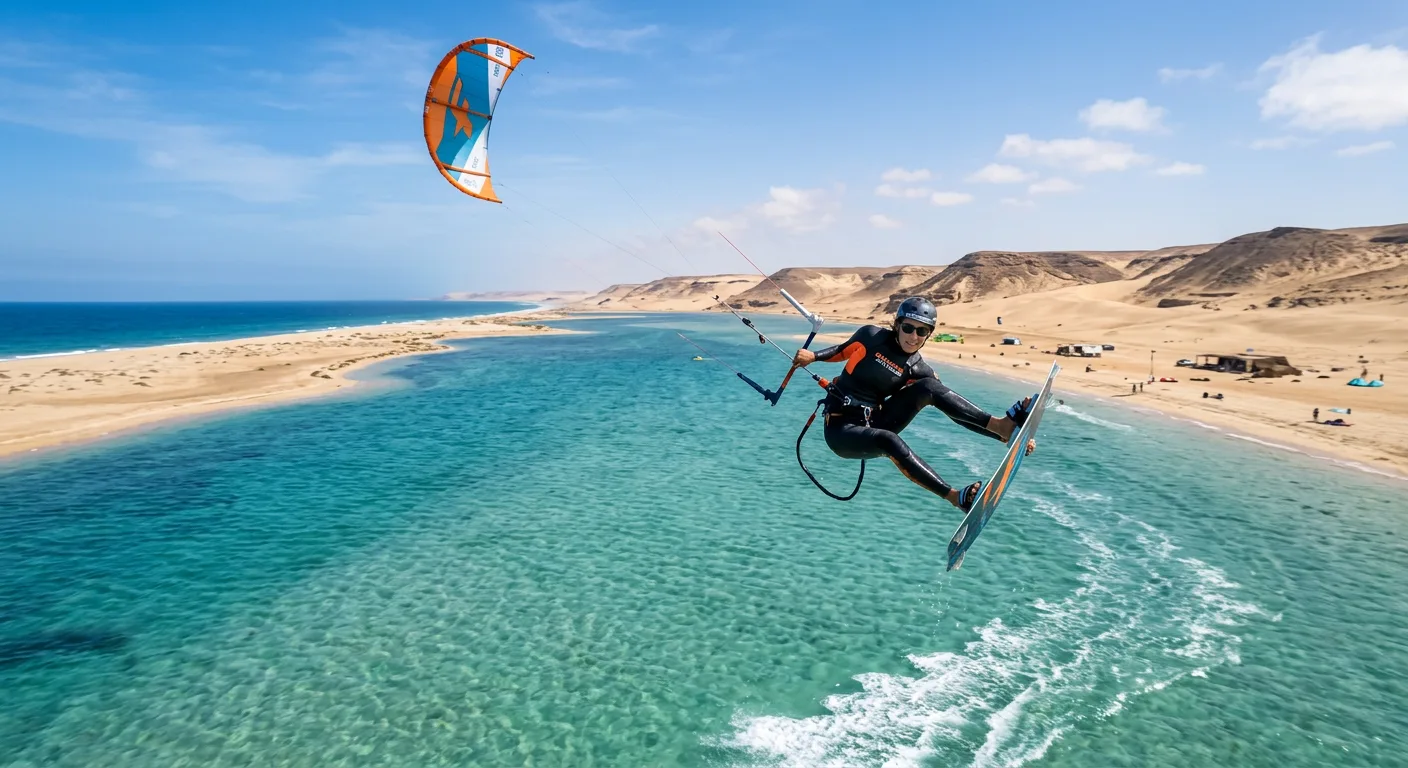
Kitesurfer jumping high over the turquoise lagoon of Dakhla
More Activity Guides
Taghazout Surf Guide
Deep dive into Morocco's surf capital with spot breakdowns, board rentals, surf camps, and local tips.
Water Sports
From kitesurfing in Dakhla to jet skiing in Agadir, explore all the aquatic adventures Morocco offers.
Essaouira Guide
Discover the windy city's medina, beaches, seafood, and vibrant arts scene on Morocco's Atlantic coast.
Agadir Guide
Sun-soaked beaches, modern resorts, and easy access to Taghazout and Paradise Valley adventures.
Best Time to Visit
Season-by-season breakdown of swell, weather, and crowds to help you time your surf trip perfectly.
Trip Cost Breakdown
Detailed budget guide covering accommodation, food, transport, and activity costs across Morocco.
Continue Exploring Morocco
Discover more of what Morocco has to offer