Discovering...
Wildlife & Nature
Wildlife & Nature Guide
From Barbary macaques in ancient cedar forests to flamingos on Atlantic lagoons, Morocco's biodiversity rivals any destination in the Mediterranean. Discover 16 iconic species, 10 national parks, world-class birdwatching, and marine life across six distinct ecosystems.
National Parks
10+
Protected areas
Bird Species
480+
Recorded in Morocco
Plant Species
4,500+
20% endemic
Conservation
Active
Species recovery
Ecosystems
6 Major
Desert to alpine
Best Season
Sep-May
Peak wildlife
Morocco's Biodiversity
Morocco sits at a biogeographic crossroads where Europe, Africa, and the Atlantic meet, creating one of the most diverse ecosystems in the entire Mediterranean basin. Within its borders you will find snow-capped peaks topping 4,000 meters, ancient cedar forests draped in mist, vast Saharan dune seas, fertile coastal wetlands, and a 3,500 km coastline spanning two oceans.
This geographic diversity translates into extraordinary biodiversity. Morocco hosts over 4,500 plant species (20% endemic), more than 100 mammal species, 480 bird species, and 98 reptile species. The country serves as a critical stopover on the East Atlantic Flyway, with millions of migratory birds passing through each autumn and spring.
Three distinct mountain ranges — the Rif, Middle Atlas, and High Atlas — create altitude-driven habitat zones ranging from Mediterranean scrub to alpine meadows. The transition from these mountains into the Sahara produces unique desert-edge ecosystems found nowhere else. Meanwhile, the Atlantic and Mediterranean coastlines support important marine habitats including the world's largest colony of Mediterranean monk seals.
For the wildlife traveler, Morocco offers something increasingly rare: the chance to see genuinely wild landscapes and species without the crowds or infrastructure of more established safari destinations. Whether you are a seasoned birder chasing the northern bald ibis, a photographer seeking the perfect macaque portrait, or a family wanting to introduce children to wild flamingos, Morocco's natural heritage will exceed your expectations.
4,500+
Plant Species
20% endemic
480+
Bird Species
Major flyway
100+
Mammal Species
Including primates
10
National Parks
Expanding network
Iconic Wildlife Species
Sixteen remarkable species that define Morocco's natural heritage, from the Atlas Mountains to the Sahara and along the coast.
Endangered
Barbary Macaque
Macaca sylvanus
Azrou, Middle Atlas
Year-round, best in spring and autumn mornings
The only macaque species found outside of Asia and the only primate north of the Sahara besides humans. Around 8,000 remain in Morocco, primarily in the cedar forests of the Middle Atlas near Azrou and Ifrane. These charismatic monkeys live in troops of 10-30 and are remarkably tolerant of human observers. Males are notably involved in infant care, a behavior rare among primates.

Least Concern
Fennec Fox
Vulpes zerda
Sahara Desert
Dawn and dusk, November to March in cooler months
The world's smallest fox, weighing just 1-1.5 kg, with enormous ears that dissipate heat and detect underground prey. Nocturnal and elusive, fennec foxes inhabit the sandy deserts of southeastern Morocco. Their oversized ears can hear insects moving beneath the sand. Spotting one in the wild is rare and unforgettable.
Vulnerable
Barbary Sheep (Aoudad)
Ammotragus lervia
High Atlas Mountains
Early morning on rocky cliff faces, spring through autumn
A powerful, agile mountain ungulate with distinctive shaggy hair on its throat and forelegs. Found in the rocky terrain of the High Atlas and Anti-Atlas mountains. These sure-footed animals can navigate near-vertical cliff faces. Once widespread across North Africa, their population has declined significantly due to hunting and habitat loss.
Domesticated
Dromedary Camel
Camelus dromedarius
Sahara Desert
Year-round in Merzouga and Zagora desert regions
The single-humped camel has been the lifeline of Saharan communities for millennia. While no longer truly wild in Morocco, semi-feral populations roam the desert edges near Merzouga and Zagora. Camels can go 7-10 days without water and survive temperatures exceeding 50 degrees Celsius. Camel treks remain one of Morocco's most iconic experiences.
Least Concern
North African Hedgehog
Atelerix algirus
Widespread, gardens and farmland
After dark in gardens, riads, and oasis edges
A nocturnal insectivore found throughout Morocco, from coastal gardens to mountain foothills. Smaller and lighter-colored than European hedgehogs, they have a distinctive white face and forehead. Commonly encountered in riads, gardens, and at the edges of oases. They feast on insects, snails, and fallen fruit.
Near Threatened
Moroccan Spiny-Tailed Lizard
Uromastyx nigriventris
Arid regions, Anti-Atlas
Late morning when basking on rocks, March to October
A striking, herbivorous lizard that can grow up to 40 cm long. Their armored, spiny tails are used for defense, whipping potential predators. They inhabit rocky, arid terrain in the Anti-Atlas and pre-Saharan regions. Excellent thermoregulators, they bask on rocks at temperatures that would be lethal to most animals.
Vulnerable
Houbara Bustard
Chlamydotis undulata
Eastern plains, semi-desert
Spring courtship displays, early morning on open steppes
A large, ground-dwelling bird of the eastern Moroccan steppes and semi-arid plains. Known for the male's spectacular courtship display, raising white neck feathers into a dramatic ruff while performing a strutting dance. Conservation breeding programs in Morocco have been crucial to preventing extinction in the wild.
Critically Endangered
Northern Bald Ibis
Geronticus eremita
Souss Massa National Park
Year-round at Souss Massa coastal cliffs, best at dawn
One of the world's rarest birds, with Morocco hosting the last significant wild population of around 700 individuals. The Souss Massa coast south of Agadir is their stronghold. These glossy-black birds with their distinctive bare red faces nest on coastal cliffs and forage in nearby agricultural fields. A conservation success story as numbers have slowly recovered from fewer than 100 in the 1990s.
Least Concern
Greater Flamingo
Phoenicopterus roseus
Oualidia, Moulay Bousselham
October to March at coastal lagoons, golden hour
Thousands of greater flamingos winter in Morocco's coastal lagoons, creating one of the country's most spectacular wildlife sights. The lagoons of Oualidia, Moulay Bousselham (Merja Zerga), and Khnifiss are prime viewing spots. From October to March, flocks of hundreds can be seen wading through the shallows, filtering brine shrimp with their specialized bills.
Least Concern
Eleonora's Falcon
Falco eleonorae
Atlantic islands, Essaouira
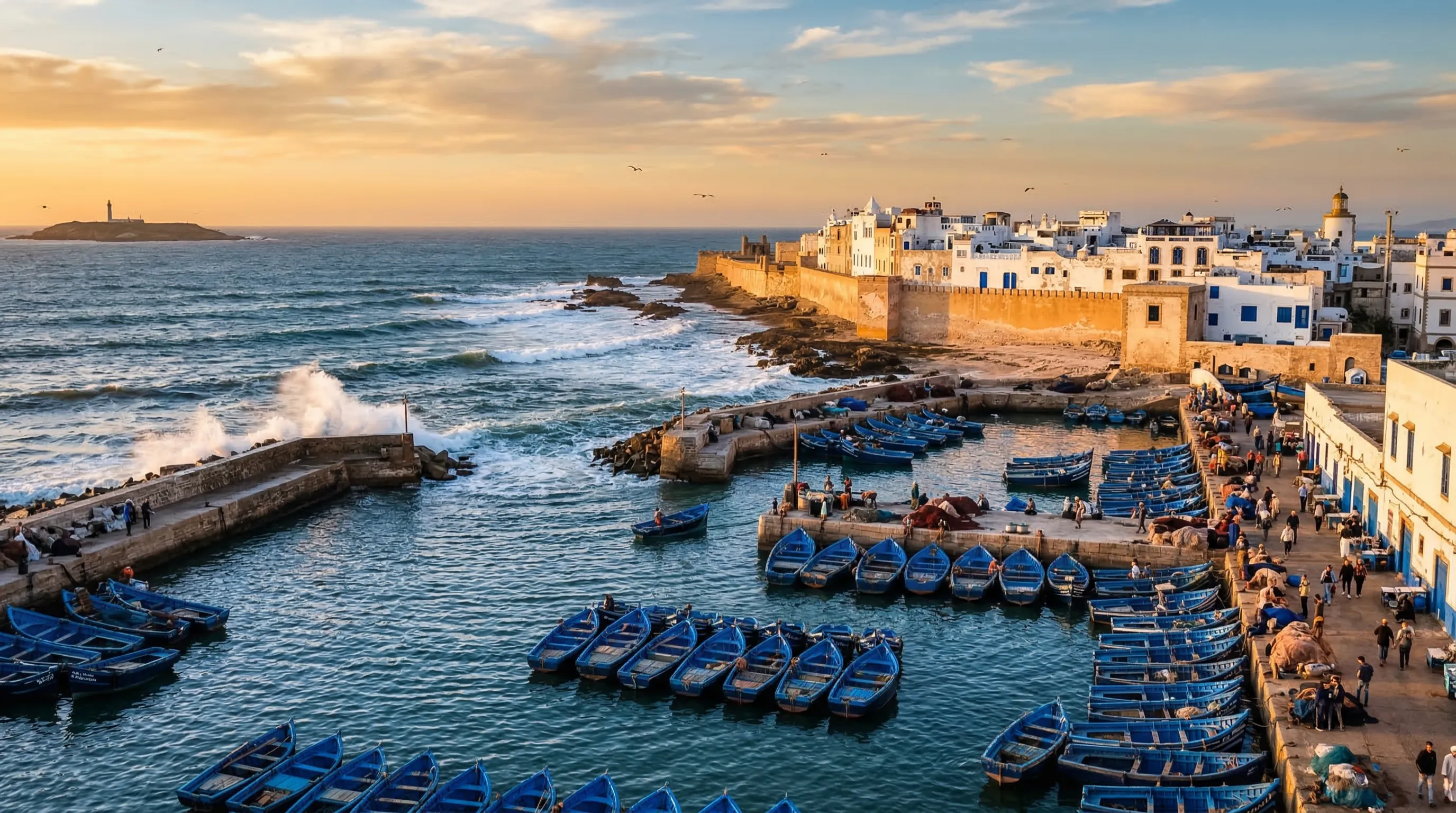
July to October, dusk hunting flights over Essaouira
A graceful, dark falcon that breeds on Morocco's Atlantic islands, particularly the Mogador islands off Essaouira. Uniquely, they time their breeding to coincide with autumn bird migration, catching small passerines to feed their chicks. Watching them hunt at dusk over the Essaouira ramparts is one of Morocco's great birding experiences.
Near Threatened
Striped Hyena
Hyaena hyaena
Atlas foothills, rural areas
Nocturnal; camera traps in remote Atlas foothills
Morocco's most elusive large predator. The striped hyena inhabits the foothills of the Atlas Mountains and remote rural areas. Strictly nocturnal and solitary, they are rarely seen but leave unmistakable tracks and scat. Their powerful jaws can crush bones. Camera trap studies suggest a small but stable population persists in the High Atlas and Rif regions.
Least Concern
Wild Boar
Sus scrofa
Rif Mountains, forested areas
Dawn and dusk at forest edges and water sources
Morocco's forests harbor significant populations of wild boar, particularly in the Rif Mountains, Middle Atlas cedar forests, and cork oak woodlands. As the only wild pig in North Africa, they play an important ecological role in forest regeneration. Primarily nocturnal, they are best spotted at dawn or dusk along forest edges and near water sources.
Vulnerable
Loggerhead Sea Turtle
Caretta caretta
Atlantic coast
Summer nesting season on remote southern beaches
Morocco's Atlantic coast is an important foraging ground for loggerhead sea turtles, and some nesting still occurs on remote southern beaches. These ancient mariners can weigh up to 200 kg and dive to depths of 230 meters. Conservation efforts along the coast work to protect nesting sites and reduce bycatch in fishing nets.
Endangered
Mediterranean Monk Seal
Monachus monachus
Cap Blanc (Ras Nouadhibou)
Restricted access; conservation-focused boat trips available
One of the world's rarest marine mammals, with a colony of approximately 300 individuals at Cap Blanc on the Morocco-Mauritania border, the largest remaining population globally. These seals rest in sea caves and feed in the nutrient-rich Atlantic waters. Direct viewing is restricted to protect the colony, but their conservation is a major success story.
Endangered
Atlas Cedar
Cedrus atlantica
Middle Atlas, Ifrane region
Year-round; autumn colors spectacular in October
Morocco's most majestic tree species, forming ancient forests in the Middle Atlas and Rif Mountains between 1,300-2,600 meters elevation. Some specimens are over 900 years old and reach 40 meters tall. The Gouraud Cedar near Azrou, estimated at 800 years old, is a landmark. These forests are critical habitat for Barbary macaques and countless other species. Climate change poses a growing threat.
Vulnerable
Dorcas Gazelle
Gazella dorcas
Eastern plains, Saharan fringe
Early morning on open plains, October to April
The smallest gazelle species in North Africa, perfectly adapted to survive in arid and semi-arid conditions. Dorcas gazelles can go their entire lives without drinking water, obtaining all moisture from the plants they eat. Small herds persist in the eastern Moroccan steppes and in Souss Massa National Park, where reintroduction efforts have been underway since the 1990s. Their graceful, bounding flight across desert terrain is mesmerizing.
National Parks & Reserves
Morocco's network of protected areas safeguards ecosystems from Atlantic wetlands to Saharan desert, high mountain peaks to Mediterranean cliffs.
High Atlas
Toubkal National Park
Est. 1942
380 km2
Trekking, mountaineering, botany
Morocco's most famous national park, centered on Jebel Toubkal. The park protects high-altitude ecosystems with over 900 plant species, including many endemics. Ibex reintroduction programs and Barbary sheep conservation make it a wildlife destination as well as a trekking mecca.
Key Highlights
North Africa's highest peak (4,167m), Berber villages, alpine flora, Barbary sheep
Barbary sheepGolden eagleBarbary partridgeAtlas day gecko
Atlantic Coast, south of Agadir
Souss Massa National Park
Est. 1991
340 km2
Birdwatching, wildlife, coastal walks
The last stronghold of the critically endangered northern bald ibis. The park stretches along 65 km of wild Atlantic coast with estuaries, sand dunes, and argan forest. Home to Dorcas gazelles, jackals, and over 250 bird species.
Key Highlights
Northern bald ibis, flamingos, gazelles, coastal cliffs, estuary
Northern bald ibisDorcas gazelleGolden jackalMoussier's redstart
Middle Atlas
Ifrane National Park
Est. 2004
500 km2
Primates, forest walks, birdwatching
Protecting the magnificent cedar forests of the Middle Atlas, this park is the best place to see Barbary macaques in the wild. The forests around Azrou host troops of 20-50 monkeys that are habituated to observers. Dayat Aoua lake is excellent for waterbirds.
Key Highlights
Barbary macaques, Atlas cedar forests, Barbary stag (reintroduced), lakes
Barbary macaqueAtlas cedarBarbary stagBooted eagle
Rif Mountains
Talassemtane National Park
Est. 2004
580 km2
Endemic plants, trekking, birdwatching
Home to the last stands of Moroccan fir (Abies maroccana), a species found nowhere else on Earth. The park encompasses dramatic Rif Mountain scenery with deep gorges, waterfalls, and diverse birdlife including Bonelli's eagle and peregrine falcon.
Key Highlights
Moroccan fir (endemic), Rif Mountains, dramatic gorges, Akchour waterfalls
Moroccan firBonelli's eaglePeregrine falconBarbary macaque
Atlantic Coast, south of Tan-Tan
Khenifiss National Park
Est. 2006
1,850 km2
Remote birding, desert ecology, solitude
One of Morocco's most remote parks, where the Sahara meets the Atlantic. The Khenifiss lagoon is a Ramsar wetland of international importance, attracting thousands of migratory birds. Saharan species like the desert fox and sand cat may be encountered.
Key Highlights
Saharan lagoon, flamingos, monk seal habitat, desert-meets-ocean
Greater flamingoSand catDesert foxSpoonbill
Mediterranean Coast
Al Hoceima National Park
Est. 2004
480 km2
Marine wildlife, coastal scenery, diving
Morocco's premier Mediterranean marine park. Dramatic cliffs plunge into crystal-clear waters. The park hosts the largest osprey colony on the Mediterranean, along with dolphins, loggerhead turtles, and important seabird nesting sites.
Key Highlights
Osprey colony, Mediterranean cliffs, dolphins, pristine coves
OspreyBottlenose dolphinLoggerhead turtleAudouin's gull
Southern Sahara coast
Dakhla Bay
Est. Proposed protected area
400 km2 (bay area)
Birdwatching, marine life, kitesurfing
The vast Dakhla Bay and lagoon system is a critical stopover for migratory birds on the East Atlantic Flyway. Thousands of flamingos, spoonbills, and shorebirds winter here. The surrounding waters support dolphins, occasional whale sharks, and important fisheries.
Key Highlights
Flamingos, migratory shorebirds, dolphins, whale sharks (seasonal)
Greater flamingoEurasian spoonbillCommon dolphinWhale shark
Eastern High Atlas
Haut Atlas Oriental National Park
Est. 2004
490 km2
Remote trekking, wildlife photography
A wild and less-visited park protecting the eastern High Atlas ecosystems. High-altitude junipers, significant raptor populations, and Barbary sheep inhabit the rugged terrain. The park offers genuine wilderness experiences away from tourist trails.
Key Highlights
Mouflons, junipers, raptors, M'Goun massif approaches
Barbary sheepLanner falconEgyptian vultureJuniper forests
Atlantic Coast, north of Kenitra
Merja Zerga (Moulay Bousselham)
Est. 1978
70 km2
Birdwatching, boat trips, photography
Morocco's most important wetland for migratory birds and a globally significant Ramsar site. The lagoon hosts over 400 bird species throughout the year. Winter brings spectacular flocks of flamingos, spoonbills, avocets, and thousands of waders. Boat tours through the lagoon are the best way to see the birdlife.
Key Highlights
400+ bird species, flamingos, spoonbills, Ramsar wetland
Greater flamingoEurasian spoonbillMarsh harrierMarbled teal
Saharan edge, between Ouarzazate and Zagora
Iriqui National Park
Est. 1994
1,230 km2
Desert ecology, Saharan wildlife, remote exploration
Centered on a seasonal lake that fills after rains, attracting wildlife from the surrounding desert. When water is present, the lake draws flamingos and other waterbirds to an otherwise arid landscape. The park protects remnant populations of Dorcas gazelle and Saharan fauna adapted to extreme conditions.
Key Highlights
Desert lake (seasonal), gazelles, Saharan fauna, migratory birds
Dorcas gazelleDesert monitorCream-colored courserEgyptian nightjar
480+ Species Recorded
Birdwatching Guide
Morocco is one of the top birdwatching destinations in the Western Palearctic, with over 480 species recorded. Its position on the East Atlantic Flyway makes it a critical migration corridor every spring and autumn.
Merja Zerga (Moulay Bousselham)
400+ speciesMorocco's premier birding lagoon. Flamingos, spoonbills, avocets, marsh harriers. Boat tours essential.
Best: October - March
EasySouss Massa National Park
250+ speciesNorthern bald ibis colony, Moussier's redstart, Barbary falcon, Tristram's warbler.
Best: Year-round
ModerateOualidia Lagoon
150+ speciesFlamingos, terns, waders. Combine with oyster tasting for a perfect day trip.
Best: September - April
EasyDayet Aoua (Ifrane)
200+ speciesAtlas Mountain lake. Crested coots, marbled teal, Atlas cedar forest birds.
Best: March - June
EasyOued Massa Estuary
300+ speciesWhere the Massa river meets the Atlantic. Spectacular concentrations of waders and raptors.
Best: November - March
ModerateOuarzazate Reservoirs
180+ speciesDesert-edge reservoirs attracting unexpected waterbirds. Marbled duck, white-headed duck.
Best: October - April
ModerateBoumalne Dades Area
120+ speciesDesert-edge birding. Cream-colored courser, trumpeter finch, desert wheatear, Bonelli's eagle.
Best: March - June
ModerateEssaouira Mogador Islands
100+ speciesEleonora's falcon breeding colony, Audouin's gull, Cory's shearwater offshore.
Best: April - October
EasyStrait of Gibraltar (Tangier)
300+ speciesMillions of raptors, storks, and passerines funnel through the strait during autumn migration. One of the greatest raptor spectacles on Earth.
Best: September - November
EasyMiddle Atlas Lakes (Aguelmame)
150+ speciesHigh-altitude crater lakes surrounded by cedar and oak forests. Excellent for breeding warblers, raptors, and Atlas endemics.
Best: April - July
ModerateSeasonal Migration Guide
Morocco's position between Europe and Africa makes it one of the world's great migration bottlenecks. The Strait of Gibraltar is just 14 km wide, funneling billions of birds through a narrow corridor twice each year.
Autumn (Sep-Nov)
Peak migration. Millions of raptors, storks, and passerines cross the Strait of Gibraltar. Best time for Tangier and northern sites. Up to 300,000 honey buzzards in a single day.
Winter (Dec-Feb)
Wintering waterbirds fill lagoons and wetlands. Flamingos, spoonbills, and ducks at their peak numbers. Excellent at Merja Zerga and Oualidia.
Spring (Mar-May)
Return migration plus breeding season. Songbirds in full voice, Atlas Mountain species active. Wildflowers attract insects and birds.
Summer (Jun-Aug)
Breeding specialists: Eleonora's falcon at Essaouira, desert species active at dawn/dusk. Quieter but rewarding for specialists.
Marine Wildlife
Morocco's Atlantic and Mediterranean coasts support rich marine ecosystems with whales, dolphins, sea turtles, and the world's rarest seal.
Whale Watching (Strait of Gibraltar & Dakhla)
April - October peak season
The Strait of Gibraltar is one of the best whale-watching locations in Europe and Africa. Fin whales, sperm whales, orcas, and pilot whales are regularly seen from April to October. Dakhla's deep Atlantic waters also attract humpback whales during migration. Several operators run ethical, small-group whale watching tours from Tarifa (Spain) and Tangier. Orca sightings peak in July and August when they follow tuna through the strait.
Dolphins of Morocco
Year-round, best spring and summer
Common dolphins, bottlenose dolphins, and striped dolphins are frequently spotted along both coasts. The Strait of Gibraltar has one of the highest dolphin densities in the world. Off Dakhla, large pods of 50-100 dolphins are not uncommon. Even from the Essaouira ramparts, dolphins can sometimes be spotted feeding offshore. Risso's dolphins inhabit deeper waters and are occasionally seen on offshore boat trips.
Snorkeling & Diving Encounters
June - September for best visibility
The Mediterranean coast offers the best underwater visibility, particularly around Al Hoceima National Park and the Perejil Islands. The Atlantic coast near Dakhla has emerging dive sites with rich marine life. The waters around the Mogador Islands (Essaouira) offer snorkeling with diverse fish species and occasional turtle encounters. Grouper, moray eels, octopus, and nudibranchs are common sightings.
Monk Seal Conservation
Restricted access; research permits only
The Mediterranean monk seal colony at Cap Blanc (Morocco/Mauritania border) is the world's largest, with about 300 individuals. While direct visits are restricted, the conservation story is remarkable. The species was once found throughout the Mediterranean but was hunted to near extinction. Morocco and Mauritania's joint protection efforts represent one of marine conservation's great success stories.
Coastal Seabirds
Spring and autumn migrations, summer breeding
Morocco's coastline hosts significant seabird colonies. Cory's shearwaters breed on offshore islands and can be seen from Essaouira. Audouin's gulls nest along the Mediterranean coast, while the Atlantic cliffs south of Agadir host important gannet and cormorant colonies. Pelagic boat trips from Dakhla and Agadir can produce storm-petrels, skuas, and occasionally albatrosses.
Best Seasons for Wildlife Viewing
Morocco's diverse climates mean there is always something to see, but each season brings its own highlights and optimal regions.
Winter
December - February
Peak flamingo and waterbird numbers at lagoons. Wintering raptors in mountains. Desert mammals more active in cooler temperatures. Whale watching in the Strait of Gibraltar for orcas.
Best regions: Merja Zerga, Oualidia, Souss Massa, Dakhla Bay
Cool and pleasant for desert wildlife viewing. Snow in Atlas Mountains. Coastal wetlands at their fullest.
Spring
March - May
Return migration of raptors and songbirds. Barbary macaque babies born. Wildflower explosion attracts butterflies and insects. Breeding displays of bustards and larks on eastern steppes.
Best regions: Middle Atlas, Strait of Gibraltar, Souss Massa, Eastern Steppes
Ideal temperatures across all regions. Green landscapes after winter rains. Peak wildflower season.
Summer
June - August
Eleonora's falcon breeding on Mogador Islands. Sea turtle nesting on remote beaches. Marine life active, dolphin pods at peak size. Desert species strictly dawn and dusk.
Best regions: Essaouira coast, Al Hoceima, Dakhla, High Atlas
Hot in interior. Best for marine wildlife and high mountain species. Avoid midday in desert and plains.
Autumn
September - November
Spectacular raptor migration through Strait of Gibraltar. Millions of birds pass through. Flamingos arrive at wintering lagoons. Desert wildlife becomes more active as temperatures cool.
Best regions: Tangier, Merja Zerga, Oualidia, Saharan fringe
Arguably the best overall season for wildlife. Pleasant temperatures, peak migration, returning waterbirds.
Endangered Species Conservation
Morocco is making significant strides in wildlife conservation. These are the key species recovery programs making a difference.
Northern Bald Ibis
Critically EndangeredThreats
Habitat loss, pesticide poisoning, disturbance at nest sites
Conservation Action
Nest site protection, community engagement with local farmers, captive breeding, satellite tracking of migrating birds
Progress
Population recovered from fewer than 100 birds in the 1990s to approximately 700 wild individuals today. Morocco now holds 95% of the global wild population.
GREPOM / BirdLife International / Souss Massa National Park
Barbary Macaque
EndangeredThreats
Illegal pet trade, habitat fragmentation, cedar forest decline due to climate change and overgrazing
Conservation Action
Forest ranger patrols, anti-poaching enforcement, habitat corridor creation, community education programs, cedar replanting
Progress
Stabilized populations in key Middle Atlas sites. Illegal trade awareness campaigns have reduced infant captures by an estimated 60% since 2010.
Barbary Macaque Awareness & Conservation / HCEFLCD
Mediterranean Monk Seal
EndangeredThreats
Habitat disturbance, fisheries bycatch, pollution, cave collapse
Conservation Action
Marine protected area at Cap Blanc, fishing exclusion zones, cave monitoring, cross-border cooperation between Morocco and Mauritania
Progress
Colony at Cap Blanc has grown steadily to approximately 300 individuals, the largest single population in the world. A model for marine mammal conservation.
CBD-Habitat / IUCN Seal Specialist Group
Atlas Cedar Forest
Endangered (Ecosystem)Threats
Climate change, drought, overgrazing by livestock, illegal logging
Conservation Action
Massive replanting campaigns (10 million seedlings since 2005), grazing restrictions, seed bank preservation, community forest management
Progress
Over 50,000 hectares replanted across the Middle Atlas. New drought-resistant seedling varieties being developed. Community cooperatives manage sustainable harvesting.
HCEFLCD / GIZ Morocco / University of Fes
Dorcas Gazelle
VulnerableThreats
Poaching, habitat loss, competition with livestock, vehicle collisions
Conservation Action
Anti-poaching patrols, fenced breeding reserves, reintroduction into Souss Massa and M'Sabih Talaa reserves
Progress
Captive breeding program has produced over 500 gazelles for release. Souss Massa population now self-sustaining with over 200 individuals.
HCEFLCD / Souss Massa National Park
Houbara Bustard
VulnerableThreats
Falconry hunting pressure, habitat degradation, drought
Conservation Action
Large-scale captive breeding (Emirates program), habitat restoration in eastern steppes, hunting regulation enforcement
Progress
Over 30,000 captive-bred birds released in Morocco since the program began. Wild population monitoring shows stabilization in key areas.
IFHC / Emirates Center for Wildlife Propagation
How You Can Help
Choose ecotourism operators who support local conservation
Never feed or approach wild Barbary macaques
Report illegal wildlife trade to local authorities
Stay on marked trails in national parks
Support local community-based tourism initiatives
Avoid single-use plastics near coastal and wetland habitats
Hire local naturalist guides for wildlife excursions
Share wildlife sightings with conservation organizations
Donate to GREPOM or Barbary Macaque Conservation
Respect buffer zones around nesting seabird colonies
Safari & Nature Tours
Recommended wildlife experiences with expert naturalist guides, from half-day excursions to multi-day expeditions.
Atlas Macaque & Cedar Forest Walk
Visit the cedar forests of Azrou to observe Barbary macaques in their natural habitat. Walk through ancient Atlas cedar groves with a naturalist guide. Includes a stop at the 800-year-old Gouraud Cedar.
Full day from Fes
$60-90 per person
Souss Massa Ibis & Birding Tour
Dedicated birdwatching tour to see the critically endangered northern bald ibis in Souss Massa National Park. Expert ornithologist guide, spotting scopes provided. Also visit the Massa estuary for waders and raptors.
2 days from Agadir
$150-250 per person
Sahara Wildlife & Stargazing
Desert safari combining wildlife spotting (fennec fox tracks, desert lizards, gazelles) with camel trekking and Saharan stargazing. Night drives for nocturnal species. Luxury desert camp with naturalist guide.
3 days from Marrakech or Ouarzazate
$200-350 per person
Merja Zerga Flamingo Boat Trip
Boat tour through Morocco's most important wetland to see flamingos, spoonbills, and hundreds of migratory species. Local boat guides who know every corner of the lagoon. Best October to March.
Half day from Rabat
$40-70 per person
Dakhla Bay Marine Safari
Explore the vast Dakhla Bay ecosystem by boat and kayak. Flamingo colonies, dolphins, potential whale shark sightings (seasonal). Combine with kitesurfing or desert excursions for a complete nature experience.
2-3 days from Dakhla
$180-300 per person
Rif Mountains Endemic Species Trek
Multi-day trek through Talassemtane National Park to see the endemic Moroccan fir, rare raptors, and diverse mountain flora. Guided by local botanists and ornithologists. Includes Akchour waterfalls.
4-5 days from Chefchaouen
$300-500 per person
Strait of Gibraltar Raptor Watch
Join expert raptor counters during peak autumn migration to witness thousands of honey buzzards, short-toed eagles, and black kites crossing the strait. Includes spotting scopes and identification workshops.
Full day from Tangier
$80-120 per person
Whale & Dolphin Watching Expedition
Small-group boat excursion into the Strait of Gibraltar to observe fin whales, sperm whales, pilot whales, and dolphin pods. Experienced marine biologist guide. Highest sighting rates April through October.
Half day from Tangier or Tarifa
$60-100 per person
Tour Booking Tips
Book specialist guides
For birding and wildlife, a knowledgeable local guide makes an enormous difference. General tour guides rarely know the specific locations and behaviors needed for wildlife encounters.
Bring proper optics
Binoculars are essential for all wildlife viewing. A spotting scope is ideal for birdwatching at lagoons. Many specialist tour operators provide optics, but confirm in advance.
Start at dawn
Wildlife is most active in the first two hours after sunrise. Insist on early starts, even if your hotel breakfast is not served until later. A thermos and snack will serve you better than sleeping in.
Respect the wildlife
Maintain distances recommended by your guide. Never attempt to feed wild animals, even habituated macaques. Flash photography disturbs nocturnal species and nesting birds.
Wildlife Photography Tips
Practical advice for capturing Morocco's wildlife, whether you are shooting with a smartphone or a professional DSLR.
1
Golden Hour at Merja Zerga
Arrive at the lagoon before sunrise for the best flamingo shots. The warm light reflecting off the water creates magical conditions. Position yourself on the eastern shore so the rising sun illuminates the birds from behind you.
Gear: 200-400mm telephoto lens, tripod, polarizing filter
2
Barbary Macaque Etiquette
Use a 70-200mm lens and keep 3-5 meters distance. Never use flash or make sudden movements. Early morning visits to Azrou yield the best behavior shots as troops forage actively. Babies cling to mothers in spring.
Gear: 70-200mm zoom, fast aperture (f/2.8) for forest shade
3
Desert Wildlife at Dawn
Saharan species are most active in the first and last hours of daylight. Look for tracks in soft sand at dawn, follow them to find lizards, beetles, and if you are very lucky, fennec fox dens.
Gear: Wide-angle for landscape context, macro for insects, headlamp
4
Raptor Photography
Morocco's gorges (Todra, Dades) create natural funnels for raptors. Position yourself with the sun behind you at gorge entrances in mid-morning when thermals rise. Bonelli's eagles are the prize.
Gear: 400mm+ telephoto, fast shutter speed (1/2000s minimum)
5
Underwater Photography
Al Hoceima's Mediterranean waters offer the best visibility (15-25m). A GoPro in a dive housing is sufficient for most marine encounters. The rocky reefs near the Perejil Islands have the most diverse marine life.
Gear: Waterproof housing, wide-angle dome port, video light
6
Ethical Wildlife Photography
Never bait or lure animals for photographs. Keep vehicle engines off near wildlife. Use natural hides and patience rather than pursuit. Share location data responsibly to avoid disturbing sensitive species.
Gear: Patience is the most important piece of equipment
7
Migration Spectacles
During autumn raptor migration at the Strait of Gibraltar, shoot from elevated positions looking down as thousands of birds stream past at eye level. Overcast days keep birds lower, making for closer encounters.
Gear: 100-400mm zoom for flexibility, fast continuous autofocus
8
Night Wildlife with Camera Traps
For nocturnal species like striped hyenas and fennec foxes, a camera trap placed near water sources or game trails can capture images impossible to get in person. Always obtain permits and guidance from local park authorities.
Gear: Trail camera with infrared flash, SD card, patience for setup
Essential Gear Checklist
Optics
- Binoculars (8x42 or 10x42)
- Spotting scope (for birding)
- 200-400mm telephoto lens
- Wide-angle for landscapes
Protection
- Sun hat and sunscreen
- Dust-proof camera bag
- Lens cleaning kit
- Rain cover for camera
Essentials
- Headlamp (red filter for night)
- Field guide books
- Notebook and pencil
- Extra batteries and memory cards
Explore Morocco's Natural Wonders
From endangered species to ancient forests, Morocco's natural heritage is as extraordinary as its cultural one. Start planning your nature-focused trip today.