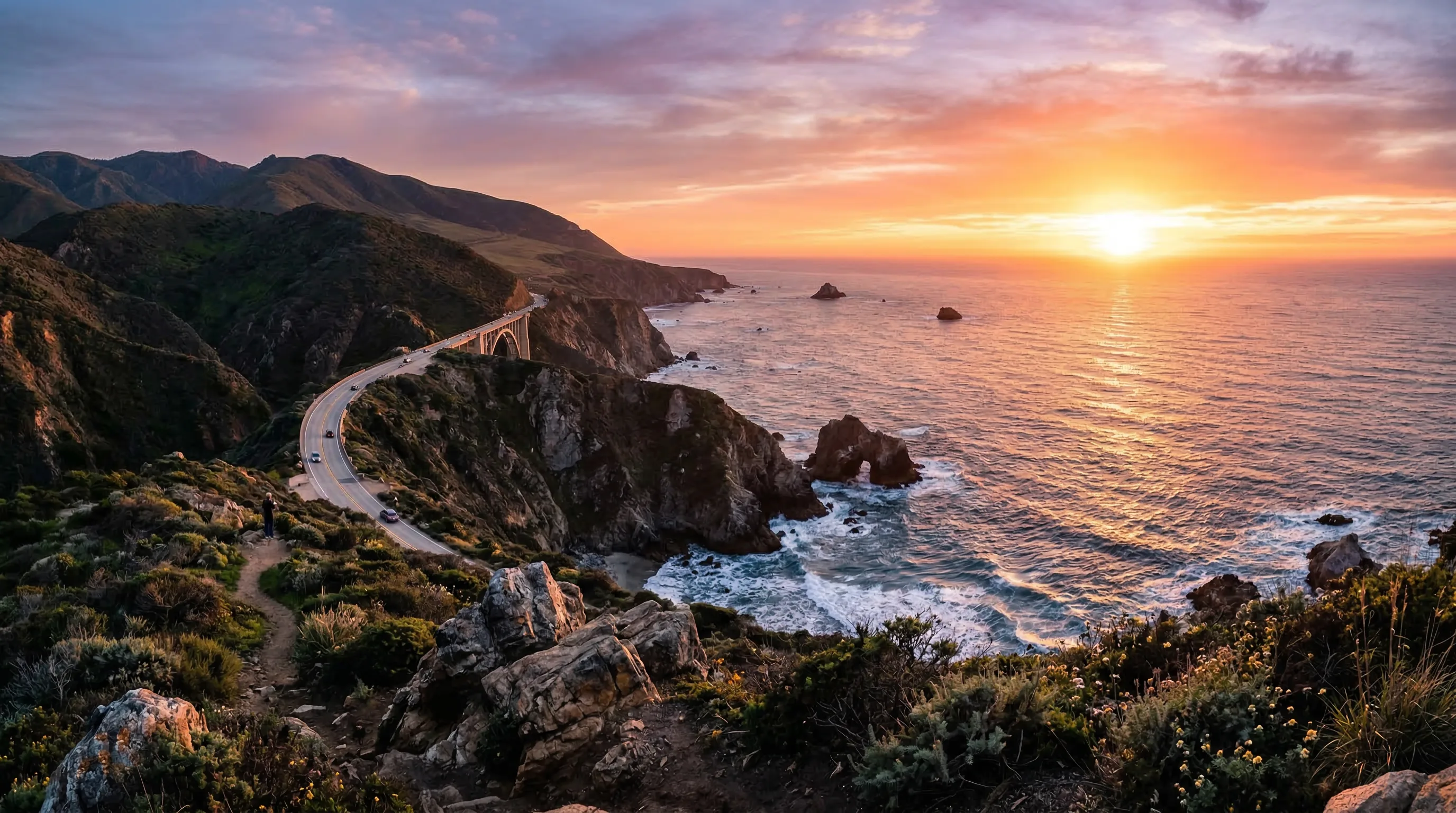
Paradise on Earth
Moroccan Gardens Guide
From the cobalt splendor of Jardin Majorelle to hidden desert oases, discover Morocco's most enchanting gardens. A thousand-year tradition of paradise gardens, water engineering, and botanical beauty awaits.
Gardens
15 Featured
Across 6 cities
Best Season
March-May
Spring bloom
Design Heart
Water
Sacred element
Top Garden
Jardin Majorelle
Most visited
Entry Fees
Free - 150 MAD
Many are free
Photography
Permitted
Most gardens
The Art of the Moroccan Garden
The Moroccan garden is far more than a collection of plants. It is a philosophical statement, a spiritual practice, and a masterwork of environmental engineering refined over a thousand years. Rooted in the Islamic concept of Janna (paradise), the traditional Moroccan garden is designed as an earthly reflection of the gardens described in the Quran: enclosed, abundant, fragrant, and centered on the life-giving presence of water.
Water is the sacred element at the heart of every Moroccan garden. In a land where much of the landscape is arid, the ability to channel, store, and display water was both a practical triumph and a spiritual act. The ancient khettara system of underground channels, some stretching over 30 kilometers from the Atlas Mountains, delivered snowmelt to royal gardens in Marrakech centuries before modern plumbing existed. Fountains, basins, and narrow water channels (seguias) are not decorative afterthoughts but the very skeleton around which the garden is built.
Geometric design governs every aspect of the Moroccan garden. The chahar bagh (four-part garden) layout, inherited from Persian and Mughal traditions, divides the space into four quadrants using intersecting water channels. This geometry extends to the zellige tilework that adorns fountains and walls, the precise clipping of hedges, and the symmetrical arrangement of citrus trees and palm plantings. The mathematical patterns are not merely aesthetic: they represent the infinite nature of creation and the divine order underlying the natural world.
Top 15 Gardens to Visit
From imperial palace gardens to hidden desert oases, these are Morocco's most beautiful and rewarding green spaces.
Jardin Majorelle
Morocco's most iconic garden and one of the most visited attractions in all of Africa. The twelve-acre botanical paradise combines vivid cobalt blue architecture with exotic plantings from around the world, creating an otherworldly sensory experience.
What makes it special: Created by French painter Jacques Majorelle in 1923 and later restored by Yves Saint Laurent and Pierre Berge. Famous for its electric cobalt blue walls (Majorelle Blue), over 300 plant species from five continents, towering bamboo groves, lotus ponds, and the Berber Museum housed in a stunning Art Deco studio.
Rue Yves Saint Laurent, Gueliz, Marrakech
9:00 AM - 6:00 PM daily (extended to 6:30 PM in summer)
150 MAD garden, 30 MAD Berber Museum, 100 MAD YSL Museum
Early morning (9-10 AM) to avoid crowds; March-May for blooming
Menara Gardens
One of the oldest gardens in Morocco, built by the Almohad dynasty in the 12th century. The vast reflecting pool was originally designed as an irrigation reservoir, surrounded by a peaceful olive grove that stretches for hundreds of acres.
What makes it special: A 12th-century Almohad garden centered around a massive reflecting pool (the Menara basin) with the snowcapped Atlas Mountains as a backdrop. The green-tiled pavilion reflected in the still water is one of Morocco most photographed scenes. Surrounded by ancient olive groves planted over 700 years ago.
Avenue de la Menara, Marrakech
8:00 AM - 5:00 PM daily
Free (10 MAD for the pavilion)
Late afternoon for golden light on the Atlas Mountains backdrop

Agdal Gardens
The largest historic garden in Marrakech and one of the oldest surviving royal gardens in the Islamic world. This walled paradise of fruit orchards and reflecting pools has been in continuous cultivation for nearly nine centuries.
What makes it special: A vast 400-hectare royal garden founded in 1157 by the Almohad Caliph Abd al-Mu'min. Contains ancient orange, fig, pomegranate, apricot, and olive groves irrigated by an ingenious underground channel system (khettara) that carries snowmelt from the Atlas Mountains over 30 kilometers. The Dar al-Hana pavilion overlooks a massive ornamental basin.
South of the Royal Palace, Marrakech
Friday and Sunday only, 9:00 AM - 5:00 PM (closed when King is in residence)
Free
Friday mornings for peaceful walks among the orchards

Le Jardin Secret
Hidden behind unassuming medina walls, this meticulously restored riad garden combines 400 years of Saadian-era architecture with a living showcase of Islamic garden philosophy. One of the best examples of traditional courtyard garden design in Morocco.
What makes it special: A beautifully restored 16th-century palace garden in the heart of the medina, featuring two distinct gardens: an exotic garden with tropical plants from around the world and an Islamic garden with traditional geometric water channels representing the four rivers of paradise. The climbable tower offers panoramic views over the medina rooftops to the Atlas Mountains.
121 Rue Mouassine, Marrakech Medina
9:30 AM - 6:30 PM (February-September), 9:30 AM - 5:30 PM (October-January)
80 MAD garden, 120 MAD garden + tower
Midday as a cool retreat from the medina heat; spring for jasmine blooms
Anima Garden
A two-hectare open-air museum and botanical garden located 27 km outside Marrakech in the Ourika Valley. Unlike traditional Moroccan gardens, Anima is a bold contemporary vision that blends botanical diversity with large-scale art installations.
What makes it special: A spectacular contemporary art garden in the foothills of the Atlas Mountains, created by Austrian artist Andre Heller. Features monumental sculptures, theatrical plantings, and immersive art installations woven through exotic gardens. The juxtaposition of massive cacti, tropical palms, and contemporary art against the Atlas backdrop is utterly unique. A free shuttle runs from a meeting point in Marrakech.
Douar Sbiti, Route de l'Ourika, Km 27, Marrakech
9:00 AM - 6:00 PM daily (closed Tuesdays)
120 MAD (includes shuttle from meeting point)
Morning for cool mountain air; April-June for peak flowering
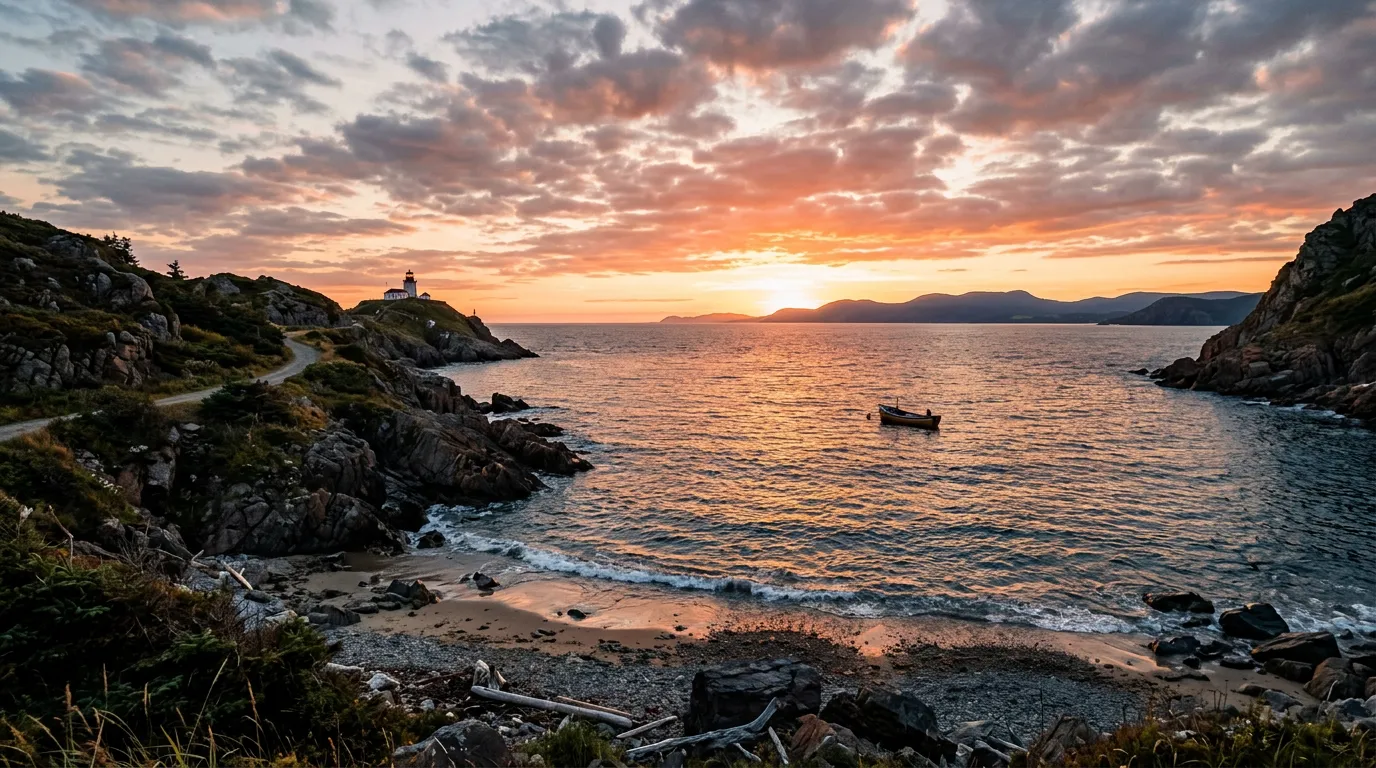
Exotic Gardens of Bouknadel
A remarkable tropical botanical garden on the road between Rabat and Kenitra. This hidden treasure houses one of the most diverse plant collections in North Africa, spread across themed gardens representing ecosystems from around the world.
What makes it special: Created by French horticulturist Marcel Francois in 1951, these lush tropical gardens contain over 1,500 plant species from five continents, organized by geographic origin: Polynesia, South America, the Caribbean, China, Japan, and sub-Saharan Africa. Bamboo forests, giant ferns, water lily ponds, and rare orchids create an astonishing diversity. A hidden gem rarely visited by tourists despite being one of Morocco finest botanical collections.
Route de Kenitra, Bouknadel (17 km north of Rabat)
9:00 AM - 6:30 PM daily
20 MAD
Spring (March-May) for the most lush vegetation

Andalusian Gardens
A tranquil Andalusian-style garden perched within the ancient Kasbah of the Udayas overlooking the Atlantic. Though created in the early 20th century, the garden perfectly captures the spirit of the Moorish gardens of Al-Andalus.
What makes it special: A serene walled garden within the 12th-century Kasbah of the Udayas, built in the Andalusian style during the French Protectorate using traditional Moorish design principles. Orange and lemon trees, purple bougainvillea, fragrant jasmine, and cypress hedges surround geometric pathways and a central marble fountain. The views over the Bou Regreg River to Sale are magnificent.
Kasbah des Oudaias, Rabat
8:00 AM - 6:00 PM daily
Free
Late afternoon for warm light on the whitewashed kasbah walls
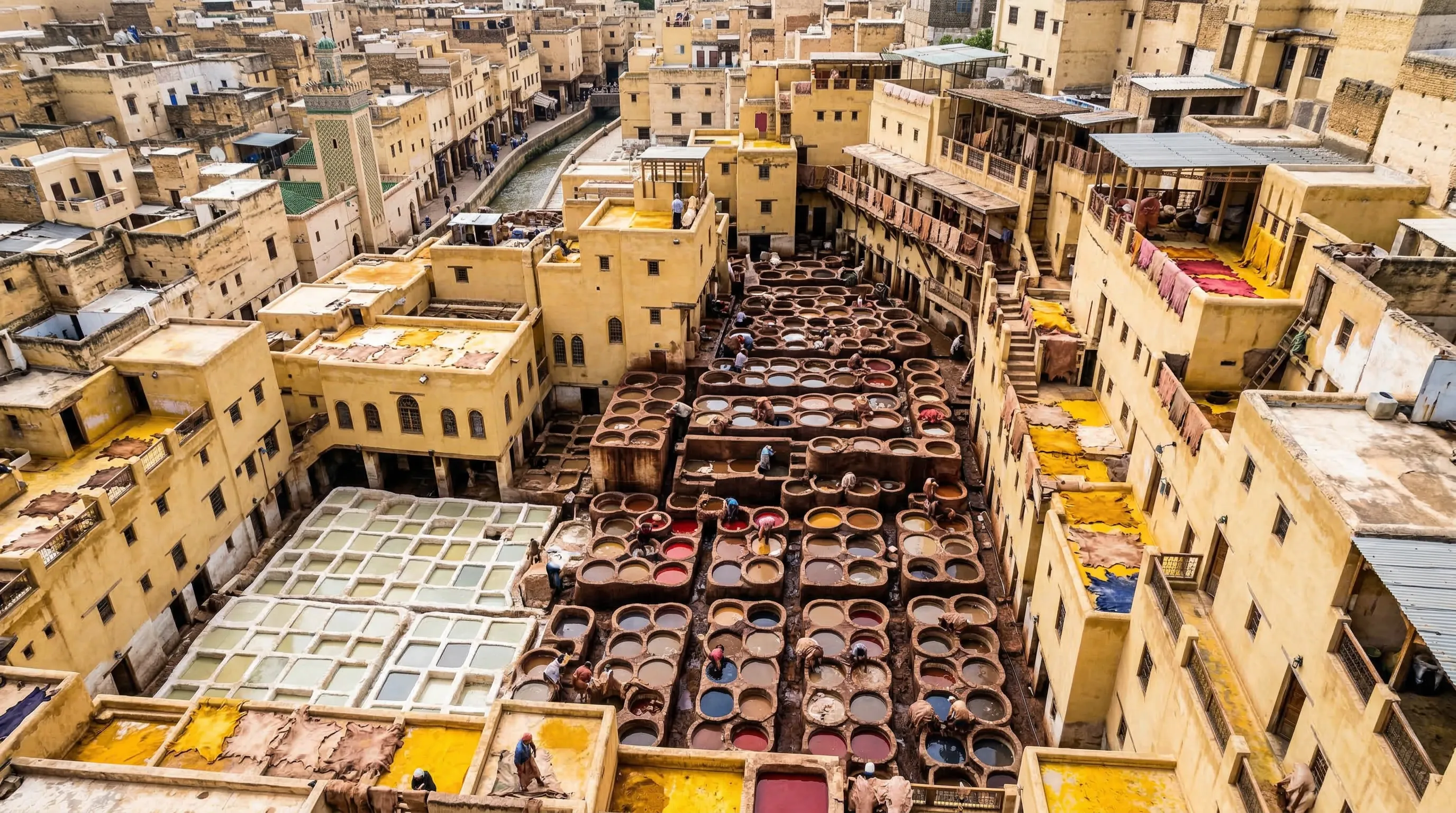
Jnan Sbil
A seven-and-a-half-hectare historic royal garden that has been lovingly restored as a public park. Jnan Sbil is an oasis of calm next to the ancient medina, offering shaded walkways, flowering gardens, and the gentle sound of flowing water.
What makes it special: The most beautiful public park in Fes, originally a royal garden created in the 18th century by Sultan Moulay Abdallah. Recently restored to its original glory with over 3,000 trees, formal flower beds, intricate water channels, ornamental lakes, and bamboo groves. The garden sits just outside the famous Bab Boujeloud (Blue Gate), making it the perfect retreat after exploring the intense Fes medina.
Avenue Moulay Hassan, Fes (near Bab Boujeloud)
8:00 AM - 6:00 PM daily
Free
Morning for birdsong; spring for roses and iris blooms
Riad Gardens of Fes
Not a single garden but a living tradition of courtyard garden design found throughout the ancient medina. Each riad (traditional townhouse) contains a private garden courtyard that follows centuries-old Islamic principles of enclosed paradise.
What makes it special: The courtyard gardens of Fes riads are among the most intimate and exquisite gardens in Morocco. Enclosed by ornate zellige-tiled walls, carved stucco, and painted cedar balconies, these miniature paradise gardens typically feature a central marble fountain surrounded by citrus trees, jasmine vines, and potted geraniums. The interplay of water, tile, light, and greenery within these walled courtyards perfectly embodies Islamic garden philosophy.
Throughout the Fes el-Bali medina
Varies by riad (typically open to guests 24/7; some allow visitors)
Free for guests; some riads charge 50-100 MAD for non-guest visits
Midday, when sunlight floods the courtyard from directly above
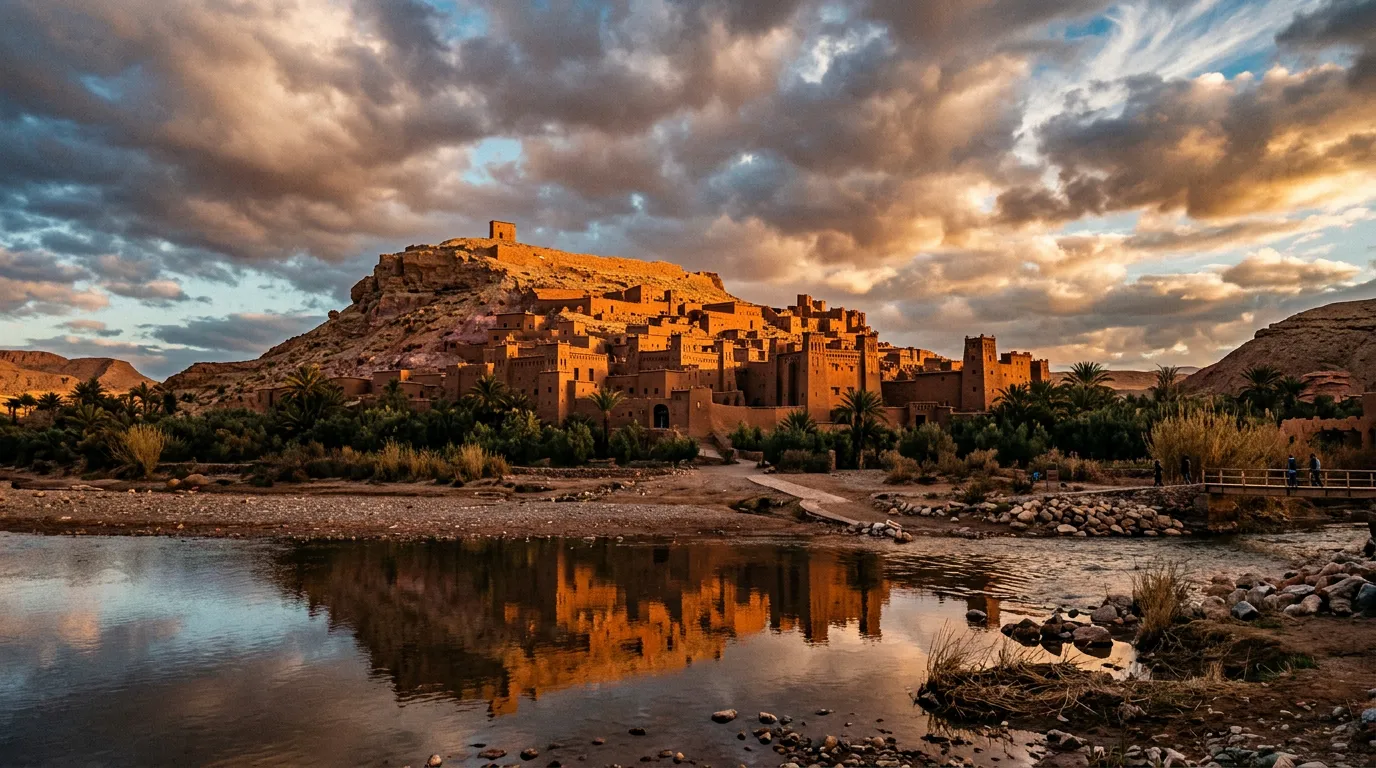
Royal Stables Gardens
The gardens surrounding the colossal granary and stables complex built by Sultan Moulay Ismail in the 17th century. This UNESCO World Heritage site combines monumental Alaouite architecture with royal garden landscapes.
What makes it special: The gardens and grounds surrounding Sultan Moulay Ismail's legendary Royal Stables (Heri es-Souani), once home to 12,000 horses. The massive granary building with its forest of arches and vaults opens onto landscaped gardens, ornamental basins, and the vast Agdal reservoir. The scale of the 17th-century engineering is breathtaking, combining monumental architecture with sophisticated hydraulic garden design.
Heri es-Souani, south of the Royal Palace, Meknes
9:00 AM - 6:00 PM daily
20 MAD
Morning for the best light on the monumental arches
Agdal Basin
A vast ornamental reservoir and garden complex built as part of Sultan Moulay Ismail's grand vision for his imperial capital. The basin demonstrates the centrality of water engineering to Moroccan royal garden traditions.
What makes it special: A monumental artificial lake built by Sultan Moulay Ismail as a reservoir for the royal palace grounds and surrounding gardens. The four-hectare basin is bordered by olive trees and garden promenades, offering panoramic views over Meknes. Originally fed by a 25-kilometer canal, the basin was a masterpiece of 17th-century hydraulic engineering. Today it serves as a peaceful public park popular with locals.
Near Heri es-Souani, Meknes
8:00 AM - 6:00 PM daily
Free
Sunset for reflections on the water and views of the old city
Argan Groves
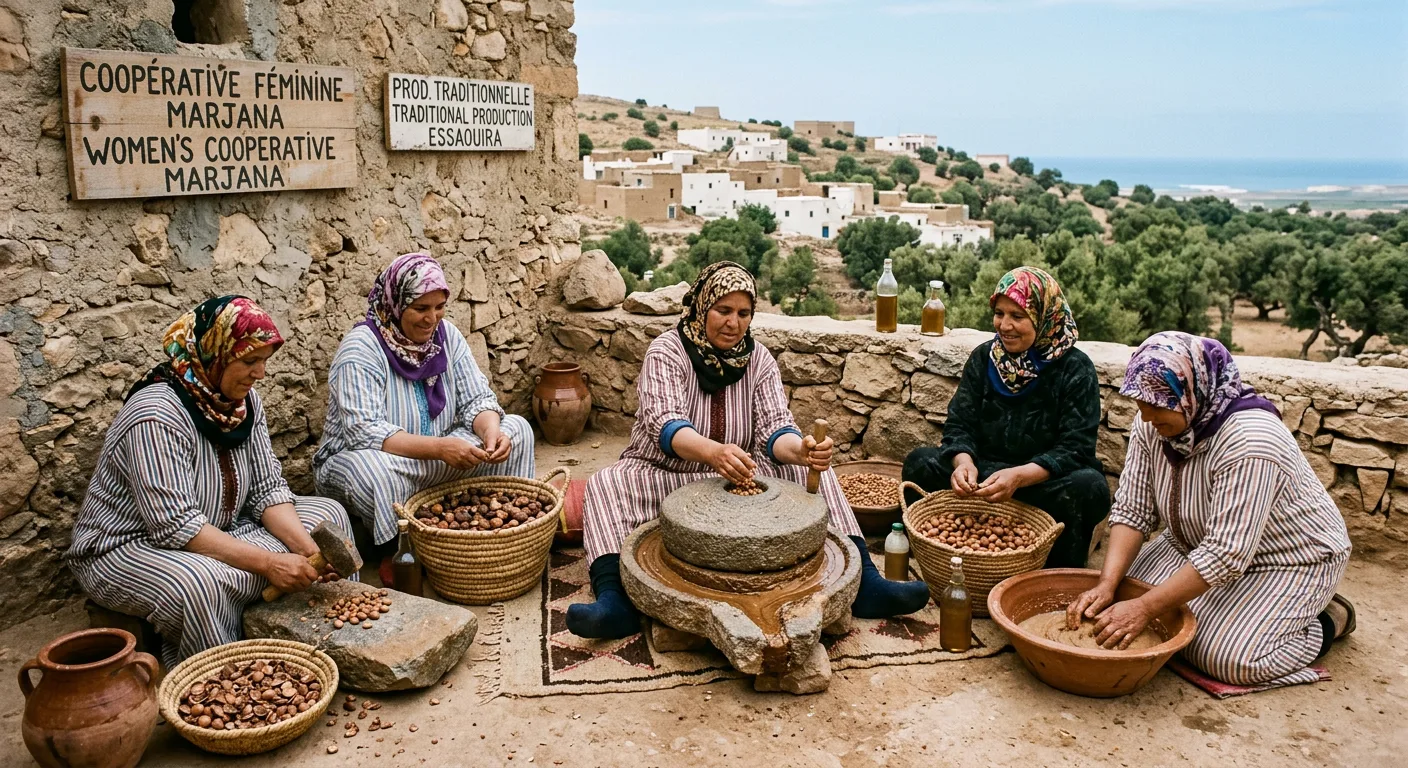
A UNESCO Biosphere Reserve of endemic argan woodland surrounding Essaouira. These ancient groves are not formal gardens but a living cultural landscape where traditional agriculture, biodiversity, and women's cooperatives intersect.
What makes it special: The UNESCO-protected argan biosphere reserve surrounding Essaouira is a unique living landscape where endemic argan trees (found nowhere else on earth) create a distinctive open woodland. Famous for the sight of goats climbing the gnarled argan branches to eat the fruit. Women's cooperatives in the groves produce argan oil using centuries-old stone-grinding methods. The twisted, ancient trees against the Atlantic breeze create an ethereal landscape.
Surrounding countryside, 5-20 km from Essaouira
Open countryside (cooperatives typically 9:00 AM - 5:00 PM)
Free (guided tours of cooperatives from 50 MAD)
Spring (April-May) when wildflowers bloom among the trees
Diabat Gardens
A village of wild beauty south of Essaouira where ruined palace gardens, sand dunes, and traditional small-scale agriculture create a landscape that blurs the line between cultivated garden and untamed nature.
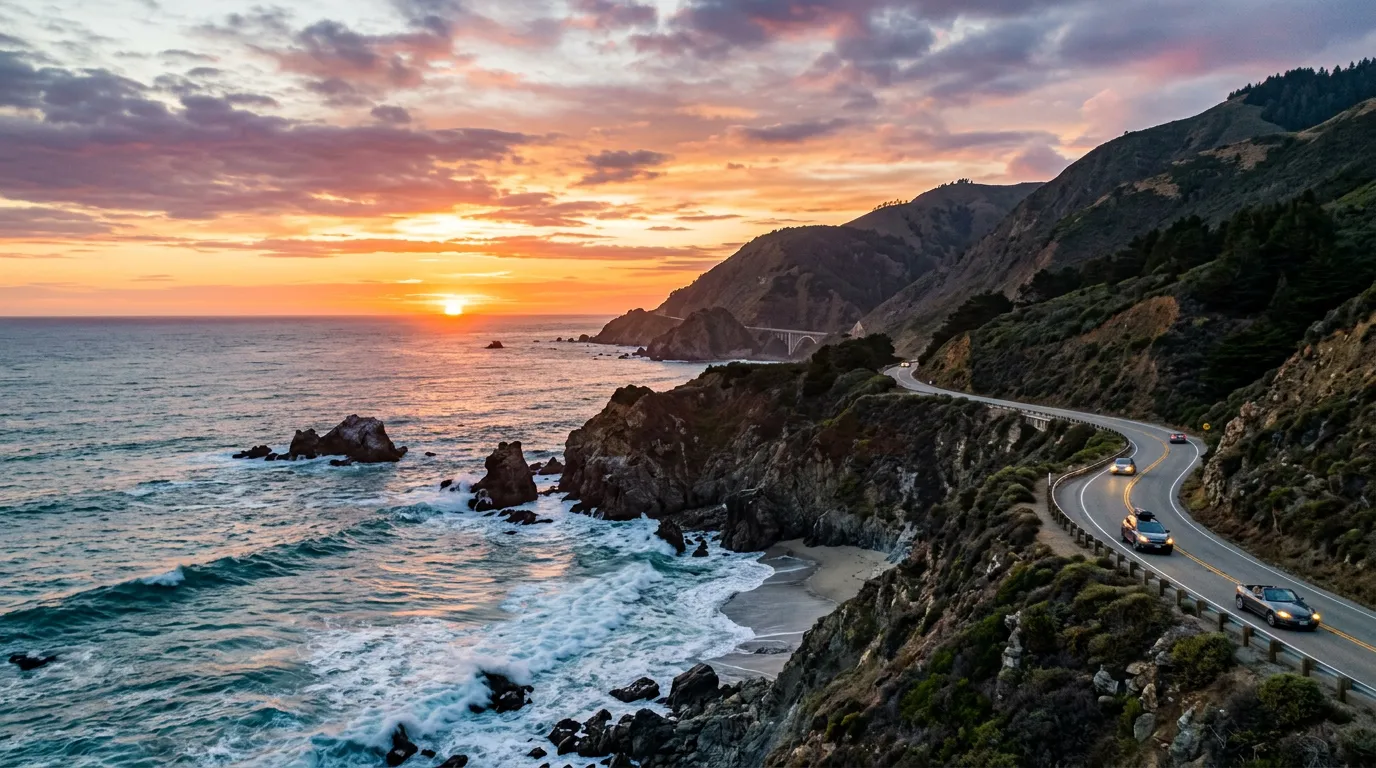
What makes it special: The windswept village of Diabat, famously visited by Jimi Hendrix in 1969, sits among sand dunes, ruined 18th-century palace gardens, and small irrigated plots where locals grow vegetables and herbs using traditional methods. The ruins of the Dar Sultan palace and its once-magnificent gardens overlook the Atlantic, with wild fig trees and bougainvillea reclaiming the crumbling walls. The surrounding landscape of dune gardens and ocean views is hauntingly beautiful.
Village of Diabat, 5 km south of Essaouira
Open access (village gardens are private but surrounding landscape is accessible)
Free
Late afternoon when the Atlantic light is golden and soft

Fint Oasis
A dramatic desert oasis hidden in a red-rock canyon, where traditional Berber irrigation creates a pocket of lush greenery in the midst of arid pre-Saharan landscape. One of the most photogenic spots in southern Morocco.
What makes it special: A stunning hidden oasis in a narrow red-rock canyon just outside Ouarzazate. Lush palm groves, irrigated terraced gardens, and a meandering river create an impossibly green paradise surrounded by the barren desert landscape. The contrast between the verdant oasis and the stark red cliffs is extraordinary. Used as a filming location for numerous Hollywood productions including Lawrence of Arabia. The traditional Berber village within the oasis maintains an ancient irrigation system.
10 km south of Ouarzazate, Fint Valley
Open access (best to hire a local guide at the village)
Free (tip for local guide recommended, 50-100 MAD)
Morning before the midday heat; October-April for comfortable temperatures
Skoura Palm Grove
A vast and ancient palm oasis stretching along the Valley of Roses. Skoura's palmery combines date palm agriculture, rose cultivation, and historic kasbah architecture in a landscape that has remained essentially unchanged for centuries.
What makes it special: One of Morocco's largest and most beautiful palm groves (palmeries), containing over 700,000 date palms along with ancient kasbahs, rose gardens, olive groves, and irrigated vegetable plots. The 17th-century Kasbah Amridil, one of the best-preserved kasbahs in Morocco, sits within the grove. The combination of towering palms, crumbling earthen kasbahs, rose hedges, and snow-capped Atlas peaks in the distance creates a landscape of extraordinary beauty.
Skoura, 42 km east of Ouarzazate on the N10
Open access (guided tours available through local kasbahs)
Free (guided tours from 100-200 MAD)
Early morning or late afternoon; spring for rose blooms
Garden Design Elements
The vocabulary of the Moroccan garden: water, tile, stone, and plant woven together in geometric harmony.
Zellige Tilework
Hand-cut geometric mosaic tiles in vivid blues, greens, and golds line fountains, pathways, and garden walls. The mathematical patterns represent infinity and the divine order of creation.
Tadelakt Surfaces
Polished waterproof lime plaster used on fountains, basins, and garden walls. Its smooth, luminous surface catches light and creates a sense of flowing water even on dry surfaces.
Central Fountains
The heart of every Moroccan garden. Running water symbolizes life and paradise in Islamic tradition. Marble or zellige fountains provide cooling sounds and attract songbirds.
Four-Part Layout (Chahar Bagh)
The classic Islamic garden is divided into four quadrants by water channels, representing the four rivers of paradise described in the Quran: water, milk, wine, and honey.
Orange and Citrus Trees
Bitter orange trees (naranj) are the signature planting of Moroccan gardens. Their fragrant blossoms perfume the air in spring, while the bright fruit provides winter color against green foliage.
Bougainvillea
The cascading magenta, purple, and coral blooms of bougainvillea drape over garden walls and pergolas throughout Morocco, creating dramatic color against whitewashed or blue-painted surfaces.
Riad Courtyard Geometry
Enclosed courtyards use precise proportions to frame the sky, channel breezes, and create a microclimate. The ratio of courtyard width to surrounding wall height is carefully calculated for optimal shade and light.
Water Channels (Seguias)
Narrow channels carry water from central fountains to the four corners of the garden. Their gentle murmur provides a cooling acoustic backdrop and symbolizes the abundance of paradise.
Best Season for Gardens
Morocco enjoys a long blooming season. Here is what to expect month by month across the country's gardens.
Almond blossoms (Tafraoute, Tizi n'Test), early wildflowers, mimosa
Cool mornings, mild afternoons. Gardens are green from winter rain.
Orange and lemon blossoms, irises, wisteria, jasmine begins
Perfect garden weather. The medina air fills with orange blossom fragrance.
Roses (especially the Valley of Roses near Skoura), bougainvillea, jacaranda, oleander
Peak season. The Kelaat M'Gouna Rose Festival typically falls in late April to mid-May.
Bougainvillea at peak, jasmine, lavender in Atlas foothills, hibiscus
Warm but not yet hot. Last comfortable month before summer heat in southern Morocco.
Oleander, hibiscus, lantana, plumbago. Garden cacti flower in oases.
Hot in interior cities. Visit gardens in early morning or late afternoon only.
Second bloom of roses, late bougainvillea, pomegranate fruit ripens
Temperatures moderate. Date palms fruit in October in the south.
Citrus fruit colors, poinsettia, winter jasmine, green winter foliage
Mild. Gardens are quieter with fewer tourists. Excellent visiting conditions.
Photography Tips for Gardens
Capture the magic of Moroccan gardens with these expert photography techniques.
Golden Hour is Everything
Moroccan gardens are most photogenic in the first and last hours of sunlight. The warm golden light transforms zellige tiles, water reflections, and foliage colors. Arrive at garden opening time for the best light and smallest crowds.
Capture Water Reflections
Moroccan gardens are designed around water. Get low to capture reflections in basins, fountains, and channels. A polarizing filter helps control glare and deepen the blue of tiled basins. Perfectly still mornings produce the best mirror reflections.
Frame Through Archways
Use the horseshoe arches, carved window screens (mashrabiya), and doorways of garden architecture as natural frames for your compositions. These create depth and a sense of discovery in your images.
Focus on Details
Some of the most compelling garden photographs are close-ups: a single orange against zellige tiles, water droplets on jasmine petals, the patina of aged brass fountain heads, or sunlight filtering through carved screens.
Use the Vertical Format
Tall palm trees, soaring arches, cascading bougainvillea, and narrow riad courtyards are natural subjects for vertical (portrait) compositions. Do not default to horizontal for every shot.
Include People for Scale
A figure walking through a palm grove, sitting by a fountain, or framed in an archway adds human scale and narrative to garden photographs. Ask permission before photographing individuals.
Respect Photography Rules
Some gardens restrict tripods or professional equipment. Mosques and their gardens are generally off-limits to non-Muslim visitors. Always check signage and ask before using flash or drones. Drone photography is heavily restricted in Morocco.
Shoot the Color Contrasts
Moroccan gardens thrive on bold color combinations: cobalt blue against terracotta, magenta bougainvillea on white walls, green palms against red earth. Compose to emphasize these contrasts for maximum visual impact.
Explore More of Morocco
From ancient architecture to vibrant crafts, there is always more to discover in the kingdom.