Is It Safe to Hike in the Atlas Mountains Alone?
Quick answer
Short, popular valley walks near villages like Imlil are generally fine on your own, but for longer or higher routes — including Toubkal — a local guide is strongly recommended for safety, navigation, weather and logistics. The Atlas is remote with patchy phone signal and changeable conditions, so solo high-mountain trekking carries real risks.
The High Atlas is a wonderful trekking destination, but "can I hike it alone?" depends a lot on the route. Here is an honest take on solo hiking there.
Match your independence to the terrain.
Short walks vs serious treks
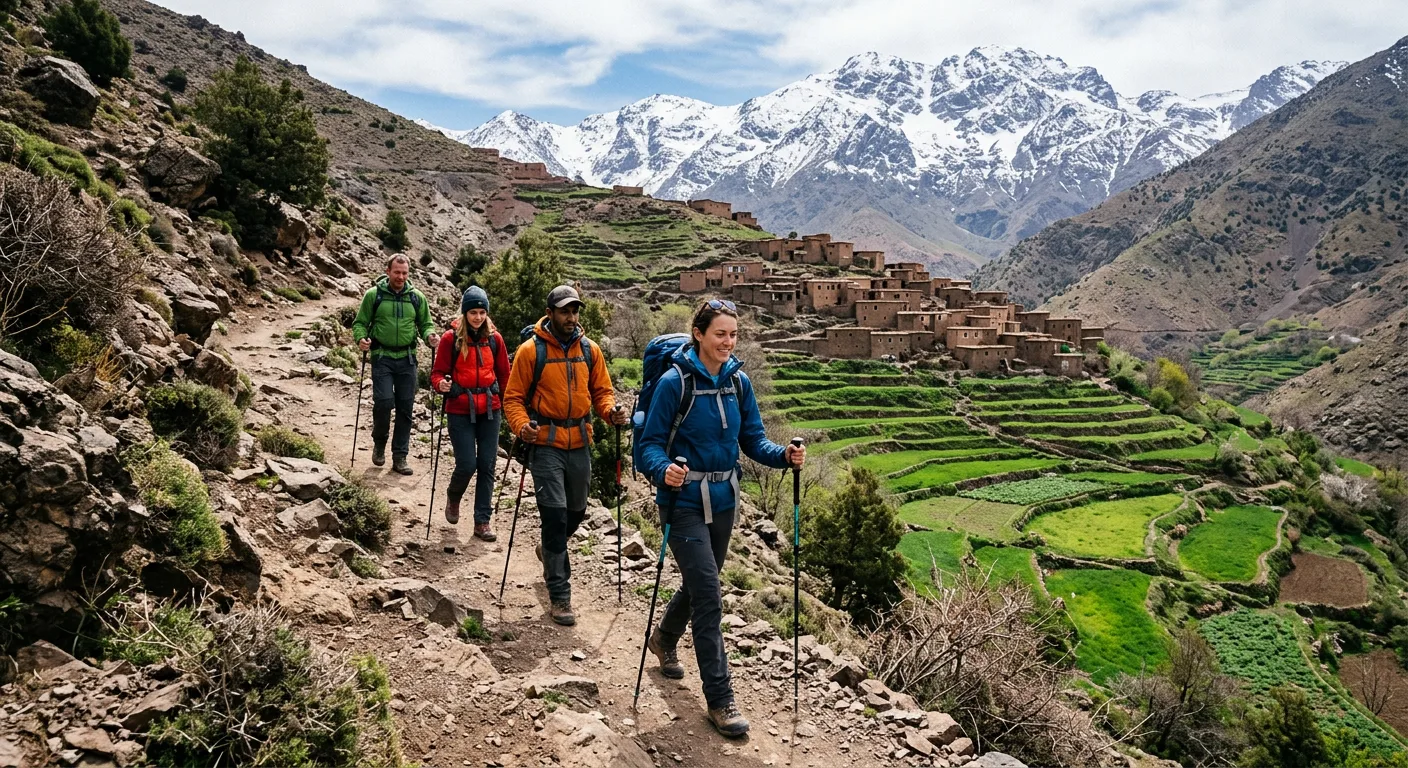
Easy, well-trodden valley walks and village-to-village strolls around hubs like Imlil and the Ourika Valley are popular and generally safe to do independently in daylight, with people around and clear paths. Many travellers wander these happily on their own.
Longer, higher or remote routes — ridge traverses, multi-day treks, and the Toubkal ascent — are a different matter: trails can be unclear, weather changes fast, altitude affects you, and help is far away. For these, going alone is risky and not advised.
Why a guide is recommended
For anything beyond gentle valley walks, a qualified local guide (and often a muleteer for bags) adds real safety and value: navigation on unmarked trails, weather and route judgement, altitude awareness, knowledge of conditions, and quick help if something goes wrong in an area with patchy phone signal. It is also the local norm and supports the mountain economy.
Toubkal in particular should be done with a guide — essential in winter, when snow and ice make it a technical mountaineering objective requiring crampons, an ice axe and experience.
Trekking responsibly
If you do shorter walks alone: go in daylight, tell someone your plan and expected return, carry water, sun protection and warm layers (mountain weather is changeable and cold at altitude/night), wear proper footwear, download offline maps (but do not rely on signal), and turn back if conditions worsen. Be respectful in Berber villages.
For real treks, book a reputable guide/agency, check the season (spring–autumn for non-mountaineers), and get travel insurance covering trekking at altitude. The Atlas rewards preparation — and a guide turns a risky solo objective into a safe, rich experience.
Key takeaways
- Short valley walks near villages: generally fine solo in daylight.
- Longer/higher routes and Toubkal: use a local guide for safety.
- The Atlas is remote with patchy signal and fast-changing weather.
- Tell someone your plan, carry layers/water, get trekking insurance.
Frequently asked questions
Can you hike the Atlas Mountains without a guide?
Short, popular valley walks near villages like Imlil are generally fine independently in daylight. For longer, higher or remote routes — and Toubkal — a local guide is strongly recommended for safety and navigation.
Do you need a guide for Mount Toubkal?
Yes — a qualified guide is strongly recommended (essential in winter, when crampons, an ice axe and experience are needed). The terrain, altitude, weather and remoteness make solo Toubkal risky.
Is it safe to trek solo in Morocco’s mountains?
For gentle, busy valley walks, generally yes with normal precautions. For serious mountain treks it is risky alone due to navigation, weather, altitude and patchy signal — use a guide.
Plan it with a local expert
Travel Morocco with Serenity Morocco Tours
Crafting extraordinary journeys through Morocco's timeless landscapes. 100% private journeys, handcrafted around you.
 from $2,011
Sahara Desert Luxury Expedition
 from $2,054
Essential Morocco: Imperial Cities Circuit
 from $5,978
Sahara to Sea: Morocco Complete