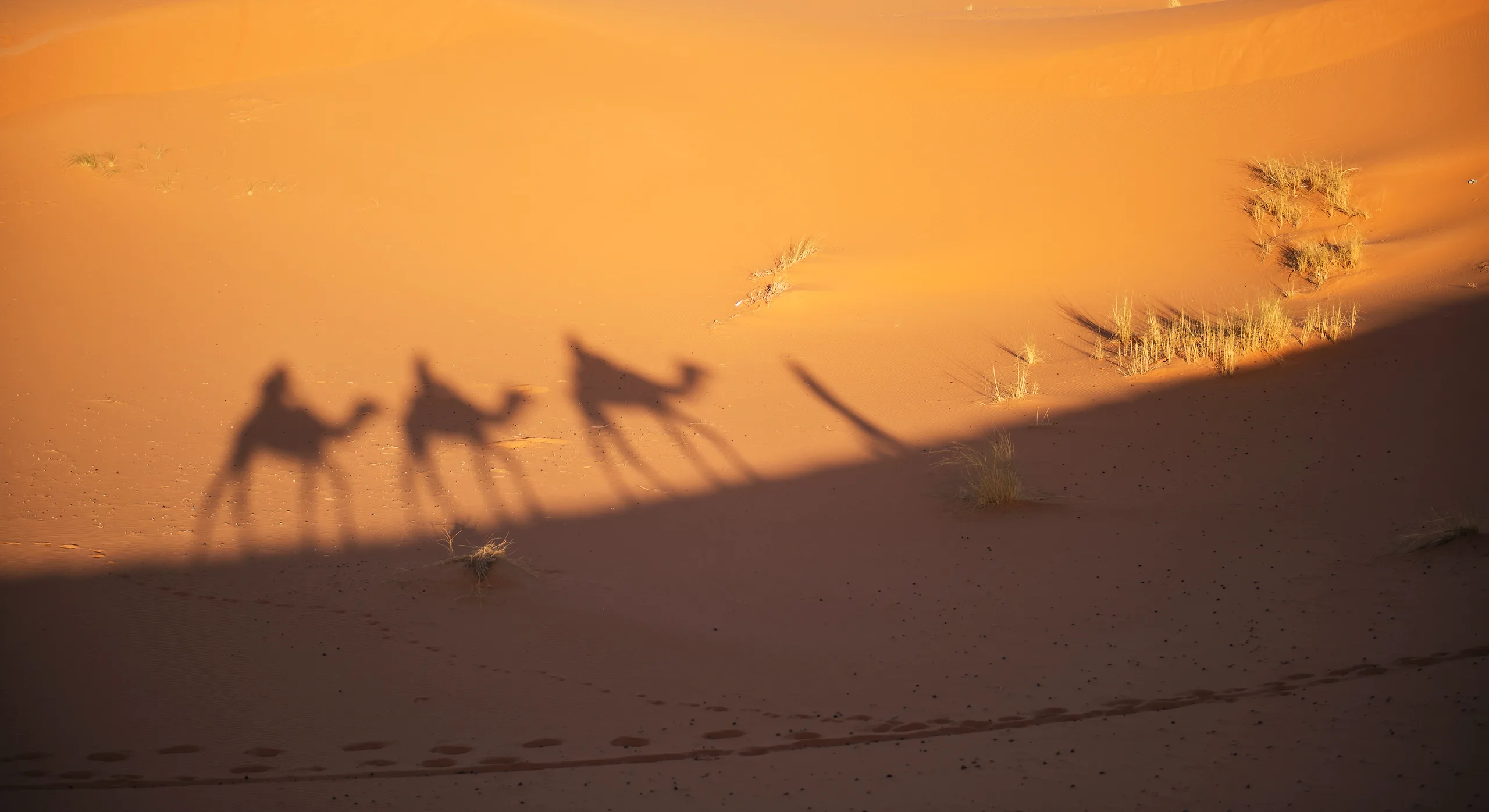
Merzouga Quad Biking: Ride the Erg Chebbi Dunes
One of Morocco’s most visceral travel experiences — tearing across the Sahara’s highest dune field on a quad bike, the sand spraying, the ridgelines razor-sharp in the low sun. Here’s what it actually costs, how long to book, and when to go.
By City Tours Morocco Editorial Team
Published 17 June 2026 Last updated 29 October 2026
Quad biking the Erg Chebbi dunes is the fastest way to understand just how vast Morocco’s Sahara actually is. On foot or on a camel you travel at the pace the desert sets; on a quad, you blast up a dune crest in seconds and suddenly the full 22-kilometre arc of sand stretches in front of you — nothing but rust-red ridges to the horizon. It’s disorienting in the best possible way.
Merzouga is ground zero for this. The village sits right against the western edge of Erg Chebbi, Morocco’s largest sea of dunes, and the main street is lined with operators who will hand you a helmet and point you towards the sand. The logistics are straightforward; the hard part is choosing between a one-hour taster and a full two-hour circuit that takes you into the quieter, wilder interior of the dune field.
Below you’ll find everything you need to plan it: realistic costs, the best times to go, what to pack, and how quad biking stacks up against the other classic Merzouga activity — the sunset camel trek.
Quad Biking at a Glance
Fast facts before you book — all figures are indicative for 2026.
Session length
1 hour or 2 hours (standard)
Indicative cost
200–600 MAD / $20–$60 per person
Best timing
Early morning or late afternoon
Season
Oct–April (avoid peak summer heat)
Location
Erg Chebbi dune field, Merzouga
Skill level
Beginner-friendly with a guide
What a Quad Session on Erg Chebbi Is Actually Like
The operator fits you with a helmet (full-face ones are better — ask for one), gives a two-minute briefing on throttle and brakes, and walks you to the bikes idling at the edge of the sandy apron beyond the village. Then you’re off. The first few minutes are mostly flat — the transition zone between the village and the proper dunes — and it gives you time to calibrate before the sand deepens.
Once you climb the first real dune, the sensation shifts. The quad bucks and slides under you; you learn quickly that momentum is your friend on the loose face, and that stopping halfway up a steep section is a mistake. Most guided routes avoid the genuinely treacherous crests unless you’re experienced, keeping to ridgelines and bowls where the riding is challenging but manageable for beginners.
At the turnaround point — usually a high ridge about 20–30 minutes into the circuit — you get a few minutes to stop, pull off the helmet, and look. The Erg Chebbi dunes reach up to 160 metres. From that height you can see Morocco fading to the east and the Algerian border somewhere in the haze beyond the last ridge. It’s the kind of moment that makes the dusty ride worthwhile.
The return loop usually swings through a different section of the dune field, and by the time you hit flat ground again your arms are tired and there’s sand in places you didn’t expect. That’s normal. That’s the point.
Erg Chebbi reaches 160 metres — Morocco’s highest dune field.
Quad Biking vs Camel Riding: How They Compare
Both activities are worth doing if your schedule allows. Here’s an honest side-by-side.
| Factor | Quad Biking | Camel Riding |
|---|---|---|
| Pace | Fast — you set it | Slow — the camel sets it |
| Terrain covered | Wide area, deep into dunes | Camp-and-back circuit |
| Noise | Engine roar throughout | Near silence |
| Physical effort | Arms and core workout | Gentle sway, some saddle soreness |
| Photo moments | Action shots, panoramic stops | Silhouette at sunset, intimate |
| Duration | 1–2 hours typically | 1–2 hours to camp |
| Indicative cost | 200–600 MAD / $20–$60 | 150–350 MAD / $15–$35 |
| Best for | Adrenaline seekers | Atmosphere and immersion |
Many private guided packages combine both: quad in the late afternoon, then switch to a camel for the final approach to the desert camp at sunset. It’s the most efficient use of a single evening.
What to Bring on Your Quad Session
Operators provide helmets and sometimes goggles, but the rest is down to you.
- Sunglasses with wraparound fit or goggles — sand gets everywhere
- A scarf or buff to cover your nose and mouth on dusty stretches
- Closed shoes, not sandals — the foot pegs are hot and gritty
- Sunscreen, even in winter (desert UV is intense)
- A water bottle — 1.5 litres minimum for a two-hour session
- A phone in a zip pocket or bag, not a loose pocket; sand ruins cameras fast
Health note: People with back problems, recent knee surgery, or severe heart conditions should skip the quad and opt for a camel trek instead. The dunes involve sudden jolts and sustained vibration over rough terrain. If in doubt, check with your doctor before booking.
Merzouga Quad Biking FAQs
Can you ride a quad bike on the Erg Chebbi dunes in Merzouga?
Yes — quad biking on the Erg Chebbi dunes is one of the most popular activities in Merzouga, and operators line the main road through the village. You ride directly into the dune field rather than on a paved circuit, which means the terrain is genuine Sahara: soft crests, sharp ridges and sweeping bowls. Most operators take you out to the base of the dunes and then guide you across a pre-set route through the sandy landscape. The experience feels rawer than Palmeraie quad biking near Marrakech — this is the actual Sahara.
How long is a quad biking session in Merzouga?
Standard sessions run either one hour or two hours. A one-hour session typically covers a circuit around the lower edges of Erg Chebbi, enough to get a feel for the dunes without going deep into the erg. A two-hour session pushes further, often reaching a high dune ridge with panoramic views across the sea of sand. For photographers or anyone wanting to stop and soak in the scale, two hours is worth the extra outlay. Half-day private tours that combine quad biking with a camel ride and sunset viewing are also available through guided operators.
Is quad biking or camel riding better in Merzouga?
They offer completely different experiences, and most visitors with time do both. Camel riding is slow, quiet and genuinely immersive — you move at the rhythm of the desert. Quad biking is loud, fast and physically engaging; you are wrestling the sand rather than becoming part of it. If you can only do one: camel riding for its meditative atmosphere; quad biking for the adrenaline and the elevation gains you can reach quickly. Many private tour packages bundle both into a single afternoon-and-sunset experience.
What is the cost of quad biking in Merzouga?
Indicative prices in 2026 run from around 200–300 MAD (roughly $20–$30) for a one-hour solo session, rising to 400–600 MAD ($40–$60) for two hours. Double quads (two riders on one bike) usually cost slightly more. Prices are rarely fixed — street-side operators expect negotiation, so polite haggling of 10–15% is normal. Booking through a reputable guided tour operator typically costs more but includes a guide who keeps you on safe terrain, equipment checks and, often, a transfer from your riad or camp.
Are quad bikes available to rent independently in Merzouga?
Yes. Dozens of small operators along the main strip in Merzouga rent quads without a guide. You sign a basic form, pay upfront, and head off with a rough verbal briefing on the route. This works fine if you are a confident rider familiar with off-road conditions, but the dunes can disorient first-timers: the soft sand is deceptively hard to read at speed, and dune crests hide sudden drops. If you have never ridden a quad off-road before, joining a small guided group or booking through a licensed operator with a lead guide is considerably safer.
What is the best time of day to quad bike in the Sahara?
The two golden windows are early morning (07:00–09:30) and late afternoon (16:00–18:30). At both times the low sun rakes across the dunes at an angle that makes the ridgelines dramatic and the sand golden rather than bleached white. Crucially, temperatures are also manageable — midday Sahara heat from June through August can exceed 45°C, which makes any sustained physical activity in the open sun genuinely unpleasant and potentially dangerous. The late-afternoon slot has the added bonus of finishing as the sun hits the horizon, giving you a natural segue into the sunset and evening camp experience.
Plan it with a local expert
Travel Morocco with Serenity Morocco Tours
Crafting extraordinary journeys through Morocco's timeless landscapes. 100% private journeys, handcrafted around you.
- Moroccan-owned
- 100% Private Tours
- 100% private tours since 2018
5 days Marrakech → Erg Chebbi
Sahara Desert Luxury Expedition
7 days Marrakech · Fes · Meknes · Rabat
Essential Morocco: Imperial Cities Circuit
14 days Full-country circuit
Sahara to Sea: Morocco Complete
Related Guides
Merzouga Desert Tours
Everything based at Erg Chebbi — camps, camel treks and overnight packages.
Morocco Quad Biking
Compare all the quad biking locations across Morocco, from the Palmeraie to the Sahara.
Merzouga Travel Guide
How to get there, where to stay, what to eat and every activity on offer at the dunes.