Discovering...
Food & Culinary Heritage
Moroccan Couscous Guide:
The Friday Tradition & Beyond
From the sacred Friday lunch to eight regional varieties, hand-rolling technique, and the best restaurants across Morocco. Everything you need to know about the kingdom's most iconic dish.
The History of Couscous in Morocco
Couscous is not just food in Morocco. It is identity. Every Friday, from the Rif Mountains to the Saharan oases, millions of Moroccan families gather around a single large platter of steaming couscous. It is the one meal that unites the entire nation, crossing lines of class, language, and geography.
The origins date back to the Berber (Amazigh) peoples of North Africa, with archaeological evidence of couscoussier-like pots in tombs from the 9th century. The technique of rolling and steaming semolina was perfected over centuries by Berber women, passing the art from mother to daughter across generations. Arab influences enriched the dish with new spices, dried fruits, and elaborate slow-cooked broths.
In December 2020, UNESCO inscribed couscous on the Representative List of the Intangible Cultural Heritage of Humanity, recognizing it as a shared tradition of Morocco, Algeria, Tunisia, and Mauritania. The inscription acknowledged not just the dish itself, but the entire ecosystem of knowledge surrounding it: the hand-rolling technique, the communal eating customs, the role of women as guardians of the tradition, and the social bonds strengthened around the shared platter.
The Sacred Friday Couscous Tradition
Every Friday, Morocco pauses. Shops close, families reunite, and the nation eats couscous together.
Why Friday?
Friday is the holy day in Islam, and the midday prayer (Salat al-Jumu'ah) is the most important of the week. After prayer, families gather at the eldest family member's home for couscous. The tradition is so deeply rooted that asking a Moroccan "What did you eat on Friday?" is rhetorical. The answer is always couscous. Restaurants across Morocco serve couscous as their Friday special, and many establishments serve nothing else for the midday meal.
The Friday Morning Ritual
Preparation begins early. By 8 AM, the couscous is being hand-rolled. The broth starts simmering by 9 AM. The air fills with the aroma of onions, saffron, and cinnamon. By noon, the couscoussier is steaming for the final time, and the family platter is warming. After the men return from Friday prayer, the meal is served. Turning away an unexpected guest on Friday is nearly unthinkable. Many families prepare extra portions for visitors or neighbors who may be alone.
For Travelers
If your Morocco trip includes a Friday, make couscous your lunch plan. Arrive at restaurants by noon for the freshest serving. Many tourist-oriented riads invite guests to join the family-style Friday couscous. If you are invited to a Moroccan home for Friday lunch, accept without hesitation. Bring pastries or fruit as a gift, remove your shoes at the door, and prepare for one of the most memorable meals of your trip.
8 Types of Moroccan Couscous
Moroccan couscous comes in far more varieties than most visitors realize. Each region and occasion calls for its own version.
Prices shown are starting prices and may vary by season, location, and restaurant.
#1
Couscous with Seven Vegetables
NationwideFriday lunch (the classic)
From 60 MAD at local restaurants
Kuskus b Saba' Khodra
The undisputed king of Moroccan couscous. Seven vegetables are chosen seasonally: typically carrots, turnips, zucchini, cabbage, pumpkin, onions, and tomatoes, slow-cooked in a fragrant broth with lamb or chicken. The number seven holds deep significance in Moroccan culture, symbolizing completeness and baraka (blessing).
Most traditional variety
Served every Friday
Seasonal vegetable selection
Sacred number seven
#2
Couscous Tfaya
Fes & Northern MoroccoCelebrations & weddings
From 80 MAD at restaurants
Kuskus b Tfaya
An opulent, sweet-savory masterpiece from Fes. The couscous is crowned with tender lamb or chicken, then topped with tfaya: a slow-cooked mixture of caramelized onions, raisins, cinnamon, and honey that has simmered for hours until deeply golden. Toasted almonds finish the dish.
Sweet-savory flavor profile
Caramelized onion topping
Wedding & celebration dish
Fes specialty
#3
Fes Lamb Shoulder Couscous
Fes & Middle AtlasFriday lunch & special occasions
From 80 MAD at restaurants
Kuskus b Lham
A whole lamb shoulder braised until falling off the bone, cooked in broth with chickpeas, onions, ras el hanout, saffron, and ginger. Fassi cooks use more butter than olive oil, more preserved ingredients, and more complex spice layering. This is the richest, most deeply satisfying variety.
Fall-off-the-bone lamb
Rich chickpea broth
Fassi butter-based technique
Deeply aromatic
#4
Marrakech 7-Vegetable Couscous
Marrakech & the SouthFriday lunch
From 55 MAD at local restaurants
Kuskus Marrakchi
The Marrakech version is sweeter and more aromatic than northern recipes, reflecting the city's love of complex spice blends. Generous ras el hanout, saffron, cinnamon, and sometimes a sprinkle of sugar on top. Pumpkin and caramelized onion topping is a Marrakchi signature.
Sweeter flavor profile
Heavy ras el hanout use
Pumpkin-forward
Aromatic spice blends
#5
Berber Barley Couscous (Belboula)
Atlas Mountains & rural areasDaily meals in mountain households
From 45 MAD at local restaurants
Belboula
Made from coarse barley rather than semolina. Nuttier, earthier, and chewier in texture. Traditionally prepared by Amazigh communities and served with buttermilk (lben) or a simple vegetable broth. Wild mountain herbs like thyme, oregano, and wild mint replace the urban spice blends. Increasingly celebrated in upscale restaurants as a heritage dish.
Berber heritage dish
Nuttier flavor
Served with buttermilk
Wild mountain herbs
#6
Seafood Couscous Essaouira
Essaouira, Safi & coastal citiesFridays in coastal regions
From 70 MAD at coastal restaurants
Kuskus b Hout
A coastal specialty using fresh fish (sea bass, grouper, or monkfish) cooked in a spicy tomato-based broth with bell peppers, potatoes, and chermoula. A completely different flavor world from inland couscous. Some versions add shrimp and calamari. The morning catch from the harbor goes straight into the pot.
Coastal specialty
Spicy chermoula broth
Morning-catch fresh fish
Tomato-pepper base
#7
Couscous Tfaya with Sweet Seffa
Fes & Northern MoroccoCelebrations, after meals
From 50 MAD at restaurants
Seffa Medfouna
A dessert couscous: fine grains or vermicelli steamed, mounded into a cone, dusted with powdered sugar and cinnamon. Hidden inside is tender chicken (seffa medfouna means "buried seffa"). Toasted almonds and raisins complete the dish. Served at celebrations and after large meals.
Sweet dessert couscous
Cinnamon-sugar topping
Hidden chicken inside
Celebration dish
#8
Couscous with Dried Meat (Khlii)
Fes & MeknesWinter months & Eid season
From 90 MAD at specialty restaurants
Kuskus b Khlii
A winter specialty using khlii, Moroccan preserved dried meat cured in rendered fat, olive oil, and spices. The intensely flavored khlii gives the couscous a deep, smoky, umami-rich taste unlike any other variety. Made primarily in Fes and Meknes during the colder months.
Winter specialty
Preserved dried meat
Smoky umami flavor
Fes & Meknes tradition
Couscous Royal: The King of the Table
The most lavish expression of Moroccan couscous, featuring three meats on a single platter.
What Makes It Royal?
Couscous royal is the most generous form of the dish. A mountain of hand-rolled couscous is topped with three different meats: slow-braised lamb shoulder, tender roasted chicken, and spicy merguez sausage. The seven-vegetable broth is served alongside. It is primarily a restaurant creation designed to impress, though some families prepare it for large celebrations like engagements and Eid.
Lamb Shoulder
Braised 3-4 hours with saffron, ginger, and chickpeas until it falls apart at a touch
Roasted Chicken
Marinated in chermoula, slow-roasted with preserved lemons, olives, and fresh herbs
Merguez Sausage
Spicy lamb sausage seasoned with cumin, paprika, harissa, and fennel seed, grilled to order
Pricing
Expect to pay from 150-300 MAD per person at mid-range to upscale restaurants. Al Fassia in Marrakech and Dar Roumana in Fes are known for the best couscous royal. Seasonal pricing can change during peak tourist months. Order 24 hours in advance at most restaurants.
The Art of Hand-Rolling Couscous
Hand-rolling couscous is a skill that Moroccan women have perfected over centuries. Here is the traditional process, step by step.
1
Prepare the Semolina
10 min
Spread fine semolina flour (smida) on a large, shallow wooden or ceramic dish called a gsaa. Sprinkle with salted water and a drizzle of olive oil. The gsaa is traditionally round and wide, providing ample surface area for rolling.
Tip: Use medium-fine semolina for the best texture. Too fine produces paste; too coarse produces lumps.
2
Roll the Grains
20 min
Using circular motions with the palms and fingertips, work the wet semolina into tiny, uniform granules. The motion is gentle and rhythmic: rolling the grains between the palms while rotating them across the gsaa. This is the skill that takes years to master.
Tip: Keep your hands slightly damp. The motion comes from the wrists and fingertips, not brute force.
3
Sift and Size
10 min
Pass the rolled couscous through a fine-mesh sieve to separate out any grains that are too large or too small. The large grains go back into the gsaa for re-rolling, while the fine dust falls through. Repeat until all grains are uniform.
Tip: Professional Moroccan cooks produce grains so uniform they look machine-made. Your first batch will be mixed and that is completely fine.
4
First Steaming
20 min
Place the rolled couscous into the top tier of a couscoussier (a two-part steamer called a kiskas). The broth simmers in the bottom pot while steam rises through the couscous. Do not cover the top. Steam until the couscous is hot throughout.
Tip: Seal the joint between the two pots with a strip of cloth dipped in flour paste to prevent steam escaping sideways.
5
Break, Fluff & Second Steaming
30 min
Remove the couscous, spread it in the gsaa, and break up any clumps with your fingers. Sprinkle with salted water and olive oil or butter. Rake through gently to separate every grain, then return to the couscoussier for a second steaming. Repeat the fluffing process. Some cooks do a third steaming for maximum lightness.
Tip: Use a fork or your fingers to gently separate the grains. Never stir vigorously or you will crush them. The total process takes about 2 hours.
Best Couscous Restaurants in Morocco
From hole-in-the-wall neighborhood gems to refined riad dining rooms, these are the places where couscous reaches its peak.
Prices are starting prices per person. Seasonal pricing may apply during peak tourist months. Many serve couscous only on Fridays.
#1
Dar Zellij
MarrakechFine Dining Riad
From 200 MAD per person
Set in a stunning 17th-century riad with intricate zellige tilework. Their Friday couscous with seven vegetables is considered one of the best in Marrakech. Reservations are essential on Fridays.
Signature: Seven-vegetable couscous with lamb
#2
Cafe Clock
FesCultural Cafe
From 80 MAD per person
A beloved Fes medina institution blending tradition with contemporary flair. The Friday couscous lunch is a communal event worth planning around, and their couscous cooking workshops are excellent.
Signature: Couscous tfaya & cooking workshops
#3
Al Fassia
MarrakechTraditional Moroccan
From 150 MAD per person
Run entirely by women since 1987. Al Fassia serves the most authentic Moroccan cuisine in the city. Their couscous royal with lamb, chicken, and merguez is legendary.
Signature: Couscous royal (triple meat)
#4
La Sqala
CasablancaGarden Restaurant
From 120 MAD per person
Housed in an 18th-century Portuguese fortification with a garden courtyard. Their lamb shoulder couscous with chickpeas and caramelized onions draws locals every Friday lunchtime.
Signature: Lamb shoulder couscous
#5
Restaurant Numero 7
FesRiad Restaurant
From 180 MAD per person
A refined riad dining experience in the Fes medina. Their seffa medfouna (sweet couscous with hidden chicken) is the finest in the city, prepared to order from generations-old family recipes.
Signature: Seffa medfouna
#6
Ocean Vagabond
EssaouiraBeach Restaurant
From 100 MAD per person
A relaxed beachfront spot specializing in fresh seafood. Their fish couscous uses the morning catch from the harbor steps away. Ocean views make the Friday experience unforgettable.
Signature: Fish couscous with chermoula
Couscous Cooking Classes by City
Learn to make authentic couscous from scratch. Classes include market visits, hand-rolling technique, and a shared meal.
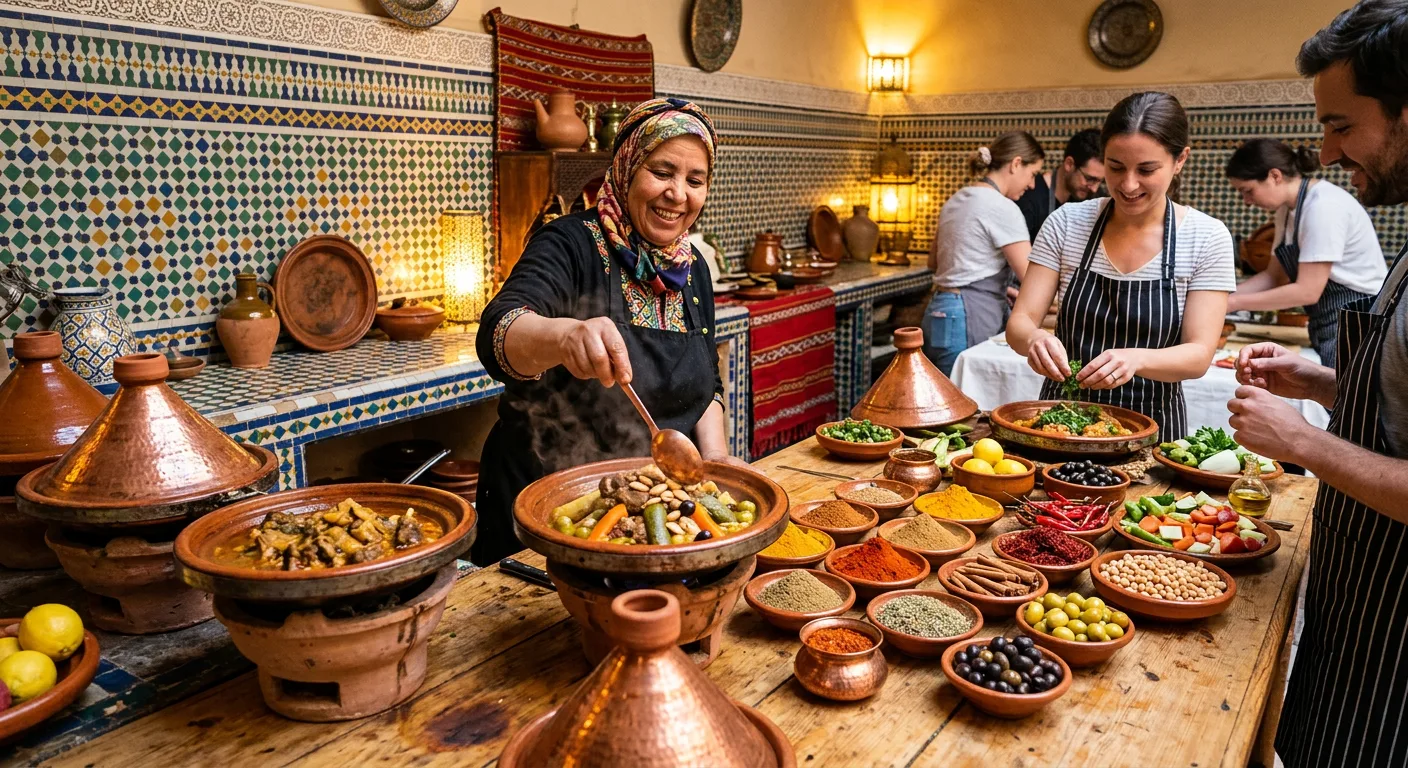
Marrakech
The most popular city for cooking classes. Marrakech offers dozens of options from budget-friendly group classes in the medina to private chef-led experiences in luxury riads. Most include a souk visit to buy ingredients.
La Maison Arabe
From 650 MADSouk Cuisine
From 350 MADAmal Women's Center
From 300 MAD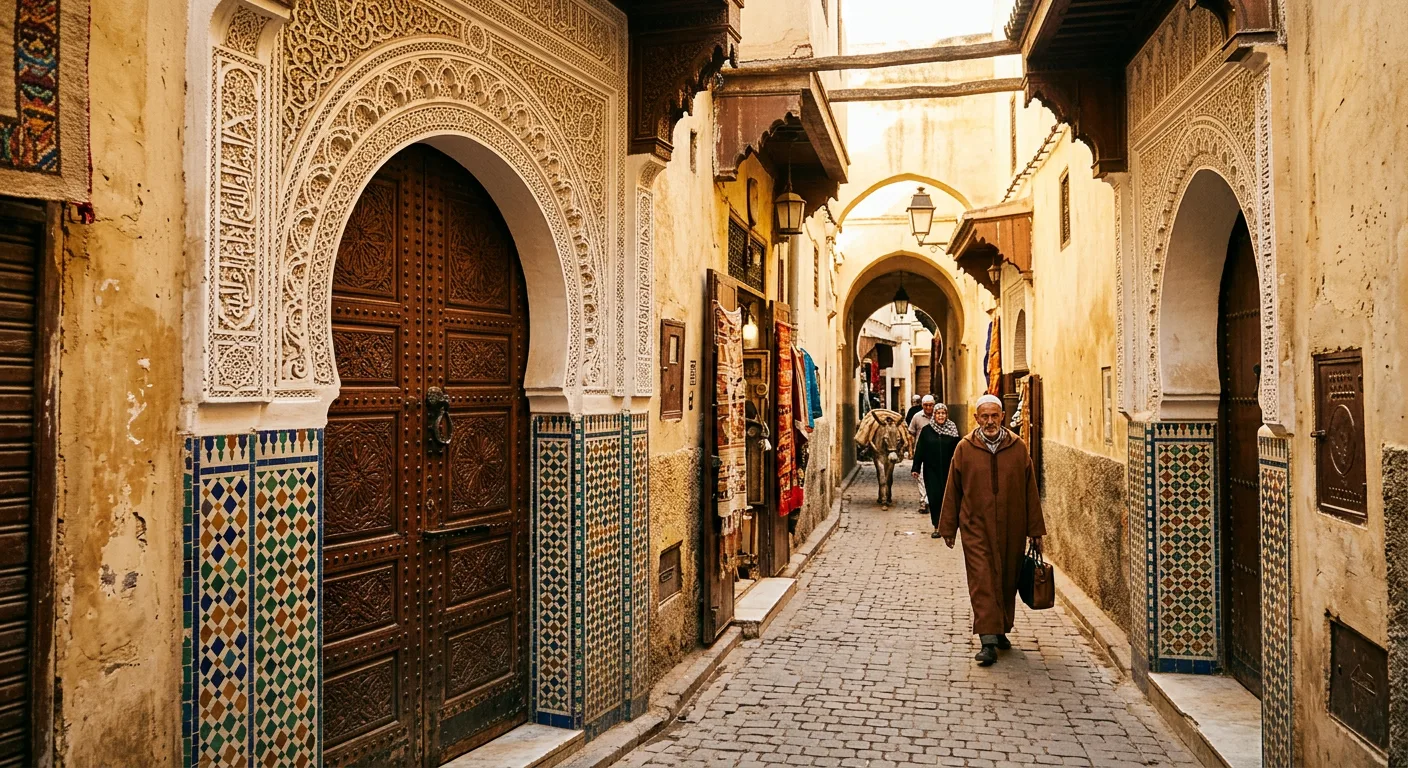
Fes
Fes is the culinary capital of Morocco, and learning to make couscous here feels especially authentic. Classes are often held in family homes within the ancient medina, taught by women who learned from their grandmothers.
Palais Amani
From 500 MADCafe Clock
From 400 MADDar Namir
From 350 MAD
Essaouira
Cooking classes in Essaouira focus on the coastal variant: fish couscous with chermoula. Many classes begin at the fishing port selecting the freshest catch, before heading to a kitchen overlooking the Atlantic.
L'Atelier Madada
From 450 MADKhmissa Cooking
From 350 MADCouscous Festivals in Morocco
Morocco celebrates its national dish with dedicated festivals that attract food lovers from around the world.
Couscous Fest (Various Cities)
An annual celebration that rotates between Moroccan cities. Dozens of cooks from different regions prepare their local couscous styles, allowing visitors to taste the full spectrum of Moroccan couscous in a single event. Cooking demonstrations, hand-rolling workshops, and competitions for the best couscous draw large crowds. Typically held in autumn.
Usually September-November
Festival of Amazigh Cuisine (Atlas Region)
Celebrating Berber culinary heritage, this festival features barley couscous (belboula), mountain herb preparations, and traditional cooking methods using wood fires and clay couscoussiers. Held in High Atlas villages, it offers a rare look at couscous in its most ancient form. Local women demonstrate hand-rolling techniques passed down for generations.
Usually June-July
Fes Festival of Culinary Arts
While not exclusively focused on couscous, this Fes festival always features couscous prominently as part of the city's culinary heritage programming. Master cooks from the old Fassi families demonstrate the refined Fes couscous tfaya and seffa medfouna, dishes that rarely appear in restaurants in their full traditional form.
Usually April-May
Couscous Dining Etiquette
Eating couscous in Morocco is a communal ritual with its own customs. Follow these guidelines for a respectful and authentic experience.
Eat with Your Right Hand
Traditionally, couscous is eaten with the right hand only. Form a small ball of couscous with your fingertips and bring it to your mouth. Using a spoon is perfectly acceptable for visitors unfamiliar with eating by hand.
Eat from Your Section
When eating from a shared platter, eat only from the area directly in front of you. Never reach across to another person's section. The host will place choice pieces of meat and vegetables near you as a sign of respect.
Wait for the Host
Do not begin eating until the host says "Bismillah" (in the name of God). This is the signal that the meal has begun. Rushing to eat before this is considered extremely rude.
Accept Second Helpings
Your host will insist you eat more. Refusing too quickly is seen as impolite. Eat generously. When you are truly full, place your hand over your heart and say "Alhamdulillah" (praise be to God).
Wash Hands & Drink the Broth
A pitcher of water and basin is passed for hand-washing before the meal. The broth (marka) is served separately and ladled over couscous. Drinking it from a bowl is also acceptable. Never waste the broth.
Thank the Cook
After the meal, say "Allah y'atik sa7a" (may God give you health). Making couscous takes hours of preparation and acknowledging the effort is deeply appreciated in Moroccan culture.
Never Rush the Meal
A Friday couscous meal is a leisurely affair lasting 1-2 hours. It is a time for family and conversation. Eating quickly and leaving is considered disrespectful to both the food and the host.
Practical Tips for Couscous Lovers
Best Day to Eat Couscous
Friday is the day. Most restaurants serve their best couscous on Friday between 12 PM and 3 PM. Some restaurants only serve couscous on Fridays. If you are in Morocco over a Friday, make couscous your lunch plan. Arrive by noon for the freshest serving.
Price Expectations
Local neighborhood restaurants serve generous couscous plates from 40-80 MAD. Mid-range restaurants charge from 100-180 MAD. Fine dining riad restaurants start from 200 MAD per person. Seasonal pricing can change during peak tourist months (October-April) and holidays.
Tourist Trap Warning
Avoid restaurants in the main squares (Jemaa el-Fna in Marrakech, for example) that serve couscous made from instant pre-steamed grains. Authentic couscous is steamed fresh in a couscoussier. Ask if the couscous is "bel yed" (by hand) or "maghrabi" (traditionally steamed).
Ordering Couscous
At restaurants, couscous is usually available only at lunchtime (12-3 PM), especially on Fridays. It is rarely served at dinner. When ordering, specify your meat preference: lamb (lham), chicken (djaj), or vegetarian (khodra). The broth is always served on the side.
Invited to a Moroccan Home?
Accept enthusiastically. Bring pastries or fruit as a gift. Remove your shoes at the door. The host will insist you eat more. This is one of the most authentic cultural experiences Morocco offers. Buy a couscoussier (from 80 MAD) at the souk to recreate the dish at home.
Buying a Couscoussier
The traditional two-part steamer is available in every souk and kitchenware shop. Stainless steel versions start from 80 MAD. Copper and brass ones (more decorative) start from 250 MAD. A couscoussier is the single best kitchen souvenir you can bring home from Morocco.
Moroccan Couscous Traditions
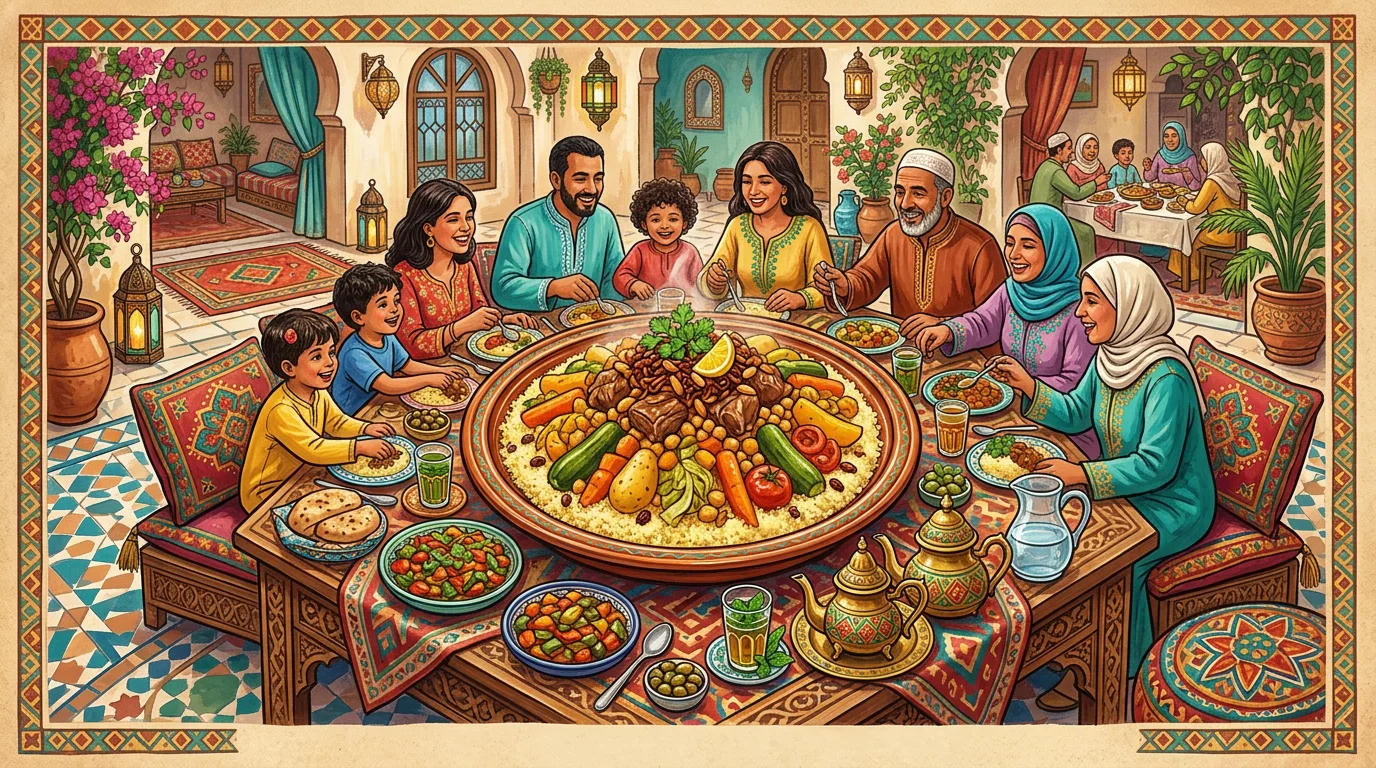
Traditional Couscous Platter
Hand-Rolling Technique
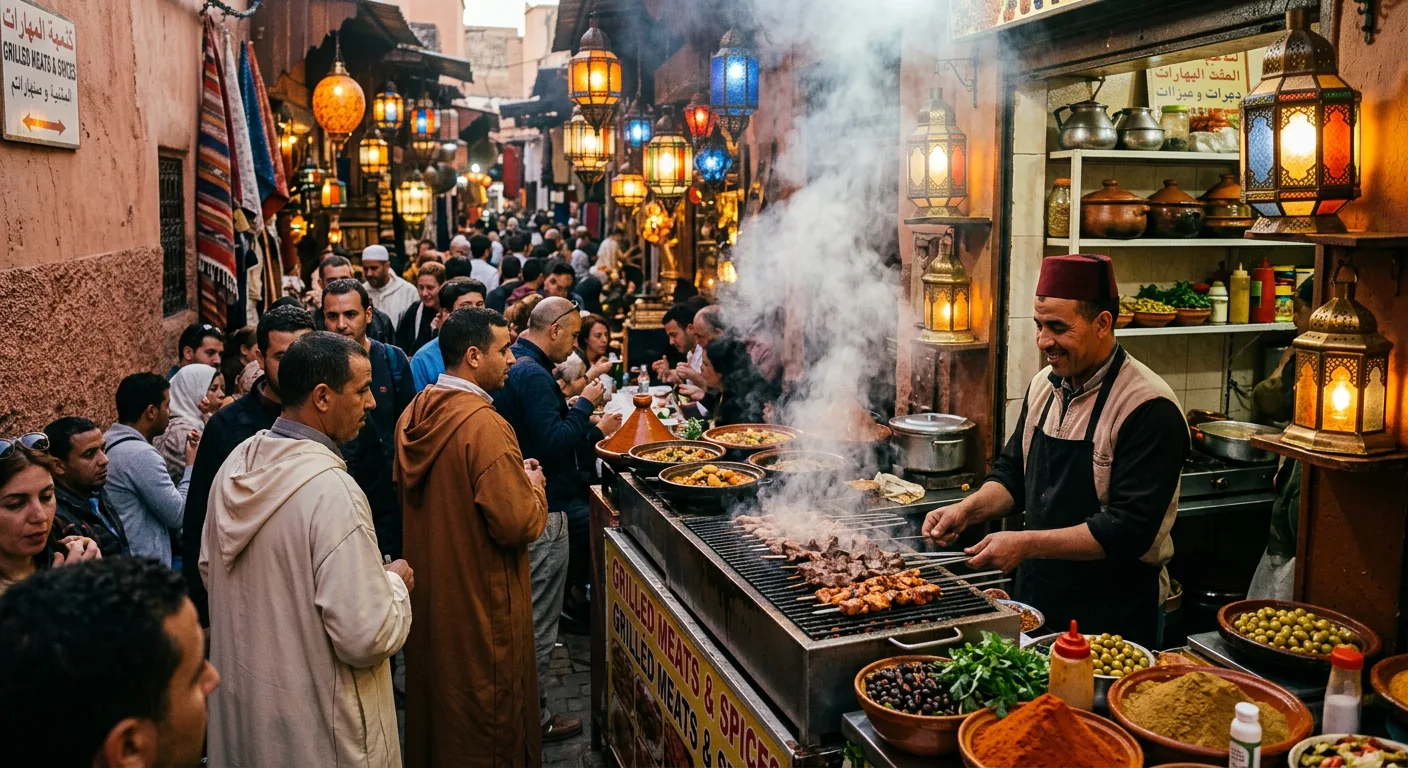
Souk Ingredients
Frequently Asked Questions
Answers to the most common questions travelers ask about Moroccan couscous.
Why do Moroccans eat couscous on Friday?
Friday is the holy day in Islam, and couscous is served after the midday prayer (Salat al-Jumu'ah) as a communal family meal. The tradition dates back centuries and is deeply ingrained in Moroccan culture. It is considered a blessing (baraka) to share couscous with family and guests on Friday. Refusing to eat couscous on Friday or serving a different dish would be seen as breaking with a sacred custom.
What is the difference between Moroccan and store-bought couscous?
Traditional Moroccan couscous is hand-rolled from semolina flour and steamed two to three times in a couscoussier, resulting in light, fluffy, separate grains. Store-bought instant couscous is industrially pre-steamed and dried, requiring only boiling water. The texture and flavor difference is enormous. Once you eat properly steamed Moroccan couscous, the instant version will never satisfy.
How do you eat couscous properly in Morocco?
Traditionally, couscous is eaten with the right hand from a shared communal platter. Each person eats from the section directly in front of them. Form small balls of couscous with your fingertips and bring them to your mouth. The host places choice pieces of meat and vegetables in front of honored guests. Using a spoon is perfectly acceptable for visitors.
What are the most popular types of Moroccan couscous?
The most popular types include seven-vegetable couscous (the Friday classic), couscous tfaya (caramelized onions and raisins from Fes), lamb shoulder couscous, chicken couscous with preserved lemons, fish couscous from the Atlantic coast, sweet seffa (dessert couscous), barley couscous (belboula) from the Atlas Mountains, and couscous royal with three meats.
Where can I take a couscous cooking class in Morocco?
Cooking classes are available in Marrakech, Fes, Essaouira, and Casablanca, starting from 300 MAD per person. Classes last 3-5 hours and include a market visit, hand-rolling technique, broth preparation, and eating the meal together. Book 2-3 days in advance during peak season.
Is Moroccan couscous gluten-free?
No. Traditional couscous is made from durum wheat semolina and contains gluten. Barley couscous (belboula) also contains gluten. Some upscale restaurants offer corn semolina or millet as alternatives. Always inform the kitchen of dietary restrictions before ordering.
What is couscous royal?
Couscous royal is a lavish version featuring three different meats: lamb, chicken, and merguez sausage, all served together on a single platter. It is typically a restaurant creation rather than a home-cooked dish, and represents the most generous expression of Moroccan couscous. Expect to pay from 150-300 MAD per person.
Can I find good couscous outside of Fridays?
Some restaurants serve couscous daily, but the quality is highest on Fridays when kitchens prepare it fresh for the weekly rush. In Marrakech and Fes, a handful of restaurants specialize in couscous and serve it every day. Tourist-oriented riads often include it on their daily menus. For the most authentic experience, plan your couscous meal on a Friday between 12 PM and 3 PM.
Related Guides
Moroccan Food Guide
The complete guide to Moroccan cuisine: 50+ dishes, dining etiquette, and the best food cities in Morocco.
Read guideCooking Classes
Hands-on cooking classes and culinary workshops across Morocco for food-loving travelers.
Read guideBest Restaurants
Top-rated restaurants across Morocco by city, cuisine style, and budget range.
Read guideStreet Food Guide
The best street food stalls, snacks, and affordable eats across Morocco's cities and medinas.
Read guideReady to Taste Morocco's National Dish?
From a Friday family meal to a hands-on cooking class, couscous is the heart of Moroccan food culture. Plan your culinary journey and experience this centuries-old tradition firsthand.