Discovering...
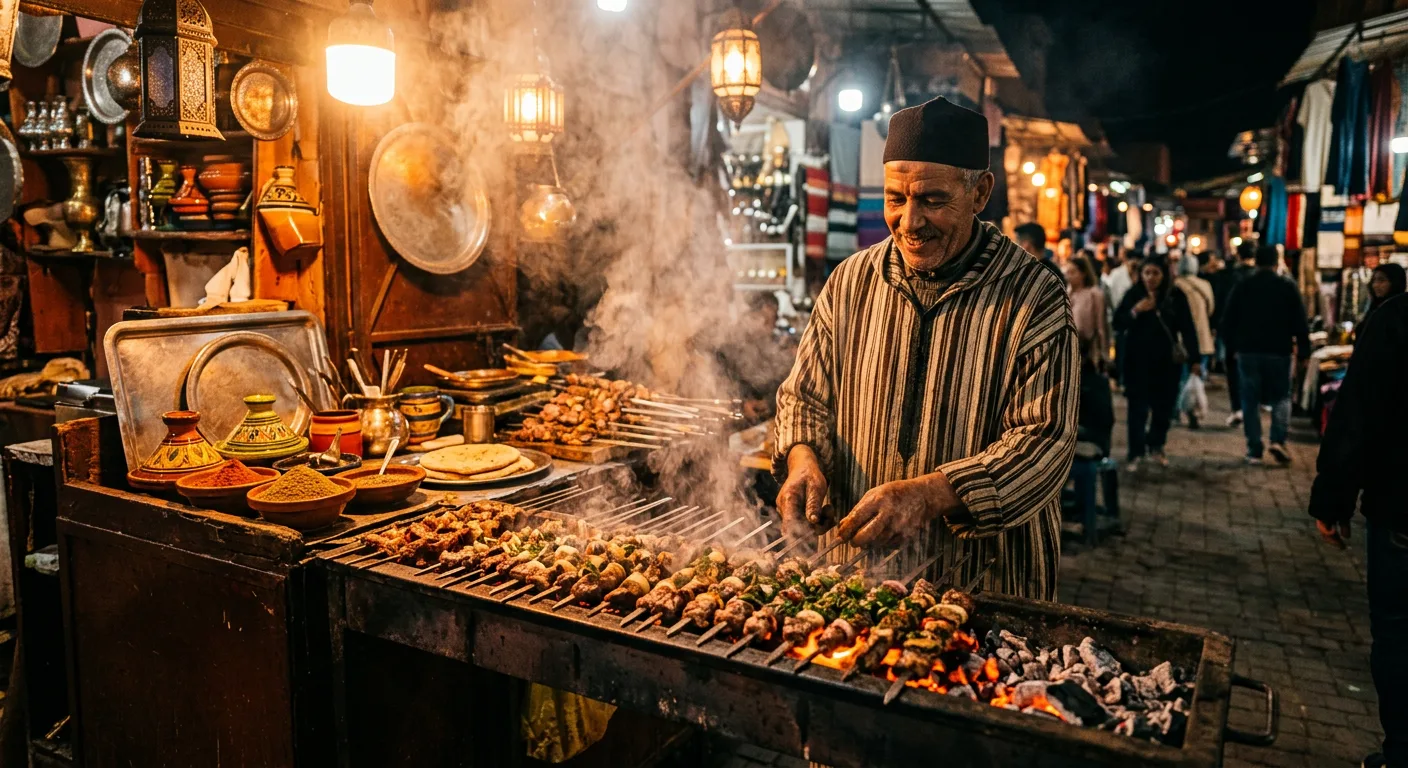
Morocco Street Food Guide
30+ must-try dishes, real prices in MAD, city-by-city stall recommendations, and food safety tips
Morocco's Street Food Culture
Eating on the street is not a fallback option in Morocco. It is how most people eat. From factory workers grabbing sfenj at dawn to families sharing harira at dusk, street food is daily routine. Generational vendors pass down recipes and prime stall locations like family heirlooms.
Moroccan street food reflects centuries of trade routes. Arab, Berber, Andalusian, French, and sub-Saharan influences collide at a single food cart. A bocadillo is a relic of Spanish occupation. Sfenj traces back to Andalusian pastry traditions. Babbouche snail soup is distinctly Berber.
Communal Eating
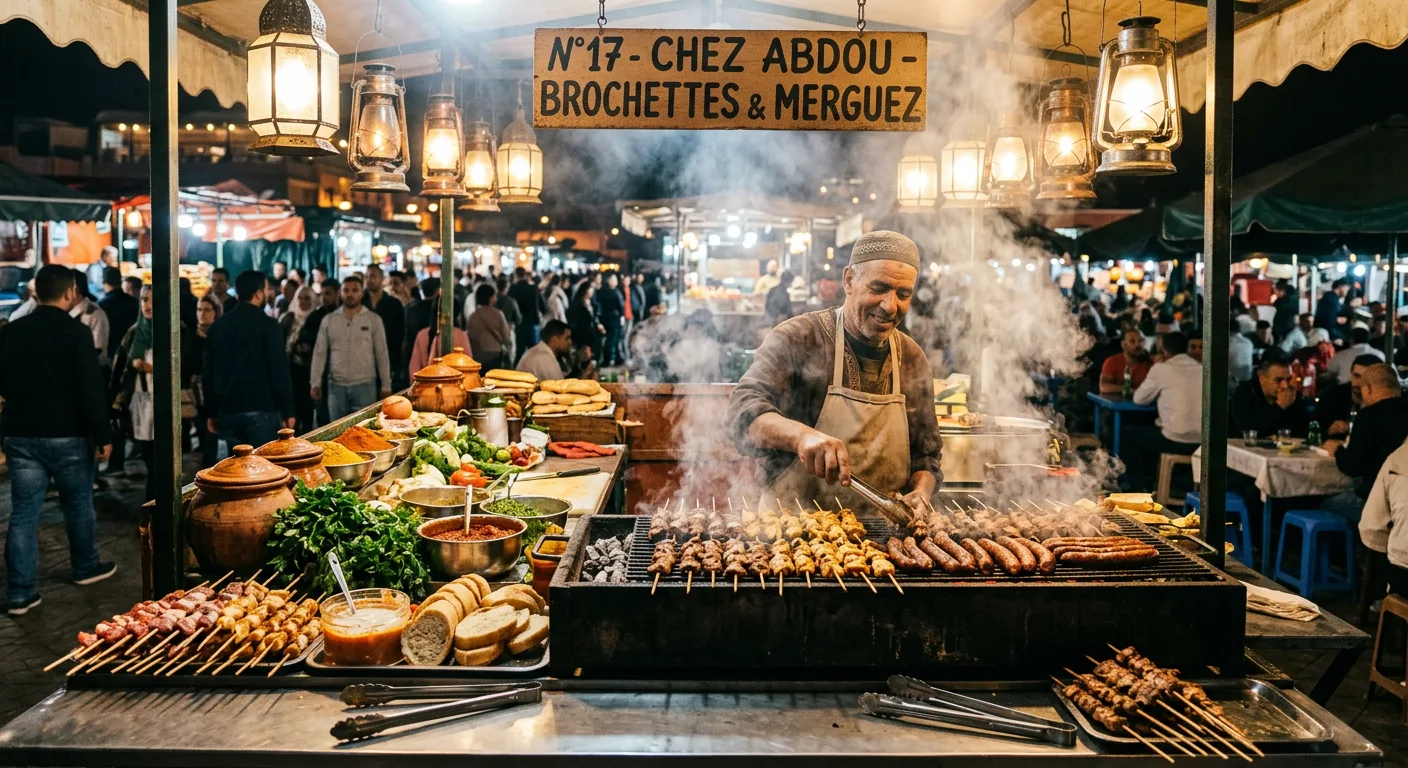
Moroccans eat from shared plates. At street stalls, strangers sit shoulder to shoulder at the same counter. Point at what others are having and you will rarely go wrong.
Time-Based Stalls
Breakfast stalls (sfenj, msemen, bissara) operate 6-10 AM. Midday stalls run 11 AM-3 PM. Night food markets fire up at 5 PM and peak around 8 PM. Know the schedule.
Hygiene at Stalls
Most food stalls are clean. Look for high customer turnover, food cooked to order, and a vendor who handles money separately from food. If locals are eating there, it is safe.
Street Food Snacks & Breads
Items you grab between meals, pair with mint tea, or stuff inside a sandwich. Most cost less than 5 MAD.
Msemen
From 2 MAD per pieceSquare-shaped layered flatbread, pan-fried until golden and flaky. Eaten plain with honey and butter, or stuffed with kefta, cheese, or herbs. The best msemen are made fresh on a griddle, with dough stretched paper-thin and folded into layers.
Every medina corner, especially near bread ovens. Best before 10 AM.
Baghrir
From 2 MAD per pieceSpongy semolina pancakes covered in hundreds of tiny holes that absorb melted butter and honey. Called "thousand-hole crepes" by locals. Served hot off the griddle, dripping with a butter-honey mixture.
Breakfast carts and medina stalls. Also served at riad breakfasts.
Sfenj
From 1 MAD eachMoroccan donuts. Rings of unsweetened dough deep-fried until puffy and golden. The vendor shapes dough by hand and drops it into boiling oil. Crisp outside, airy inside. Moroccans dip sfenj into morning coffee or mint tea.
Street corners and market entrances. Follow the smell of hot oil at 7 AM.
Briwat
From 3 MAD eachTriangular pastries made from warqa (paper-thin dough) wrapped around a filling and deep-fried. Savory versions contain chicken, kefta, or cheese. Sweet versions are filled with almond paste and soaked in honey. The pastry shatters on first bite.
Medina bakeries, souks, and food stalls. Common during Ramadan.
Maakouda
From 3 MAD per pieceDeep-fried potato cakes. Mashed potatoes seasoned with cumin, turmeric, garlic, and herbs, fried until a dark golden crust forms. Served plain, inside khobz bread, or in a bocadillo sandwich. Cheap, filling, and everywhere.
Sandwich stalls, market food courts, and bus station vendors.
Khobz
From 1.50 MAD per loafRound flatbread baked in communal wood-fired ovens. Moroccans eat khobz with every meal. Torn into pieces and used to scoop tagine sauce, dip into olive oil, or wrap around grilled meat. Each neighborhood has its own bakery (ferrane).
Neighborhood bakeries (look for the wood smoke). Best fresh around noon.
Batbout
From 2 MAD per pieceSmall, round pocket bread cooked on a griddle. Puffier and softer than khobz, with a pocket perfect for stuffing with kefta, eggs, or cheese. Popular in northern Morocco.
Northern Morocco and medina sandwich stalls.
Street Food Mains & Soups
Grilled meats, hearty soups, and overstuffed sandwiches. Expect charcoal smoke and long queues at the good spots.
Merguez Sandwiches
From 15 MADSpicy lamb or beef sausages, deep red from harissa and paprika, grilled over charcoal and stuffed into khobz with tomatoes, onions, and hot sauce. The casings snap as you bite through. Vendors set up at dusk near busy intersections.
Evening food stalls across all cities. Casablanca's Derb Ghallef is famous for merguez.
Kefta
From 20 MAD per servingSeasoned minced lamb or beef shaped onto skewers and charcoal-grilled. Mixed with grated onion, parsley, cumin, paprika, and cinnamon. Served with bread, raw onion, and tomato salad, or in a sandwich.
Jemaa el-Fnaa stalls, souk food courts, and every evening food market.
Shawarma
From 20 MADRotisserie chicken or beef shaved off a vertical spit, loaded into bread with garlic sauce, pickled vegetables, and fries. Morocco adopted shawarma from the Middle East and added local spice blends and harissa. The best stalls maintain a constant queue and slice meat to order.
New city (ville nouvelle) areas, near cinemas and commercial streets.
Bocadillos
From 15 MADCrusty baguette sandwiches stuffed with tuna, sardines, kefta, maakouda, fried eggs, olives, harissa, and mayonnaise. A legacy of Spanish and French influence. Point at ingredients behind the glass counter and they assemble your combination.
Everywhere. Particularly near schools, bus stations, and market entrances.
Babbouche (Snail Soup)
From 5 MAD per bowlSmall land snails simmered in a spiced broth of thyme, licorice root, caraway, and anise. Locals believe the broth cures colds. Pick out snails with a toothpick and drink the peppery broth. An acquired taste, but unmissably Moroccan.
Jemaa el-Fnaa (Marrakech), Rcif Square (Fes), and most evening markets.
Harira
From 5 MAD per bowlMorocco's national soup. Thick, tomato-based broth loaded with lentils, chickpeas, vermicelli, and coriander. Harira stands appear at dusk. During Ramadan, the entire country breaks the fast with this soup.
Every city at dusk. Best near mosques and at Ramadan food markets.
Brochettes (Meat Skewers)
From 5 MAD per skewerChunks of lamb, beef, chicken, or liver on metal skewers, charcoal-grilled. Served with bread, cumin salt, and hot sauce. Lamb heart and liver skewers cost less than regular meat.
Night food stalls, souk grills, and roadside vendors.
Fried Fish
From 25 MAD per plateSardines, whiting, or shrimp in chermoula paste, dredged in flour, deep-fried to order. Served with bread and lemon.
Essaouira port, Casablanca old medina, Agadir Souk El Had.
Sheep Head (Tete)
From 15 MAD per portionWhole sheep heads slow-steamed until butter-soft. Point at cheek (the best), tongue, brain, or eye. Cumin and salt, served with bread.
Jemaa el-Fnaa and tete vendors in Fes and Meknes medinas.
Bissara
From 5 MAD per bowlFava bean soup blended into a thick puree, drizzled with olive oil, cumin, and paprika. Breakfast fuel. Creamy, earthy, gone by 11 AM.
Breakfast stalls and working-class neighborhoods.
Sweets & Pastries
Drenched in honey, perfumed with orange blossom water, studded with almonds and sesame. A few dirhams each.
Chebakia
From 3 MAD per pieceFlower-shaped pastry flavored with anise, sesame, and orange blossom water, deep-fried and dipped in hot honey. The classic Ramadan sweet. Intensely sticky and fragrant.
Bakeries and medina sweet shops. Production ramps up during Ramadan.
Sellou (Sfouf)
From 10 MAD per portionDense, crumbly mixture of toasted flour, ground almonds, sesame seeds, butter, honey, and cinnamon. Not baked, just pressed together. Texture somewhere between cookie dough and halva. Sold by weight at spice shops.
Spice shops, medina bakeries, and Ramadan sweet stalls.
Ghriba
From 2 MAD eachCracked-top Moroccan cookies in coconut, almond, and sesame varieties. Crisp outside with visible cracks, soft and chewy inside. Coconut ghriba with mint tea is a perfect afternoon snack.
Bakeries, pastry shops, and supermarkets. Year-round.
Cornes de Gazelle
From 5 MAD eachCrescent-shaped pastries filled with almond paste scented with orange blossom water, baked until just golden. The most refined Moroccan pastry. Bakery-fresh versions far surpass tourist-shop ones.
Quality patisseries. In Fes, medina bakeries near Rcif produce the best.
Fresh Orange Juice
From 5 MAD per glassVendors stack pyramids of oranges and press them to order using hand-crank juicers. A tall glass of cold juice for from 5 MAD is one of Morocco's greatest bargains. Jemaa el-Fnaa alone has 30+ juice stalls.
Every city square. Negotiate before ordering at tourist-area stalls.
Briouats with Almonds
From 4 MAD eachSweet briwat pastries: warqa dough wrapped around ground almonds, sugar, cinnamon, and orange blossom water, fried and dipped in honey. Shatteringly crisp.
Medina bakeries and Ramadan food stalls.
Street Drinks & Juices
Morocco runs on mint tea and fresh juice. Ask for prices before ordering. Bottled water is everywhere.
Avocado Smoothie
From 15 MADThick, creamy smoothie of ripe avocado blended with milk, sugar, and sometimes almonds or dates. A meal in a glass. Morocco grows avocados domestically, keeping prices low.
Juice bars in every city. Marrakech and Agadir have the most vendors.
Pomegranate Juice
From 10 MADRuby-red juice pressed from fresh pomegranates, available October through February. Tangy, slightly sweet. Some vendors mix it with orange juice for a blend.
Seasonal at juice stalls in autumn and winter. Best in Meknes and Fes.
Mint Tea
From 5 MAD per glassGreen gunpowder tea steeped with fresh spearmint and sugar cubes, poured from height to create froth. Central to social life. Refusing tea is considered impolite. Served scalding hot even in summer.
Everywhere. Cafes, street stalls, shops. Free from merchants during bargaining.
Almond Milk (Jus d'Amande)
From 10 MADFresh almond milk blended from raw almonds, sugar, and water with a dash of orange blossom. Thick, rich, and intensely nutty. A Fes medina specialty.
Fes medina, Marrakech juice stalls, and larger city markets.
Sugarcane Juice
From 5 MADStalks of sugarcane fed through a hand-cranked press, producing a pale green, intensely sweet juice served cold with lime. More common in southern Morocco.
Seasonal carts in Agadir, Taroudant, and southern cities.
Best Street Food by City
Each Moroccan city has its own street food personality. Here is where to eat in each.
Marrakech
Jemaa el-Fnaa Night Market
The undisputed capital of Moroccan street food. Jemaa el-Fnaa transforms nightly into Africa's largest open-air food market with 100+ stalls. Beyond the square, Rue Bani Marine has bocadillos, Mechoui Alley has slow-roasted lamb, and the souk food courts serve cheap tagines.
Top Dishes to Try:
- Snail soup at Jemaa stalls
- Mechoui at Mechoui Alley
- Tanjia (unique to Marrakech)
- Orange juice at the square
- Kefta sandwiches on Rue Bani Marine
Moderate -- tourist markup on Jemaa stalls. Walk 5 minutes into the medina for lower prices.
Fes
Rcif Square & Talaa Kebira
The culinary capital of Morocco. Rcif Square has the densest concentration of food vendors. Walking up Talaa Kebira, you pass pastry shops, olive vendors, spice stalls, and brochette grills. Less touristy than Marrakech, lower prices.
Top Dishes to Try:
- Camel meat (unique to Fes)
- Almond milk from medina carts
- Cornes de gazelle from Rcif bakeries
- Pigeon pastilla by the slice
- Briwat from hole-in-the-wall shops
Low -- Fes medina food is a bargain. A full lunch from 20 MAD.
Casablanca
Central Market & Derb Ghallef
Morocco's biggest city has the most cosmopolitan street food scene. The Central Market near the port grills seafood on the spot. Derb Ghallef flea market is flanked by merguez stalls feeding thousands of shoppers. Ain Diab corniche has beachfront snack bars with bocadillos and grilled corn.
Top Dishes to Try:
- Grilled seafood at the Central Market
- Merguez at Derb Ghallef
- Bocadillos near the Habous Quarter
- Shawarma in the ville nouvelle
- Fresh sardines at port-side stalls
Moderate -- prices vary by neighborhood. Habous and old medina are cheapest.
Essaouira
Port Fish Grills
Essaouira's identity is built on fish. The port has open-air grill stalls where you choose your catch from ice displays: sardines, prawns, squid, sea bream, lobster. Grilled over charcoal with bread, salad, and chermoula. Prices are posted. Best-value seafood in Morocco.
Top Dishes to Try:
- Grilled sardines at the port
- Mixed seafood platter
- Squid and prawn skewers
- Fish chermoula sandwich
- Sardine briwat (local specialty)
Low to moderate -- port grill meals from 40 MAD.
Meknes
Place el-Hedim & Medina Souks
The most underrated street food city. Fewer tourists means lower prices and more authentic stalls. Place el-Hedim has harira vendors, snail soup, and juice carts. The olive market near Bab Mansour offers Morocco's best cured olives.
Top Dishes to Try:
- Olive tasting at the olive souk
- Harira from Place el-Hedim
- Maakouda sandwiches in the medina
- Local wine from the Meknes region
- Brochettes near Bou Inania medersa
Low -- cheapest of the imperial cities. Street food meals from 15 MAD.
Street Food Price Guide
All prices in MAD. Tourist areas charge 20-50% more than local neighborhoods. Seasonal pricing can change.
| Item | Price | Type |
|---|---|---|
| Sfenj (1 donut) | From 1 MAD | Snack |
| Khobz (1 loaf) | From 1.50 MAD | Bread |
| Msemen / Baghrir | From 2 MAD | Snack |
| Ghriba cookie | From 2 MAD | Sweet |
| Briwat / Maakouda | From 3 MAD | Snack |
| Chebakia (1 piece) | From 3 MAD | Sweet |
| Harira / Babbouche / Bissara | From 5 MAD | Soup |
| Fresh orange juice | From 5 MAD | Drink |
| Mint tea | From 5 MAD | Drink |
| Brochette (1 skewer) | From 5 MAD | Main |
| Pomegranate juice / Almond milk | From 10 MAD | Drink |
| Bocadillo / Merguez sandwich | From 15 MAD | Main |
| Avocado smoothie | From 15 MAD | Drink |
| Kefta plate / Shawarma | From 20 MAD | Main |
| Fried fish plate | From 25 MAD | Main |
| Grilled fish (Essaouira) | From 40 MAD | Main |
Daily Budget: Eating street food exclusively, budget from 60-100 MAD per day. Breakfast msemen + coffee (from 10 MAD), midday bocadillo + juice (from 25 MAD), evening grilled meat dinner (from 40 MAD) totals ~75 MAD (under 8 USD). Seasonal pricing can change.
Food Safety Tips
Stomach problems are not inevitable. Most food-related illness comes from water and raw produce, not cooked street food.
What to Look For
- High customer turnover means fresh food and fast rotation
- Food cooked in front of you on a hot grill or fresh oil
- Vendor handles money and food with separate hands
- Locals eating at the stall (the best safety indicator)
What to Avoid
- Pre-cooked food sitting at room temperature for hours
- Raw salads from street carts (restaurants are fine)
- Tap water and ice at street stalls (drink bottled water)
- Stalls where an aggressive tout drags you in
Water & Drinks
Bottled water only (Sidi Ali, Ain Saiss, from 5 MAD/1.5L). Fresh juice is safe (fruit is peeled). Mint tea is safe (boiled water). Avoid ice at budget stalls.
Stomach Preparation
Start with cooked foods your first two days. By day three, branch into adventurous stalls. Pack Imodium and rehydration salts. Probiotics a week before travel can help. Most issues resolve in 24 hours.
Best Time to Eat Street Food
Peak hours produce the safest food because turnover is highest. Eat breakfast 7-9 AM when msemen griddles are hot. Hit midday stalls around 12:30-1:30 PM. For evening food markets, arrive 7-9 PM. After 11 PM, most stalls wind down.
Guided Street Food Tours
Local guides know which vendors are best, translate menus, explain ingredients, and steer you toward dishes you would never find alone.
Marrakech Food Tours
Evening tours through Jemaa el-Fnaa and the medina souks, sampling 10-15 dishes over 3-4 hours. Operators include Marrakech Food Tours and Taste of Marrakech. Also bookable through GetYourGuide.
From 350 MAD per person
Fes Medina Food Walks
Hidden gems deep in the medina: camel meat, communal-oven bread, pastilla by the slice, and almond milk from a cart operating for 40 years. Morning and evening departures.
From 300 MAD per person
Essaouira Seafood & Market Tour
Starts at the fish auction, moves through the spice market, finishes with grilled seafood at the port stalls. Smaller groups and a relaxed pace compared to Marrakech tours.
From 250 MAD per person
Casablanca Street Food Tour
Covers the Central Market seafood stalls, Habous Quarter bakeries, and local neighborhoods. Diverse immigrant communities add Senegalese, Lebanese, and French-influenced food.
From 300 MAD per person
Booking Tip: Book food tours for your first or second day. The guide teaches you how to navigate stalls, order dishes, and spot the best vendors. That knowledge pays off for the rest of your trip.
Vegetarian & Vegan Street Food
Street food has more plant-based options than sit-down restaurants. Many of the cheapest stalls serve naturally vegetarian food.
Vegetarian Options
- Msemen and baghrir with honey and butter
- Maakouda potato fritters
- Cheese and egg bocadillos
- Harira without meat ("bla lhem")
- Zaalouk (smoky eggplant dip) with bread
- Boiled corn from street carts (from 5 MAD)
- Cheese briwat pastries
- All sweets, pastries, juices, and smoothies
Vegan Options
- Bissara fava bean soup (naturally vegan)
- Boiled chickpeas with cumin
- Fresh fruit juices and sugarcane juice
- Roasted nuts and dried fruits from souk vendors
- Olives and olive oil with bread
- Avocado smoothies with water ("bla hlib")
- Khobz bread (flour, water, yeast, salt)
Useful Phrases: "Bla lhem" = without meat. "Bla hlib" = without milk. "Bla jben" = without cheese. "Ana nabati" = I am vegetarian. French also works: "sans viande", "sans lait".
Frequently Asked Questions
Answers to common questions about eating street food in Morocco.
Is street food safe to eat in Morocco?
Moroccan street food is generally safe when you follow basic rules. Eat at stalls with high customer turnover, choose food cooked fresh in front of you, avoid raw salads at street carts, and stick to bottled water. Most travelers eat street food daily without issues. Locals eat at the same stalls, which is the best indicator of safety.
How much does street food cost in Morocco?
Morocco has some of the cheapest street food in North Africa. Fresh orange juice costs from 5 MAD, sfenj donuts from 1 MAD each, harira soup from 5 MAD, a merguez sandwich from 15 MAD, and a full grilled meat plate with bread and salad from 30 MAD. You can eat three full meals of street food for under 80 MAD per day.
What is the best street food in Jemaa el-Fnaa?
The famous Jemaa el-Fnaa night market in Marrakech serves grilled meats (kefta, merguez, lamb chops), sheep head (tete), snail soup (babbouche), harira, fried fish, and khobz bread sandwiches. Stalls 1, 14, and 31 are consistently recommended. Arrive around 7 PM for the freshest food and skip stalls where touts aggressively pull you in.
Can vegetarians find street food in Morocco?
Yes. Vegetarian street food options include msemen and baghrir flatbreads with honey, maakouda potato fritters, bissara fava bean soup, zaalouk eggplant dip with bread, harira without meat, boiled corn, roasted nuts, fresh fruit juices, and avocado smoothies. Many stalls also sell vegetable-stuffed briwat pastries.
What time do street food stalls open in Morocco?
Street food operates on a schedule. Breakfast stalls selling msemen, sfenj, and harira open from 6 AM. Midday stalls serving sandwiches, kefta, and bocadillos operate from 11 AM to 3 PM. Evening food markets like Jemaa el-Fnaa start setting up around 5 PM and peak from 7 PM to 11 PM. Some stalls near bus stations and souks stay open late.
Should I tip at street food stalls in Morocco?
Tipping at street food stalls is not expected but appreciated. Rounding up to the nearest 5 MAD is common. If you sit at a stall with a table and receive attentive service, leaving 5-10 MAD is generous. For orange juice vendors and quick snack purchases, no tip is necessary.
What is the best city for street food in Morocco?
Marrakech leads for sheer variety and spectacle, especially the Jemaa el-Fnaa night market. Fes has the most refined street food with unique specialties like camel meat and pigeon pastilla. Essaouira dominates for seafood grills at the port. Meknes offers the best value with lower prices than tourist cities. Casablanca has the most diverse international-influenced street food.
How do I order street food if I do not speak Arabic or French?
Pointing works at most stalls. Vendors display their food openly, so gesture at what you want and hold up fingers for quantity. Learn a few words: "wahd" (one), "jouj" (two), "beshhal" (how much), "safi" (enough). Most vendors in tourist areas speak basic English. Watching what locals order and saying "bhal hadak" (like that one) also works well.
Continue Exploring Moroccan Cuisine
Restaurant Guide
Top restaurants in Marrakech, Fes, Casablanca, and beyond. From rooftop dining to hidden medina gems.
Read moreCooking Classes
Learn to make tagine, couscous, and pastilla. Half-day and full-day classes with local chefs.
Read moreSpice Guide
Ras el hanout, cumin, saffron, and more. What to buy, how to use them, and where to find the best.
Read moreFull Food Guide
50+ Moroccan dishes, dining etiquette, regional specialties, and restaurant price breakdowns.
Read moreReady to Eat Your Way Through Morocco?
From sfenj at dawn to grilled meats at midnight, Moroccan street food runs all day. Start planning your culinary adventure across the country's food stalls and night markets.