Discovering...
Markets & Souks
Morocco Markets Guide:
The Complete Visitor's Handbook
From Marrakech's legendary souks to Essaouira's seaside fish market. Every market type, what to buy, when to go, how to bargain, and what to eat at Morocco's vibrant markets.
The Magic of Moroccan Markets
Moroccan markets are sensory experiences unlike anything else in the world. Step through a medina gate and you enter a labyrinth of narrow alleys alive with color, scent, and sound. Pyramids of saffron glow golden beside towers of cumin. Leather bags hang like lanterns from wooden beams. The rhythmic tap of coppersmiths echoes off ancient stone walls. These markets have operated continuously for centuries, and their traditions remain remarkably intact.
But Morocco's market culture extends far beyond the famous medina souks. Coastal cities host fish markets where the morning catch is grilled to order. Rural villages come alive once a week for sprawling open-air markets where farmers, shepherds, and artisans trade goods as they have for generations. Antique markets in Tangier yield vintage treasures with stories spanning continents. This guide covers every type of Moroccan market: where to find them, what to buy, when to go, how to navigate, and how to bring home the best finds.
All prices listed are starting prices in Moroccan dirhams (MAD). Seasonal pricing applies during peak tourist months (October-April) and holidays, when market prices tend to run 10-20% higher due to increased demand.
Famous Markets by City
Six Moroccan cities, six completely different market experiences. Here is what makes each one special.
Marrakech
The Market Capital of Morocco
Electric, theatrical, overwhelmingBest for: Spices, carpets, leather, lanterns, textiles
Marrakech is synonymous with Moroccan market culture. Over 3,000 stalls radiate through the medina from the iconic Jemaa el-Fna square. By day the souks buzz with artisans, vendors, and shoppers; by night the square transforms into the world's largest open-air food market. Prices are higher here due to the tourist premium, but the variety and energy are unmatched anywhere in Morocco.
Market Highlights
Jemaa el-Fna Night Market
Food stalls, entertainers, fresh juice carts from sunset until midnight
Souk Semmarine
The main souk artery: textiles, clothing, babouche slippers, and souvenirs
Souk el-Attarine
Aromatic spice market with ras el hanout, saffron, cumin, and perfume oils
Rahba Kedima (Spice Square)
Open-air market with henna, natural cosmetics, and Berber baskets
Tip: Visit the souks in the morning (9-11 AM) for cooler temperatures and thinner crowds, then return to Jemaa el-Fna at sunset for the full spectacle of the night food market.
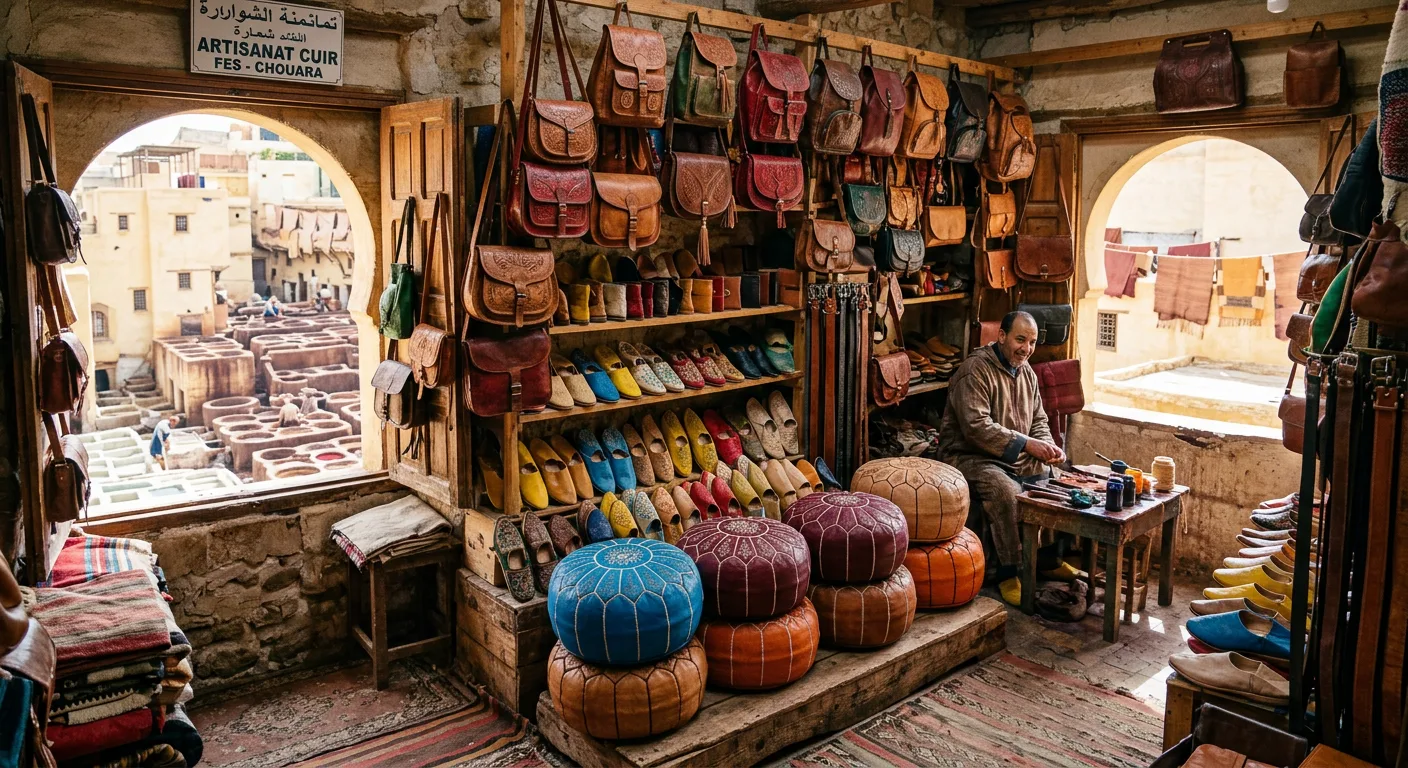
Fes
The Medieval Market Maze
Authentic, intense, medievalBest for: Leather, blue ceramics, brass, embroidered textiles
Fes el-Bali is the world's largest car-free urban zone, home to over 9,000 artisan workshops connected by 9,400 narrow alleyways. Donkeys serve as delivery trucks through passages too narrow for vehicles. The markets feel medieval in the best sense: goods are made by hand just steps from where they are sold. Prices are 20-30% lower than Marrakech because fewer tourists reach Fes.
Market Highlights
Chouara Tannery Quarter
World-famous leather tanneries with rooftop viewing; leather goods at source prices
Place Seffarine
Coppersmith square with artisans hammering brass platters, teapots, and trays by hand
Souk el-Henna
Quiet square selling henna, kohl, argan oil, and natural Moroccan beauty products
Ain Nokbi Pottery Quarter
Workshops producing the iconic Fes blue-and-white hand-painted ceramics
Tip: Hire an official guide (from 300 MAD for a half day) for your first visit. The medina layout is genuinely disorienting. After one guided orientation, you can navigate independently on return visits.
Essaouira
The Coastal Market Town
Relaxed, salty, artisticBest for: Fresh fish, argan oil, thuya wood, silver jewelry
Essaouira offers the most relaxed market experience in Morocco. The compact, walled medina is easy to navigate, vendors are low-pressure, and the fishing port provides one of Morocco's best food market experiences. Watch fishermen unload their catch at dawn, choose your seafood at the port market, and have it grilled on the spot for an unforgettable meal. The town is also the argan oil capital of Morocco.
Market Highlights
Port Fish Market
Fresh-caught sardines, shrimp, and seafood grilled to order for from 30 MAD
Thuya Woodworkers' Quarter
Hand-carved thuya wood boxes, chess sets, and marquetry art
Medina Central Souk
Compact market with clothing, spices, argan oil, and artisan goods
Fish Auction (Criée)
Early morning wholesale fish auction at the port; fascinating to watch from 6 AM
Tip: Visit the port fish market between 11 AM and 1 PM when grills are at peak activity. Point at the fish you want, agree on a price, and sit down while it is grilled with salt, cumin, and lemon.
Chefchaouen
The Blue Artisan Market
Charming, photogenic, gentleBest for: Rif blankets, goat cheese, honey, handmade soap, painted pottery
Chefchaouen's market is small but uniquely charming. The blue-washed walls create the most photogenic shopping backdrop in Morocco. Goods reflect the Rif Mountain heritage: hand-woven blankets, goat cheese aged in caves, wildflower honey, olive oil soap, and blue-and-white ceramics found nowhere else. Bargaining is gentle and straightforward, making it ideal for visitors who find larger cities overwhelming.
Market Highlights
Place Outa el-Hammam
Central square ringed by cafes and souvenir shops with kasbah views
Blue Medina Market Streets
Woven goods, leather bags, and hand-painted ceramics along iconic blue walls
Women's Weaving Cooperatives
Authentic Rif Mountain textiles and blankets sold directly by artisan women
Ras el-Maa Local Market
Fresh produce, mountain herbs, local honey, and handmade goat cheese near the waterfall
Tip: Shop at the women's weaving cooperatives on the edges of the medina for fair-trade textiles at honest prices. Ask your riad for directions. The hand-stitched leather bags unique to the Rif region are exceptional value.
Casablanca
The Modern Metropolis Market
Urban, bustling, cosmopolitanBest for: Fresh seafood, produce, spices, everyday Moroccan goods
Casablanca's markets combine Moroccan tradition with metropolitan energy. The art deco Marché Central is a food lover's paradise: glistening fish, pyramids of olives, towers of spices, and butcher stalls all under one roof. The Habous Quarter, built by the French in Moroccan style, offers a curated market experience with fixed-price shops, making it a good introduction for first-timers before tackling traditional souks.
Market Highlights
Marché Central (Central Market)
Art deco market hall with the freshest seafood, meats, flowers, and spices in Casablanca
Habous Quarter (New Medina)
French-designed Moroccan-style market with olive vendors, pastries, and leather goods
Derb Omar Wholesale Market
Massive wholesale district for textiles, household goods, and electronics at local prices
Old Medina Market
Compact traditional souk near the port with spices, leather, and affordable souvenirs
Tip: Visit Marché Central in the morning when fish is freshest. The surrounding restaurants will cook your market purchases for a small fee. The Habous Quarter pastry shops are famous for their cornes de gazelle and chebakia.
Tangier
The Gateway Market
Cosmopolitan, breezy, crossroadsBest for: Antiques, spices, fabric, international-influenced goods
Tangier sits at the crossroads of Africa and Europe, and its markets reflect that dual identity. The Grand Socco is the traditional gateway to the medina, a chaotic and colorful square where Africa meets the Mediterranean. The Petit Socco inside the medina has a bohemian, literary history. Tangier's antique and flea markets offer unique finds not available in southern Moroccan cities, including vintage European furniture and Andalusian-influenced crafts.
Market Highlights
Grand Socco (Place du Grand 9 Avril)
Historic market square at the medina entrance with vendors, cafes, and cinemas
Petit Socco
Intimate square inside the medina with spice stalls, antique shops, and literary-era cafes
Rue de la Liberté Market Area
Mix of modern shops and traditional stalls along the main boulevard
Marshan Flea Market
Weekend antique and bric-a-brac market with vintage finds and Moroccan collectibles
Tip: The Grand Socco is best experienced on a Sunday morning when the produce market is at its peak. Walk from there through Rue Siaghin into the medina to reach the Petit Socco and the deeper market alleys.
Types of Moroccan Markets
Morocco has five distinct types of markets, each offering a unique shopping experience.
Daily Souks (Medina Markets)
Permanent markets inside walled medinas, organized by trade into distinct zones. These are the classic Moroccan shopping experience. Stalls pass from father to son across generations. Each medina has its own character and specialty goods.
What to buy: Spices, leather goods, textiles, ceramics, lanterns, jewelry, carpets
Where: Every major city medina (Marrakech, Fes, Meknes, Essaouira, Chefchaouen)
Weekly Rural Markets (Souk Days)
Held once a week in open fields or designated squares, these markets serve farming and pastoral communities. They are named after their operating day in Arabic. Souk el-Had (Sunday), Souk el-Tnine (Monday), Souk el-Tleta (Tuesday), Souk el-Arba (Wednesday), Souk el-Khemis (Thursday), Souk el-Jemaa (Friday), and Souk el-Sebt (Saturday). Entirely local, with almost no tourist presence.
What to buy: Fresh produce, livestock, household goods, Berber textiles, local spices
Where: Rural towns across Morocco, named by the day they operate (e.g., Souk el-Had = Sunday)
Fish Markets
Coastal cities have vibrant fish markets where the morning catch is sold directly from fishing boats. Essaouira and Casablanca are the most famous. Many fish markets have adjacent grilling stations where you choose your fish, agree on a price, and eat it freshly prepared with bread, salad, and harissa.
What to buy: Fresh sardines, shrimp, squid, sea bream, swordfish, lobster (cooked to order)
Where: Essaouira port, Casablanca Marché Central, Tangier port, Agadir, Al Hoceima
Spice Markets (Souk el-Attarine)
Dedicated spice zones within larger souks, named souk el-attarine (market of the perfumers). The air is thick with cumin, cinnamon, and saffron. Vendors sell both individual spices and custom blends. Ras el hanout, Morocco's signature spice mix with up to 30 ingredients, is the star purchase. Prices start from 20 MAD per 100g.
What to buy: Ras el hanout, cumin, paprika, saffron, dried rosebuds, orange blossom water, perfume oils
Where: Marrakech Souk el-Attarine, Fes Souk el-Attarine, Meknes spice quarter
Antique and Flea Markets
These markets specialize in pre-owned, vintage, and antique goods. Tangier's weekend flea market and Marrakech's Thursday market at Bab el-Khemis offer everything from genuine antiques to interesting bric-a-brac. Prices vary wildly, so knowledge is essential. Genuine Berber silver jewelry and antique zellige tiles are the most prized finds.
What to buy: Vintage Berber jewelry, old brass, antique tiles, vintage textiles, colonial-era furniture
Where: Tangier Marshan flea market, Marrakech Bab el-Khemis, Essaouira antique shops
Market Hours & Best Times to Visit
Timing matters. Here is when each type of Moroccan market is at its best.
Market Type
Opens
Closes
Best Time
Note
City Medina Souks
9:00-10:00 AM
7:00-8:00 PM
Early morning (9-11 AM)
Many close for Friday prayers 12-2 PM
Fish Markets
6:00-7:00 AM
2:00-3:00 PM
Mid-morning (9-11 AM)
Freshest catch sold first; go early
Weekly Rural Markets
Sunrise (6-7 AM)
1:00-2:00 PM
Early morning (7-9 AM)
Wind down by midday; livestock sold first
Night Food Markets
Sunset (6-7 PM)
Midnight-1:00 AM
Around 8:00-9:00 PM
Jemaa el-Fna peaks after dark
Flea / Antique Markets
8:00-9:00 AM
4:00-5:00 PM
Morning (9-11 AM)
Best finds go early; weekends busiest
During Ramadan, all market hours shift later. Evening markets become busier after iftar. Many shops open later in the morning and stay open later at night.
Navigating the Medina
How to find your way through Morocco's maze-like markets without losing your bearings.
Download Offline Maps First
Download Google Maps or Maps.me for offline use before entering the medina. GPS works inside souks even when mobile data does not. Mark your riad, the nearest gate, and key landmarks before you start exploring.
Learn the Trade Zone Layout
Moroccan markets are organized by trade: leather in one zone, spices in another, metalwork in another. Once you understand the zone layout, navigating becomes intuitive. Major zones radiate outward from the central mosque or main square.
Navigate by Landmarks
Most market alleys have no visible street names. Navigate by landmarks: mosques, fountains, painted gates, and open squares. The main mosque or central square is always the anchor point. When lost, walk downhill or follow the crowd toward main arteries.
Embrace Getting Lost
Getting lost in a Moroccan medina is not a failure; it is part of the experience. Some of the best discoveries happen in unplanned detours. Carry your riad's business card and phone number. Any shopkeeper can point you toward major landmarks.
Hire a Guide for First Visits
In Fes and Marrakech especially, an official guide (from 300 MAD for a half day) can transform your first visit. They know hidden workshops, can negotiate on your behalf, and help you build a mental map for independent exploration later.
Follow Colored Arrow Signs
Many medinas (especially Fes and Marrakech) have installed colored directional signs pointing toward key exits, landmarks, and attractions. Follow these when you need to reorient. Blue arrows in Fes often point toward Bab Boujloud.
Market Photography Etiquette
Moroccan markets are incredibly photogenic. Follow these guidelines to capture beautiful images respectfully.
Always Ask Before Photographing People
A simple gesture toward your camera with a questioning look is enough. Many vendors are happy to pose; others will wave you off. Respect their decision immediately. Photographing someone against their will is considered deeply disrespectful.
Tip When Someone Poses for You
If a vendor, artisan, or local agrees to pose, a small tip of 5-10 MAD is appreciated and expected. This is a fair exchange. Professional water sellers in traditional dress and henna artists actively seek photo opportunities and will expect payment.
Photograph Goods and Architecture Freely
Photographing market stalls, colorful goods, architectural details, and general market scenes without people is almost always fine. Vendors often appreciate photos of their beautiful displays and may even arrange items for a better shot.
Be Discreet with Women and Children
Never photograph women without explicit permission, especially in conservative rural markets. Photographing children should also involve parental permission. Use a zoom lens or capture wider scenes if you want to document the general atmosphere.
Best Light for Market Photography
Morning light (9-11 AM) creates the best photographs in open-air markets. In covered souks, the interplay of light beams through gaps in the roof creates dramatic shots around midday. Golden hour (5-6 PM) is ideal for open squares like Jemaa el-Fna.
Bargaining Essentials
Quick-reference bargaining tips to negotiate with confidence and respect in any Moroccan market.
Research prices before you enter the market. Visit an Ensemble Artisanal (fixed-price government shop) to learn baselines.
Counter at 30-40% of the asking price. The final price typically settles at 40-60% of the initial quote.
Stay friendly and patient. Haggling is a social ritual, not a confrontation. Smile, joke, and enjoy the process.
Use the walk-away technique. Say "shukran" and start leaving; most vendors will call you back with a lower offer.
Bundle multiple purchases for better per-item pricing. "What price for all three?" signals a bulk deal.
Pay cash in small Moroccan dirham denominations (20 and 50 MAD notes). Cash always beats card prices.
Never show too much excitement about an item. Casual interest keeps the starting price lower.
Know when to stop. Once you reach a fair price, accept it graciously. Pushing for another 10 MAD is disrespectful.
When Not to Bargain
Do not bargain at government-run Ensemble Artisanal shops, women's cooperatives, food markets selling fresh produce by weight, pharmacies, or modern retail stores with fixed prices. In these places, the listed price is the final price.
Food Markets & What to Try
Moroccan food markets are a feast for the senses. Here are the must-try foods and where to find them.
Freshly Grilled Sardines
From 20 MADChoose your sardines at the fish stall, have them grilled with salt, cumin, and lemon on a charcoal grill, and eat them with fresh bread and harissa. Essaouira's port grills are the most famous.
Where: Essaouira port, Casablanca Marché Central, Tangier port area
Freshly Squeezed Orange Juice
From 5 MADMorocco's iconic street drink. Carts stacked with pyramids of oranges line every major market square. Freshly squeezed on the spot and served in a glass. Marrakech's Jemaa el-Fna has dozens of competing juice vendors.
Where: Jemaa el-Fna Marrakech, market squares across Morocco
Msemen (Moroccan Flatbread)
From 3 MADFlaky, layered flatbread cooked on a griddle, often served with honey, cheese, or khlii (preserved meat). A quintessential Moroccan breakfast food available at market stalls from early morning.
Where: Street vendors at every market entrance and inside medinas
Snail Soup (Babbouche)
From 5 MADA beloved Moroccan street food served in a warm broth seasoned with thyme, liquorice, and spices. The small cart with a steaming pot is unmistakable. Use a toothpick to extract the snails. Locals swear it cures colds.
Where: Jemaa el-Fna Marrakech, Fes medina food stalls
Dried Fruits, Nuts & Dates
From 30 MAD per 250gAlmonds, walnuts, figs, apricots, and Medjool dates are sold in mountainous displays. Dates from the Draa Valley and almonds from Tafraout are particularly prized. Sample before buying and buy by weight.
Where: Marrakech souks, Fes medina, every market in Morocco
Street Tagine
From 25 MADSimple, hearty tagines served in the clay pot they were cooked in. Chicken with preserved lemon, kefta (meatball) with egg, and vegetable tagines are the most common market versions. Served with bread for dipping.
Where: Market-adjacent food stalls in Marrakech, Fes, Meknes
Food Market Safety Tips
Eat where locals eat; high turnover means fresh food and lower risk
Drink bottled water; avoid tap water and ice in drinks from street vendors
Grilled-to-order food is safest; avoid pre-cooked items sitting at room temperature
Carry hand sanitizer; most market food is eaten with your hands and bread
Frequently Asked Questions
What are the most famous markets in Morocco?
The most famous are the Marrakech souks (3,000+ stalls around Jemaa el-Fna), Fes medina markets (the world's largest car-free market zone with 9,000+ workshops), Essaouira fish market at the port, Chefchaouen's blue artisan market, Casablanca's art deco Marché Central, and the Tangier Grand Socco. Each city offers a completely different market atmosphere and specialty goods.
What types of markets exist in Morocco?
Morocco has daily souks (permanent markets in city medinas), weekly rural markets named by the day they operate, fish markets at coastal ports, spice markets (souk el-attarine), and antique or flea markets. Daily souks are the most visited by tourists, but weekly rural markets offer the most authentic, untouched Moroccan market experience.
What time do Moroccan markets open and close?
City medina souks open 9-10 AM and close 7-8 PM. Fish markets start as early as 6 AM and wind down by 2-3 PM. Weekly rural markets run from sunrise to early afternoon. Night food markets at Jemaa el-Fna open at sunset and run until midnight. Many shops close for Friday prayers from 12-2 PM. During Ramadan, hours shift later.
Is it OK to take photos in Moroccan markets?
Photographing stalls, goods, and architecture is generally fine. Always ask before photographing people. Many vendors will happily pose; others prefer not to be photographed. A small tip of 5-10 MAD is appreciated when someone poses for you. Avoid photographing women without explicit permission, especially in rural markets.
How much should I bargain in a Moroccan market?
Counter at 30-40% of the asking price. The final price typically settles at 40-60% of the initial quote. Stay friendly, bundle purchases for better deals, and always pay cash in MAD. Visit an Ensemble Artisanal (government fixed-price shop) first to learn baseline values, then negotiate with confidence in the souks.
What food should I try at Moroccan food markets?
Must-try foods include freshly grilled sardines at port markets (from 20 MAD), freshly squeezed orange juice (from 5 MAD), msemen flatbread (from 3 MAD), snail soup or babbouche (from 5 MAD), dried fruits and Medjool dates, and market-side tagines (from 25 MAD). Jemaa el-Fna in Marrakech offers the widest selection of street food in Morocco.
Are weekly rural markets worth visiting?
Absolutely. Weekly rural markets offer a genuine glimpse into Moroccan daily life with almost no tourist presence. They sell fresh produce, livestock, household goods, and local crafts at truly local prices. Named after the day they operate (Souk el-Had = Sunday, Souk el-Khemis = Thursday), they are held in open fields across rural Morocco from sunrise to early afternoon.
How do I avoid getting lost in a Moroccan market medina?
Download offline maps before entering. Note landmarks like mosques, fountains, and gates. Carry your riad's business card. Follow main arteries and look for colored directional signs. Hire a guide for your first visit to Fes or Marrakech medinas. Getting slightly lost is part of the charm, and main thoroughfares always lead back to familiar landmarks.
Related Guides
Guide to Moroccan Souks
In-depth guide to every major souk in Morocco with maps, opening hours, and what to expect.
Read moreMoroccan Markets Overview
Explore traditional weekly markets, food markets, and modern shopping across Morocco.
Read moreMorocco Souk Guide
Step-by-step haggling guide, fair prices, scam avoidance, and souk etiquette for first-timers.
Read moreMorocco Shopping Guide
Complete shopping guide with price tables, customs info, and advanced bargaining strategies.
Read moreMorocco Haggling Guide
Master the art of bargaining with step-by-step strategies, fair price benchmarks, and cultural tips.
Read moreWhat to Buy in Morocco
The best Moroccan souvenirs with real prices, quality markers, and city-by-city recommendations.
Read more