Discovering...
Pet Travel Guide
Morocco with Pets:
The Complete Travel Guide
Everything you need to bring your dog or cat to Morocco. Entry requirements, pet-friendly stays, vet clinics, airline policies, and safety tips for 2026.
Traveling to Morocco with Your Pet
Morocco is an increasingly popular destination for travelers who refuse to leave their furry companions behind. While the country is not as straightforward for pet travel as Western Europe, it is entirely possible to bring your dog or cat to Morocco with proper planning and documentation.
The key to a successful trip lies in preparation. Morocco requires specific vaccinations, a rabies antibody titer test, an international health certificate, and an import permit from the ONSSA (the national food safety authority). The process takes a minimum of 3-4 months from start to finish, so early planning is essential.
Once you arrive, Morocco offers a surprising range of pet-friendly accommodations, from luxury hotels in Marrakech to laid-back guesthouses in Essaouira. Veterinary care is available in all major cities, and the growing expat community has driven improvements in pet services across the country. This guide covers every step of the journey, from paperwork to packing.
Pet Entry Requirements: Step-by-Step Timeline
Follow this timeline carefully to ensure your pet is cleared for entry into Morocco. Start at least 4 months before your travel date.
Requirements may change. Verify current rules with the Moroccan embassy or ONSSA before traveling.
1
ISO Microchip Implantation
Any time before travel (must predate rabies vaccination)
Your pet must have an ISO 15-digit microchip (ISO 11784/11785 standard) implanted by a licensed veterinarian. The microchip must be scannable and the number must match all accompanying documents. If your pet was microchipped before being vaccinated for rabies, you are in compliance. Morocco does not accept tattoo identification alone.
Tip: Bring your own microchip scanner or confirm your vet has verified the chip is readable. Some older chips use non-ISO frequencies that Moroccan scanners cannot read.
2
Rabies Vaccination
At least 30 days and no more than 12 months before travel
Your pet must have a current rabies vaccination administered by a licensed veterinarian. The vaccination must have been given at least 30 days before arrival in Morocco but no more than 12 months prior. Puppies and kittens must be at least 3 months old to receive the rabies vaccine, which means they cannot enter Morocco before they are 4 months old.
Tip: Keep the original vaccination certificate with the batch number, date of administration, and vaccine expiry date. Photocopies are not accepted at Moroccan customs.
3
Rabies Antibody Titer Test
At least 3 months before travel (results must show 0.5 IU/ml or higher)
A blood sample must be taken at least 30 days after rabies vaccination and sent to an EU-approved laboratory for a rabies antibody titer test (FAVN or ELISA method). The result must show a neutralizing antibody level of at least 0.5 IU/ml. This test is valid for the life of the pet as long as rabies boosters are kept current. The 3-month waiting period starts from the date the blood sample was taken.
Tip: Request the test well in advance. Processing takes 2-4 weeks at most labs. If the titer is below 0.5 IU/ml, your pet will need a booster vaccination and a retest.
4
International Health Certificate
Within 10 days of departure
A licensed and government-accredited veterinarian must issue an international health certificate (often the USDA APHIS 7001 form for US travelers, or the EU pet passport for European travelers). This certificate confirms that your pet is healthy, free of contagious diseases, and fit to travel. It must include microchip number, vaccination records, and the vet's official stamp and signature.
Tip: In the US, after your vet signs the certificate, it must be endorsed by your local USDA APHIS Veterinary Services office. Allow 2-5 business days for endorsement. Some APHIS offices accept appointments only.
5
ONSSA Import Permit
Apply at least 15 business days before travel
Morocco's Office National de Securite Sanitaire des Produits Alimentaires (ONSSA) requires an import permit for all pets entering the country. You must submit a completed application form along with copies of your pet's vaccination records, titer test results, and health certificate. The permit is valid for 30 days from the date of issue. ONSSA may request additional documentation for certain breeds.
Tip: Contact the Moroccan embassy or consulate in your country to obtain the ONSSA application form. Some travelers report success applying directly through ONSSA's regional office in Casablanca or Rabat.
6
Customs Declaration on Arrival
Upon arrival in Morocco
Upon arrival at a Moroccan airport or port, proceed to the ONSSA veterinary inspection point (located near customs). Present your pet along with all original documents: import permit, health certificate, vaccination records, and titer test results. An ONSSA veterinarian will inspect your pet, verify the microchip, and review all paperwork. If everything is in order, your pet will be cleared for entry. There is no mandatory quarantine for pets arriving with complete documentation.
Tip: Arrive with all documents organized in a folder. The inspection can take 30-60 minutes. If documents are incomplete, your pet may be held in a temporary quarantine facility while you resolve the issue, which can cost from 200 MAD per day.
Airline Pet Policies for Morocco Flights
Each airline has different rules for traveling with pets. Compare policies before booking your flight to Morocco.
All prices are starting prices and may vary by route and season. Seasonal surcharges may apply during peak travel periods (June-September and December-January).
Royal Air Maroc (RAM)
All RAM routes to/from Morocco, including Casablanca, Marrakech, Rabat, and Tangier
Cabin Policy
Pets under 8 kg (including carrier) allowed in cabin. Soft-sided carrier, max 46 x 28 x 24 cm.
Cargo Hold Policy
Pets over 8 kg travel in a pressurized, temperature-controlled cargo hold in an IATA-approved rigid crate.
From 400 MAD (cabin, domestic) / from 1,200 MAD (cabin, international) / from 2,000 MAD (hold, international)
Booking: Must notify at least 48 hours before departure. Maximum 2 pets per flight in cabin. Snub-nosed breeds (brachycephalic) are not accepted in cargo during summer months (June-September).
Ryanair
Multiple European cities to Marrakech, Fes, Rabat, Agadir, Tangier
Cabin Policy
Ryanair does not allow pets in the cabin. Only registered assistance dogs are permitted on board.
Cargo Hold Policy
Ryanair does not transport pets in the hold. You must use an independent pet transport service if flying Ryanair.
N/A (pets not accepted)
Booking: If you are flying Ryanair to Morocco, arrange separate pet transport through a licensed animal transport company. Companies like PetAir UK or Animal Airways offer door-to-door services from 3,000 MAD.
Air France
Paris CDG to Casablanca, Marrakech, Rabat, Fes, Tangier, Agadir
Cabin Policy
Pets under 8 kg (including carrier) allowed in cabin. Carrier must fit under the seat (max 46 x 28 x 24 cm). Dogs and cats only.
Cargo Hold Policy
Pets 8-75 kg travel in a pressurized cargo hold in an IATA-approved crate. Crate must allow the pet to stand, turn, and lie down.
From 1,500 MAD (cabin) / from 2,500 MAD (hold) for Paris-Morocco routes
Booking: Book pet travel at least 48 hours before departure via Air France customer service. Maximum 1 pet per passenger in cabin. Brachycephalic breeds not accepted in hold May-October.
Transavia
Amsterdam, Paris Orly, and other European cities to Marrakech, Agadir, Nador
Cabin Policy
Pets under 8 kg (including carrier) allowed in cabin in a soft carrier. Maximum dimensions 40 x 25 x 23 cm.
Cargo Hold Policy
Pets over 8 kg and up to 75 kg accepted in the cargo hold. IATA-approved rigid crate required.
From 500 MAD (cabin) / from 1,800 MAD (hold) for European routes to Morocco
Booking: Add your pet during online booking or call customer service at least 24 hours before departure. Only 1 pet in cabin per passenger and a maximum of 2 pets per flight.
Pet-Friendly Accommodations in Morocco
These hotels, riads, and guesthouses actively welcome pets and provide amenities for your animal companions.
Prices shown are starting prices per night. Seasonal pricing applies during peak months (October-April) and holidays when rates may increase by 30-50%.
La Mamounia
MarrakechLuxury Palace Hotel
From 4,500 MAD per night (pet supplement from 500 MAD)
One of the world's most iconic hotels welcomes well-behaved dogs and cats. Pets receive their own bed, food bowls, and a welcome treat upon arrival. The hotel's extensive gardens provide ample space for walks. A pet-sitting service is available when you want to explore the medina without your companion.
Pet welcome amenity kit
Garden walking areas
Pet-sitting service available
No breed restrictions
Riad Kniza
MarrakechBoutique Riad
From 2,200 MAD per night (pet supplement from 300 MAD)
This intimate boutique riad in the medina is one of the most genuinely pet-friendly accommodations in Marrakech. The resident cats are part of the charm, and visiting dogs are welcomed warmly. The courtyard provides a shaded area for pets, and the staff can arrange veterinary visits if needed.
Courtyard for pets
Resident cats on-site
Vet visits arranged
Water bowls throughout
Sofitel Casablanca Tour Blanche
CasablancaLuxury Hotel
From 2,800 MAD per night (pet supplement from 400 MAD)
Casablanca's premier luxury hotel accepts small to medium dogs (under 15 kg) and cats. Pets receive a welcome kit with treats, a water bowl, and a plush bed. The hotel is near the Corniche promenade, which is ideal for early morning and evening walks with your dog.
Welcome kit for pets
Near Corniche walks
Small to medium pets
Pet-friendly room floors
Hotel & Spa Le Doge
CasablancaBoutique Art Deco Hotel
From 1,800 MAD per night (pet supplement from 250 MAD)
A beautifully restored Art Deco mansion in Casablanca that welcomes pets of all sizes. The garden terrace offers outdoor space for dogs, and the staff are experienced in accommodating pet travelers. Located in the Gauthier district, surrounded by tree-lined avenues perfect for walks.
All pet sizes welcome
Garden terrace access
Tree-lined neighborhood walks
Experienced pet-friendly staff
Fairmont Royal Palm
MarrakechLuxury Resort
From 5,000 MAD per night (pet supplement from 600 MAD)
This expansive resort on the outskirts of Marrakech is ideal for pets thanks to its 231 hectares of grounds, including olive groves, gardens, and a private golf course. Dogs can roam on-lead through the grounds. The resort provides pet beds, bowls, and can arrange a local vet if needed.
231 hectares of grounds
Olive grove walking trails
Pet amenities provided
On-call vet arrangement
Dar Nanka
EssaouiraGuesthouse
From 800 MAD per night (no pet supplement)
A laid-back guesthouse just outside Essaouira's medina that genuinely loves animals. Dogs are welcome throughout the property and on the nearby beach. The owners have dogs of their own and can advise on the best walking routes, off-leash beach areas, and local vets. One of the most affordable pet-friendly options in Morocco.
No pet supplement
Beach access for dogs
Owner has own dogs
Local walking route advice
Veterinary Clinics Across Morocco
Reliable veterinary care is available in all major Moroccan cities. Save these contacts before you travel.
Consultation fees shown are starting prices. Emergency and after-hours consultations may cost more. Prices current as of early 2026.
Clinique Veterinaire de Marrakech
Marrakech
Rue Ibn Sina, Gueliz, Marrakech
+212 524 43 XX XX
Mon-Sat 9:00-18:00
The most established veterinary clinic in Marrakech, located in the Gueliz district. Offers general consultations, vaccinations, emergency care, and surgery. The lead veterinarian speaks French, Arabic, and English. Consultation fees start from 200 MAD.
General consultationsEmergency careSurgeryVaccinationsMicrochip scanning
SOS Animaux Casablanca Veterinary Centre
Casablanca
Boulevard Moulay Ismail, Casablanca
+212 522 26 XX XX
Mon-Fri 8:30-19:00, Sat 9:00-13:00
One of the largest veterinary facilities in Morocco, affiliated with the SOS Animaux animal welfare organization. Provides full veterinary services including diagnostics, radiology, and dental care. They also assist with pet export documentation if you need to leave Morocco with your pet. Consultation from 250 MAD.
Full diagnosticsRadiologyDental careExport documentationSpay/neuter services
Cabinet Veterinaire Rabat
Rabat
Avenue Hassan II, Agdal, Rabat
+212 537 77 XX XX
Mon-Fri 9:00-18:00, Sat 9:00-12:00
A modern veterinary practice in Rabat's upscale Agdal district. Specializes in small animal medicine and has experience treating expat and traveler pets. Offers boarding facilities for short stays. The clinic can arrange ONSSA paperwork for pets leaving Morocco. Consultation from 200 MAD.
Small animal medicineBoarding facilitiesONSSA paperwork assistancePharmacyLab tests
Clinique Veterinaire Agadir
Agadir
Rue de la Foire, Talborjt, Agadir
+212 528 84 XX XX
Mon-Sat 9:00-17:00
A well-equipped clinic in Agadir that serves both local pet owners and tourists traveling with animals. Located near the beach area, they frequently treat pets suffering from heat-related issues and saltwater exposure. Emergency services available by phone outside regular hours. Consultation from 180 MAD.
Heat-related treatmentEmergency on-callGeneral surgeryVaccinationsParasite treatment
Clinique Veterinaire Tanger
Tangier
Boulevard Pasteur, Tangier
+212 539 93 XX XX
Mon-Fri 9:00-18:00, Sat 9:00-13:00
Tangier's leading veterinary practice, strategically located for travelers arriving by ferry from Spain. The veterinarian has extensive experience with international pet travel documentation and can verify that your paperwork meets Moroccan requirements on arrival. Consultation from 200 MAD. French, Spanish, and Arabic spoken.
Travel documentation reviewImport/export assistanceGeneral consultationsVaccinationsParasite prevention
Pet Safety Tips in Morocco
Keep your pet safe and healthy throughout your Moroccan adventure with these essential safety guidelines.
Heat Protection
Critical in summer monthsMorocco can be extremely hot, especially from May to September when temperatures regularly exceed 40 degrees Celsius in cities like Marrakech and Fes. Never leave your pet in a car. Walk your dog early in the morning (before 9:00) and in the evening (after 18:00). Carry water at all times and watch for signs of heatstroke: excessive panting, drooling, lethargy, or vomiting. Hot pavement can burn paw pads; test the ground with the back of your hand before walking your dog.
Stray Dog Encounters
High - always leash your petMorocco has a significant stray dog population, particularly outside major cities and in rural areas. Stray dogs can carry rabies, parasites, and diseases. Keep your pet on a leash at all times in public. Avoid areas where stray dogs congregate, especially near garbage dumps and construction sites. If a stray dog approaches aggressively, do not run. Stand still, avoid eye contact, and slowly back away. Report any bites to a vet immediately.
Food and Water Safety
Moderate - carry your own water supplyDo not let your pet drink from puddles, streams, or communal water bowls, as these may contain bacteria, parasites, or toxins. Carry bottled or filtered water for your pet. Avoid feeding your pet table scraps from Moroccan restaurants, as the spices (especially chili and cumin in large quantities) can cause digestive upset. Bring your pet's regular food from home or purchase a familiar brand at a Moroccan pet store (available in Marrakech, Casablanca, and Rabat).
Parasite Prevention
High - treat before departureMorocco has ticks, fleas, sandflies, and mosquitoes that can transmit diseases including leishmaniasis, ehrlichiosis, and heartworm. Ensure your pet is on a broad-spectrum parasite preventative (covering ticks, fleas, and heartworm) before traveling. Apply tick and flea treatment within 48 hours of arrival. Check your pet thoroughly for ticks after walks, especially in grassy or rural areas. Sandfly-repellent collars (such as Scalibor) provide additional protection against leishmaniasis.
Transport Within Morocco
Plan transport in advancePetit taxis (small city taxis) generally do not accept pets. Grand taxis (shared taxis for intercity travel) are at the driver's discretion. Your best options are rental cars or private transfers arranged through your hotel. The ONCF train service does not permit pets except small animals in carriers. CTM and Supratours bus services do not allow pets. If driving, use a pet seatbelt harness or a secured crate. Never let your pet ride with its head out the window due to dust and debris on Moroccan roads.
Cultural Sensitivity
Important cultural awarenessIn Moroccan culture, dogs are sometimes viewed differently than in Western countries. While attitudes are changing, especially in tourist areas, some Moroccans may be uncomfortable around dogs due to religious or cultural beliefs. Keep your dog on a short leash in medinas and crowded areas. Do not bring your dog into mosques, most traditional restaurants, or food souks. Cats, on the other hand, are widely loved and well-treated throughout Moroccan society. Be respectful of local customs and keep your pet under close control.
Pet Travel Packing List
Do not leave home without these essentials. Many pet supplies are difficult to find in Morocco, so bring everything you need.
Documents
Original vaccination certificate with rabies record
Rabies antibody titer test results
International health certificate (endorsed/stamped)
ONSSA import permit
Pet passport (EU travelers)
Copies of all documents (stored separately from originals)
Recent photo of your pet (for identification if lost)
Travel Gear
IATA-approved travel crate or soft-sided cabin carrier
Sturdy leash and collar with ID tag (include Moroccan phone number)
Harness for secure walking in busy medinas
Portable water bottle and collapsible bowl
Poop bags (not widely available in Morocco)
Pet seatbelt harness or car crate for road travel
Microchip scanner (optional but helpful for verification)
Health and Comfort
Tick and flea preventative (apply before departure)
Heartworm preventative medication
Sandfly-repellent collar (e.g., Scalibor)
Pet sunscreen for exposed skin (nose, ears)
Paw balm or booties for hot pavement
Pet first-aid kit (bandages, antiseptic, tweezers for ticks)
Any regular medications with vet prescription letter
Food and Water
Enough of your pet's regular food for the entire trip
Portable water filter or bottled water supply
Treats for training and calming during travel
Collapsible food and water bowls
Feeding schedule reminder (maintain routine despite time changes)
Exploring Morocco with Your Pet
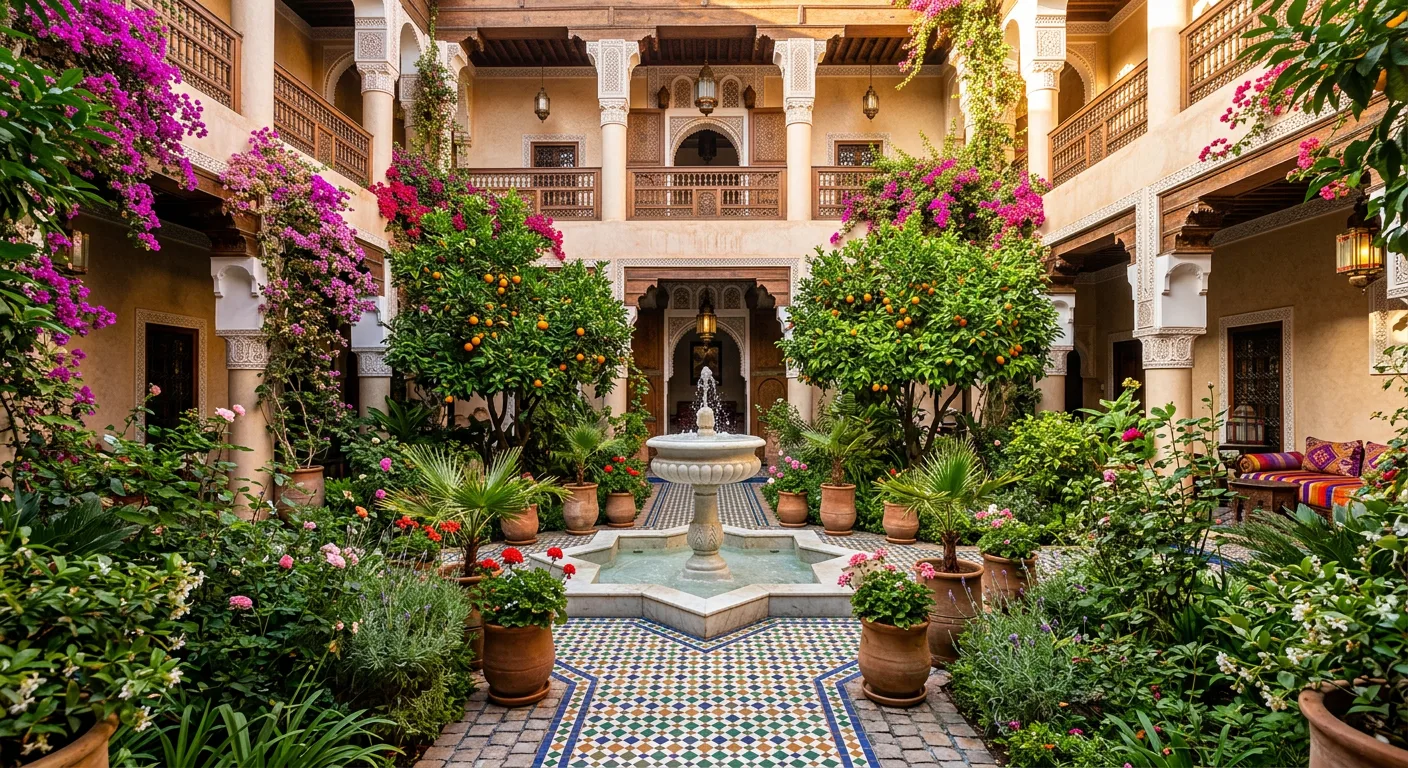
Garden Walks in Marrakech

Pet-Friendly Essaouira Coast
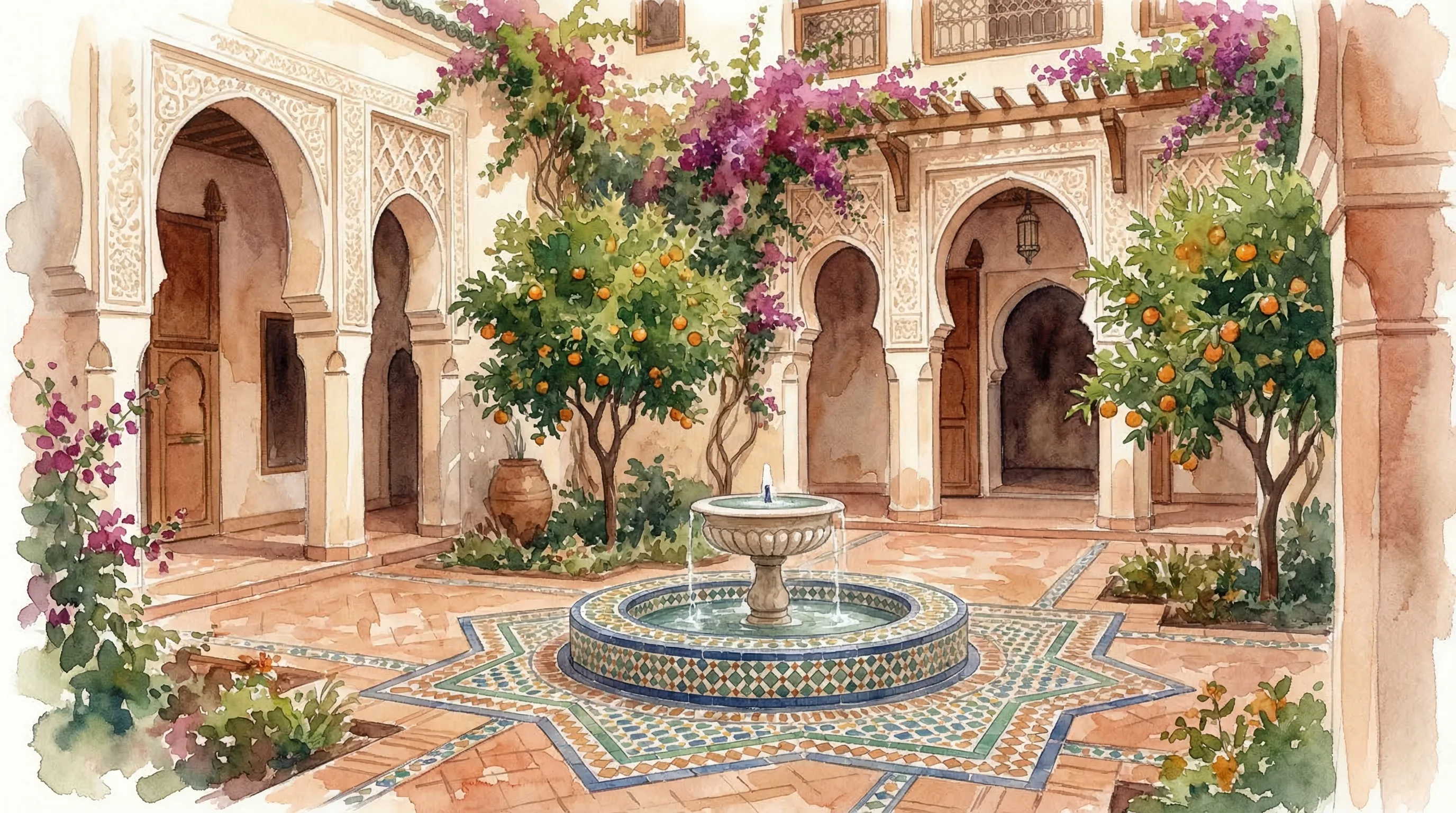
Riad Courtyards for Pets
Frequently Asked Questions
Is there a quarantine period for pets entering Morocco?
No, there is no mandatory quarantine for pets entering Morocco with complete documentation (valid rabies vaccination, titer test above 0.5 IU/ml, endorsed health certificate, and ONSSA import permit). However, if your documents are incomplete or if the ONSSA veterinarian at the port of entry has concerns, your pet may be held in a temporary facility while issues are resolved. This can cost from 200 MAD per day. To avoid any risk, ensure all paperwork is complete and organized before departure.
Can I bring my pet into Moroccan hotels and restaurants?
Pet policies vary significantly. Luxury hotels and international chains are most likely to accept pets, usually with a supplement from 250 MAD to 600 MAD per night. Most riads in the medina are not pet-friendly due to small spaces and resident cats. Traditional restaurants and food establishments generally do not allow pets. Hotels with gardens or outdoor spaces are your best options. Always confirm the pet policy before booking and request written confirmation.
What happens if my pet gets sick in Morocco?
Morocco has veterinary clinics in all major cities. Casablanca and Rabat have the most advanced facilities with diagnostic equipment comparable to European standards. Consultation fees start from 180 MAD. Emergency after-hours services are available in major cities, though you may need to call ahead. The SOS Animaux network operates in several cities and can provide referrals. Carry a basic pet first-aid kit and your vet's contact details from home for phone consultations.
Are there specific dog breeds banned from entering Morocco?
Morocco does not maintain an official breed ban list for pet imports. However, ONSSA reserves the right to refuse entry to animals deemed dangerous. Breeds commonly classified as dangerous in other countries (such as Pit Bull Terriers, Rottweilers, and similar breeds) may face additional scrutiny at customs. Some pet-friendly accommodations also restrict certain large or powerful breeds. Check with your accommodation and airline before traveling with breeds that may be subject to restrictions.
Can I take my pet to the beach in Morocco?
Beach rules for pets vary by location. Agadir's main beach generally does not allow dogs, but beaches to the north and south are more relaxed. Essaouira's beaches are relatively pet-friendly, especially the stretch south of the medina. Taghazout and the surfing beaches south of Agadir are generally accepting of dogs. Always keep your dog on a leash near other beachgoers, provide shade and fresh water, and avoid the hottest hours. Rinse saltwater from your pet's coat after beach visits to prevent skin irritation.
What is the best way to travel within Morocco with a pet?
The most practical option is renting a car, which gives you full control over your pet's comfort and schedule. Rental cars are available from 250 MAD per day at all major airports and cities. Private transfers can be arranged through hotels from 500 MAD per trip for intercity travel. ONCF trains only allow small pets in carriers. Most bus services (CTM, Supratours) do not accept pets. Petit taxis rarely accept pets, while grand taxi drivers may agree for an additional fee. For longer distances, consider hiring a private driver.
How much does it cost to bring a pet to Morocco?
Budget from 2,500 MAD to 8,000 MAD total for pet travel preparation. This includes the rabies titer test (from 1,500 MAD equivalent depending on country), health certificate endorsement fees, ONSSA import permit (from 350 MAD), airline pet transport fees (from 800 MAD for cabin to 3,500 MAD for cargo hold), and a pet-friendly accommodation surcharge from 250 MAD per night. Prices vary significantly by your country of origin and chosen airline. Seasonal pricing can change these estimates.
Do I need pet travel insurance for Morocco?
Pet travel insurance is not legally required but is highly recommended. Standard travel insurance policies do not cover veterinary emergencies abroad. Specialized pet travel insurance policies can cover emergency vet visits, surgery, medication, and even emergency repatriation of your pet. Policies start from around 150 MAD equivalent per trip depending on the provider and coverage level. Companies like Petplan, Trupanion, and ManyPets offer international coverage options that work in Morocco.
Related Guides
Morocco Visa Guide
Entry requirements, visa-free countries, passport rules, and everything you need to enter Morocco legally.
Read moreMorocco Travel Tips
Essential tips for first-time visitors covering transport, safety, cultural etiquette, and budgeting.
Read moreHealth Guide Morocco
Vaccinations, healthcare facilities, pharmacies, water safety, and staying healthy during your trip.
Read more