Discovering...

Travel Health & Medical
Health & Medical Guide
A comprehensive guide to staying healthy in Morocco. From vaccinations and pharmacies to hospitals and emergency contacts — everything you need for a safe and healthy trip, updated for 2025-2026.
Morocco Health Overview
Morocco does not pose exceptional health risks for travelers. The country has a well-developed healthcare system, particularly in private facilities in major cities like Casablanca, Rabat, and Marrakech. Pharmacies are abundant, well-stocked, and staffed by qualified pharmacists who often serve as the first point of medical contact for minor ailments.
The most common health issues for visitors are traveler's diarrhea, sunburn, and dehydration — all preventable with basic precautions. No vaccinations are legally required for entry into Morocco, but several are strongly recommended by the CDC and WHO. With proper preparation, a well-stocked first aid kit, and comprehensive travel insurance, you can explore Morocco with confidence.
Morocco's healthcare infrastructure has improved significantly over the past decade, with new private hospitals, expanded ambulance networks, and improved rural clinics. The country is also emerging as a destination for medical tourism, particularly for dental care and cosmetic procedures.
None
Compulsory Vaccines
Medium
Stomach Illness Risk
Good
Private Healthcare
Low
Malaria Risk
Pre-Travel Health Preparation
Ideally, begin your health preparations 6-8 weeks before departure. This gives time for vaccine courses to take effect and allows you to address any pre-existing conditions with your doctor.
6-8 Weeks Before Travel
- Visit a travel health clinic or your GP for a pre-travel consultation. Discuss your itinerary in detail, including any trekking, desert, or rural plans.
- Begin any multi-dose vaccine courses (Hepatitis B requires 3 doses over 6 months, though accelerated schedules exist).
- If you take prescription medications, obtain a 3-month supply with a letter from your doctor detailing each medication, dosage, and medical necessity.
- Consider rabies pre-exposure prophylaxis if trekking, cycling, or visiting rural areas.
2-4 Weeks Before Travel
- Get Hepatitis A and Typhoid vaccines (these need at least 2 weeks to become effective).
- Purchase comprehensive travel insurance with medical evacuation coverage. Verify it covers Morocco specifically and any adventure activities you have planned.
- Assemble your first aid kit (see detailed recommendations below). Buy oral rehydration salts and Imodium.
- Visit your dentist for a check-up. Dental emergencies abroad can be stressful and expensive.
- Prepare a card with your blood type, allergies, and emergency contact information in both English and French.
Recommended Vaccinations
No compulsory vaccinations required. Morocco does not require proof of any vaccination for entry (unless arriving from a yellow fever endemic country, in which case proof of yellow fever vaccination is required). The vaccines below are recommended by the CDC and WHO for traveler protection.
CDC-Recommended Vaccines
Hepatitis A
Protects against hepatitis A virus, which can be contracted through contaminated food and water. This is the single most important travel vaccine for Morocco.
Timing: At least 2 weeks before travel. Two-dose series for long-term protection.
Note: Highly recommended for all travelers regardless of itinerary. The virus is present in Morocco, especially in areas with less developed sanitation.
Typhoid
Protects against Salmonella typhi, spread through contaminated food and water. Particularly important if you plan to eat street food or visit rural areas.
Timing: At least 2 weeks before travel for injectable, 1 week for oral form.
Note: Recommended for most travelers, especially those venturing beyond major tourist routes or with adventurous eating habits.
Hepatitis B
Protects against hepatitis B virus, transmitted through blood and bodily fluids. Important for longer stays or if you might need medical treatment.
Timing: Three-dose series over 6 months. Accelerated schedule available.
Note: Recommended for travelers who may have intimate contact with locals, require medical procedures, or stay longer than 6 months.
Routine Vaccine Updates
Tetanus / Diphtheria / Pertussis (Tdap)
Routine booster that should be up to date regardless of travel. Tetanus risk increases with outdoor activities and any skin wounds.
Timing: Booster every 10 years. Get updated before travel if due.
MMR (Measles, Mumps, Rubella)
Routine childhood vaccine. Ensure you have received two doses. Measles outbreaks can occur in Morocco.
Timing: Two doses if born after 1957 and not previously vaccinated.
Influenza
Seasonal flu vaccine. Morocco experiences influenza season during winter months (November-March). Crowded souks and public transport increase exposure risk.
Timing: Annual vaccine, ideally 2 weeks before travel.
COVID-19
Stay up to date with COVID-19 vaccinations and boosters as recommended by your home country health authority.
Timing: Follow your national health authority guidance for boosters.
Situational Vaccines
Rabies
Pre-exposure prophylaxis for rabies. Morocco has stray dogs and cats in many cities, and rabies is present in animal populations.
Timing: Three-dose series over 21-28 days before travel.
Note: Consider if you will be spending time in rural areas, trekking, cycling, or if you are a long-term traveler. Children are at higher risk due to their tendency to approach animals.
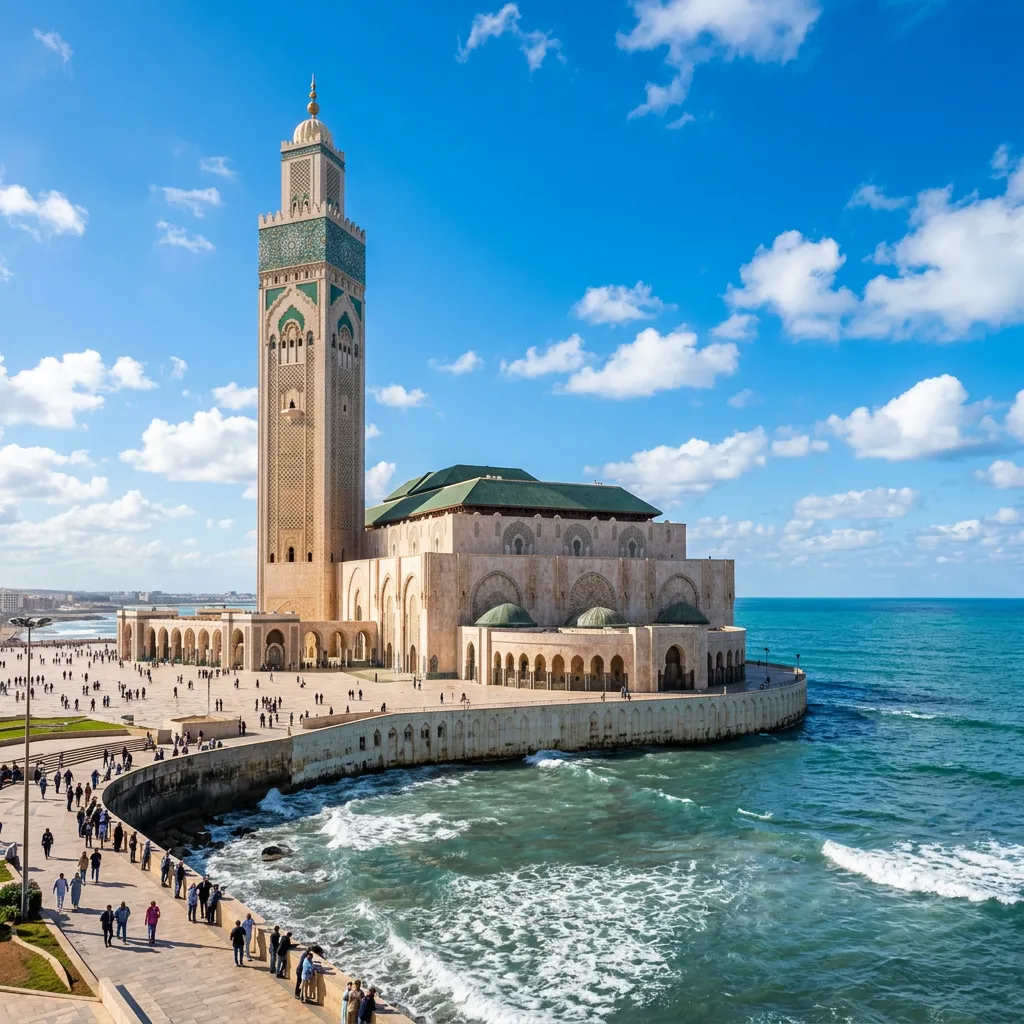
Morocco's healthcare system blends modern facilities in cities with traditional practices in rural areas
Travel Insurance Guide
Travel insurance with medical coverage is essential for Morocco. Private hospitals require upfront payment, and medical evacuation to Europe can cost $50,000 or more. Here is how to choose the right level of coverage for your trip.
Basic
Emergency medical only
$30-60 / 2 weeks
Short city breaks, low-risk itineraries
Medical: $50,000 - $100,000
Evacuation: $100,000
- Emergency hospital coverage
- Emergency dental
- Trip cancellation (limited)
- 24/7 assistance hotline
Recommended
Comprehensive
Medical + Trip protection
$60-120 / 2 weeks
Most Morocco travelers
Medical: $250,000 - $500,000
Evacuation: $500,000
- Full medical coverage
- Medical evacuation
- Trip cancellation/interruption
- Lost luggage
- Adventure sports (basic)
- 24/7 assistance hotline
Premium / Adventure
Full coverage + High-altitude trekking
$120-250 / 2 weeks
Toubkal treks, desert expeditions, adventure sports
Medical: $1,000,000+
Evacuation: $1,000,000+
- Unlimited medical
- Helicopter evacuation
- High-altitude trekking (4,000m+)
- Search and rescue
- Adventure sports (full)
- Trip cancellation/interruption
- Personal liability
Key insurance tips for Morocco: Confirm that your policy covers Morocco as a destination. Verify coverage for specific activities like trekking above 3,000m, quad biking, or desert camping. Keep your policy number and emergency assistance phone number accessible offline. Most Moroccan private hospitals require payment upfront — keep your credit card ready and claim reimbursement from your insurer afterwards. Ensure your policy includes repatriation coverage.
Common Health Issues
These are the health concerns most frequently reported by travelers to Morocco. Nearly all are preventable with basic precautions.
Traveler's Diarrhea
Risk Level:high
Symptoms
Watery stools, abdominal cramps, nausea, urgency, sometimes mild fever. Usually lasts 3-5 days without treatment.
Prevention
- Drink only bottled or purified water -- verify the seal is intact
- Avoid ice cubes in drinks at smaller establishments
- Eat at busy restaurants with high food turnover
- Peel fruits and vegetables yourself, or eat only cooked produce
- Wash hands frequently or use hand sanitizer before eating
- Avoid buffets where food has been sitting at room temperature
Treatment
Oral rehydration salts (available at any pharmacy) are the most important treatment. Loperamide (Imodium) helps with symptoms. If symptoms are severe, bloody, or last more than 48 hours, see a doctor. Pharmacists in Morocco can provide appropriate medication without a prescription.
Sun Exposure & Heat Stroke
Risk Level:high
Symptoms
Sunburn, headache, dizziness, nausea, rapid heartbeat, confusion, and in severe cases loss of consciousness. Morocco gets extremely hot in summer (40-50 C in interior cities).
Prevention
- Wear SPF 50+ broad-spectrum sunscreen and reapply every 2 hours
- Wear a wide-brimmed hat and UV-protective sunglasses
- Avoid outdoor activities between 12:00-16:00 in summer
- Drink at least 3 liters of water per day in hot weather
- Take breaks in air-conditioned or shaded spaces
- Wear loose, light-colored, breathable clothing
Treatment
Move to shade or air conditioning immediately. Apply cool, wet cloths to the body. Drink water with electrolytes slowly. For heat stroke (confusion, hot dry skin, loss of consciousness), call SAMU at 15 immediately -- this is a medical emergency.
Altitude Sickness
Risk Level:medium
Symptoms
Headache, nausea, dizziness, fatigue, shortness of breath, difficulty sleeping. Usually appears above 2,500m and affects 20-25% of trekkers on Mount Toubkal.
Prevention
- Ascend gradually -- do not gain more than 500m of sleeping altitude per day above 2,500m
- Stay well hydrated (3-4 liters per day at altitude)
- Avoid alcohol during the first 48 hours at altitude
- Consider acetazolamide (Diamox) prophylaxis -- consult your doctor before travel
- Spend a night in Imlil (1,740m) before attempting Toubkal summit
- Listen to your body and descend if symptoms worsen
Treatment
The most effective treatment is descent. If mild symptoms occur, rest at current altitude and hydrate. Acetazolamide can help with mild symptoms. Severe altitude sickness (HACE or HAPE) requires immediate descent and emergency medical attention. Mountain refuges have basic medical supplies.
Insect Bites & Stings
Risk Level:medium
Symptoms
Mosquito bites (itching, swelling), scorpion stings (intense pain, swelling, numbness), sandfly bites (itchy red bumps). Morocco is not a malaria zone, but mosquitoes can transmit other illnesses.
Prevention
- Use DEET-based insect repellent (30-50% concentration) on exposed skin
- Wear long sleeves and trousers at dawn and dusk in rural areas
- Use mosquito nets if accommodation does not have window screens
- Shake out shoes and clothing before putting them on (scorpions)
- Check bedding in desert camps and basic accommodations
- Avoid walking barefoot outdoors, especially at night
Treatment
For mosquito bites, antihistamine cream reduces itching. For scorpion stings, clean the area and apply a cold compress. Most Moroccan scorpions are not deadly, but seek medical attention immediately for severe pain, difficulty breathing, or if the victim is a child. Antivenom is available at hospitals in affected regions.
Water Safety
Safe Practices
- Always drink bottled water. Sidi Ali and Sidi Harazem are the most common brands. Verify the cap seal cracks when opened — some vendors refill bottles with tap water.
- Brush your teeth with bottled water as a precaution, especially during your first few days while your body adjusts. This is particularly important in smaller towns.
- Hot drinks are generally safe. Moroccan mint tea and coffee are safe because the water is boiled. This is one of the safest beverages you can order anywhere.
- Upscale restaurants and riads generally use filtered water for cooking and ice. You can typically trust ice and salads at established, well-reviewed restaurants.
Avoid
- Tap water for drinking. While tap water in major cities like Casablanca and Rabat is technically treated, the pipes and storage tanks can introduce contaminants. Do not risk it.
- Ice cubes at street stalls and small, basic restaurants. You cannot be sure if the ice was made from purified water. Larger restaurants and hotels generally use safe ice.
- Fresh fruit juices from street vendors may be diluted with tap water. Ask specifically if the juice is made with bottled water (eau minerale). Orange juice squeezed in front of you is generally fine.
- Fountain water in medinas. While historically these were drinking fountains, modern water quality is unreliable. Admire them but do not drink from them.
Sustainability tip: Rather than buying dozens of plastic bottles, bring a reusable water bottle with a built-in filter (LifeStraw, Grayl, or similar). These can purify tap water and save you money while reducing plastic waste. Morocco has a significant plastic waste challenge, and every bottle counts.
Food Safety Guidelines
Moroccan food is one of the highlights of any trip, and most travelers eat widely without any issues. Street food in Morocco is generally safer than in many other developing countries because much of it is cooked fresh at high temperatures in front of you. Follow these guidelines to minimize your risk.
Generally Safe
- Freshly cooked tagines and couscous (high heat kills bacteria)
- Grilled meats at busy street stalls (high turnover means fresh food)
- Fresh bread from bakeries (baked at extreme heat)
- Fruits you can peel yourself (oranges, bananas, mandarins)
- Freshly squeezed orange juice (Jemaa el-Fnaa stalls are iconic)
- Moroccan mint tea (always boiled)
Exercise Caution
- Raw salads at budget restaurants (may be washed with tap water)
- Buffet food at hotels (check that hot food is truly hot)
- Seafood in inland cities far from the coast
- Dairy products from roadside vendors (unpasteurized)
- Shellfish during warm months (May-September)
Best Avoided
- Snail soup from street vendors with questionable hygiene
- Pre-cut fruit displayed on the street in the heat
- Food sitting at room temperature for extended periods
- Raw or undercooked meat or eggs
- Tap water used in any beverage preparation
Pharmacy Culture in Morocco
Moroccan pharmacies are a traveler's best friend. They are far more than just places to pick up prescriptions — they serve as frontline healthcare providers where qualified pharmacists diagnose minor ailments, recommend treatments, and dispense medications, often without requiring a formal prescription.
The Green Cross
Look for the illuminated green cross sign. Pharmacies are found on virtually every block in Moroccan cities and towns. They are identified by a glowing green neon cross, similar to pharmacies across Europe. Most are open from 8:30 AM to 12:30 PM and 2:30 PM to 8:00 PM.
Pharmacie de Garde (Night Pharmacy)
A rotating night duty system ensures at least one pharmacy in every neighborhood is open 24/7. These are called "pharmacie de garde" and their schedule is posted on the door of every pharmacy. Your hotel can always tell you which pharmacy is on night duty. In an emergency, call the local police (19) for the nearest one.
Pharmacist as Doctor
Moroccan pharmacists are highly trained (5-6 years of pharmacy school) and often serve as the first point of medical contact. For minor ailments like stomach problems, cold symptoms, skin irritations, or insect bites, simply describe your symptoms and the pharmacist will recommend appropriate medication. This is far quicker and cheaper than a doctor visit.
Common Over-the-Counter Medications in Morocco
Pain & Fever
- Doliprane (paracetamol)
- Aspro (aspirin)
- Nurofen (ibuprofen)
- Spasfon (antispasmodic)
Digestive
- Smecta (anti-diarrhea)
- Imodium (loperamide)
- Maalox (antacid)
- ORS packets (Adiaril)
Allergy & Cold
- Aerius (desloratadine)
- Zyrtec (cetirizine)
- Actifed (decongestant)
- Humex (cough syrup)
Skin & Wounds
- Betadine (antiseptic)
- Biafine (burn cream)
- Cortisone cream
- Apaisyl (insect bite relief)
Healthcare System & Hospitals
Private Hospitals (Cliniques Privees)
- The recommended choice for tourists. Modern equipment, shorter wait times, cleaner facilities, and staff who often speak French and English.
- Payment is required upfront, usually by credit card. Costs are significantly lower than European/American hospitals (a consultation typically costs 200-500 MAD / $20-50 USD).
- Available in all major cities and most medium-sized towns. Your hotel or riad can recommend the nearest one and help arrange transport.
- Keep all receipts, diagnostic reports, and prescriptions for insurance reimbursement claims.
Public Hospitals (CHU / Hopitaux Publics)
- Free or very low cost, but often overcrowded with long wait times. Facilities may be basic by Western standards, particularly in smaller cities.
- University hospitals (CHU) in Casablanca, Rabat, Marrakech, and Fes have the most comprehensive facilities and specialist departments.
- French is the primary language of medical practice. English-speaking staff are rare in public facilities. Bring a translation app or French-speaking friend if possible.
- For serious trauma or emergencies where a private hospital is not accessible, public hospitals provide competent emergency care. Stabilization and transfer to private care is common practice.
Recommended Hospitals by City
Clinique Internationale de Marrakech
Marrakech
Specialties: General medicine, surgery, emergency, cardiology, orthopedics
Languages: French, English, Arabic
Phone: +212 524-435757
Top choice for tourists in Marrakech. Modern facility with 24/7 emergency department. English-speaking doctors available.
Clinique du Parc
Casablanca
Specialties: Cardiology, oncology, neurology, general surgery, pediatrics
Languages: French, English, Arabic
Phone: +212 522-994000
One of the best private hospitals in Morocco. International standards of care, modern equipment, and multilingual staff.
Hopital Cheikh Zayd
Rabat
Specialties: General medicine, surgery, ophthalmology, cardiology
Languages: French, Arabic, some English
Phone: +212 537-684040
Well-equipped private hospital in the capital. Good for non-emergency consultations and specialist appointments.
Clinique Atlas
Fes
Specialties: General medicine, surgery, maternity, emergency
Languages: French, Arabic
Phone: +212 535-622222
Leading private facility in Fes. 24-hour emergency service. Limited English but excellent care.
Clinique Agdal
Rabat
Specialties: Orthopedics, surgery, cardiology, neurology
Languages: French, English, Arabic
Phone: +212 537-776565
Modern private clinic with international accreditation standards. Popular with diplomats and expatriates.
CHU Mohammed VI
Marrakech
Specialties: Full-service university hospital, trauma center
Languages: French, Arabic
Phone: +212 524-434949
Main public hospital in Marrakech. Large trauma center. Can be crowded but handles serious emergencies well. Limited English.
CHU Ibn Rochd
Casablanca
Specialties: Full-service university hospital, all specialties
Languages: French, Arabic
Phone: +212 522-222222
Largest public hospital in Morocco. University teaching hospital with all specialties. Go here for complex trauma cases if private options are unavailable.
Clinique Les Oliviers
Agadir
Specialties: General medicine, surgery, orthopedics, emergency
Languages: French, English, Arabic
Phone: +212 528-840404
Best private option in Agadir. Good for tourist-related injuries and illnesses. English-speaking doctors available.
Emergency Numbers
Save these numbers in your phone before arriving in Morocco. All emergency numbers are free to call from any phone, including mobiles without a Moroccan SIM card.
SAMU (Medical Emergency)
15
Emergency medical services and ambulance dispatch
Police
19
Urban police for any emergency
Fire Brigade
15
Fire and rescue services (shared with SAMU)
Gendarmerie
177
Rural police and highway emergencies
General Emergency
112
European-style emergency number, works from any mobile
Poison Control
0801-000-180
Centre Anti-Poison et de Pharmacovigilance
Dental Care for Tourists
Emergency Dental Care
If you experience a dental emergency in Morocco, private dental clinics (cabinets dentaires) are available in all cities and most towns. Treatment quality at private practices in Casablanca, Rabat, and Marrakech is generally excellent, with many dentists trained in France.
A dental consultation typically costs 200-400 MAD ($20-40 USD). An extraction costs 300-600 MAD ($30-60 USD). A filling ranges from 400-800 MAD ($40-80 USD). These prices are a fraction of European or American costs.
Ask your hotel or riad for a recommendation, or search for "dentiste" on Google Maps. Many dentists speak French and some speak English. Bring your travel insurance details as some policies cover emergency dental work.
Dental Tourism
Morocco is increasingly popular for dental tourism, with savings of 50-70% compared to European prices. Major procedures like implants, veneers, and crowns are commonly sought by European visitors.
Casablanca and Rabat have specialized dental tourism clinics with state-of-the-art equipment and multilingual staff. Some offer package deals including accommodation and airport transfers.
If considering dental tourism, research clinics thoroughly, check reviews from international patients, verify the dentist's qualifications (many are French-trained or hold international certifications), and plan for multiple visits if the procedure requires them.
Medical Tourism in Morocco
Morocco has emerged as a growing medical tourism destination, particularly for patients from Sub-Saharan Africa and increasingly from Europe. The country offers high-quality medical care at significantly lower prices than Western Europe, combined with the appeal of recovering in a beautiful destination.
The Moroccan government has invested in healthcare infrastructure and actively promotes medical tourism. Major hospitals in Casablanca and Rabat now have international patient departments with dedicated coordinators who handle visa letters, airport transfers, accommodation, and translation services.
Cosmetic Surgery
Rhinoplasty, liposuction, facelifts. 40-60% savings vs. Europe.
Dental Procedures
Implants, veneers, crowns. 50-70% savings vs. Europe.
Ophthalmology
LASIK, cataract surgery. Modern equipment and trained specialists.
Fertility Treatment
IVF and fertility treatments at international-standard clinics.
Bringing Prescription Medication
What to Do
- Carry medications in their original pharmacy packaging with the prescription label clearly visible.
- Bring a letter from your doctor in English and French listing each medication, its generic name, dosage, and why you need it.
- Carry enough medication for your entire trip plus a 7-day buffer in case of travel delays.
- Split medications between carry-on and checked luggage in case one bag is lost.
- Know the generic (international) name of your medications in case you need to buy replacements in Morocco.
Important Restrictions
- Controlled substances (opioid painkillers, benzodiazepines, ADHD medications like Adderall) require extra documentation. Carry your prescription and doctor's letter.
- Cannabis-based medications (CBD oil, medical marijuana) are illegal in Morocco despite recent legalization of cannabis farming. Do not bring these under any circumstances.
- Psychotropic medications may require prior authorization from Moroccan authorities for large quantities. For a normal trip supply, a doctor's letter is usually sufficient.
- Insulin and syringes are allowed with a doctor's letter. Carry them in your hand luggage with a medical letter for airport security.
Mental Health Resources
Travel can be mentally challenging, especially in a culturally different environment. Culture shock, sensory overload in medinas, persistent touts, and being far from home can affect your mental wellbeing. Here are resources available in Morocco.
In-Country Resources
- SOS Psychiatrie Maroc: +212 522-989898. French and Arabic-speaking crisis support line.
- Private psychiatrists and psychologists are available in major cities. Casablanca and Rabat have the most options. Expect to pay 500-1000 MAD ($50-100 USD) per session.
- Embassy assistance: Your embassy can provide a list of English-speaking mental health professionals in Morocco.
Remote / Online Options
- Telehealth services like BetterHelp or Talkspace work in Morocco with a stable internet connection. Continue existing therapy sessions remotely.
- Crisis lines: International Association for Suicide Prevention (IASP) maintains a directory of crisis centers worldwide at https://www.iasp.info/resources/Crisis_Centres/
- Self-care tips: Maintain routines where possible. Take quiet breaks from the stimulation of souks and cities. Riads offer peaceful courtyards for decompression. Journal your experiences.
COVID-19: Current Status & Requirements
All COVID-19 Travel Restrictions Lifted
As of 2023, Morocco has removed all COVID-19 entry requirements. No vaccination proof, negative test, or health declaration is needed for entry. Masks are no longer mandatory in any setting.
Current Situation (2025-2026)
- No vaccination, testing, or quarantine requirements for any traveler
- Masks are optional everywhere, though some healthcare facilities may request them
- COVID-19 testing is available at private labs if needed for return travel (200-400 MAD for PCR)
- Morocco's vaccination rate is one of the highest in Africa (>70% fully vaccinated)
Recommendations
- Stay up to date with COVID-19 vaccinations and boosters before travel
- Carry a few masks in case you feel unwell or visit healthcare settings
- Pack rapid antigen tests if your home country requires testing for re-entry
- Ensure travel insurance covers COVID-19 related illness and trip disruption
Allergies & Dietary Medical Needs
Morocco can be challenging for travelers with food allergies because shared cooking surfaces are common, ingredient lists are rarely available at traditional restaurants, and nuts are used extensively in Moroccan cuisine. Preparation is essential.
Common Allergens in Moroccan Food
- Nuts: Almonds are ubiquitous in Moroccan cuisine — in pastries (pastilla, chebakia), tagines, couscous, and amlou (argan oil spread). Peanuts and walnuts also appear frequently.
- Gluten: Bread is central to every Moroccan meal. Couscous is made from wheat semolina. Gluten-free options are limited outside high-end restaurants.
- Dairy: Butter (smen) and milk are used in many dishes. Fresh goat cheese and yogurt (raib) are common. Specify "sans lait, sans beurre" (without milk, without butter).
- Eggs: Used in many pastries, bastilla, and some tagine preparations. Egg is a common binding agent in Moroccan cooking.
Practical Tips
- Carry an allergy card written in Arabic and French listing your allergens. Several apps and websites can create these for you.
- Always carry your EpiPen (or two) and ensure your travel companions know how to use it. EpiPens are not readily available in Moroccan pharmacies.
- Inform your riad or hotel about allergies when booking. Moroccan hosts take food allergies seriously when informed in advance.
- Learn key phrases: "Ana andi hassasiya min..." (I have an allergy to...) in Darija, or "Je suis allergique a..." in French.
- Supermarkets like Marjane and Carrefour carry labeled products where you can check ingredients. Stock up on safe snacks for between meals.
First Aid Kit Recommendations
While Moroccan pharmacies are well-stocked and inexpensive, having your own first aid kit means you are prepared for situations in remote areas, desert camps, or mountain refuges where pharmacies are not nearby.
Medications
- Imodium (loperamide)
- Oral rehydration salts (6-8 packets)
- Paracetamol / Ibuprofen
- Antihistamine tablets
- Motion sickness tablets
- Antacid tablets
- Throat lozenges
Wound Care
- Adhesive bandages (assorted sizes)
- Sterile gauze pads
- Medical tape
- Antiseptic wipes
- Antibiotic ointment
- Tweezers
- Small scissors
Sun & Insect Protection
- SPF 50+ sunscreen (reef-safe)
- After-sun aloe vera gel
- DEET insect repellent (30-50%)
- Hydrocortisone cream (1%)
- Lip balm with SPF
Hygiene & Comfort
- Hand sanitizer
- Wet wipes
- Blister plasters (Compeed)
- Eye drops (artificial tears)
- Electrolyte powder packets
- Thermometer
Trekking addition: If you are trekking in the Atlas Mountains, add altitude sickness medication (acetazolamide — prescription required), extra blister plasters, a knee brace or support bandage, water purification tablets, and a lightweight emergency blanket. Mountain refuges have very basic first aid supplies.
Related Travel Health Guides
Travel Insurance
Compare the best travel insurance plans for Morocco covering medical emergencies, trip cancellation, and adventure activities like trekking and desert tours.
Halal Travel Guide
Navigate halal dining, prayer facilities, and Muslim-friendly accommodation options across every major Moroccan city and region.
Vegan Food Guide
Discover plant-based Moroccan dishes, vegan-friendly restaurants, and how to communicate dietary needs at local eateries.
Is Morocco Safe?
Honest safety assessment for tourists including crime statistics, neighbourhood ratings, and practical tips to stay secure during your trip.
Emergency Numbers
Quick-reference guide to all emergency contacts in Morocco including police, ambulance, fire services, embassies, and tourist helplines.
Trip Cost Breakdown
Detailed budget breakdown for Morocco travel covering accommodation, food, transport, activities, and healthcare costs in MAD.
Stay Healthy, Enjoy Morocco
With sensible preparation and basic precautions, health issues should not overshadow your Moroccan adventure. The vast majority of travelers visit Morocco without any medical problems. Prepare well, stay hydrated, be smart about food and water, and enjoy one of the most extraordinary countries in the world.