Discovering...
Sustainable Travel
Eco-Tourism in Morocco: Travel Responsibly
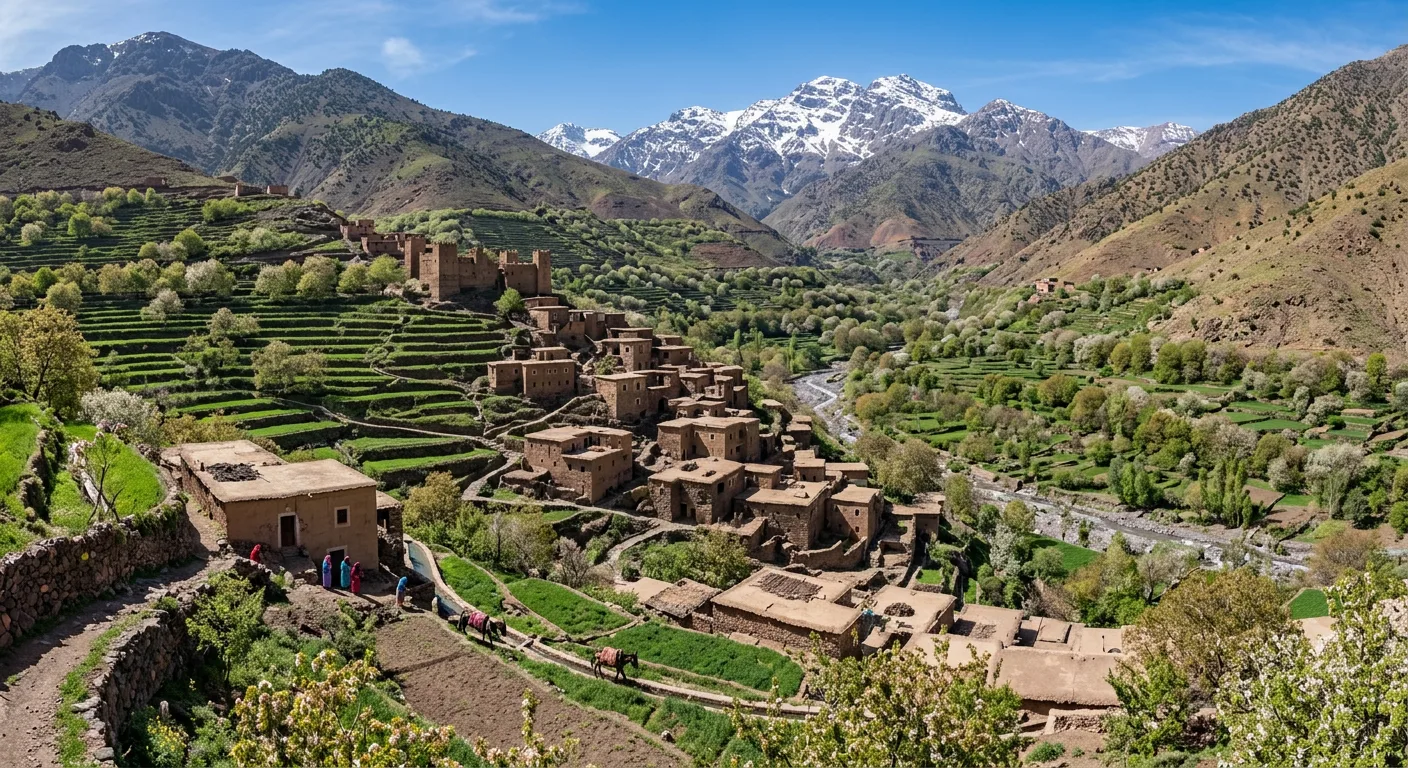
From solar-powered eco-lodges in the Atlas Mountains to women's argan cooperatives on the Atlantic coast, Morocco offers a wealth of sustainable travel experiences that protect the environment, preserve culture, and empower local communities.
Eco-Lodges
50+
Across Morocco
Cooperatives
1,200+
Women-led organizations
National Parks
10+
Protected areas
Plastic Ban
2016
Zero Mika campaign
Solar Energy
Noor
World's largest solar farm
UNESCO Sites
9
Cultural heritage
Why Eco-Tourism Matters in Morocco
Morocco welcomed over 14 million tourists in 2023, a number the government aims to grow to 26 million by 2030 under its national tourism strategy. This growth brings both opportunity and risk. Eco-tourism offers a path that generates economic benefit while protecting the country's extraordinary natural and cultural heritage for future generations.
The kingdom is already a global leader in several sustainability areas. The Noor-Ouarzazate solar complex is one of the world's largest concentrated solar power plants. Morocco's 2016 ban on single-use plastic bags was one of the most ambitious in Africa. Over 1,200 women's cooperatives across the country produce argan oil, saffron, carpets, and crafts using traditional methods that have sustained communities for centuries.
Yet challenges remain. Water stress is severe, particularly in the south. Plastic pollution persists despite the bag ban. Over-tourism threatens fragile ecosystems in popular destinations like the Erg Chebbi dunes and the Toubkal summit trail. Choosing eco-conscious travel options is not just a feel-good decision — it is a material contribution to preserving what makes Morocco remarkable.
This guide covers everything you need to plan a sustainable trip: eco-lodges that give back to communities, cooperatives where your purchase directly empowers women, national parks where your visit funds conservation, and practical steps to minimize your environmental footprint while maximizing your positive impact.
Eco-Lodges & Sustainable Accommodation
Morocco's best eco-lodges combine authentic experiences, environmental responsibility, and meaningful community impact. Every property listed here has been selected for its verified sustainability practices.
Atlas Mountains
1,800 - 4,500 MAD/night
Kasbah du Toubkal
Imlil, High Atlas
Perched at 1,800 meters on a rocky outcrop overlooking the Imlil Valley, this award-winning eco-lodge occupies a restored kasbah that once belonged to a feudal chief. The lodge pioneered community-based tourism in the High Atlas and remains the gold standard. Rooms feature traditional Berber design with hand-carved cedar woodwork, tadelakt walls, and wool blankets woven in the village below. The panoramic terrace offers jaw-dropping views of Jebel Toubkal.
Eco Features
Solar hot waterLocal stone constructionOrganic gardenZero single-use plasticRainwater harvesting
Community Impact
5% of revenue funds the Education For All boarding houses for rural girls. Employs 85 local staff from surrounding Berber villages. Built and maintained entirely by local craftsmen.
Best for: Trekking base, cultural immersion, mountain luxury

Draa Valley
6,500 - 12,000 MAD/night
Dar Ahlam
Skoura, Ouarzazate Province
A restored 19th-century kasbah surrounded by 12 hectares of palm groves, rose gardens, and olive orchards. Dar Ahlam (House of Dreams) operates as a luxury maison d'hotes with just 14 suites, ensuring minimal environmental footprint despite its high-end positioning. Each day brings a surprise excursion planned by the staff: a picnic in the Skoura palmery, dinner in the desert dunes, or breakfast at a hidden oasis. The kitchen champions local, seasonal cuisine.
Eco Features
Solar energy systemHeritage restorationOrganic kitchen gardenNatural pool filtrationZero-waste kitchen policy
Community Impact
Restored a crumbling 200-year-old kasbah that would have been lost. Employs 60 local staff with above-market wages. Funds a village school and medical dispensary. Sources all produce from local organic farms within 20 km.
Best for: Luxury sustainable travel, heritage conservation, immersive experiences
Atlas Mountains
2,200 - 5,000 MAD/night
Kasbah Bab Ourika
Ourika Valley, High Atlas
A contemporary eco-lodge built into the hillside above the Ourika Valley using traditional pisé (rammed earth) construction. The 16 rooms blend seamlessly with the landscape, each offering private terraces with Atlas views. The lodge runs a permaculture garden that supplies the restaurant with herbs, vegetables, and fruits. Cooking classes teach guests traditional Berber cuisine using garden ingredients.
Eco Features
Solar panelsGreywater recyclingOrganic permaculture gardenLED lighting throughoutLocally sourced construction materials
Community Impact
Built by 150 local artisans over three years. Funds a village hammam and communal bread oven. Employs 40 staff from surrounding douars. Purchases all food from Ourika Valley farmers.
Best for: Day trips from Marrakech, cooking classes, permaculture
Sahara Desert
1,200 - 3,500 MAD/night
Sawadi Desert Camp
Erg Chebbi, Merzouga
A low-impact luxury camp set among the towering dunes of Erg Chebbi. Unlike permanent desert hotels that scar the landscape, Sawadi uses removable tented structures that leave zero trace. Each tent features hand-woven Saharan textiles, solar-powered lanterns, and traditional carpets. The camp relocates seasonally to prevent sand compaction. Evening meals are cooked in underground sand ovens, a traditional Saharan technique.
Eco Features
Solar-powered lightingComposting toiletsMinimal footprint tentsNo permanent structures on dunesBiodegradable cleaning products
Community Impact
Operated entirely by local Amazigh families from Merzouga and Hassilabied. Camel handlers own their own animals and receive fair wages. A portion of revenue funds desert clean-up campaigns removing trash from dune areas.
Best for: Authentic desert experience, stargazing, zero-trace camping
Atlas Mountains
400 - 800 MAD/night
Lalla Abouch Eco-Lodge
Ait Bougmez Valley, Central High Atlas
Nestled in the remote Ait Bougmez Valley, known as the Happy Valley, this community-owned eco-lodge represents grassroots sustainable tourism at its finest. The lodge was built by villagers using traditional techniques and local materials. Rooms are simple but comfortable, heated by wood stoves in winter and cooled by thick earthen walls in summer. Meals are prepared by village women using produce from the valley's walnut orchards and vegetable gardens.
Eco Features
Straw-bale insulationSolar water heatingComposting systemTraditional pisé constructionWood-fired heating from pruned orchards
Community Impact
A community-owned lodge where profits go directly to the village cooperative. Funded construction of a village bridge and irrigation canal. Trains local youth as trekking guides and hospitality staff.
Best for: Budget eco-travel, authentic village life, off-the-beaten-path trekking
Souss-Massa
900 - 2,000 MAD/night
Atlas Kasbah Ecolodge
Agadir outskirts, Souss Region
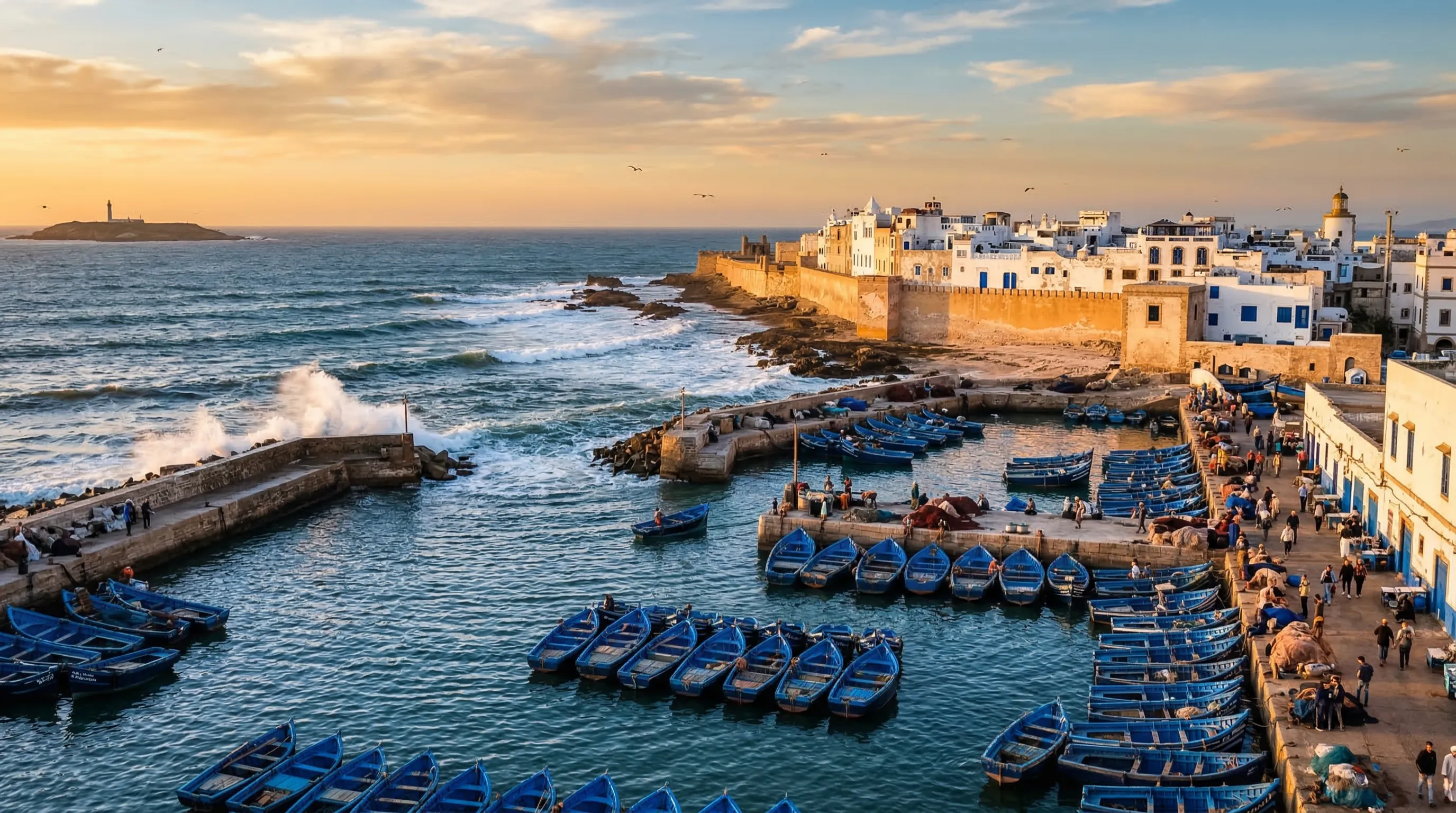
The first certified eco-lodge in southern Morocco, set among argan trees on a hillside overlooking the Atlantic. The lodge was built entirely from local stone and reclaimed materials, with thick walls that maintain comfortable temperatures year-round without air conditioning. The natural swimming pool is filtered by aquatic plants rather than chemicals. Guests can join argan harvesting during season or take guided walks in Souss-Massa National Park.
Eco Features
Certified Green Key eco-labelSolar energy 80% of powerOrganic argan groveNatural swimming poolGreywater irrigation system
Community Impact
Partners with local argan oil cooperative for guest visits. Employs 25 staff from surrounding villages. Funds environmental education programs in local schools. Supports Souss-Massa National Park conservation.
Best for: Argan experiences, coastal nature, eco-certification
Draa-Tafilalet
600 - 1,400 MAD/night
Ecolodge Bab El Oued
Agdz, Draa Valley
An intimate adobe lodge on the edge of the Draa palmery, designed to demonstrate that luxury and sustainability are not mutually exclusive even on a modest budget. The eight rooms are built in traditional Draa Valley style with thick mud-brick walls, palm-wood ceilings, and tadelakt bathrooms. The rooftop terrace surveys an endless carpet of date palms stretching to the desert horizon. The lodge runs sunset kayak trips on the Draa River.
Eco Features
Adobe constructionSolar electricityOrganic date palm gardenWater recyclingNatural ventilation design
Community Impact
Built by local craftsmen using ancestral adobe techniques. Employs 15 local staff. Supports a village women's literacy program and cooperates with local date farmers to market their produce to guests.
Best for: Draa Valley exploration, date harvest season, desert edge landscapes
High Atlas
500 - 1,100 MAD/night
Dar Itrane
Toubkal National Park, Aremd Village
A traditional Berber guesthouse in the village of Aremd, the last settlement before the Toubkal summit trail. The lodge is built into the mountainside using local stone and walnut timber, exactly as Berber houses have been constructed for centuries. The terrace garden grows mint, thyme, and vegetables used in the family kitchen. The wood-fired hammam uses water from a mountain spring and is heated with pruned walnut branches.
Eco Features
Stone and timber constructionSolar panelsSpring water supplyOrganic terrace gardenWood-burning hammam
Community Impact
Family-run by a local Berber family for three generations. Funds maintained hiking trails and water channels in Aremd village. Trains village youth as mountain guides through a mentorship program.
Best for: Toubkal trekking, authentic mountain homestay, budget-friendly
How to Choose an Eco-Lodge
Check for certifications
Look for Green Key, Travelife, or EarthCheck certification. In Morocco, the Clef Verte (Green Key) label is the most common eco-certification for accommodations.
Ask about community benefit
Genuine eco-lodges can tell you exactly how they benefit the local community: employment numbers, educational programs funded, percentage of revenue shared.
Verify local ownership
Locally owned lodges keep more revenue in the community. Ask who owns and operates the property. Many excellent eco-lodges are family-run Moroccan businesses.
Review energy and water practices
Solar hot water, LED lighting, greywater recycling, and rainwater harvesting are baseline eco-practices. If a lodge cannot describe its environmental systems, be skeptical.
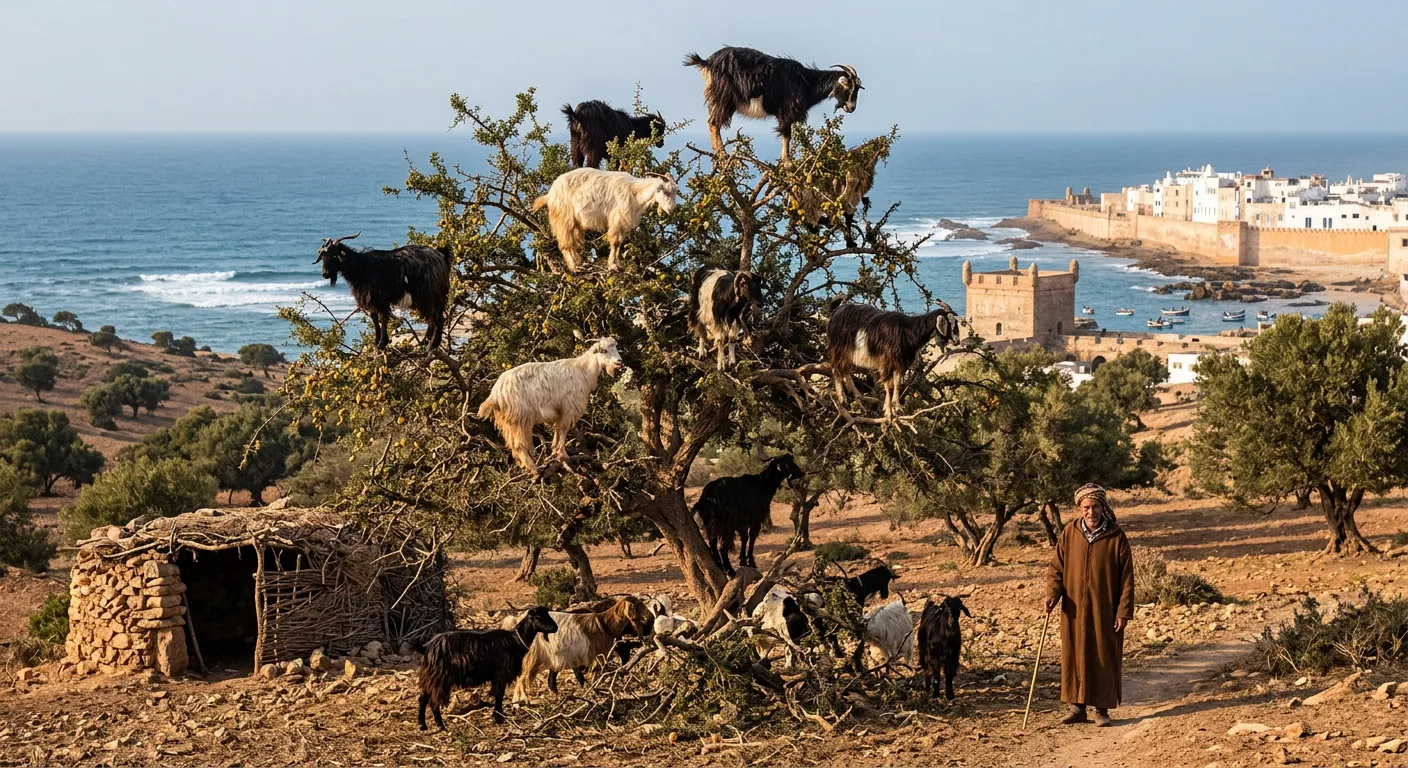
Argan trees in the Souss Valley -- a UNESCO-protected biosphere

The argan tree -- Morocco's liquid gold and a pillar of sustainable rural livelihoods
Women's & Artisan Cooperatives
Visiting cooperatives is one of the most impactful things you can do as an eco-tourist in Morocco. Your purchase directly supports women's economic empowerment and preserves ancestral craft traditions.
Cooperative Amal
Women's culinary training
A non-profit restaurant and training center that provides disadvantaged women with professional culinary skills. Founded by a Moroccan-American social entrepreneur, Amal (which means Hope) trains women from difficult backgrounds in restaurant service, Moroccan cuisine, and business management. Guests enjoy authentic, home-style Moroccan food while directly funding job training programs.
Marrakech
40+ women trainees annually
Open daily for lunch 12:00-15:00. Cooking classes available Mon-Sat, 350 MAD per person. Reservations recommended.
Traditional Moroccan mealsCooking classesCatering services
Price range: 80-350 MAD
Cooperative Tamounte
Argan oil production
One of the original women's argan cooperatives, established in the early 2000s as part of a UNESCO Biosphere Reserve initiative. Watch the entire argan oil extraction process, from cracking the incredibly hard nuts by hand (a skill requiring years of practice) to cold-pressing the kernels. The cooperative provides fair wages, health insurance, and literacy classes to its members.
Between Essaouira and Agadir
60 women
Open daily 8:30-17:00. Free guided tours of the production process. No appointment needed for groups under 10.
Culinary argan oilCosmetic argan oilAmlou (argan and almond spread)Argan soap
Price range: 150-400 MAD per liter
Cooperative Tiguemine
Argan oil and saffron
A Fair Trade-certified cooperative that has expanded beyond argan oil to produce saffron and prickly pear seed oil, one of the world's most expensive cosmetic oils. The cooperative's members have used their earnings to send daughters to university, build homes, and gain financial independence in a traditionally patriarchal rural society.
Tidzi, between Essaouira and Agadir
45 women
Open Mon-Sat 9:00-17:00. Group demonstrations available. Call ahead for English-speaking guide.
Virgin argan oilSaffronPrickly pear seed oilNatural cosmetics
Price range: 120-500 MAD per product
Al Kawtar Cooperative
Women's embroidery and textiles
A cooperative of hearing-impaired and disadvantaged women who create exquisite hand-embroidered textiles using traditional Fessi and Marrakchi patterns. Each piece takes days or weeks to complete. The cooperative provides sign language instruction, healthcare access, and a supportive community for women who often face social marginalization.
Marrakech Medina
30 women
Showroom open Mon-Sat 9:00-18:00. Watch artisans at work. Custom orders take 2-4 weeks.
Hand-embroidered table linensCushion coversTraditional caftansCustom orders
Price range: 200-3,000 MAD per item
Cooperative Afous
Silver jewelry
Tiznit has been the capital of Moroccan silver jewelry for centuries. This cooperative preserves ancestral Amazigh silversmithing techniques that are at risk of being lost. Master artisans use hand tools and traditional methods to create intricate filigree, engraving, and enameling. Each piece tells a story through Amazigh symbols representing fertility, protection, and the natural world.
Tiznit, Anti-Atlas
25 artisans
Workshop visits available Mon-Fri 9:00-16:00. Demonstrations of traditional engraving techniques.
Traditional Amazigh silver jewelryFibulasHand of Fatima pendantsCustom silverwork
Price range: 150-5,000 MAD per piece
Imi N'Tanoute Women's Saffron Cooperative
Saffron production
Taliouine produces some of the world's finest saffron, rivaling Iranian varieties. This cooperative manages the entire process from planting the crocus bulbs to the delicate hand-harvesting of stigmas at dawn during the brief October-November season. Each gram requires 150-200 flowers. The cooperative has transformed what was traditionally unpaid women's work into a fair-wage enterprise with profit sharing.
Taliouine, Anti-Atlas
50 women
Harvest visits October-November only. Off-season showroom open daily. Saffron field tours 100 MAD per person.
Pure Moroccan saffronSaffron honeySaffron cosmeticsSaffron tea blends
Price range: 40-120 MAD per gram of saffron
National Parks & Protected Areas
Morocco's national parks protect ecosystems from alpine peaks to Saharan wetlands. Visiting these parks funds conservation and supports surrounding communities.
Toubkal National Park
High Atlas Mountains · 380 km²
Morocco's flagship national park and a model for community-based mountain tourism. The park authority works with local villages to ensure trekking revenue benefits communities directly. Mule handlers, guides, and guesthouse operators are all sourced from the Imlil and Aremd valleys. Recent trail restoration projects have addressed erosion caused by increased foot traffic on the Toubkal summit route.
Key Features
North Africa's highest peak (4,167m), alpine meadows, endemic flora, Berber villages
Eco Activities
- Responsible trekking with local guides
- Berber village homestays
- Botanical walks
- Mountain clean-up treks
Entry & Guides
Park fee 20 MAD. Licensed guide mandatory above 3,000m. Guide fee 400-600 MAD/day.
Best Season
April to June, September to November
Souss-Massa National Park
Atlantic Coast, south of Agadir · 340 km²
The last stronghold of the critically endangered northern bald ibis, with Morocco hosting 95% of the global wild population. The park stretches along 65 km of wild, undeveloped Atlantic coastline. Eco-tourism here directly funds conservation: entrance fees and guided tour revenue support ranger patrols, nest site protection, and community education programs that have helped the ibis population recover from fewer than 100 to over 700 birds.
Key Features
Critically endangered northern bald ibis, wild Atlantic coast, argan woodland, estuary habitats
Eco Activities
- Birdwatching with local ornithologist guides
- Northern bald ibis observation
- Coastal nature walks
- Argan forest education trails
Entry & Guides
Free entry. Guided birdwatching tours 300-500 MAD per person.
Best Season
Year-round; October to March for migratory birds
Ifrane National Park
Middle Atlas · 500 km²
Home to Morocco's most magnificent cedar forests, some trees over 800 years old. The park is central to conservation efforts for the endangered Barbary macaque. Eco-visitors can participate in tree planting programs that have replanted over 50,000 hectares of degraded cedar forest across the Middle Atlas. The park demonstrates how tourism can fund reforestation: a portion of guide fees goes directly to nurseries growing cedar seedlings.
Key Features
Ancient Atlas cedar forests, Barbary macaques, mountain lakes, endemic flora
Eco Activities
- Cedar forest walks
- Barbary macaque observation
- Birdwatching at Dayet Aoua
- Tree planting volunteer programs
Entry & Guides
Free entry. Guide recommended for macaque observation, 200-400 MAD.
Best Season
March to November; autumn for cedar colours
Al Hoceima National Park
Mediterranean Coast, Rif Mountains · 480 km²
Morocco's premier Mediterranean marine park, where the Rif Mountains plunge into crystal-clear waters. The park protects the largest breeding colony of ospreys on the Mediterranean, along with dolphins, sea turtles, and important seabird nesting sites. A community-managed sustainable fishing program allows traditional fishing while protecting marine ecosystems. Eco-tourism boat trips provide income for fishermen who might otherwise overfish.
Key Features
Mediterranean marine park, osprey colony, dolphins, pristine coves, dramatic cliffs
Eco Activities
- Marine wildlife snorkeling
- Coastal hiking
- Osprey colony observation
- Sustainable fishing village visits
Entry & Guides
Free entry. Boat tours to osprey cliffs 400-700 MAD per group.
Best Season
May to October for marine life; March to June for osprey nesting
Community-Based Tourism Experiences
Immersive experiences where tourism revenue goes directly to local families and communities. These are not tourist performances — they are genuine invitations into daily life.
Berber Village Homestay
Stay with a Berber family in a traditional mountain home. Share meals cooked on a wood fire, help in the terrace gardens, and learn about daily life in a culture that has remained largely unchanged for centuries. Families receive the full payment directly.
Imlil or Ait Bougmez Valley
1-3 nights
250-500 MAD per person per night
Includes:
- Accommodation in family home
- All meals (breakfast, lunch, dinner)
- Tea ceremonies
- Optional guided village walk
Organic Farm Stay & Harvest Experience
Work alongside local farmers during harvest season: picking olives in November, harvesting saffron in October, or gathering roses in May. Learn traditional agricultural techniques that have sustained these valleys for generations. Includes hands-on cooking with your harvest.
Ourika Valley or Draa Valley
1-2 days
400-700 MAD per person per day
Includes:
- Farm work experience
- Traditional lunch
- Cooking class
- Take-home produce or products
Nomad Camp Experience
Join a semi-nomadic family at their seasonal desert camp. Learn to prepare bread baked in sand, navigate by stars, and understand the complex social customs of Saharan nomadic life. All revenue goes directly to the nomad families, supporting a way of life increasingly threatened by modernization.
M'Hamid el Ghizlane, Sahara edge
2-3 days
800-1,500 MAD per person per day
Includes:
- Desert camp accommodation
- All meals
- Camel transport
- Guided desert walks
- Stargazing sessions
Fishing Village Day with Artisanal Fishermen
Join local fishermen at dawn for a traditional fishing trip using ancestral techniques. Return to the village to prepare your catch with a local family. Learn about sustainable fishing practices and the challenges facing Morocco's small-scale fishing communities.
Moulay Bousselham or Sidi Ifni
Full day
300-500 MAD per person
Includes:
- Boat trip with fishermen
- Fish preparation lesson
- Traditional seafood lunch
- Village walking tour
Carpet Weaving Workshop
Learn the art of Amazigh carpet weaving from master weavers in Ain Leuh, a village renowned for its distinctive Middle Atlas carpet tradition. Each pattern encodes Amazigh symbols representing fertility, protection, and tribal identity. Proceeds fund the women's weaving cooperative.
Ain Leuh, Middle Atlas
Half day to full day
200-400 MAD per person
Includes:
- Weaving instruction
- Materials provided
- Mint tea and pastries
- Cooperative visit
Pottery Village of Tamegroute
Visit the centuries-old pottery workshops of Tamegroute, famous for their distinctive green glaze derived from local minerals. Try your hand at the potter's wheel under guidance of master craftsmen whose families have practiced the art for generations. Also visit the ancient Koranic library with manuscripts dating to the 11th century.
Tamegroute, near Zagora
Half day
150-300 MAD per person
Includes:
- Pottery demonstration
- Hands-on pottery lesson
- Koranic library visit
- Mint tea
Sustainable Travel Practices
Practical, actionable steps to minimize your environmental impact and maximize your positive contribution while traveling in Morocco.
Reduce Plastic Waste
- Carry a refillable water bottle with a filter (LifeStraw or SteriPen)
- Bring reusable shopping bags for souk purchases
- Refuse single-use plastic bags (banned since 2016)
- Choose eco-lodges that provide filtered water stations
- Pack solid shampoo and soap bars instead of liquid bottles
Impact: Morocco's Zero Mika campaign banned plastic bags in 2016, removing an estimated 26 billion bags annually. Tourists can support this by reducing personal plastic use.
Conserve Water
- Take short showers (Morocco faces severe water stress)
- Reuse hotel towels and linens
- Avoid hotels with large swimming pools in arid regions
- Support accommodations with greywater recycling
- Report water leaks or waste to management
Impact: Morocco is among the most water-stressed countries globally. The average tourist uses 300-800 liters per day compared to the local average of 50-80 liters.
Support Local Economy
- Buy directly from artisan cooperatives, not middlemen
- Eat at locally owned restaurants and food stalls
- Hire local guides rather than international tour operators
- Stay in family-run riads and guesthouses
- Pay fair prices: aggressive haggling harms artisan livelihoods
Impact: When you buy from a cooperative, 70-90% of the price goes to the artisan. Through middlemen or souk shops, artisans may receive as little as 10-20%.
Responsible Trekking
- Always hire a licensed local guide (legally required in national parks)
- Carry out all trash, including organic waste above treeline
- Stay on marked trails to prevent erosion
- Use established campsites rather than creating new ones
- Respect wildlife distances: 10m minimum for all animals
Impact: The Toubkal summit trail receives over 50,000 trekkers annually. Trail erosion and litter have become serious concerns, making responsible practices essential.
Cultural Sensitivity
- Ask permission before photographing people
- Dress modestly in rural and religious areas
- Learn basic Arabic or Amazigh greetings
- Respect Ramadan: avoid eating or drinking publicly during daylight hours
- Accept tea invitations graciously (refusing can be considered rude)
Impact: Cultural respect builds genuine connections and ensures tourism remains welcome in communities. Many villages have closed to tourists due to disrespectful visitor behavior.
Carbon-Conscious Travel
- Use trains between major cities (ONCF rail network is efficient)
- Share grand taxis rather than hiring private cars
- Choose direct flights where possible to reduce emissions
- Offset remaining carbon through verified programs
- Walk or cycle within cities and towns
Impact: A Marrakech-Fes train journey produces 80% less CO2 per passenger than driving the same route. Morocco's rail network connects most major cities.
Sustainable Souvenirs & Ethical Shopping
Every purchase tells a story. Choose souvenirs that support artisans, preserve traditions, and are made from sustainable materials.
Cooperative Argan Oil
Women's cooperatives between Essaouira and Agadir
Fair-trade certified, women-empowering, supports UNESCO Biosphere Reserve. Buying from cooperatives rather than middlemen ensures 70-90% goes to the women producers.
150-400 MAD per liter
Hand-woven Amazigh Carpet
Weaving cooperatives in Ain Leuh, Azrou, or Taznakht
Made from locally sourced wool using vegetable dyes. Each carpet takes weeks to months to weave. Preserves ancestral patterns and techniques. Cooperative purchases ensure fair wages.
800-8,000 MAD depending on size
Tamegroute Pottery
Tamegroute village workshops near Zagora
Made from local clay with mineral glazes, using wood-fired kilns. A centuries-old tradition that requires no imported materials. Purchasing directly from workshops supports artisan families.
50-500 MAD per piece
Handmade Leather Goods
Tannery cooperatives in Fes or Marrakech
When bought from traditional tanneries using vegetable tanning (not chrome), these goods are produced using ancient, low-chemical methods. Look for the Fes tannery cooperative stamp.
200-2,000 MAD
Saffron from Taliouine
Taliouine cooperatives, Anti-Atlas
Hand-harvested by women's cooperatives. No pesticides, rain-fed irrigation, and traditional cultivation methods. The world's most labor-intensive spice, supporting rural employment.
40-120 MAD per gram
Thuya Wood Crafts
Essaouira woodworking shops
Made from sustainably harvested thuya root burls (the trees are not felled). Look for the Essaouira artisan collective certification. Avoid unmarked vendors who may use unsustainably sourced wood.
100-3,000 MAD
Rose Water from Kelaat M'Gouna
Rose cooperatives in Dades Valley
Distilled from hand-picked Damascene roses during the May harvest. No synthetic additives. Women's cooperatives manage the entire production chain from field to bottle.
50-200 MAD per bottle
Natural Beldi Soap (Savon Noir)
Local hammams and herbal shops throughout Morocco
Made from olive oil and eucalyptus, completely biodegradable, zero plastic packaging when bought in bulk. A traditional product that replaces multiple synthetic body care items.
30-80 MAD per jar
Carbon-Conscious Transport & Offsets
Compare the carbon footprint of different transport options within Morocco and make informed choices about how you move around the country.
| Transport Mode | Example Route | CO2 / Person | Price | Notes |
|---|---|---|---|---|
| Train (ONCF) | Marrakech to Fes | ~8 kg CO2 | 200-340 MAD | Air-conditioned, scenic. Al Boraq high-speed train connects Tangier to Casablanca in 2h10m. |
| Shared Grand Taxi | Marrakech to Essaouira | ~12 kg CO2 | 80-100 MAD | Shared with 5 other passengers. Much lower emissions per person than private hire. |
| CTM/Supratours Bus | Marrakech to Ouarzazate | ~6 kg CO2 | 80-120 MAD | Modern coaches with AC. Most efficient motorized transport for the Atlas crossing. |
| Private Car Hire | Marrakech to Fes | ~45 kg CO2 | 1,500-2,500 MAD | Highest emissions per person. Consider if group of 4+ to lower per-person impact. |
| Domestic Flight | Casablanca to Ouarzazate | ~90 kg CO2 | 600-1,200 MAD | Highest carbon option. Rarely necessary given Morocco's compact geography. |
| Bicycle | City exploration | 0 kg CO2 | 100-200 MAD/day rental | Marrakech, Essaouira, and Meknes have growing cycling infrastructure. E-bike tours available. |
Carbon Offset Programs in Morocco
Solar Energy Credits
Morocco's Noor-Ouarzazate solar complex generates 580 MW of clean energy. Gold Standard-certified offset credits fund expansion of solar infrastructure across the country. Cost: approximately 100-150 MAD per tonne of CO2.
Reforestation Projects
The High Atlas Foundation has planted over 4 million trees across Morocco. Offset programs fund nurseries growing Atlas cedar, argan, olive, and almond trees. Each tree sequesters an average of 22 kg of CO2 per year over its lifetime.
Clean Cookstove Programs
Verra-certified projects distribute improved cookstoves to rural families, reducing wood fuel consumption by 50-70%. Each stove prevents approximately 3 tonnes of CO2 annually while improving indoor air quality and reducing deforestation.
Organic Farms & Agricultural Experiences
Morocco's agricultural heritage spans millennia. These farms welcome visitors to experience traditional and innovative organic farming practices firsthand.
1
Le Jardin des Douars
Essaouira region
A permaculture showcase property that grows over 200 varieties of herbs, fruits, and vegetables without any chemical inputs. The gardens supply the on-site restaurant and local markets. Guided permaculture walks explain companion planting, water harvesting, and soil-building techniques adapted to Morocco's climate.
Specialty: Permaculture garden, medicinal herbs, organic vegetables
200-400 MAD per person (includes lunch)
2
Bio Organic Olive Farm
Meknes region, Saiss Plain
One of Morocco's first certified organic olive farms, cultivating seven traditional Moroccan olive varieties. The farm uses no pesticides, practicing integrated pest management with companion planting and beneficial insects. Visitors can tour the ancient stone press, walk the groves, and taste oils from different varieties.
Specialty: Certified organic olive oil, olive varieties
150-300 MAD per person (includes tasting)
3
Saffron Fields of Taliouine
Taliouine, Anti-Atlas
The saffron terraces of Taliouine produce what many chefs consider the finest saffron in the world. These rain-fed, pesticide-free fields have been cultivated for over 1,000 years. Visit during the October-November harvest to witness the pre-dawn picking of crocus flowers and the painstaking separation of stigmas.
Specialty: Organic saffron, honey, almonds
100-200 MAD per person
4
Agafay Permaculture Project
Agafay Desert, near Marrakech
A pioneering project demonstrating how to grow food in arid conditions using permaculture principles. Solar-powered drip irrigation, swales, and mulching techniques produce surprising yields of vegetables, fruits, and herbs in the Agafay stone desert. Workshops teach techniques applicable to home gardens.
Specialty: Desert permaculture, drought-resistant crops, solar irrigation
250-500 MAD per person (includes workshop)
5
Rose Valley Organic Farms
Kelaat M'Gouna, Dades Valley
The Dades Valley grows millions of Damascene roses organically across thousands of hectares. The roses are planted as hedgerows between other crops, providing natural pest barriers. Visit during the May harvest festival to see the fields in full bloom and watch the traditional copper-still distillation process.
Specialty: Damascene roses, rose water, rose cosmetics
100-250 MAD per person
Water Conservation: Morocco's Critical Challenge
Morocco faces one of the most severe water crises in the Mediterranean region. Annual rainfall has decreased by 20% over the past three decades, and per-capita water availability has dropped from 2,600 cubic meters in 1960 to under 600 cubic meters today — well below the internationally recognized threshold of 1,000 cubic meters for water stress.
Tourism accounts for a significant portion of water consumption in popular destinations. A typical luxury hotel uses 800-1,500 liters per guest per night, compared to the national average household consumption of 50-80 liters per person per day. The contrast is stark and the environmental toll is real.
As a responsible traveler, your water choices matter. Every short shower, every reused towel, and every decision to choose a water-conscious accommodation contributes to a sustainable future for the communities you visit.
What You Can Do
- Take 5-minute showers instead of baths
- Reuse hotel towels and linens
- Carry a reusable water bottle with filter
- Choose accommodations with greywater systems
- Report leaking taps or running toilets
- Avoid hotels with decorative fountains or large pools in dry regions
Morocco's Water Innovations
- Fog-catching nets in the Anti-Atlas harvest water from clouds
- Traditional khettaras (underground irrigation channels) still function in oases
- Desalination plants serve Agadir and Dakhla
- Treated wastewater irrigates golf courses and green spaces
- Drip irrigation replaces flood irrigation in modern farms
- Rainwater harvesting mandated in new eco-tourism developments
Responsible Trekking in Morocco
Morocco's mountains are a trekking paradise, but increased foot traffic demands responsible practices to protect these fragile environments.
Leave No Trace Principles
- Carry out all trash including food waste, orange peels, and tissue
- Use established trails and campsites to prevent erosion
- Bury human waste at least 30 cm deep and 70 m from water sources
- Never pick wildflowers or disturb plants, especially above treeline
- Minimize campfire impact: use a camping stove when possible
- Leave what you find: rocks, artifacts, and natural features stay in place
Supporting Local Guides
- Hire licensed local guides (required by law in national parks)
- Ensure mule handlers are paid fair wages (minimum 200 MAD/day)
- Tip guides and porters appropriately (50-100 MAD/day standard)
- Choose operators that provide insurance for their staff
- Request village-based accommodation over imported camping gear
- Learn about guide qualifications: CFAMM certification is the gold standard
Trekking Route Conditions
- Toubkal summit trail: heavily trafficked, trail restoration underway
- M'Goun traverse: less crowded, excellent community guesthouses
- Jebel Saghro: winter alternative, semi-arid landscapes, uncrowded
- Ait Bougmez Valley: gentle trekking, superb village-to-village routes
- Rif Mountains: Talassemtane park offers pristine forest trekking
- Report trail damage or litter issues to park authorities
Mountain Safety & Ethics
- Acclimatize properly: spend one night at 3,000m before going higher
- Carry adequate water (minimum 2 liters per person per day in summer)
- Check weather conditions with local guides before departure
- Travel with a group of at least two people above 3,000m
- Respect village customs: dress modestly, ask before photographing
- Support mountain rescue services with a voluntary contribution
Frequently Asked Questions
Everything you need to know about traveling sustainably in Morocco.
Is eco-tourism expensive in Morocco?
Eco-tourism in Morocco spans every budget. Community guesthouses in the Atlas Mountains cost 250-400 MAD per night including meals. Mid-range eco-lodges like Ecolodge Bab El Oued run 600-1,400 MAD. Luxury options like Kasbah du Toubkal start at 1,800 MAD. Many sustainable travel choices, such as taking trains, eating at local restaurants, and buying from cooperatives, actually cost the same or less than conventional tourist options while delivering far greater local benefit.
How can I ensure my trip benefits local communities?
Stay in locally owned accommodations rather than international chains. Hire local guides directly or through village cooperatives rather than city-based agencies. Buy directly from artisan cooperatives where 70-90% of revenue goes to the producer. Eat at family-run restaurants. Choose tour operators who employ and train local staff. Ask about community benefit programs before booking. Even small choices matter: buying water from a village shop rather than a supermarket chain keeps money circulating locally.
What are argan oil cooperatives and can I visit them?
Argan oil cooperatives are women-run organizations that produce argan oil using traditional hand-pressing methods. Most are located in the Souss region between Essaouira and Agadir, within the UNESCO Argan Biosphere Reserve. Visitors are welcome to observe the entire production process: cracking the incredibly hard argan nuts with stones, grinding the kernels, and cold-pressing the oil. Visits are typically free, though purchases are encouraged and appreciated. Cooperatives sell culinary and cosmetic argan oil at fair prices, usually 150-400 MAD per liter.
Are there plastic-free travel options in Morocco?
Morocco banned single-use plastic bags in 2016 with its ambitious Zero Mika campaign, removing an estimated 26 billion bags per year from circulation. Many eco-lodges now provide filtered water stations, reusable bottles, and biodegradable toiletries. Bring a refillable water bottle with a built-in filter (LifeStraw or SteriPen) to avoid buying plastic bottles. Several cities including Marrakech and Casablanca now have bulk food shops and zero-waste stores. Traditional shopping at souks using your own bags is inherently low-waste.
Is tap water safe to drink in Morocco?
Tap water in major cities like Marrakech, Fes, and Casablanca is technically treated and safe, but the high mineral content can cause stomach upset for visitors. Rather than buying plastic bottles, invest in a refillable bottle with a carbon filter or UV purifier. Many eco-lodges provide filtered water stations. In rural areas, always filter or purify water. Spring water in the Atlas Mountains is generally safe but should still be treated as a precaution.
How do I offset my flight carbon emissions to Morocco?
Several verified carbon offset programs operate in Morocco. The country's Noor-Ouarzazate solar complex is one of the world's largest, and offset credits fund expansion of renewable energy. Gold Standard and Verra-certified projects include clean cookstove distribution in rural areas, reforestation programs in the Atlas Mountains, and solar energy projects. A return flight from Europe generates approximately 500-800 kg of CO2. Offsetting costs roughly 100-200 MAD through platforms like Gold Standard or myclimate.
Can I volunteer with conservation projects?
Yes, but choose carefully. Legitimate volunteer programs include tree planting with the High Atlas Foundation, marine conservation monitoring at Al Hoceima National Park, and teaching English at rural schools through established NGOs. Avoid voluntourism operations that charge high fees for unskilled work that displaces local employment. A good rule: if the organization charges more than your accommodation would cost, and the work could be done by a local employee, reconsider. Responsible programs are typically run by Moroccan NGOs with international partnerships.
What is the best season for eco-tourism in Morocco?
Spring (March-May) and autumn (September-November) are ideal for most eco-tourism activities. Spring brings wildflowers, pleasant temperatures for trekking, and the rose harvest in the Dades Valley. Autumn offers comfortable weather, the saffron harvest in Taliouine, olive harvest in the north, and peak bird migration. Summer is best for marine eco-tourism in Al Hoceima and high-altitude trekking. Winter brings snow to the Atlas Mountains and excellent birdwatching at coastal wetlands.
How do I identify genuine cooperatives versus tourist traps?
Genuine cooperatives typically display their official cooperative registration number (usually starting with the province code). They have multiple women working on-site, not just a salesroom. Look for Fair Trade or IGP (Indication Geographique Protegee) certification. Real cooperatives welcome you to watch the production process. They do not have touts outside recruiting tourists from the road. If a "cooperative" is staffed primarily by men and located on a major tourist road, it may be a commercial operation masquerading as a cooperative.
Are there eco-friendly desert experiences that avoid animal exploitation?
Yes. Look for desert camps that own their camels and treat them as working partners, not commodities. Healthy camels should be well-fed, not emaciated, with no visible saddle sores. Limit camel rides to 1-2 hours maximum. Several operators now offer desert trekking on foot, mountain biking, or 4x4 experiences as alternatives. Ask about camel welfare policies before booking. The best operators, like those in Merzouga, employ traditional nomadic camel handlers who have lifelong relationships with their animals.
Continue Your Sustainable Journey
Explore more guides to plan your responsible Morocco adventure.
National Parks
Protected areas and conservation
Trekking Guide
Atlas Mountain trail routes
Wildlife & Nature
Species, birdwatching, marine life
Argan Oil Guide
Cooperatives and production
Camping in Morocco
Outdoor adventures and campsites
Budget Travel
Affordable sustainable options
Cooking Classes
Farm-to-table experiences
Crafts & Artisans
Traditional Moroccan craftsmanship
Eco-Tourism in Morocco at a Glance
Key facts, figures, and impact data about sustainable travel in Morocco.
Travel Morocco Responsibly
Every choice you make as a traveler shapes the future of the places you visit. By choosing eco-lodges, supporting cooperatives, and practicing sustainable habits, you help preserve Morocco's extraordinary heritage for generations to come.