Discovering...
Adventure Sports & Outdoor Activities
Morocco Adventure Sports
Guide 2026
11 adrenaline-fueled activities across coast, desert, and mountains. Surfing, kitesurfing, rock climbing, paragliding, sandboarding, canyoning, rafting, horse riding, mountain biking, quad biking, and zip-lining with prices from 200 MAD.
Why Morocco Is Built for Adventure Sports
Morocco compresses an extraordinary range of adventure terrain into a single country. Within a few hours of driving you can transition from riding Atlantic swells at Taghazout to sandboarding 150-meter Sahara dunes at Erg Chebbi, from paragliding above the snow-capped Atlas to rock climbing 300-meter limestone walls at Todra Gorge. Coastline, desert, mountains, gorges, forests, and rivers: the raw ingredients for world-class adventure sport are all here.
What makes Morocco stand out from competitors like Portugal or Turkey is the combination of excellent conditions and affordability. A surf lesson costs a fraction of what you would pay in Peniche. A tandem paragliding flight over the Atlas costs less than half the price of a comparable flight in the Alps. The adventure tourism infrastructure has matured rapidly, with certified guides, modern equipment, and professional operators now available for every activity covered in this guide. Yet the country retains its raw character: you will share the waves with local fishermen, cross paths with Berber shepherds on mountain bike trails, and raft through gorges where the only other presence is birdsong and rushing water.
This guide covers 11 adventure sports, each with detailed information on the best locations, optimal season, realistic costs, safety guidelines, and practical tips. Whether you are a first-timer looking for a gentle introduction or an experienced athlete chasing serious thrills, Morocco has something for you.
11
Adventure activities
20+ Spots
World-class locations
200 MAD
Starting price
Year-round
Adventure season
11 Best Adventure Sports in Morocco
From Atlantic surf breaks to Sahara dunes, Atlas gorges to desert trails, these are the top adrenaline experiences Morocco offers.
All prices are starting prices per person. Seasonal pricing applies and costs vary by operator and group size.
Surfing
World-class Atlantic breaks from Taghazout to Imsouane
Beginner to Advanced
Location
Taghazout
Duration
2-3 hour sessions
Best Season
September-April
Price
From 300 MAD per lesson
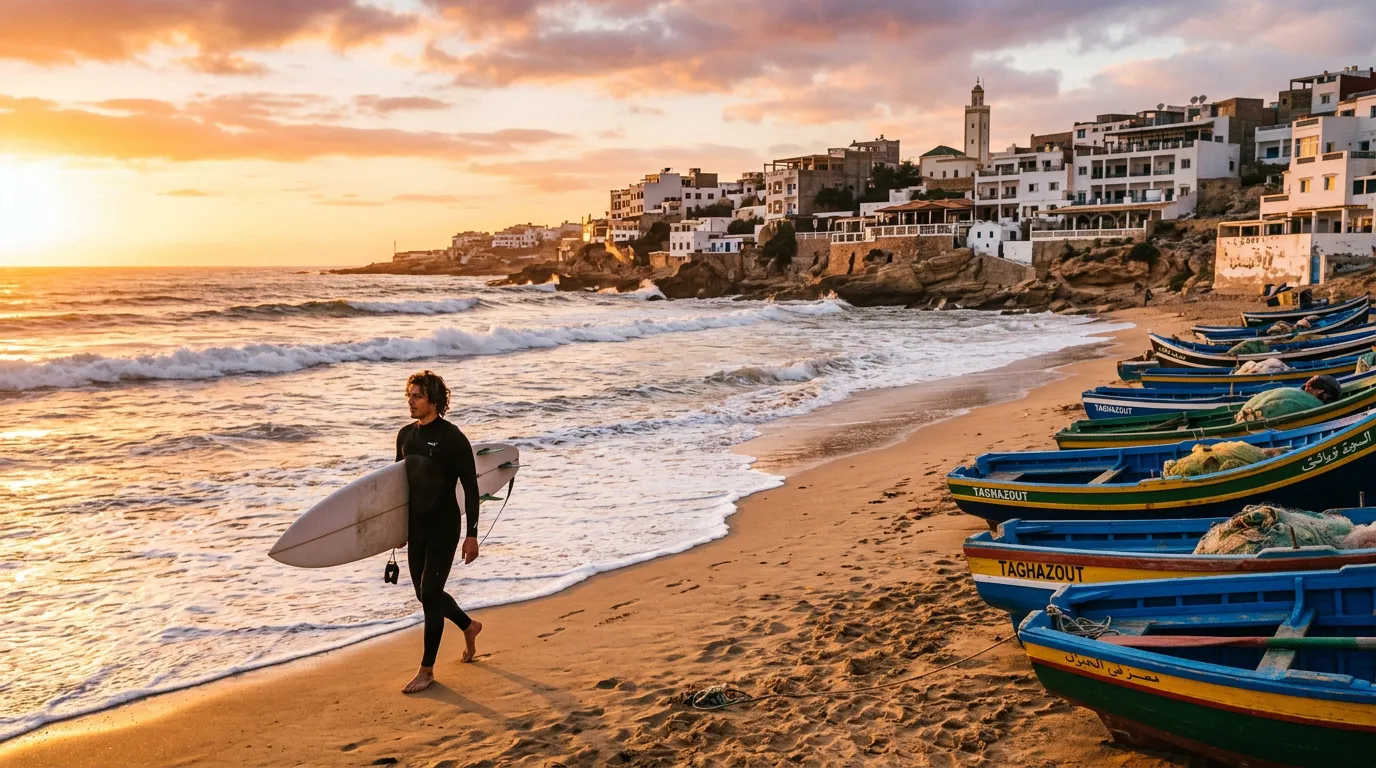
Morocco ranks among the finest surfing destinations in Africa. Consistent North Atlantic swells, water temperatures that rarely drop below 17 degrees, and a coastline packed with point breaks, reef breaks, and beach breaks make this country a magnet for wave riders at every level. Taghazout, 20 kilometers north of Agadir, is the epicenter. Anchor Point delivers long, powerful right-handers that draw professionals from around the world; Killer Point produces fast, hollow barrels on bigger swells; and the gentle beach break at Tamraght welcomes first-timers. Farther north, Imsouane shelters the longest right-hand wave on the African continent, a mellow point break that peels for hundreds of meters on a good day. Essaouira offers wind-driven surf paired with kitesurfing and a thriving arts scene, while Sidi Kaouki provides uncrowded peaks for those willing to venture slightly off the beaten path.
Highlights
Anchor Point in Taghazout: one of the world's top right-hand point breaks
Imsouane: Africa's longest right-hand wave, ideal for longboarding
Water temperatures 17-22 degrees Celsius year-round
Surf camps from 500 MAD per night with lessons and accommodation included
Essaouira: wind-driven waves and vibrant surf culture
Safety Tips
Check tide tables and swell forecasts before paddling out
Beginners should always surf with a certified instructor
Wear a 3/2mm wetsuit November through March when water drops to 17 degrees
Respect lineup etiquette and give priority to local surfers at crowded breaks
Taghazout, Essaouira, Imsouane, Sidi Kaouki September-April (biggest swells) Beginner to Advanced
Kitesurfing
Consistent trade winds at Dakhla and Essaouira
Beginner to Advanced
Location
Dakhla
Duration
3-5 hour sessions
Best Season
April-October
Price
From 800 MAD per lesson
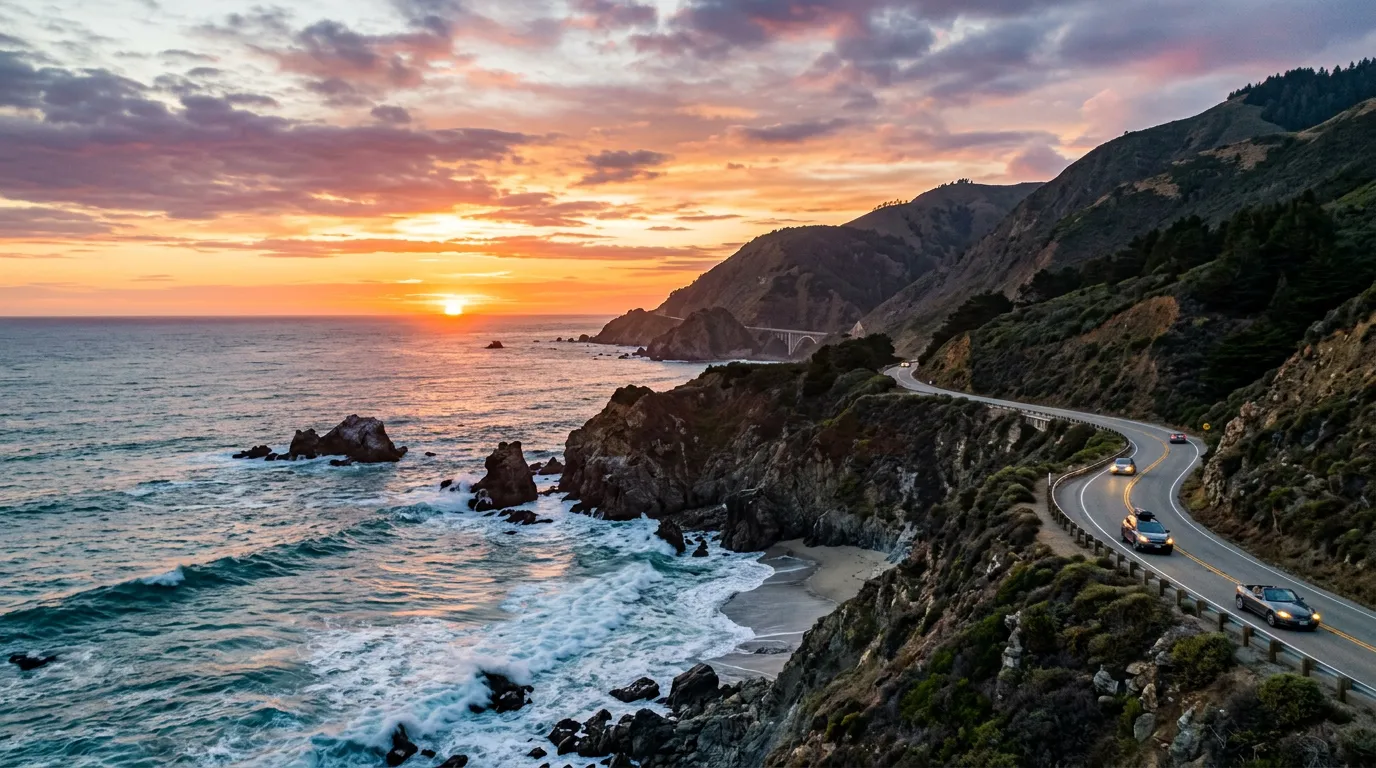
Morocco is a global kitesurfing hub thanks to powerful, consistent trade winds that funnel along its Atlantic coast. Dakhla, in the far south, is the crown jewel: a vast turquoise lagoon with butter-flat water, side-onshore thermals blowing 300+ days per year, and water so warm you can ride in boardshorts well into December. The Dakhla lagoon stretches 40 kilometers, giving riders endless downwind space and multiple kite spots depending on wind direction. Essaouira earns its nickname "Wind City of Africa" from April to September, when Alizee winds reach 25-35 knots daily. The beach break here suits experienced freeriders and wave-kiting enthusiasts. IKO-certified schools operate at both locations with multilingual instructors and modern gear. Equipment rental for experienced riders starts from 400 MAD per day.
Highlights
Dakhla lagoon: flat water and 300+ wind days per year
Essaouira: accessible from Marrakech with daily bus service
IKO-certified schools with modern equipment at both locations
Equipment rental from 400 MAD per day for experienced riders
Dakhla hosts international kitesurfing competitions annually
Safety Tips
Complete a certified IKO course before riding independently
Never kite alone; always ride at supervised spots or with a buddy
Wear a helmet and impact vest while learning
Check wind forecasts and respect offshore wind warnings
Dakhla, Essaouira, Moulay Bousselham April-October (strongest winds) Beginner to Advanced
Rock Climbing
Limestone walls at Todra Gorge and granite in Tafraoute
Beginner to Expert
Location
Todra Gorge
Duration
Half-day to full-day sessions
Best Season
March-May, September-November
Price
From 500 MAD per guided session
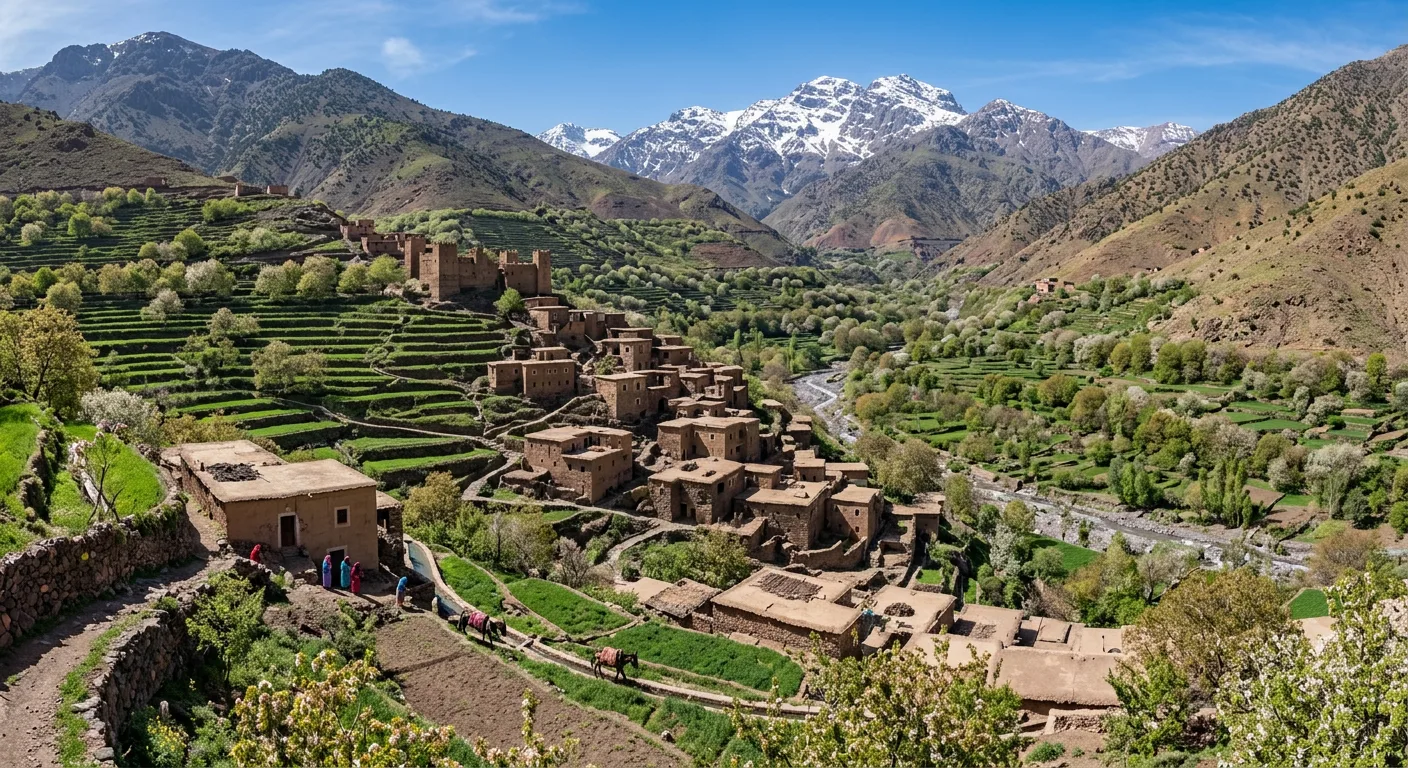
Morocco has emerged as one of North Africa's premier climbing destinations. Todra Gorge, carved through the eastern High Atlas, is the flagship venue: 300-meter vertical limestone walls flank a narrow canyon, hosting over 150 bolted sport routes from French grade 5a to 8b+. The classic Pilier du Couchant multi-pitch route climbs the full height of the gorge and ranks among the finest moderate multi-pitch lines in Africa. Tafraoute in the Anti-Atlas provides a completely different experience: pink granite domes and boulders set amid almond orchards and painted rocks, with bouldering problems and short sport routes. For the truly adventurous, Taghia Canyon is Morocco's answer to Yosemite: big-wall limestone routes up to 800 meters accessible only by mule or a long approach on foot. Chefchaouen in the Rif Mountains has newly developed crags with short, steep sport routes and views of the blue-washed medina.
Highlights
Todra Gorge: 150+ bolted sport routes from 5a to 8b+ on limestone
Tafraoute: granite bouldering amid painted rocks and almond orchards
Taghia Canyon: remote big-wall routes up to 800 meters high
Chefchaouen: new crags with Rif Mountain views
Winter climbing weather rivaling southern Spain at a fraction of the cost
Safety Tips
Bring your own gear or rent from shops in Tinghir near Todra Gorge
Hire a local guide for Taghia: access is remote and most routes are trad
Inspect bolt conditions on older routes, particularly at Todra
Climb early morning or late afternoon in warmer months to avoid heat
Todra Gorge, Tafraoute, Taghia Canyon, Chefchaouen March-May, September-November Beginner to Expert
Paragliding
Thermal flights above the Atlas, Agadir coast, and Ifrane forests
No Experience Required (tandem)
Location
Aguergour (Atlas)
Duration
15-45 minutes per flight
Best Season
March-November
Price
From 800 MAD per tandem flight
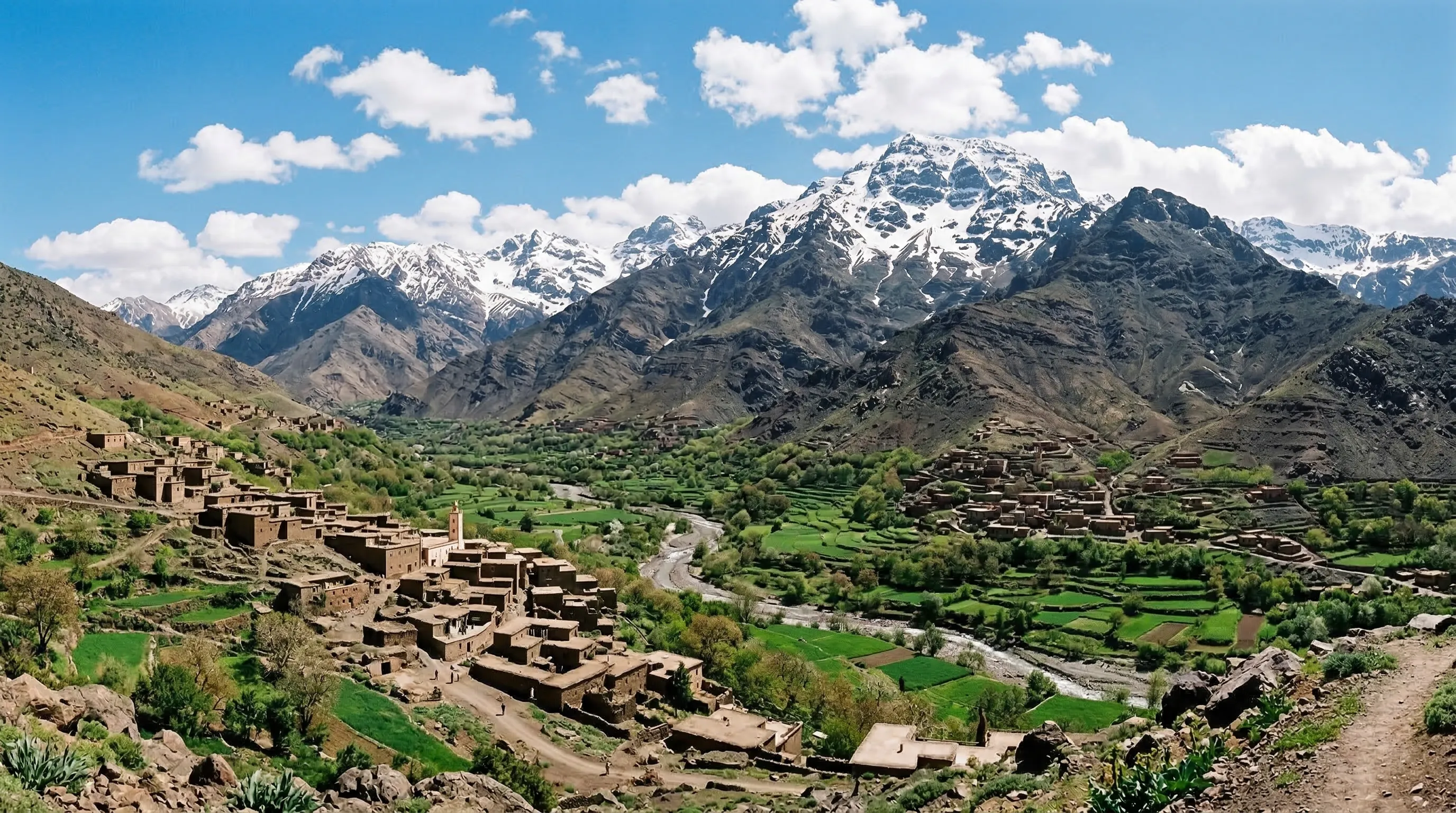
Paragliding in Morocco opens up aerial perspectives that no other activity can match. The launch site at Aguergour, roughly 45 minutes south of Marrakech in the High Atlas foothills, sends tandem pilots and passengers soaring over terraced Berber villages, walnut groves, and the winding river valleys below. On strong thermal days, flights can last 30-45 minutes and gain over 1,000 meters of altitude. Agadir offers coastal flights with views down the golden beach and out over the Atlantic horizon. Ifrane, the "Switzerland of Morocco" in the Middle Atlas, provides a forest-and-lake landscape that feels completely different from the rest of the country. Tandem flights require zero experience: you run a few steps at the launch ramp, your certified pilot handles takeoff, steering, and landing, and you enjoy the view.
Highlights
Aguergour: soar over Atlas valleys with panoramic mountain views
Agadir: coastal flights over the Atlantic and golden beaches
Ifrane: fly above cedar forests and Middle Atlas lakes
Tandem flights need zero experience; the pilot does everything
GoPro footage and photos included with most operators
Safety Tips
Fly only with certified tandem pilots from insured operators
Wear sturdy shoes and avoid loose clothing or dangling scarves
Flights depend on weather; be prepared for same-day cancellation
Disclose any medical conditions or fear of heights before takeoff
Aguergour (Atlas), Agadir, Ifrane, Dades Valley March-November No Experience Required (tandem)
Sandboarding
Ride the 150-meter dunes of Erg Chebbi at Merzouga
Beginner Friendly
Location
Erg Chebbi (Merzouga)
Duration
1-3 hours per session
Best Season
October-April
Price
From 200 MAD per session
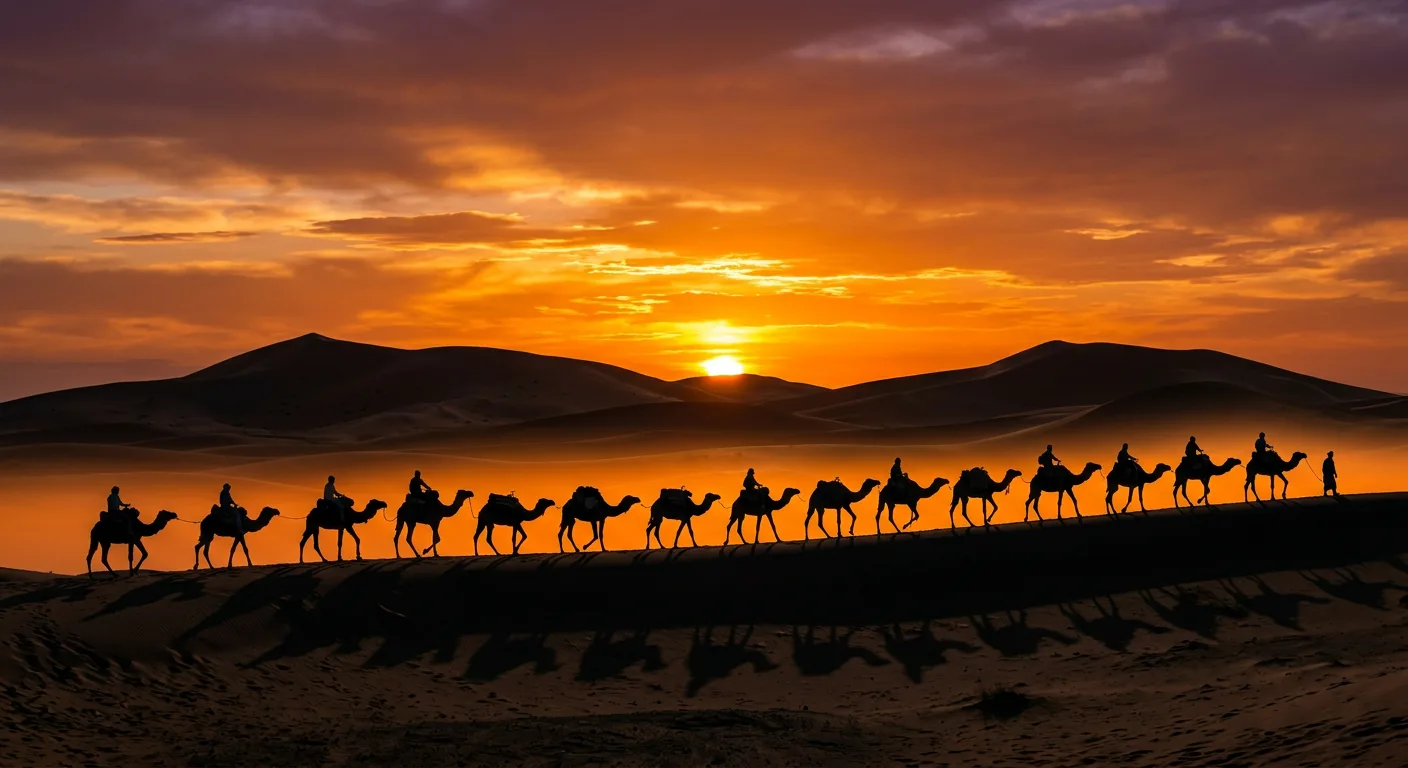
Sandboarding the Erg Chebbi dunes near Merzouga is one of Morocco's most photogenic adrenaline rushes. These dunes tower up to 150 meters above the desert floor, their ridgelines curving against a sky that shifts from deep blue at midday to orange and crimson at sunset. You strap a waxed board to your feet at the top, point downhill, and slide. The speed builds quickly on steeper faces, and wipeouts send up dramatic plumes of fine golden sand. The climb back up is a genuine workout but the views from the summit reward every step. Most desert camps at Merzouga include sandboarding in their overnight packages at no extra charge. Erg Chigaga, accessible from M'Hamid in the Draa Valley, offers larger dunes with far fewer tourists for those who want solitude with their thrills.
Highlights
Erg Chebbi: dunes up to 150 meters for long, fast descents
No experience needed; anyone can sandboard within minutes
Often included free with desert camp overnight bookings
Combine with sunset camel trek and Sahara stargazing
Erg Chigaga: remote dunes with fewer tourists
Safety Tips
Wear closed shoes and long sleeves to prevent sand burn
Apply sunscreen generously, including under the chin (sand reflects UV)
Carry at least 2 liters of water per person
Avoid sandboarding in midday heat from June to September
Erg Chebbi (Merzouga), Erg Chigaga (M'Hamid) October-April (cool desert temperatures) Beginner Friendly

Quad Biking
Agafay Desert, Merzouga, and palm-grove trails
Beginner to Intermediate
Location
Agafay Desert
Duration
1-4 hours
Best Season
Year-round
Price
From 400 MAD per hour
Quad biking is one of Morocco's most accessible adventure activities. The Agafay Desert, a moon-like landscape of rocky plains and dry riverbeds just 30 minutes from Marrakech, is the most popular venue. Morning and sunset sessions let you tear across open terrain with the snow-capped Atlas range as a backdrop. Merzouga offers a different experience: riding alongside the Sahara dunes through hamada (stony desert) and past date-palm oases where you stop for mint tea with local families. No driving license is required for guided tours. Operators provide comprehensive instruction, helmets, goggles, and dust masks before you ride. Sunset sessions followed by a traditional Berber dinner under the stars have become one of Marrakech's most popular excursions.
Highlights
Agafay Desert: 30 minutes from Marrakech with Atlas Mountain views
Merzouga: ride alongside Sahara dunes through oases
No driving license required for guided tours
Sunset quad tours from 600 MAD including Berber dinner
Palm-grove trails near Marrakech for a gentler ride
Safety Tips
Wear long trousers, closed shoes, and all provided safety gear
Follow your guide and stay on designated routes at all times
Maintain a safe following distance from other riders
Choose operators with well-maintained, newer quad bikes
Agafay Desert, Merzouga, Ouarzazate, Marrakech outskirts Year-round (best October-May) Beginner to Intermediate
Canyoning
Rappel waterfalls and swim through gorges at Akchour
Moderate
Location
Akchour
Duration
4-7 hours
Best Season
April-October
Price
From 600 MAD per person
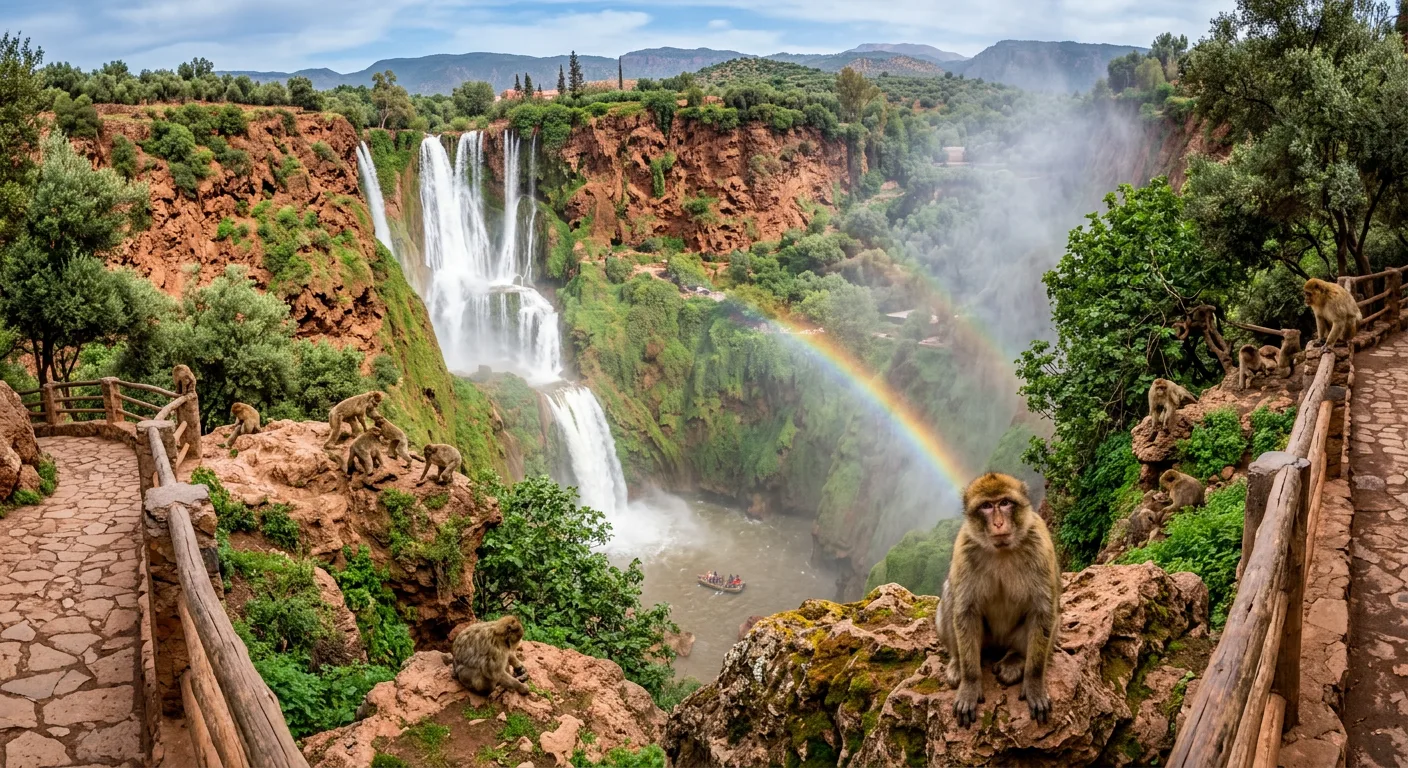
Morocco's limestone gorges, basalt canyons, and Atlas Mountain valleys create conditions that are tailor-made for canyoning. Akchour, near Chefchaouen in the Rif Mountains, is the standout destination: a series of waterfalls and deep pools set in pristine wilderness, where you rappel down rock faces, leap from natural platforms into turquoise pools, and scramble through narrow slot sections. The Ourika Valley, 45 minutes south of Marrakech, offers accessible half-day trips with waterfalls up to 20 meters high. Paradise Valley near Agadir features smooth rock slides and emerald swimming pools in a palm-lined gorge. Operators provide all technical equipment including wetsuits, helmets, harnesses, and ropes. Guided groups are typically limited to 8-10 people for safety.
Highlights
Akchour: remote canyon descents through Rif Mountain wilderness
Ourika Valley: half-day waterfall rappelling near Marrakech
Paradise Valley: natural rock slides and emerald pools
All technical equipment provided by operators
Combine with hiking for a full-day Atlas Mountain adventure
Safety Tips
Never canyon without a certified guide and proper equipment
Wear the provided wetsuit and helmet at all times in the canyon
Check water levels before departure; flash floods follow rain
Ensure your operator carries a first aid kit and satellite phone
Akchour, Ourika Valley, Paradise Valley, Ouzoud April-October (water levels permitting) Moderate
Mountain Biking
Singletrack across the High Atlas and down to the desert
Beginner to Advanced
Location
High Atlas
Duration
Half-day to multi-day
Best Season
March-May, September-November
Price
From 500 MAD per half-day guided
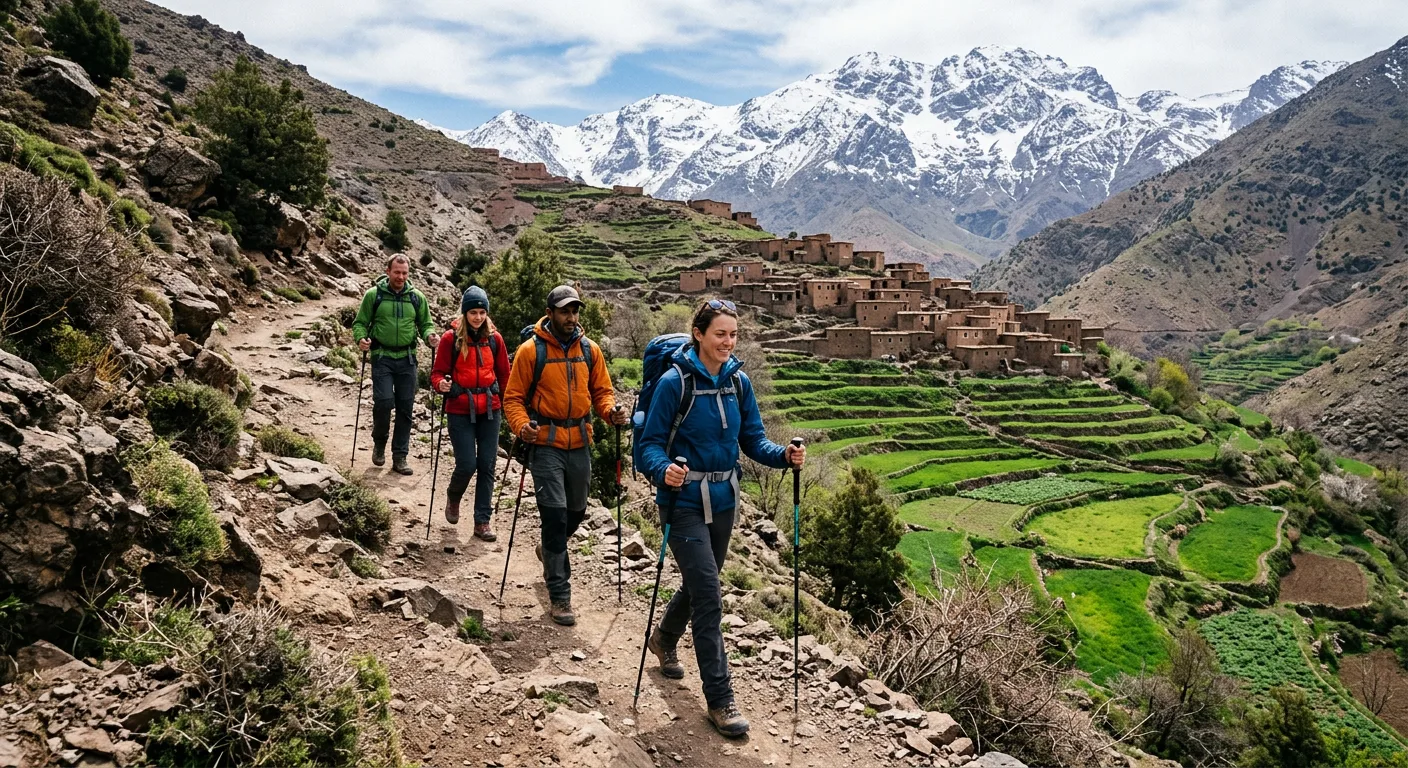
The diversity of terrain in Morocco makes it a mountain biking destination with few equals. The High Atlas offers technical singletrack descents through Berber villages and juniper forests, with views that stretch to the Sahara on clear days. Amizmiz, 55 kilometers south of Marrakech, has become a hub for guided riding with networks of village trails and purpose-built singletrack connecting hamlets, irrigation channels, and hilltop granaries. The Agafay Desert delivers flowing trails across rocky moon-like landscapes. The Dades Valley combines gravel roads with singletrack linking oasis villages beneath towering red-rock cliffs. Multi-day bikepacking routes crossing the Atlas from Marrakech to the Sahara have grown rapidly in popularity, blending technical riding with overnight stays in mountain gites and desert camps. E-bike options are now available at most operators for riders who want the views without the full cardiovascular effort.
Highlights
Amizmiz: growing hub with village trails and guided networks
High Atlas: technical singletrack with snow-capped mountain views
Dades Valley: gravel and singletrack through red-rock oasis villages
Multi-day bikepacking from Marrakech across the Atlas to the Sahara
E-bike options available at most operators
Safety Tips
Always wear a helmet; carry a basic repair kit and hand pump
Check brake pads and tire pressure before every ride
Carry at least 2 liters of water on any ride in Morocco
Ride with a guide on unfamiliar trails to prevent getting lost
High Atlas, Ourika Valley, Agafay, Dades Valley, Amizmiz March-May, September-November Beginner to Advanced
Zip-Lining
Fly across Atlas valleys and forest canopies
Beginner Friendly
Location
Terres d'Amanar (Atlas)
Duration
1-3 hours
Best Season
Year-round
Price
From 300 MAD per person
Zip-lining in Morocco has grown steadily, with several well-equipped adventure parks now operating in the Atlas Mountains. Terres d'Amanar, about 30 minutes from Marrakech in the Atlas foothills, is the most established. It offers multiple zip-lines stretching up to 300 meters over forested valleys, plus aerial rope courses, climbing walls, and archery. The experience is family-friendly and accessible to anyone who meets the minimum age and weight requirements. Some operators in the Ourika Valley have installed zip-lines that cross above river gorges, adding a water element to the thrill. The Agafay Desert has newer installations that combine zip-lining with quad biking and camel rides for a full adventure day.
Highlights
Terres d'Amanar: multiple zip-lines up to 300 meters over Atlas forests
Family-friendly with no prior experience needed
Ourika Valley: zip-line over river gorges and waterfalls
Combine with rope courses, climbing walls, and Berber lunch
Only 30 minutes from Marrakech for easy half-day trips
Safety Tips
Verify the operator uses modern equipment with redundant safety systems
Follow all weight and age restrictions listed by the operator
Wear closed-toe shoes and remove loose jewelry before riding
Listen to the full safety briefing before your first run
Terres d'Amanar (Atlas), Agafay, Ourika Valley Year-round Beginner Friendly
White Water Rafting
Class III-IV rapids on Atlas Mountain rivers
Moderate to Challenging
Location
Ahansal River
Duration
Half-day to full-day
Best Season
March-May
Price
From 500 MAD per half-day
White water rafting in Morocco is a lesser-known activity that rewards those willing to seek it out. The Ahansal River, cutting through the Central High Atlas between Beni Mellal and Azilal, delivers the strongest rapids: Class III-IV sections that surge during spring snowmelt from March to May. The gorge scenery is stunning, with red and ochre cliffs rising above the water and Berber villages perched on terraced hillsides. The Ourika River, closer to Marrakech, offers gentler Class II-III rapids during the wet season, making it a solid choice for beginners and families. Guided trips include all equipment (rafts, paddles, helmets, life vests), safety briefings, and typically lunch at a riverside Berber home. Transport from Marrakech or Beni Mellal is arranged by most operators.
Highlights
Ahansal River: Class III-IV rapids through dramatic Atlas gorges
Ourika River: gentler Class II-III rapids accessible from Marrakech
All equipment and safety gear provided by operators
Lunch at a riverside Berber home included with most trips
Spring snowmelt creates reliable water levels March through May
Safety Tips
Wear the provided life vest and helmet at all times on the river
Listen to the guide's paddle commands and safety instructions
Water is cold in spring; wetsuits are provided but dress warmly underneath
Confirm that your travel insurance covers white water rafting
Ahansal River, Ourika River, Oum Er-Rbia March-May (snowmelt season) Moderate to Challenging
Horse Riding
Beach gallops, Atlas trails, and desert rides
Beginner to Advanced
Location
Essaouira
Duration
1 hour to multi-day
Best Season
Year-round
Price
From 350 MAD per hour
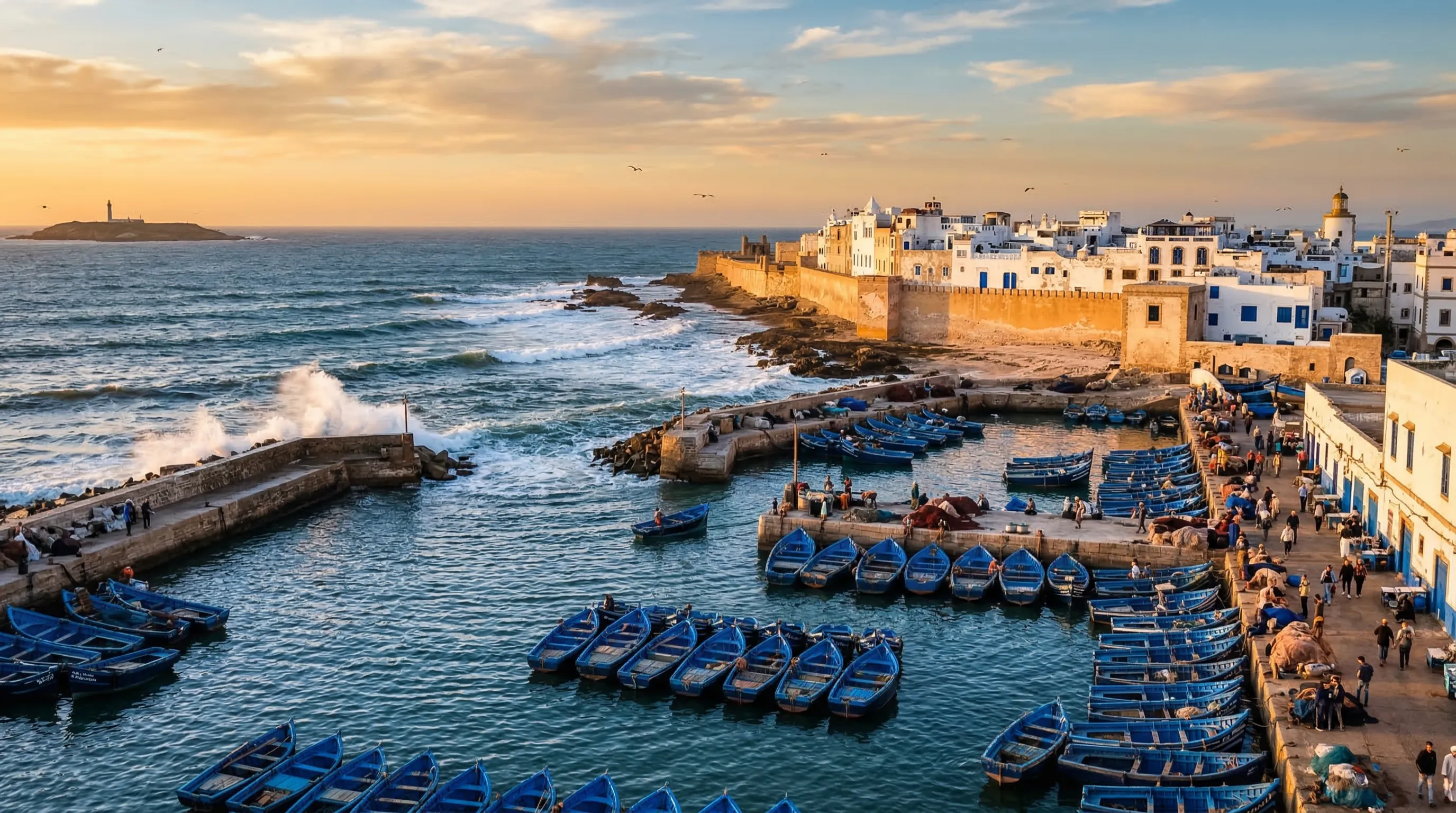
Morocco has a deep equestrian tradition, and horse riding is one of the most rewarding ways to explore the country's landscapes. Essaouira offers sunset beach gallops along kilometers of firm, flat sand backed by dunes and argan groves. Ouirgane in the High Atlas is the base for multi-day trail rides through walnut-forested valleys, past Berber villages, and up to mountain passes with panoramic views. Agadir provides beachfront rides along the Souss-Massa coast, where you may spot flamingos and other birdlife in the nearby national park. Near Merzouga, horse rides through the palm groves and along the edges of the Erg Chebbi dunes at sunrise or sunset offer a quieter alternative to camel trekking. Stables use well-trained Barb and Arab-Barb horses accustomed to varied terrain and riders of all levels.
Highlights
Essaouira: sunset beach gallops along Atlantic sands
Ouirgane: multi-day Atlas trail rides through Berber villages
Agadir: coastal rides near Souss-Massa National Park
Merzouga: sunrise rides alongside Sahara dunes
Barb and Arab-Barb horses suited to all experience levels
Safety Tips
Wear sturdy boots with a small heel and a riding helmet
Be honest about your riding experience when booking
Apply sunscreen and carry water on longer rides
Choose stables that demonstrate proper horse care and welfare standards
Essaouira, Agadir, Ouirgane (Atlas), Merzouga Year-round (best October-May) Beginner to Advanced
Safety Essentials for Adventure Sports
Adventure sports carry inherent risks. Follow these guidelines to stay safe and get the most from your Morocco trip.
Choose Certified Operators
Look for operators with verified online reviews, proper liability insurance, and internationally certified guides (IKO for kitesurfing, IFMGA for climbing). Ask to see credentials before booking.
Get Adventure Travel Insurance
Standard travel insurance often excludes adventure activities. Confirm your policy covers each specific sport you plan to do: paragliding, climbing, kitesurfing, and rafting are commonly excluded.
Inspect All Equipment
Check helmets, harnesses, ropes, and life vests before every activity. Refuse any equipment that looks frayed, cracked, or damaged. Your safety is more important than politeness.
Know Your Limits
Morocco offers activities for every skill level, but choosing the wrong difficulty is dangerous. Start easy and work up. Be honest about your fitness and experience when booking.
Stay Hydrated and Sun-Protected
Morocco's heat and dry air cause dehydration quickly during physical activity. Carry 2+ liters of water per person. Wear SPF 50+ sunscreen and reapply every two hours.
Respect Local Conditions
Weather, tides, wind, and water levels change quickly. Check conditions before heading out and be prepared to cancel or postpone if safety requires it.
Best Season for Each Adventure Sport
Morocco offers adventure year-round, but the ideal activity depends on when you visit.
Spring (March-May)
Excellent20-30 C (coast), 15-25 C (mountains)
The finest all-round season. Surf swells remain strong through March and April. Trade winds build for kitesurfing. Desert temperatures are comfortable for sandboarding. Snowmelt feeds Atlas rivers for white water rafting. Rock climbing, canyoning, mountain biking, and horse riding conditions are all at their peak.
Best activities: All activities: surfing, rafting, climbing, canyoning, biking, horse riding
Summer (June-August)
Good (water sports)30-40 C (coast), 35-45 C (desert)
Too hot for desert and mountain activities at midday. Kitesurfing peaks with strong daily trade winds along the coast. Surfing is smaller but fun at many breaks. Canyoning in mountain valleys offers a refreshing escape. Horse riding on the coast is pleasant in the morning and evening. Avoid quad biking and sandboarding in the desert.
Best activities: Kitesurfing, surfing, canyoning, zip-lining, coastal horse riding
Autumn (September-November)
Excellent22-32 C (coast), 20-30 C (desert)
Another outstanding season for adventure sports. Atlantic surf swells return strongly. Desert temperatures cool for sandboarding and quad biking. Rock climbing at Todra Gorge is ideal. Mountain biking trails are dry and fast. Horse riding conditions are comfortable across all regions. October is the single best month overall.
Best activities: All activities: surfing, sandboarding, climbing, paragliding, horse riding
Winter (December-February)
Good (surf & desert)15-20 C (coast), 10-20 C (desert by day)
Biggest Atlantic swells make this prime surfing season. Desert days are pleasant but nights are cold. Rock climbing at Todra Gorge is excellent with cool, dry weather. Kitesurfing slows with inconsistent wind. Canyoning is limited by cold water. Horse riding on the coast remains comfortable during the day.
Best activities: Surfing, rock climbing, sandboarding, quad biking, horse riding
Adventure Sports Costs Breakdown
What adventure activities cost in Morocco. Prices are starting figures and may vary by season, operator, and group size.
ActivityCostNotes
Surfing lesson (2 hours)From 300-500 MADBoard and wetsuit included
Kitesurfing lesson (3 hours)From 800-1,500 MADIKO-certified with equipment
Rock climbing (full day guided)From 500-1,000 MADGear rental and guide included
Paragliding tandem flightFrom 800-1,500 MADGoPro footage usually included
Sandboarding sessionFrom 200-400 MADOften free with desert camp
Quad biking (1-2 hours)From 400-800 MADHelmet, goggles, guide included
Canyoning half-dayFrom 600-1,200 MADWetsuit, helmet, harness, guide
Mountain biking half-dayFrom 500-1,000 MADBike, helmet, guide, transport
Zip-lining (adventure park)From 300-600 MADMultiple lines and activities
White water rafting half-dayFrom 500-900 MADAll gear, transport, lunch
Horse riding (1-2 hours)From 350-700 MADHelmet and horse provided
Budget Adventures
From 200-500 MAD
Sandboarding, zip-line, horse riding
Mid-Range Activities
From 500-1,000 MAD
Surfing, climbing, biking, rafting
Premium Experiences
From 800-1,500 MAD
Paragliding, kitesurfing, canyoning
Frequently Asked Questions
Answers to the most common questions about adventure sports in Morocco.
What are the top adventure sports in Morocco for 2026?
Morocco offers 11 world-class adventure sports: surfing at Taghazout, Essaouira, and Imsouane; kitesurfing in Dakhla and Essaouira; rock climbing at Todra Gorge and Tafraoute; paragliding over Agadir, the Atlas, and Ifrane; sandboarding at Erg Chebbi; quad biking in the Agafay Desert; canyoning at Akchour; mountain biking on Atlas trails; zip-lining at Terres d'Amanar; white water rafting on the Ahansal River; and horse riding on Atlantic beaches and Atlas trails.
How much do adventure sports cost in Morocco?
Morocco is very affordable for adventure sports. Sandboarding starts from 200 MAD, surfing lessons from 300 MAD, zip-lining from 300 MAD, horse riding from 350 MAD, quad biking from 400 MAD, mountain biking from 500 MAD, rock climbing from 500 MAD, rafting from 500 MAD, canyoning from 600 MAD, kitesurfing from 800 MAD, and paragliding from 800 MAD. Prices vary by season, operator, and group size. Seasonal pricing applies.
Is Morocco safe for extreme sports?
Morocco is safe for adventure sports when you use reputable operators with certified guides. Verify credentials (IKO for kitesurfing, certified mountain guides for climbing and canyoning), inspect equipment before use, and read recent reviews. Ensure your travel insurance covers each specific activity. The biggest preventable risks are dehydration and sun exposure, both easily managed with preparation.
When is the best time for adventure sports in Morocco?
Spring (March-May) and autumn (September-November) are the best all-round seasons. Surfing peaks September to April. Kitesurfing is best April to October. Desert activities suit October to April. White water rafting runs March to May during snowmelt. Rock climbing and mountain biking are ideal in spring and autumn. October is the single best month for the widest range of activities.
Can beginners do adventure sports in Morocco?
Most activities welcome beginners. Surf schools teach first-timers on gentle beach breaks. Tandem paragliding requires zero experience. Sandboarding, quad biking, zip-lining, and horse riding are accessible with no prior skill. Beginner climbing routes at Todra Gorge start at grade 5a. White water rafting on the Ourika River suits families and newcomers. Only advanced climbing, independent kitesurfing, and Class IV rafting need prior experience.
Where is the best surfing in Morocco?
Taghazout near Agadir is Morocco's surfing capital with Anchor Point and Killer Point. Imsouane has Africa's longest right-hand wave. Essaouira offers wind-driven surf and arts-scene culture. Sidi Kaouki is ideal for beginners with uncrowded breaks. Mirleft and Sidi Ifni offer quiet southern reef breaks. Water temperature ranges from 17 to 22 degrees year-round.
Is there white water rafting in Morocco?
Yes. The Ahansal River in the Central High Atlas has Class III-IV rapids during spring snowmelt (March-May). The Ourika River near Marrakech offers gentler Class II-III rapids during the wet season. Guided trips include all equipment, safety briefings, transport, and lunch. Half-day sessions cost from 500-900 MAD per person.
What should I pack for adventure sports in Morocco?
Pack SPF 50+ sunscreen, a wide-brim hat, UV sunglasses, a refillable water bottle, quick-dry clothing, sturdy closed-toe shoes, reef shoes for water sports, and a waterproof camera. Most operators provide activity-specific gear like wetsuits, helmets, and harnesses. Carry your travel insurance documents and confirm adventure coverage.
Related Guides
Continue planning your Morocco adventure with these in-depth guides.
Morocco Surfing Guide
In-depth look at every surf spot from Taghazout to Dakhla, with swell forecasts, camp reviews, and gear rental prices.
Read guide
Rock Climbing Morocco
Route-by-route coverage of Todra Gorge, Taghia Canyon, and Anti-Atlas bouldering with grades and logistics.
Read guide
Horse Riding in Morocco
Beach gallops in Essaouira, Atlas trail rides, and desert excursions with stable recommendations and prices.
Read guide
Trekking in Morocco
Multi-day trekking routes through the Atlas Mountains, Jebel Saghro, and the Rif with trail details and costs.
Read guide
Outdoor Activities Morocco
Complete overview of outdoor experiences from hiking and cycling to kayaking and birdwatching.
Read guide
Ready for Adventure in Morocco?
From Atlantic surf breaks to Sahara sand dunes, Atlas gorges to mountain trails, Morocco's adventure sports deliver year-round thrills at prices that make other destinations look expensive. Start planning your trip today.