Discovering...
Navigation & Exploration
Morocco Medina Tips:
Navigate, Explore & Enjoy
How to navigate Morocco's ancient walled cities without getting lost. Best medinas by city, dealing with touts, photography etiquette, safety tips, and the art of embracing the maze.
What Is a Medina and Why Does It Matter?
A medina is the historic walled heart of a Moroccan city, a labyrinth of narrow alleys, covered markets, mosques, and traditional houses that has remained largely unchanged for centuries. The word "medina" simply means "city" in Arabic, and these ancient quarters are where Moroccan urban life has pulsed for over a thousand years. Every major Moroccan city has one, from the sprawling 9,000-alley maze of Fes el-Bali to the compact blue-painted streets of Chefchaouen.
For travelers, the medina is both the highlight and the challenge of visiting Morocco. The sensory overload of spice-scented alleys, the call to prayer echoing off ancient walls, artisans crafting leather and metalwork by hand, children playing in sunlit courtyards: this is the Morocco that draws millions of visitors each year. But the same narrow passages that create this magic can also leave you disoriented, overwhelmed, and unsure how to get back to your riad. This guide gives you the tools to navigate with confidence so you can focus on the experience, not the anxiety.
Morocco has nine medinas recognized as UNESCO World Heritage Sites: Fes (1981), Marrakech (1985), Meknes (1996), Tetouan (1997), Essaouira (2001), Mazagan/El Jadida (2004), Rabat (2012), and the historic cities of Volubilis (1997) and Ksar of Ait Ben Haddou (1987).
Medina Layout Explained
Understanding how a medina is structured is the first step to navigating one with confidence.
Defensive Walls & Gates (Babs)
Every medina is enclosed by ancient ramparts with monumental gates called babs. These gates are your primary navigation anchors. Major cities have 10-20 named gates, each leading to a different quarter. The most famous include Bab Boujloud in Fes and Bab Agnaou in Marrakech.
Central Mosque & Square
The Friday mosque (jama) sits at the heart of every medina. The commercial souks radiate outward from it. This central hub is your compass. When lost, ask for the "jama el-kebir" (grand mosque) and you will reach the medina center from any direction.
Souks Organized by Trade
Traditional souks cluster by craft: leather workers, metalworkers, spice sellers, and textile merchants each occupy their own zone. This medieval trade guild system survives today and helps you navigate. Once you recognize the zones, you can orient yourself by what is being sold around you.
Fondouks (Caravanserais)
Historic inns with central courtyards where merchants once stored goods and camels. Many fondouks now house artisan workshops. They are quiet oases within the medina bustle and make excellent landmarks because their large wooden doors are easy to spot.
Residential Derbs (Dead-End Alleys)
Side alleys called derbs branch off main routes and typically dead-end at private homes. These are the alleys that trap tourists. If an alley narrows to less than a meter and you see laundry overhead with no shops, you have entered a residential derb. Turn back to the main route.
Fountains & Public Ovens
Ornate sebil fountains and communal bread ovens (ferran) mark neighborhood centers within the medina. Both are excellent landmarks because they are permanent, distinctive, and known to every local. Ask for the nearest ferran or sebil when reorienting.
How to Navigate a Moroccan Medina
Eight proven strategies to find your way through even the most complex medina without losing your bearings.
1
Download Offline Maps Before You Enter
Download Google Maps or Maps.me for offline use while still connected to Wi-Fi. GPS works inside medinas even without cell data. Pin your riad location, the nearest gate, and any landmarks you want to find. Maps.me often has better detail for narrow medina alleys than Google Maps.
2
Follow Main Arteries, Not Side Alleys
Every medina has 2-4 main thoroughfares connecting major gates to the central mosque and square. These arteries are wider, busier, and lined with shops. Stick to them until you gain confidence. Side alleys are where tourists get lost. If a passage narrows and empties of shops, return to the main route.
3
Use Landmarks, Not Street Names
Medina alleys rarely have visible street signs. Navigate by mosques (listen for the call to prayer), fountains, painted gates, open squares, and distinctive shops. The call to prayer sounds loudest near your closest mosque, giving you a directional anchor five times daily.
4
Walk Downhill When Lost
Most Moroccan medinas are built on slopes with the central area at the lowest point. When disoriented, walk downhill and you will typically reach a main artery or familiar square. This works especially well in Fes, where water channels historically flowed downhill to the tanneries.
5
Follow Locals, Not Other Tourists
Local residents walk with purpose through medina alleys they know by heart. Follow a woman carrying groceries or a child heading to school and you will reach a main route faster than following tourist groups. Locals take the most efficient paths through the maze.
6
Look for Colored Directional Signs
Fes, Marrakech, and Tetouan have installed colored arrow signs on walls pointing toward major gates, attractions, and exits. In Fes, blue arrows point toward Bab Boujloud. In Marrakech, signs point toward Jemaa el-Fna. Follow these when you need to reorient quickly.
7
Carry Your Riad Business Card
Always keep your riad or hotel card with its address and phone number. If you get truly lost, show the card to any shopkeeper and they will point you in the right direction. Most riad staff can also talk you back on the phone using landmarks near your position.
8
Embrace Getting Slightly Lost
Getting gently lost is part of the medina experience. The most beautiful doorways, hidden courtyards, and quiet tea shops are found when you wander off the beaten path. As long as you have your offline map and riad card, you are never truly lost, just exploring.
Best Medinas in Morocco by City
Five medinas, five completely different experiences. Here is what to expect in each.
Fes el-Bali
The World's Largest Car-Free Urban Zone
Difficulty: ChallengingUNESCO: 1981
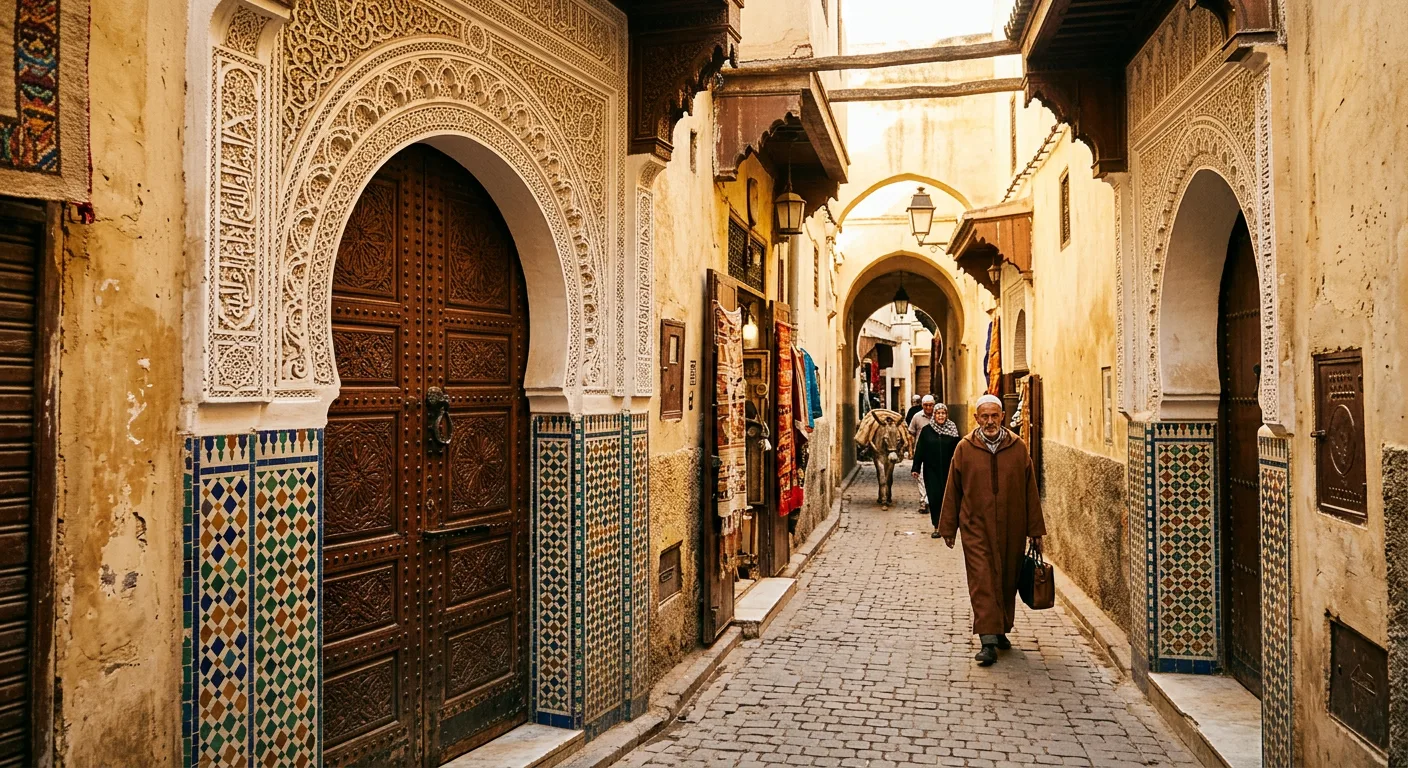
Fes el-Bali is the largest medina in North Africa and the most intact medieval city in the Arab world. Over 9,000 narrow alleys wind through a labyrinth where donkeys replace delivery trucks and artisans practice crafts unchanged for centuries. The medina has no cars, no motorcycles (officially), and some passages are barely shoulder-width. It is genuinely disorienting on a first visit.
Key Highlights & Landmarks
Chouara Tanneries
Iconic leather dyeing pits visible from surrounding terraces
Al-Qarawiyyin Mosque
Founded 859 AD; the world's oldest continuously operating university
Bab Boujloud
The famous blue gate and main entry point to the medina
Talaa Kebira
The main artery descending from Bab Boujloud to the medina center
Tip: Hire an official guide (from 300 MAD half day) for your first visit. After one guided walk, you will understand the main routes well enough to explore independently. Use Talaa Kebira as your spine and branch off from there.

Marrakech
The Vibrant Red City Medina
Difficulty: ModerateUNESCO: 1985
Marrakech medina is the most visited in Morocco and the most tourist-friendly. Jemaa el-Fna serves as an unmistakable central anchor point that you can always navigate back to. The northern medina contains the dense souk network while the southern section holds palaces, the mellah (Jewish quarter), and quieter residential zones. Wider streets and better signage make navigation easier than Fes.
Key Highlights & Landmarks
Jemaa el-Fna
The famous central square with food stalls and performers
Ben Youssef Madrasa
Stunning 14th-century Islamic college with intricate stucco
Bahia Palace
Grand 19th-century palace with beautiful gardens and mosaics
Souk Semmarine
The main souk artery radiating north from Jemaa el-Fna
Tip: Use Jemaa el-Fna as your compass. All main routes eventually lead back to the square. The Koutoubia Mosque minaret is visible from many points and always tells you which direction the square lies.
Chefchaouen
The Blue Pearl of the Rif
Difficulty: EasyUNESCO: Not UNESCO (cultural heritage site)
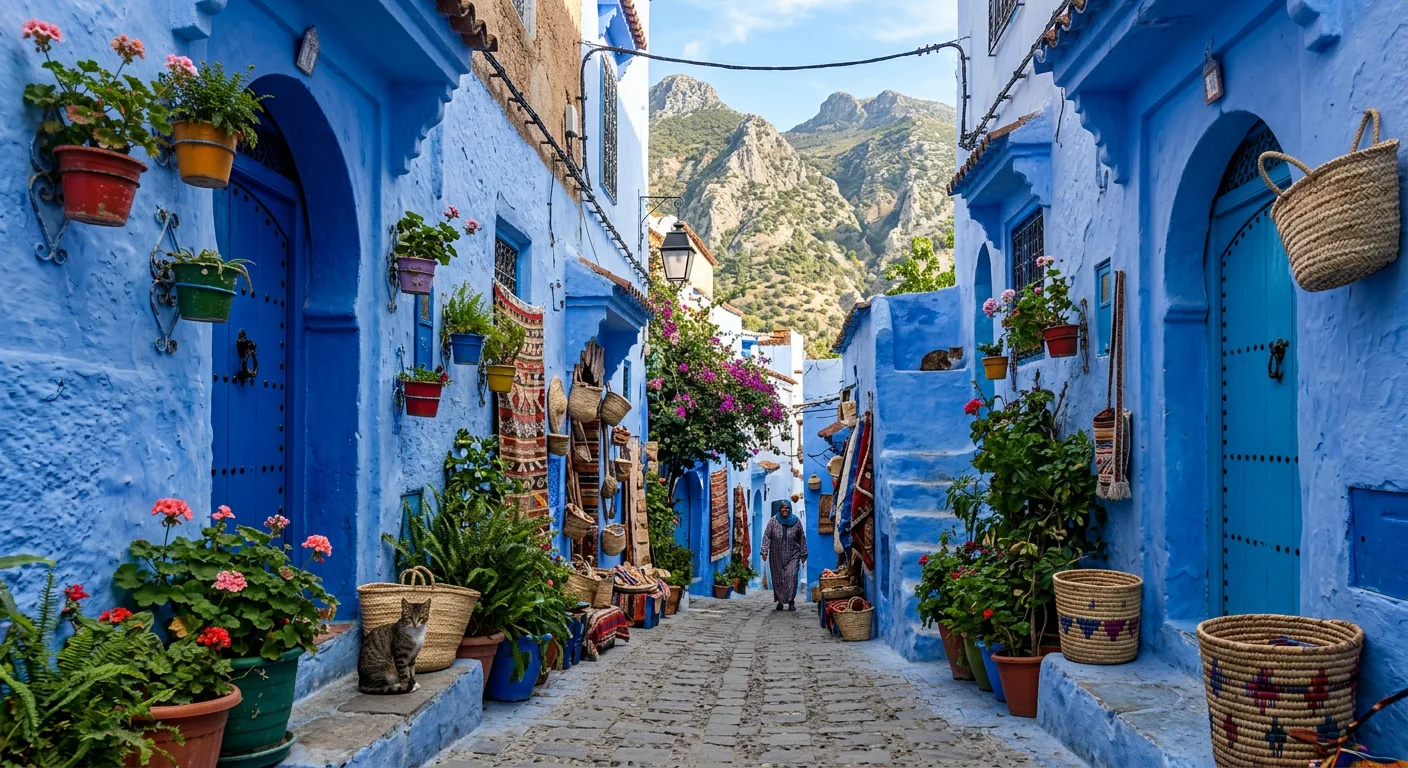
Chefchaouen has one of the most charming and navigable medinas in Morocco. The compact size means you can walk from one end to the other in 15 minutes. Every alley is painted in distinctive shades of blue, creating one of the most photogenic settings in the country. The gentle atmosphere, lack of aggressive touts, and manageable scale make it ideal for medina first-timers.
Key Highlights & Landmarks
Place Outa el-Hammam
Central square with the kasbah, cafes, and shady trees
Blue-Painted Alleys
The iconic blue-washed walls and stairways throughout the medina
Ras el-Maa
Natural spring and waterfall at the eastern edge of the medina
Spanish Mosque Viewpoint
Short hike above the medina for panoramic photos at sunset
Tip: Enter through the main gate near Place Outa el-Hammam. The medina slopes uphill toward Ras el-Maa in the east. You genuinely cannot get lost here for more than a few minutes due to the compact size.
Essaouira
The Compact Coastal Medina
Difficulty: EasyUNESCO: 2001
Essaouira medina is uniquely easy to navigate because it follows a grid pattern rather than the typical medina maze. Built in the 18th century by a French architect, streets are wider and more orderly than other Moroccan medinas. The Atlantic Ocean on one side and ramparts on the others provide constant orientation. The relaxed, wind-swept atmosphere makes it a stress-free medina experience.
Key Highlights & Landmarks
Skala de la Ville
Sea-facing ramparts with cannons and panoramic ocean views
Port & Fish Market
Active fishing port where you choose fresh fish grilled on the spot
Avenue de l'Istiqlal
Main commercial street bisecting the medina with shops and cafes
Mellah Quarter
Former Jewish quarter with distinctive architecture and star motifs
Tip: Use the ocean as your compass. Walk toward the sound of waves and you reach the ramparts. Avenue de l'Istiqlal bisects the medina east-west, making it an easy spine to navigate from.
Tetouan
The Andalusian White Medina
Difficulty: ModerateUNESCO: 1997
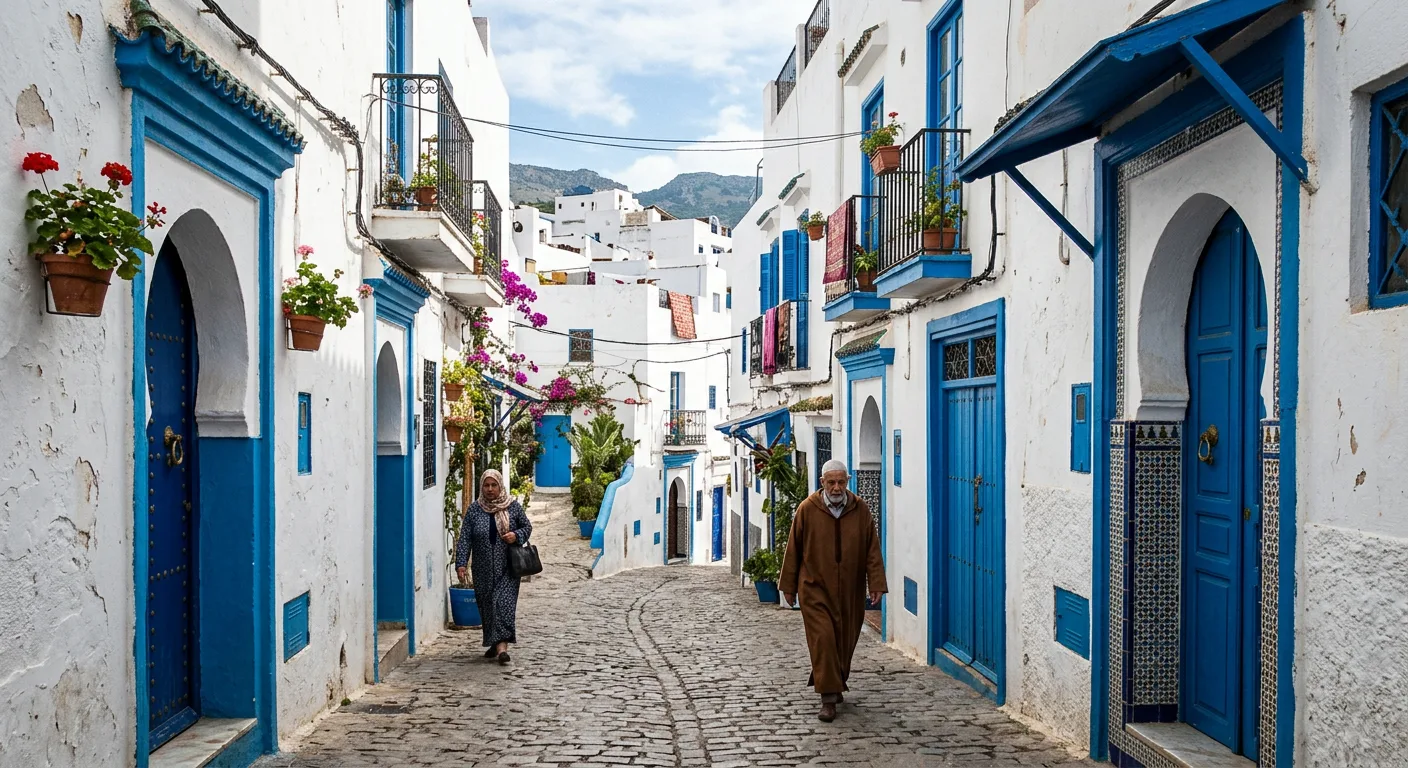
Tetouan medina is a UNESCO World Heritage Site and one of the most authentic in Morocco because it sees far fewer tourists than Fes or Marrakech. The architecture is distinctly Andalusian: whitewashed walls, wrought-iron balconies, and Spanish-influenced tile work reflect the city's history as a refuge for Muslims and Jews expelled from Spain. The medina is mid-sized and moderately challenging to navigate.
Key Highlights & Landmarks
Place Hassan II
Grand royal square at the medina entrance with the royal palace
Bab el-Okla
Main gate leading into the medina from the modern city
Mellah Quarter
Historic Jewish quarter with Andalusian-style houses and balconies
Artisan School
Traditional crafts school where you can watch zellige and woodworking
Tip: Enter via Bab el-Okla near Place Hassan II. The medina fans out from this gate in a semicircle. Tetouan locals are notably friendly and will help you with directions without expecting payment.
Dealing with Touts & Unofficial Guides
Touts are part of medina life. Here is how to handle them with confidence and respect.
Say "La Shukran" and Keep Walking
A firm "la shukran" (no thank you) with a smile and continued walking is the most effective response. Do not stop, do not make eye contact, and do not engage in conversation. Stopping to explain you do not need help invites further persistence.
Do Not Accept Unsolicited Directions
If someone approaches offering to show you the way to a landmark or your riad, politely decline. Unsolicited guides expect payment (from 50-100 MAD) even if you did not ask for help. Use your offline map instead or ask a seated shopkeeper who cannot follow you.
Hire Official Guides Only
Official guides carry a government-issued badge with their photo and license number. Book through your riad or the local tourist office (Delegation du Tourisme). Official guides charge fixed rates (from 300 MAD for a half day) and provide genuine knowledge without commission-driven shop detours.
Beware the "It's Closed" Trick
Someone near a monument or your riad tells you it is "closed today" and offers to take you somewhere else. This is always false. Walk past them and check for yourself. The person earns a commission from the alternative venue they redirect you to.
Walk With Confidence and Purpose
Touts target people who look lost or hesitant. Even if you are unsure of your route, walk at a steady pace and look straight ahead. Confident walkers attract far less attention than those who stop at every intersection to check their phone or look around.
Know That Touts Are Not Dangerous
Unofficial guides and touts can be annoying but they are not dangerous. They are trying to earn a living. A firm refusal is all that is needed. If someone persists, step into any shop and the shopkeeper will typically shoo them away. Do not let touts diminish your medina experience.
Photography Etiquette in Medinas
Moroccan medinas are incredibly photogenic. Follow these guidelines to capture them respectfully.
Always Ask Before Photographing People
This is the most important photography rule in Moroccan medinas. Always ask permission before taking photos of individuals, especially women and children. A polite "mumkin sura?" (may I take a photo?) goes a long way. Some people will decline, and that must be respected.
Expect Tips for Portrait Photography
If someone agrees to pose for you, a tip of 5-10 MAD is customary and appreciated. Water sellers, snake charmers, and henna artists in Marrakech specifically expect payment. This is their livelihood. Sneaking photos without paying is considered disrespectful.
Architecture Is Always Fair Game
Doorways, archways, tile work, carved plaster, painted walls, and general street scenes can be freely photographed. Moroccan medinas are extraordinarily photogenic and you will not run out of architectural subjects. Early morning and late afternoon light creates the best shadows and colors.
Avoid Photographing Military and Religious Sites
Never photograph near military installations, police stations, or government buildings. Mosques are off-limits to non-Muslims for both entry and interior photography. You can photograph mosque exteriors and minarets from the street without issue.
Best Times to Explore a Medina
The medina transforms throughout the day. Choose your timing based on what you want to experience.
Early Morning (8:00-10:00 AM)
Quiet, golden light, locals opening shops
Fewest tourists, best photography light, cool temperatures, watch the medina wake up. Some vendors offer better prices on the first sale of the day for good luck.
Best for: Photography, peaceful exploration, getting oriented
Late Morning (10:00 AM-12:00 PM)
Active, souks in full swing, moderate crowds
All shops open, full range of merchandise displayed, artisans at work. Enough activity to feel the medina energy without overwhelming crowds.
Best for: Shopping, visiting artisan workshops, souk exploration
Midday (12:00-3:00 PM)
Hot, many shops closed, quiet during Friday prayers
Fewer people means easier navigation and photography of architecture. However, heat can be oppressive May-September. Many shops close for lunch and prayer.
Best for: Riad rest, lunch, avoiding the heat
Late Afternoon (4:00-6:00 PM)
Golden hour, second wave of activity, cooling down
Beautiful warm light for photography, vendors reopening, locals doing evening errands. The most magical atmosphere as the heat breaks and shadows lengthen.
Best for: Photography, shopping, rooftop terrace cafes
Medina Safety Tips
Moroccan medinas are safe for tourists. These practical tips ensure a comfortable experience.
Keep Valuables in Front Pockets or Crossbody Bags
Pickpocketing is rare but possible in crowded souks. Use a crossbody bag worn across your front, or keep your phone and wallet in zipped front pockets. Avoid back pockets and open handbags in busy areas.
Stick to Main Routes After Dark
Well-lit main thoroughfares and areas near restaurants and riads are safe at night. Avoid unlit side alleys after dark. The medinas of Marrakech and Essaouira feel safest at night due to tourist activity. Fes medina is quieter after dark.
Watch for Motorbikes and Donkeys
Despite being car-free, medinas are not vehicle-free. Motorbikes weave through alleys (especially in Marrakech) and donkeys carry loads in Fes. When you hear a horn or "balak!" (watch out), press against the wall to let them pass.
Wear Comfortable, Closed-Toe Shoes
Medina surfaces are uneven cobblestones, sometimes wet and slippery. Flip-flops and heels are impractical. Sturdy walking shoes or sandals with good grip are essential. You will walk 8-15 km on a typical medina exploration day.
Tourist Police Patrol Major Medinas
Morocco has dedicated tourist police (Brigade Touristique) in Fes, Marrakech, and other major cities. They patrol medinas and can help if you feel harassed. Look for officers in uniform near major gates and landmarks.
Dress Modestly for Respect and Comfort
Cover shoulders and knees in medinas out of respect for local culture. Modest dress also reduces unwanted attention. Women do not need to cover their hair. Lightweight, breathable fabrics in neutral colors work best.
What to Do When You Get Lost
Getting lost in a medina is not a disaster. It is often the best part of the experience.
Immediate Steps
Stop, take a breath, and check your offline map for your GPS position
Walk downhill or toward sounds of activity to find a main artery
Ask a seated shopkeeper (not a standing person) for directions to the nearest gate or landmark
Show your riad business card to anyone and they will point you in the right direction
Reframing the Experience
The most memorable medina moments happen when you wander off the beaten path
Hidden courtyards, quiet tea rooms, and authentic workshops are found by happy accident
You are never truly lost with a charged phone and offline map; you are just exploring
Moroccans are genuinely helpful; asking for directions is a chance to connect with locals
Pro tip: Before leaving your riad each morning, screenshot the walking route from your riad to the nearest major landmark on your offline map. This gives you a reliable return path even if your phone battery dies or GPS signal weakens in narrow alleys.
Frequently Asked Questions
What is a medina in Morocco?
A medina is the historic old town or walled city center found in every major Moroccan city. The word means "city" in Arabic. Medinas were built centuries ago within defensive walls and feature narrow winding alleys, mosques, souks (markets), riads (traditional houses), and architecture largely unchanged for hundreds of years. They are car-free zones where donkeys and handcarts serve as the primary transport.
How do I avoid getting lost in a Moroccan medina?
Download an offline map (Google Maps or Maps.me) before entering. Identify key landmarks: mosques, fountains, decorated gates, and open squares. Follow main thoroughfares rather than narrow side alleys. Carry your riad or hotel business card with its address. Look for colored directional signs installed in major medinas like Fes and Marrakech. When lost, walk downhill to find main arteries.
Which Moroccan medina is the best to visit?
It depends on what you want. Fes el-Bali is the largest and most authentic medieval medina, with 9,000+ alleys and a UNESCO listing. Marrakech is the most vibrant and tourist-friendly. Chefchaouen is the most photogenic with blue-painted walls. Essaouira is the easiest to navigate with its compact grid layout. Tetouan has the most authentic Andalusian architecture. Most travelers visit at least two.
Is it safe to walk in a Moroccan medina at night?
Main thoroughfares and areas near restaurants and riads are safe at night. Avoid poorly lit side alleys after dark. Marrakech, Essaouira, and Chefchaouen feel safest at night due to tourist activity. Fes medina is quieter after dark. Tourist police patrol major medinas. Overall, Moroccan medinas are safe spaces, but standard travel precautions apply.
How do I deal with touts and unofficial guides?
Say "la shukran" (no thank you) firmly but politely and keep walking without stopping. Do not engage in conversation or make eye contact. If you want a guided tour, hire an official guide with a government badge from the tourist office or through your riad. Official guides charge from 300 MAD for a half day and provide genuine historical knowledge.
Can I take photos in a Moroccan medina?
Architecture, doorways, tile work, and general street scenes can be freely photographed. Always ask permission before photographing people, especially women and children. A tip of 5-10 MAD is customary when someone poses for you. Never photograph near military or government buildings. Mosque interiors are off-limits but exteriors and minarets are fine.
What is the best time of day to explore a medina?
Early morning (8-10 AM) offers the best photography light, cooler temperatures, and fewer crowds. Late afternoon (4-6 PM) brings golden light and renewed activity as the heat breaks. Avoid midday (12-2 PM) when heat peaks and many shops close. Friday afternoons are quiet due to prayer. Each time of day offers a different medina atmosphere.
How is a Moroccan medina laid out?
Medinas follow a concentric layout. The main mosque sits at the center, surrounded by commercial souks organized by trade. Residential neighborhoods fan outward from the commercial core. Gates (babs) in the defensive walls connect the medina to the modern city. Main arteries lead from the gates to the center. Side alleys (derbs) branch off and often dead-end at private homes.
Should I hire a guide for the medina?
For Fes el-Bali, an official guide is highly recommended on your first visit (from 300 MAD for a half day) because the layout is genuinely disorienting. Marrakech is optional but helpful for hidden gems. Chefchaouen and Essaouira are easy to explore independently. Always use official guides with government badges. Book through your riad or the local Delegation du Tourisme.
Related Guides
Moroccan Medina Guide
In-depth guide to every major medina in Morocco with history, architecture, and what to see.
Read moreMorocco Scams to Avoid
Common tourist scams in Morocco and how to avoid them. Stay informed and travel smart.
Read moreMorocco Souk Guide
Complete guide to shopping in Moroccan souks with haggling tips, fair prices, and what to buy.
Read moreIs Morocco Safe?
Honest safety guide for Morocco covering crime, solo travel, transport, and health.
Read moreMorocco Travel Tips
Essential tips for visiting Morocco: money, transport, language, culture, and planning.
Read more