Discovering...
Culture & Hospitality
Morocco Mint Tea
(Atay) Guide
The complete guide to Morocco's national drink. From the ritual of gunpowder green tea with fresh spearmint to the art of the high pour -- tradition in every glass.
More Than a Drink: Mint Tea and Moroccan Identity
Mint tea — called atay b'nana in Moroccan Darija — is the undisputed national beverage of Morocco. It is served at every meal, offered to every guest, poured at every negotiation, and shared at every gathering from Tangier to the Sahara. To understand Moroccan tea is to understand Moroccan social life itself.
The drink arrived in Morocco in the 18th century when British merchants introduced Chinese green tea through the port of Mogador (modern Essaouira). Moroccans blended the tea with the fresh spearmint that grew abundantly across the country and added generous amounts of sugar. Within decades, this combination became the centerpiece of Moroccan hospitality — a ritual that has remained essentially unchanged for over 200 years.
Today, Morocco is the world's largest importer of Chinese green tea. An estimated 70,000 tonnes arrive annually, almost all of it the tightly rolled gunpowder variety. The average Moroccan drinks between 1 and 2 liters of mint tea per day. Refusing a glass from a host is one of the few genuine social missteps a visitor can make.
Key Ingredient
Chinese gunpowder green tea + fresh spearmint (nana)
Daily Consumption
1-2 liters per person, all day from breakfast to midnight
Social Role
Served at every gathering, meal, business deal & guest welcome
The Three Pillars of Moroccan Tea
Every glass of atay rests on three ingredients, each with its own history and purpose.
Chinese Gunpowder Green Tea
Rolled into small dense pellets that resemble gunpowder grains, this tea unfurls slowly during brewing, releasing a bold, slightly smoky flavor. Morocco uses almost exclusively the "special gunpowder" grade from Zhejiang province. The tighter the roll, the fresher the leaf. Moroccans call the tea "atay sini" (Chinese tea) and are brand-loyal — the green tin of Chunmee is recognized nationwide.
Fresh Spearmint (Nana)
Moroccan mint tea uses spearmint (mentha spicata), not peppermint. Fresh bunches are sold at every market for from 2-5 MAD. The mint must be fresh — dried mint produces an inferior tea. Leaves are stuffed generously into the pot, sometimes equaling the volume of the liquid. In winter, when fresh mint is scarce, dried mint or other herbs substitute.
White Sugar (Sukkar)
Sugar is not optional in traditional Moroccan tea — it is structural. The large white sugar cone (pain de sucre) is broken into chunks and dissolved directly in the pot, not added to individual glasses. A standard pot holds 50-100 grams of sugar. The sweetness balances the astringency of the green tea and the sharpness of the mint, creating the characteristic rounded flavor.
How Moroccan Mint Tea Is Made
The traditional six-step method that has defined Moroccan tea for over two centuries.
1
Rinse the Tea Leaves
Place 1-2 tablespoons of Chinese gunpowder green tea into a metal teapot. Add a small amount of boiling water, swirl for 10 seconds, then discard the water. This "washing" removes dust and bitterness from the rolled leaves without stripping flavor. The rinse water is always thrown away.
2
First Steep — The "Spirit" of the Tea
Pour boiling water over the rinsed leaves and let them steep for 1-2 minutes. Pour a small glass of this first brew (called "ruh al-atay" or the spirit of the tea) and set it aside. This concentrated glass holds the deepest flavor and will be returned to the pot later.
3
Add Fresh Mint and Sugar
Stuff a generous handful of fresh spearmint (nana) into the pot. Traditional recipes use at least half as much mint as there is liquid. Add sugar — large sugar cones, sugar loaf chunks, or cubes. A standard pot for 4-6 glasses takes 4-6 large lumps. Press the mint down gently with a long spoon.
4
Second Steep and Return the Spirit
Add more boiling water to fill the pot. Pour the reserved "spirit" glass back into the pot. Place the teapot on low heat or a charcoal burner (majmar) for 2-3 minutes. The gentle simmering melds the green tea, mint, and sugar into a single unified flavor.
5
Test and Pour
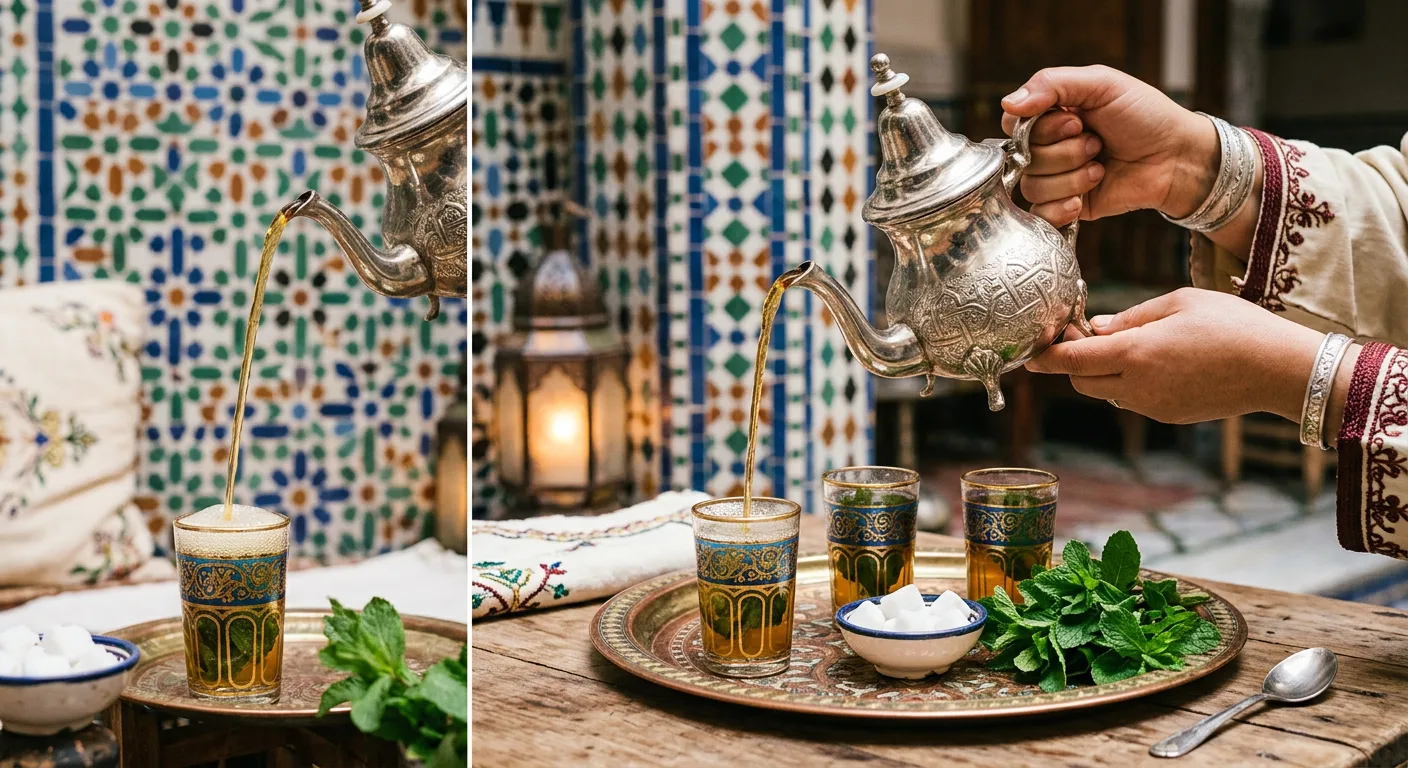
Pour a test glass and taste for sweetness and strength. If needed, add more sugar or mint. When satisfied, pour the tea from a height of 30-50 cm into small decorated glasses. The stream should be steady and thin. The foam that forms on the surface signals a well-made pot.
6
Serve and Repeat
Serve glasses on a metal tray. A single set of tea leaves produces three rounds. For the second and third pots, add fresh mint and sugar but reuse the original tea leaves. Each successive round has a different character: the first is mild, the second is strong, the third is more herbal and bitter.
The Art of the High Pour
Why Moroccan tea is poured from a height, and what the foam means.
The most visually striking element of Moroccan tea service is the pour. The host lifts the teapot high above the glass — often 30 to 50 centimeters — and directs a thin, steady stream into the small glass below. This is not showmanship for tourists. The technique serves three practical purposes.
Aeration: The long fall through air introduces oxygen into the tea, which develops a light foam on the surface. This foam (called "the crown") is a mark of quality. A glass without foam suggests rushed or careless preparation.
Mixing: The force of the pour blends the sugar, mint, and tea evenly throughout the glass, so that every sip has the same balanced flavor. Stirring with a spoon is not part of the tradition.
Cooling: Passage through the air lowers the temperature slightly, making the tea drinkable sooner. In a culture where tea is served very hot, this matters.
Moroccan men often practice the high pour from childhood. Spilling is rare among experienced pourers. When tea is poured back and forth between the pot and a glass several times before serving (a process called "turning" the tea), it further improves the mixture.
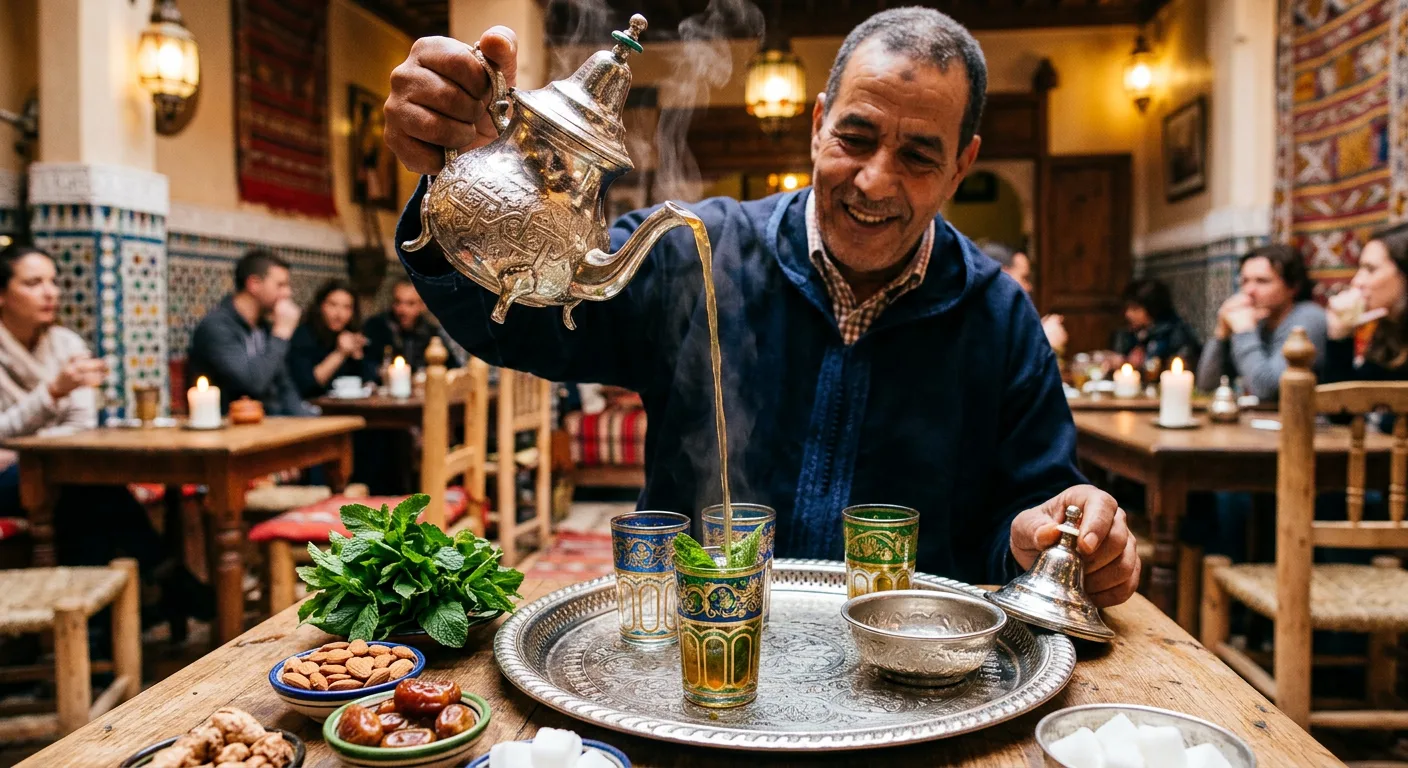
The traditional high pour
Tea Etiquette in Morocco
Six rules that every guest should know before sitting down to tea.
Accept the First Glass
Refusing tea from a host — especially in a home — is considered impolite. Accept at least one glass, even if you only take a few sips. This acknowledges the gesture of hospitality.
Three Glasses Is the Custom
The Moroccan proverb says the first glass is gentle as life, the second is strong as love, and the third is bitter as death. Staying for all three rounds shows respect and appreciation for your host's time.
The Host Always Pours
Tea preparation and pouring is the host's duty, typically the head of the household or the eldest present. Pouring your own glass or someone else's is a breach of protocol. Wait to be served.
Hold the Glass at the Rim
Moroccan tea glasses have no handles. Hold the glass at the very top rim between your thumb and forefinger. The lower part is too hot to touch. Avoid wrapping your hand around the glass.
Sip, Do Not Gulp
Tea is served hot and is meant to be sipped slowly. The pace of tea drinking mirrors conversation. Rushing through your glass implies you want to leave. Savoring shows contentment.
Declining More Tea Gracefully
After two or three glasses, place your palm over the glass or turn it upside down on the tray. Say "shukran, baraka" (thank you, that is enough). Your host will understand. Do not leave while a full glass sits in front of you.
Regional Tea Variations
The same pot of tea tastes different across Morocco. Here is how each region makes it its own.
Marrakech & the South
Tea is extremely sweet in the south. Sugar quantities can double compared to northern recipes. The tea is often served with almond-stuffed pastries (kaab el ghazal). Saffron from nearby Taliouine sometimes makes an appearance in special blends.
Fes & the Imperial Cities
Fassi tea tends to be moderately sweet with an emphasis on presentation. Silver tea services are a point of family pride. Orange blossom water (ma zhar) may be added to the pot for special occasions. The serving ceremony is more formal.
Northern Morocco (Tangier, Chefchaouen)
In the Rif region, sheeba (a wormwood herb similar to absinthe) replaces or supplements mint, producing a more bitter and aromatic brew. This "Riffian tea" is an acquired taste but prized by locals. Chefchaouen cafes typically offer both styles.
Atlas Mountains & Berber Villages
Berber mountain tea often includes wild thyme, sage, or pennyroyal from high-altitude pastures. In winter, fresh mint is scarce, so dried mint or herb blends are common. Tea is brewed over wood fire or charcoal, giving it a subtle smoky flavor.
Saharan & Desert Regions
Desert tea ritual is slower and more ceremonial. In Merzouga and the oases, tea is prepared over hot coals with prolonged boiling. The brew is extremely concentrated and sweet. Nomadic families carry tea-making supplies as essential travel provisions.
Essaouira & the Coast
Coastal cities offer a relaxed tea culture influenced by Atlantic breezes. Louiza (lemon verbena) tea is popular alongside mint. In summer, some modern cafes serve chilled or iced mint tea variations. Essaouira adds its surf-town ambiance to the ritual.
Best Tea Houses & Salons de Thé
Where to drink the finest mint tea in Morocco, from local medina cafes to palace hotel lounges.
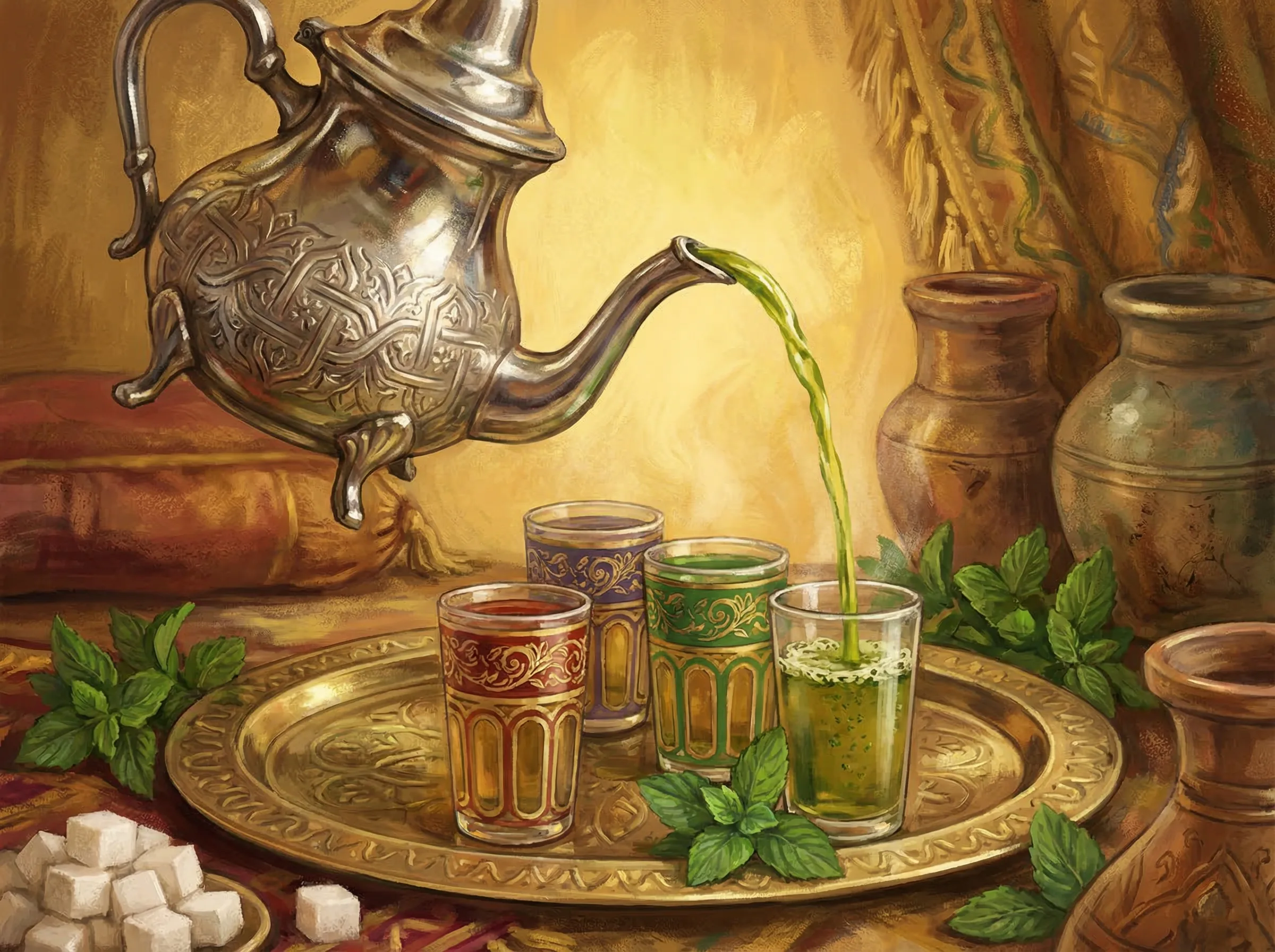
Marrakech
The red city has tea houses ranging from panoramic rooftop terraces above the medina to intimate riad courtyards. Jemaa el-Fnaa is ringed with tea stalls where you can watch the square unfold over a steaming glass.
Cafe des EpicesRooftop Terrace
From 20 MAD — Rahba Kedima spice square views, fresh mint tea, laid-back atmosphere
Le JardinGarden Cafe
From 30 MAD — Hidden garden in the medina, lush greenery, organic mint from on-site garden
NomadModern Rooftop
From 35 MAD — Contemporary take on tea service, Atlas Mountain views on clear days
Maison de la Photographie TerraceMuseum Cafe
From 25 MAD — Stunning medina panorama, quiet retreat, tea with pastries
La Mamounia Tea LoungePalace Hotel
From 80 MAD — Legendary hotel, elaborate silver service, garden setting, premium pastries
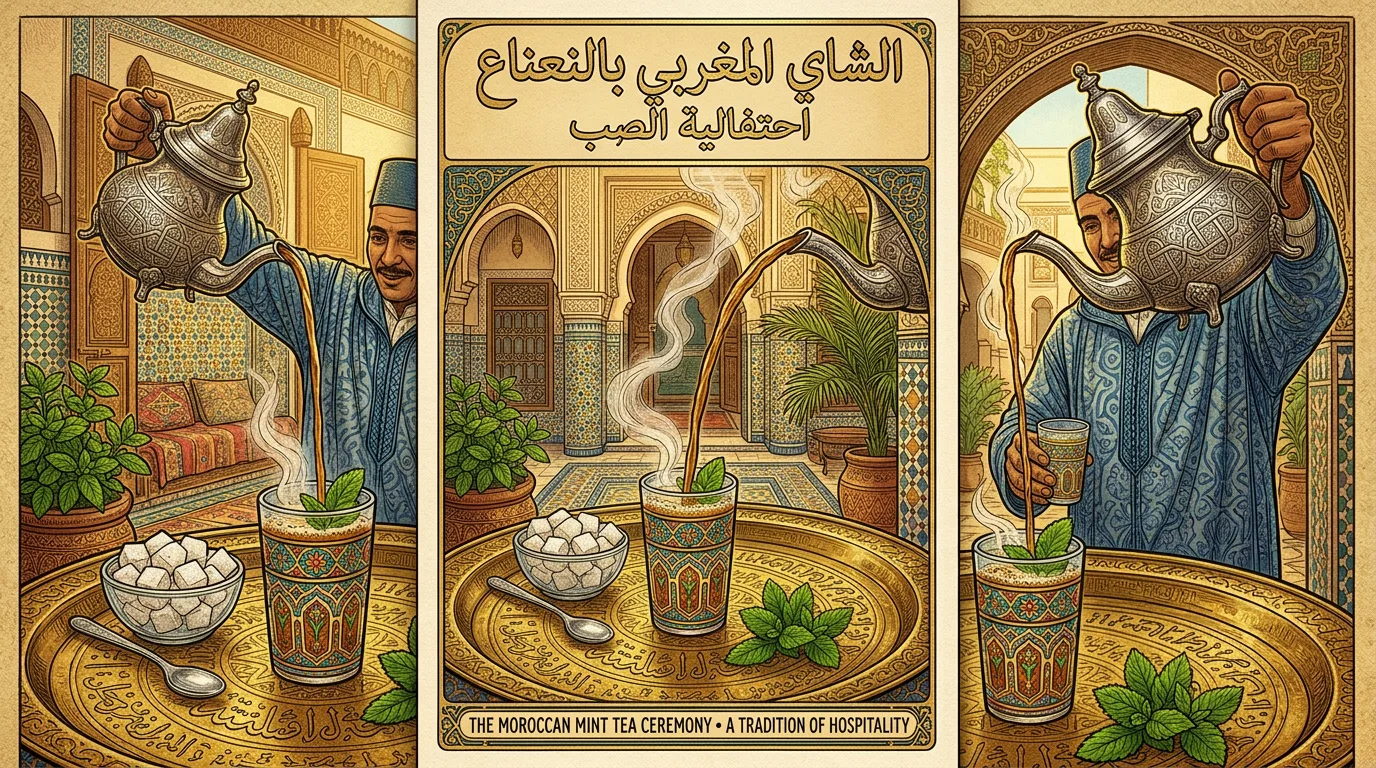
Fes
Fes has the most traditional tea culture in Morocco. Family-run salons de the in the medina serve tea the same way they have for generations. Rooftop terraces overlook the tanneries and minarets.
Cafe ClockCultural Cafe
From 25 MAD — Art events, storytelling nights, traditional tea with camel burger
Riad Rcif TerraceRiad Rooftop
From 20 MAD — Medina rooftop, quiet mornings, generous mint tea service
The Ruined GardenGarden Cafe
From 30 MAD — Restored ruin turned garden restaurant, peaceful tea afternoons
Palais de Fes SalonTraditional Salon
From 40 MAD — Formal Fassi tea ceremony, silver tea set, elaborate pastry selection
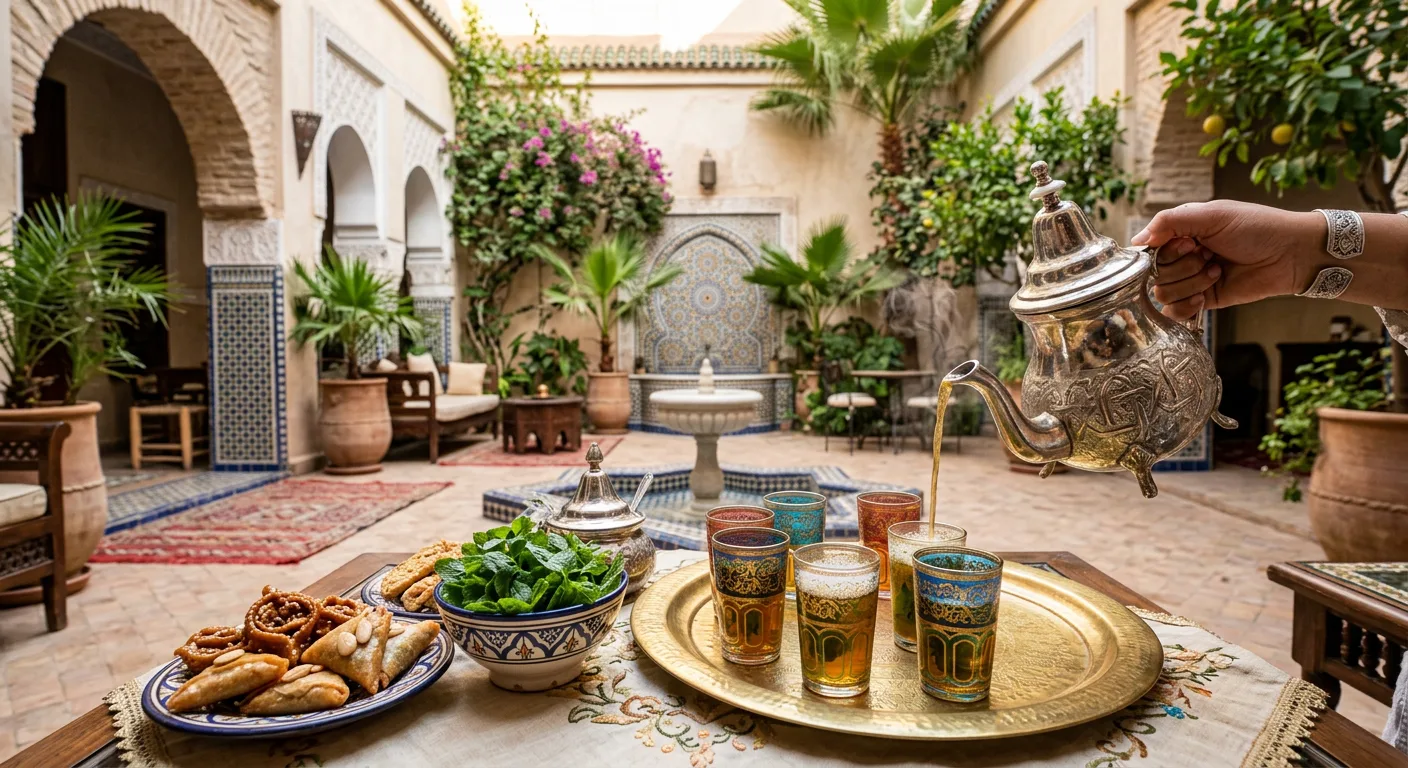
Casablanca
Casablanca blends Moroccan tea tradition with cosmopolitan cafe culture. Art deco salons de the sit alongside modern specialty cafes. The Habous quarter has old-school tea rooms popular with locals.
Patisserie Bennis HabousHistoric Patisserie
From 15 MAD — Legendary 1930s shop, mint tea with Moroccan pastries, local institution
Cafe Rick'sThemed Bar/Cafe
From 50 MAD — Casablanca film tribute, mint tea on the terrace, iconic atmosphere
Sqala CafeGarden Cafe
From 25 MAD — Inside old Portuguese fortification, shaded garden, traditional tea service
Villa ZevacoModern Salon
From 40 MAD — Mid-century architecture, curated tea menu, art gallery vibe
Chefchaouen
The blue city is dotted with small cafes where elderly men play cards over pots of tea. Sheeba herb tea is the local specialty here. Many terraces offer views of the blue-washed medina walls and Rif Mountains.
Place Outa el-Hammam CafesTown Square
From 10 MAD — Main square, multiple terraces, people-watching, sheeba or mint tea
Cafe AladdinRooftop
From 15 MAD — Panoramic blue medina views, sunset tea, budget-friendly
Bab Ssour TerraceHillside Cafe
From 15 MAD — Elevated position, Rif Mountain backdrop, quiet mornings
Tea with Meals and Daily Life
Mint tea is not reserved for special occasions. It threads through every part of the Moroccan day.
Breakfast
Moroccans start the day with mint tea alongside msemen (flatbread), beghrir (semolina pancakes), olive oil, honey, and amlou (almond-argan spread). The first pot of the day is often the strongest.
After Lunch
The main meal of the day ends with tea rather than dessert. After tagine or couscous, a pot of mint tea aids digestion and signals the start of the afternoon rest. It is impolite to leave the table before tea is finished.
Afternoon Tea
Between 4 and 6 PM, many Moroccans take a second tea break with pastries like chebakia, ghriba, or briouats. This is a social hour — friends and family gather in living rooms, on terraces, or at neighborhood cafes.
After Dinner
Evening tea can extend well past midnight during family gatherings, holidays, or Ramadan nights. After iftar during Ramadan, multiple pots of tea accompany dates, harira soup, and pastries. The communal tea drinking is a core part of the evening.
Business & Shopping
In the souk, accepting a shopkeeper's tea is part of the negotiation process. It slows the pace, builds rapport, and turns a transaction into a conversation. The tea is genuine hospitality, not a sales tactic — but it does make you more likely to buy.
Guest Welcome
When you enter a Moroccan home, tea is prepared before any other conversation. It may take 15-20 minutes. This wait is intentional. The time spent preparing tea shows the host values the visit enough to make a fresh pot from scratch.
Tea Ceremony Experiences for Visitors
Go beyond drinking tea — learn to prepare and pour it yourself.
Riad Tea Ceremony
Many riads offer guided tea ceremonies where a host demonstrates the full preparation, explains the cultural significance, and lets you practice the high pour yourself. Often paired with Moroccan pastries.
From 100 MAD per person 45-60 minutes Marrakech, Fes
Souk Tea & Shopping Tour
A guided walk through the medina that includes shopping for tea supplies — selecting tea leaves, choosing mint, picking out glasses and a teapot — followed by a tea preparation session at a local home or riad.
From 200 MAD per person 2-3 hours Marrakech, Fes, Essaouira
Berber Village Tea Experience
During Atlas Mountain excursions, many operators include a stop at a Berber village where a local family prepares tea over a wood fire. The mountain herbs used in Berber tea differ from city recipes. A deeply personal and unhurried experience.
From 150 MAD per person 1-2 hours (part of day trip) Imlil, Ourika Valley, High Atlas
Cooking Class with Tea Lesson
Many Moroccan cooking classes end with a mint tea preparation lesson. After cooking tagine or couscous, you learn the full tea-making process and enjoy your meal with freshly brewed tea. A complete Moroccan culinary immersion.
From 350 MAD per person 3-5 hours Marrakech, Fes, Essaouira, Casablanca
Tea Accessories & What to Buy
Bring the ritual home. Here is what to look for in the souks and how much to pay.
Silver-Plated Teapot (Berrad)
From 150 MAD
The iconic Moroccan teapot with a long curved spout designed for high pouring. Available in nickel-silver, brass, or genuine silver. Sizes range from 2-glass personal pots to 12-glass family pots. Higher quality has thicker walls and a tighter lid.
Coppersmith souks in Marrakech and Fes, or the Habous quarter in Casablanca
Painted Tea Glasses
From 5 MAD per glass
Small, handleless glasses decorated with gold, silver, or multicolored enamel patterns. Traditional sets include 6 or 12 matching glasses. Designs range from geometric to floral. The gold filigree patterns are the most classic Moroccan style.
Glassware shops in every medina, souks, and homeware stores
Silver or Brass Tea Tray (Siniya)
From 100 MAD
Round or rectangular trays with etched geometric or arabesque patterns. The tray completes the tea service and is carried to wherever guests are seated. Genuine hammered brass trays from Fes are collector-grade pieces.
Metalwork souks, antique dealers, and craft cooperatives
Sugar Cone (Pain de Sucre)
From 10 MAD per cone
The traditional Moroccan sugar comes in large hard white cones weighing about 2 kg, wrapped in blue or purple paper. The cone is broken into chunks with a special hammer. Sugar cones are sold in every grocery store and are a staple of Moroccan kitchens.
Grocery stores (hanout), supermarkets, and spice shops
Charcoal Burner (Majmar)
From 50 MAD
A clay or metal brazier used to keep the teapot warm during long tea sessions. Charcoal is placed inside and the teapot sits on top. The majmar maintains a gentle heat that keeps the tea at serving temperature without over-boiling.
Pottery souks, hardware stores, and craft markets
Chinese Gunpowder Green Tea
From 20 MAD per 250g
The base ingredient. Sold loose by weight in spice shops and pre-packaged in grocery stores. Popular brands include Chunmee (the green tin) and Sultan. The tightly rolled pellets should be uniform in size with a dark green color. Avoid dusty or broken leaves.
Spice shops, souks, grocery stores, and supermarkets
Mint Tea Price Guide 2026
What to expect to pay for tea, experiences, and supplies. Seasonal pricing can change.
Item
Price
Notes
Glass of mint tea (local cafe)
From 5 MAD
Neighborhood cafes, the everyday price
Glass of mint tea (street vendor)
From 3 MAD
Stalls and mobile vendors
Teapot at a tourist cafe
From 20 MAD
Serves 3-4 glasses, tourist medina areas
Teapot at upscale salon de the
From 40 MAD
Premium setting, served with pastries
Teapot at luxury hotel
From 80 MAD
Palace hotels, silver service
Tea ceremony experience
From 100 MAD
Guided preparation at a riad
Souk tea & shopping tour
From 200 MAD
Includes guide and supplies
Cooking class with tea lesson
From 350 MAD
Full culinary experience
Gunpowder green tea (250g)
From 20 MAD
Loose leaf at spice shops
Silver-plated teapot
From 150 MAD
Basic to mid-range quality
Set of 6 painted tea glasses
From 30 MAD
Standard decorated glasses
Complete tea set (pot + tray + glasses)
From 300 MAD
Tourist souvenir packages
The Role of Tea in Moroccan Hospitality
Tea is not a beverage in Morocco. It is a language.
In Moroccan culture, offering tea is an act of welcome that transcends social class. A family in a remote Atlas village with limited resources will still prepare tea for an unexpected visitor, using their best glasses and their finest mint. The gesture communicates: you are honored here, you are safe here, take your time.
The preparation itself is a gift of labor. The host washes the leaves, selects the freshest mint, breaks sugar from the cone, boils the water, tests the flavor, and performs the high pour — all while guests observe. This public preparation is deliberate. It shows that nothing is hidden, that the tea is made with care, and that the host is personally invested in the quality of what they serve.
Business dealings in Morocco often begin with 20-30 minutes of tea and conversation before any commercial topic is raised. Pushing to talk business before the tea is poured signals impatience and is read as disrespect for the relationship. Experienced visitors and expatriates learn quickly that the most productive meetings start with the slowest tea.
During mourning, tea is the first thing neighbors bring to a bereaved family. During celebrations — weddings, births, Eid — tea flows continuously. During Ramadan, the breaking of the fast at iftar always includes mint tea alongside dates, harira, and chebakia. Tea marks every passage, every gathering, every door that opens.
The Art of Moroccan Tea
Traditional Tea Ceremony
Mint Tea with Foam
Moroccan Tea Set
Frequently Asked Questions
Answers to the most common questions about Moroccan mint tea.
What type of tea is used in Moroccan mint tea?
Moroccan mint tea is made with Chinese gunpowder green tea (called "atay sini" in Darija). The tea leaves are rolled into small pellets that unfurl during brewing. The most popular brand is Chunmee or Pearl Gunpowder. Loose-leaf quality varies, and Moroccans are particular about their preferred brand.
Why is Moroccan mint tea poured from a height?
Pouring from a height of 30-50 cm aerates the tea, creating a light foam on the surface and mixing the flavors evenly. The foam signals proper preparation. Pouring also cools the tea slightly, making it drinkable faster. The technique requires practice; skilled pourers never spill a drop.
Is it rude to refuse tea in Morocco?
Refusing tea can be seen as a mild social slight, since offering tea is a central act of Moroccan hospitality. You should accept at least one glass. If you cannot drink more, a polite "shukran, baraka" (thank you, enough) is the graceful way to decline additional glasses. Turning down tea from a shopkeeper does not carry the same weight as declining from a host in their home.
How many glasses of tea should you drink in Morocco?
Tradition says three glasses. A Moroccan proverb states: "The first glass is gentle as life, the second is strong as love, the third is bitter as death." In practice, your host may refill your glass multiple times. Drink at least one, ideally two or three. Leaving before the first glass is empty is considered impolite.
How much sugar is in Moroccan mint tea?
Traditional Moroccan mint tea is very sweet. A standard teapot for 4-6 glasses uses 4-8 large sugar cones or the equivalent in sugar cubes (roughly 50-100 grams). In tourist areas, many cafes and riads now offer "moins de sucre" (less sugar) or unsweetened versions on request. The sugar is integral to the flavor balance, not an afterthought.
What is the best time to drink mint tea in Morocco?
Moroccans drink mint tea all day. It is served after every meal, during business meetings, when guests arrive, while shopping in the souk, and during afternoon breaks. Peak tea-drinking hours are mid-morning (10-11 AM) and late afternoon (4-6 PM). Tea after dinner can extend past midnight during social gatherings.
Can I buy Moroccan tea supplies to take home?
Yes. Chinese gunpowder green tea is sold in every souk and grocery store (from 20 MAD per 250g). Dried spearmint bundles are available at spice stalls (from 10 MAD). Silver-plated tea sets with glasses start from 200 MAD in medina shops. Pack tea leaves and mint in sealed bags for freshness. Brass or silver teapots can be shipped if too heavy for luggage.
What is Berber whiskey?
"Berber whiskey" is a humorous nickname for Moroccan mint tea, used because Morocco is a Muslim-majority country where alcohol consumption is uncommon in traditional settings. The joke is that mint tea is the national drink the way whiskey might be elsewhere. You will hear this term in tourist areas and from guides, but it is not a formal name.
Are there Moroccan teas besides mint tea?
Yes. Louiza (lemon verbena) tea is popular in cooler months. Sheeba (wormwood/absinthe herb) tea is common in northern Morocco. Saffron tea appears in Taliouine, where saffron is grown. Thyme tea is a Berber mountain remedy. In summer, some cafes serve chilled or iced mint tea. Herbal infusions without green tea are called "tisanes."
How much does tea cost in Morocco?
A glass of mint tea at a local cafe costs from 5-10 MAD. A full teapot at a tourist cafe runs from 20-40 MAD. At upscale salons de the and hotel restaurants, expect from 40-80 MAD per teapot. Street vendors sell glasses for from 3-5 MAD. Tea served in a riad or during a private ceremony is typically included in the accommodation or experience cost. Seasonal pricing can change.
Related Travel Guides
Moroccan Food Guide
Complete guide to Moroccan cuisine: tagines, couscous, pastilla, street food, and dining etiquette.
Read GuideMorocco Tea Culture
Extended exploration of Morocco's tea traditions, regional customs, and the social fabric of tea.
Read GuideCooking Classes
Where to learn Moroccan cooking with hands-on tagine, pastry, and tea preparation workshops.
Read GuideMorocco Etiquette Guide
Dress code, tipping customs, greetings, and social norms for respectful travel in Morocco.
Read GuideMore Food & Culture Resources
Street Food Guide
A tour of Morocco's best street food: where to find it, what to order, and how much to pay.
Food Tours
Guided food tours in Marrakech, Fes, Casablanca, and beyond with local experts.
Cooking Classes Guide
Detailed comparison of cooking classes across Morocco with prices and what you will cook.
Souk Shopping Guide
How to navigate Moroccan markets, bargain effectively, and buy spices, tea, and crafts.
Moroccan Cuisine Overview
The essential introduction to Morocco's food traditions, regional dishes, and dining culture.
Moroccan Culture Guide
Deeper look at Moroccan traditions, family life, festivals, and the cultural fabric of daily life.