Discovering...
Updated March 2026
Morocco Canyoning &
Gorge Adventures
From the 300-meter walls of Todra Gorge to the turquoise pools of Paradise Valley, Morocco hides some of the most dramatic canyon landscapes in North Africa. Rappel waterfalls, leap from cliffs into crystal pools, and trek through slot canyons carved over millennia. This guide covers every major gorge, activity type, difficulty level, and price.
Why Morocco for Canyoning
Morocco sits at the collision point of the Sahara, the Atlantic, and the Atlas Mountains. That geology has carved a network of gorges, slot canyons, and waterfall systems that rival anything in southern Europe or the American Southwest — at a fraction of the cost. A full-day guided canyoning trip with equipment starts from 600 MAD (roughly 55 EUR), compared to 200+ EUR in Spain or France.
The diversity is what sets Morocco apart. In a single week, you can rappel through the limestone corridors of Todra Gorge, swim beneath the hundred-meter Akchour cascades in the Rif Mountains, cliff-jump into the palm-shaded pools of Paradise Valley, and hike past Barbary macaques at the 110-meter Ouzoud Falls. Each gorge has its own character, its own micro-climate, and its own level of challenge.
Canyoning infrastructure has grown rapidly since 2020. Licensed guides operate across all major gorge systems, equipment standards have improved, and routes are better documented. Family-friendly options now exist at Paradise Valley and Ourika Valley for children as young as six. Technical multi-day expeditions through the M'Goun Canyon system push into genuine wilderness that few travelers ever see.
Top Canyoning Destinations
Six gorge systems across Morocco, each with distinct character, challenge level, and scenery.
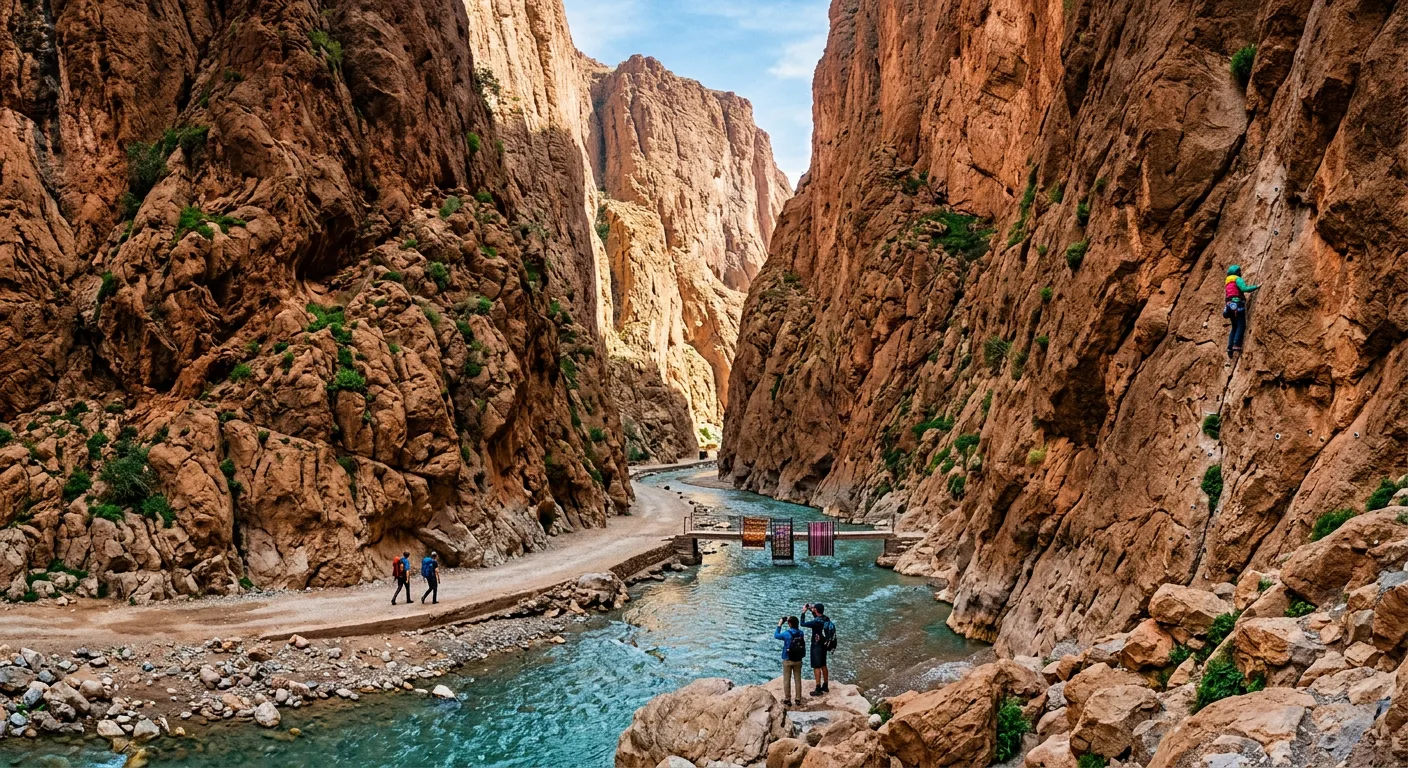
Todra Gorge
Tinghir, Draa-Tafilalet
Morocco's most iconic canyon. Todra's limestone walls rise 300 meters on either side of a narrow passage just 10 meters wide at its tightest point. The gorge stretches 40 km through the eastern High Atlas, but the most dramatic section is the final 600 meters where the walls close in around the Todra River. Technical canyoning routes involve rappelling down 15-30 meter drops and swimming through cold pools fed by mountain springs.
Moderate to Advanced
March - June, September - November
From 600 MAD (full-day guided canyoning with equipment)
Technical canyoningRock climbingRappellingGorge hikingRiver wading
Water temperatures hover around 15 C year-round in the deep pools. A wetsuit is strongly recommended. The gorge floor can be slippery — bring shoes with aggressive grip.
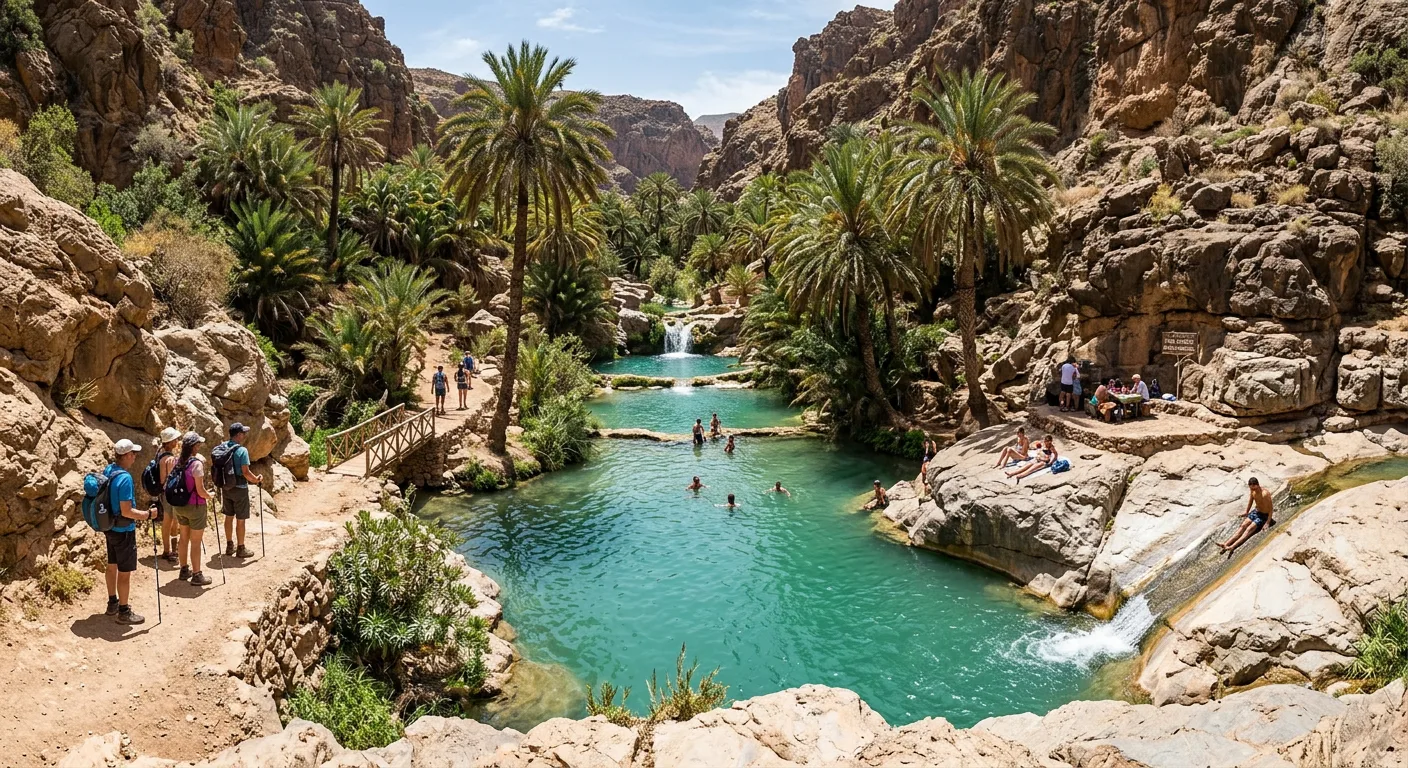
Akchour Waterfalls
Talassemtane National Park, Chefchaouen
Two spectacular waterfalls in the Rif Mountains accessible from Chefchaouen. The small waterfall (20 meters) is a 45-minute hike along a river trail with swimming pools along the way. The large waterfall (cascades of over 100 meters total) requires a more demanding 2-hour trek through dense forest. The turquoise pools beneath both falls are deep enough for swimming. The God's Bridge natural rock arch adds a dramatic geological feature to the trek.
Easy to Moderate
April - October
From 200 MAD (guided half-day from Chefchaouen)
Waterfall trekkingSwimmingCliff jumpingCanyon explorationPhotography
Start early to avoid crowds, especially on weekends. The trail to the large waterfall is steep in sections and requires good footwear. Bring lunch — there are no vendors past the trailhead.
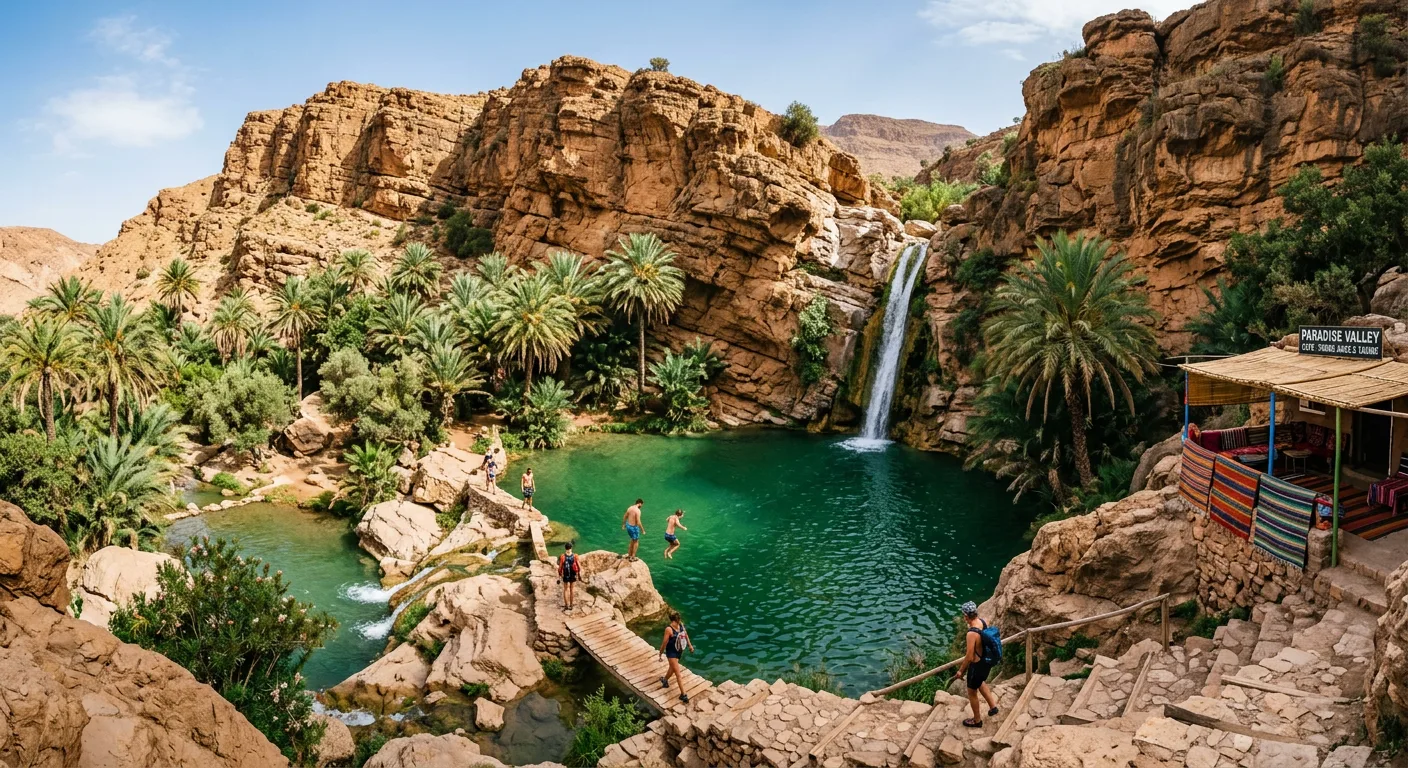
Paradise Valley
Imouzzer Ida Outanane, near Agadir
A series of turquoise natural pools and small waterfalls carved into a palm-lined gorge about 30 km north of Agadir. The valley got its name from Jimi Hendrix, who reportedly visited in the late 1960s. Cliff jumps range from gentle 2-meter drops suitable for families to adrenaline-pumping 10-meter leaps for experienced jumpers. The pools are connected by short scrambles over smooth rocks, creating a natural water park atmosphere.
Easy to Moderate
April - November
From 100 MAD (local guide for the full valley circuit)
Cliff jumpingNatural pool swimmingRock scramblingGorge walkingPicnicking
Wear water shoes — the rocks between pools are polished and slippery. Visit on weekdays to avoid weekend crowds from Agadir. There is a small cafe at the upper entrance selling drinks and tagine.
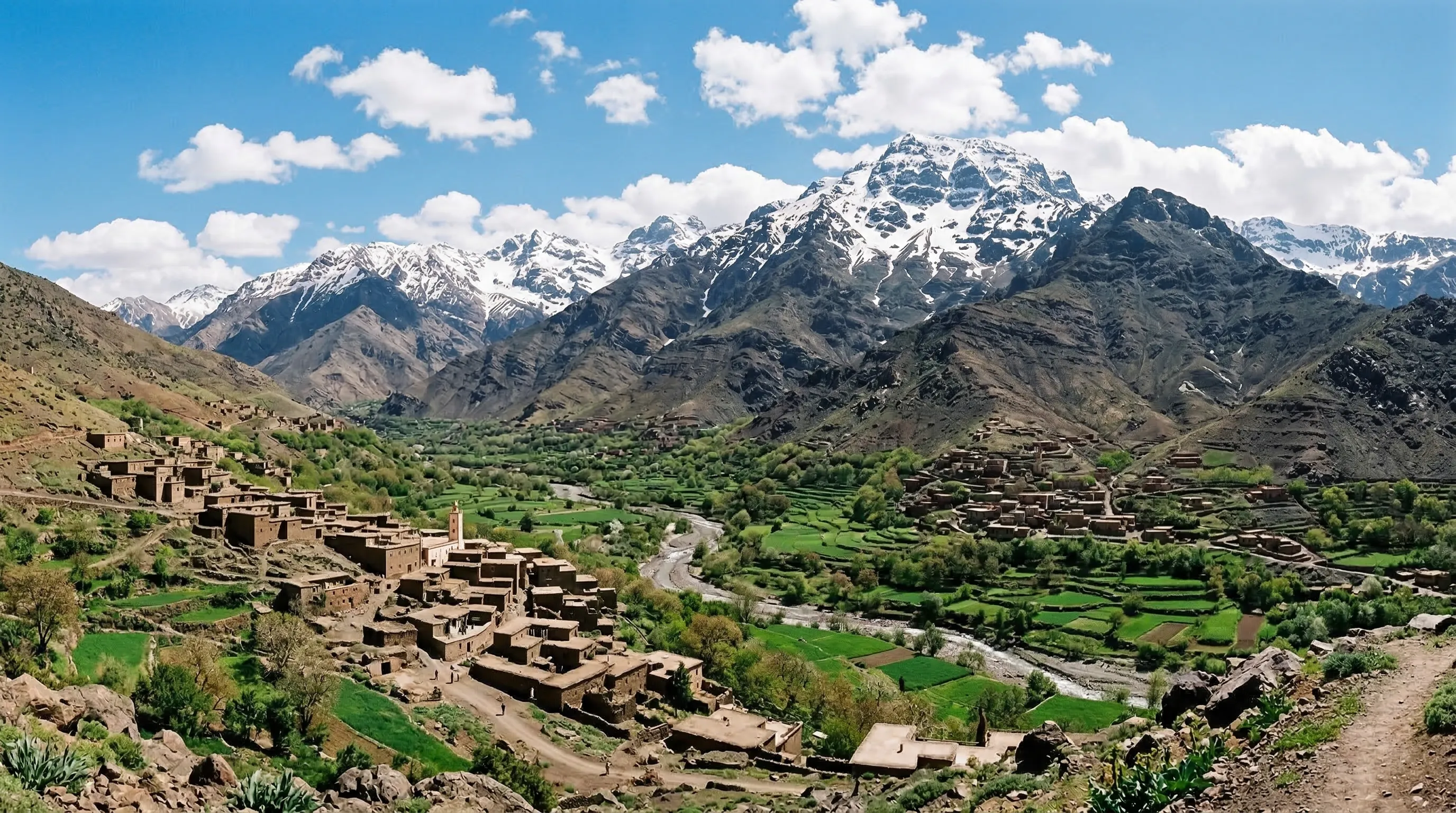
Ourika Valley & Setti Fatma
High Atlas, 60 km from Marrakech
Seven cascading waterfalls above the village of Setti Fatma in the Ourika Valley. The first waterfall is a 30-minute scramble from the village and is suitable for most fitness levels. Each successive waterfall demands more climbing skill, with the seventh requiring technical scrambling. The Ourika River runs through the valley floor with shallow pools for cooling off. This is the most accessible gorge adventure from Marrakech and works perfectly as a day trip.
Easy to Moderate
March - November
From 150 MAD (local guide for 3 waterfalls)
Waterfall hikingRiver trekkingSwimmingBerber village visitsBotanical walks
The trail beyond the second waterfall is exposed in places — use a guide. Flash floods in August 1995 killed hundreds here; always monitor weather and heed local warnings. Riverside restaurants serve fresh trout and tagine.
Ouzoud Falls
Azilal Province, Middle Atlas
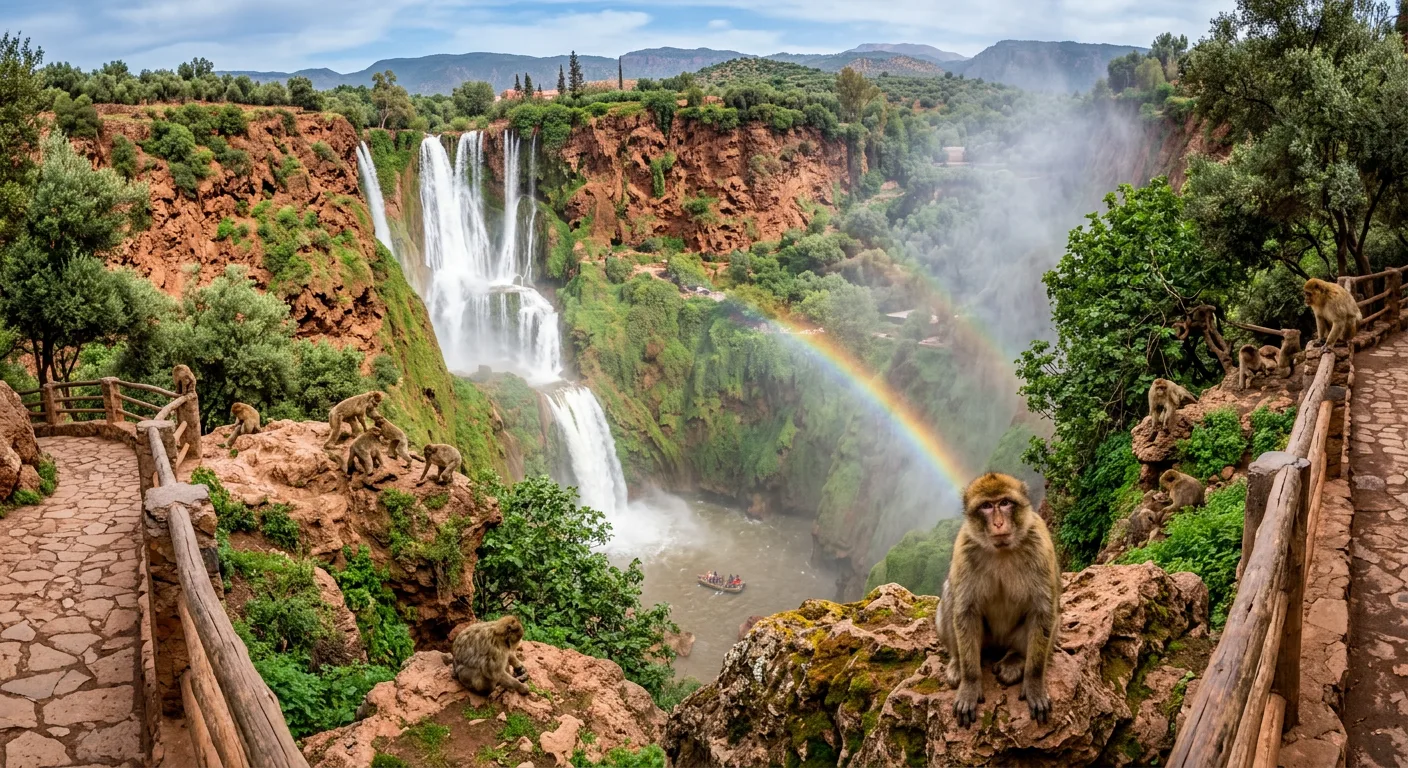
Morocco's tallest waterfall at 110 meters, plunging in multiple tiers into a wide basin surrounded by olive trees. Stairways and trails lead from the rim to the base where you can swim in the mist-cooled pools. Small boats ferry visitors to the base of the falls for from 20 MAD. Barbary macaques live in the surrounding trees and are regularly spotted. The gorge below the falls offers a scenic walk along the El-Abid River with additional smaller cascades.
Easy
Year-round (best March - June)
From 50 MAD (parking + boat ride)
Waterfall viewingSwimmingBoat ridesBarbary macaque spottingGorge walking
Spring delivers the most powerful water flow. The pools at the base are cold even in summer. Do not feed the macaques — it disrupts their natural behavior. A paved path makes the upper viewpoints accessible for wheelchairs.
Gorges du Dades
Boumalne Dades, Draa-Tafilalet
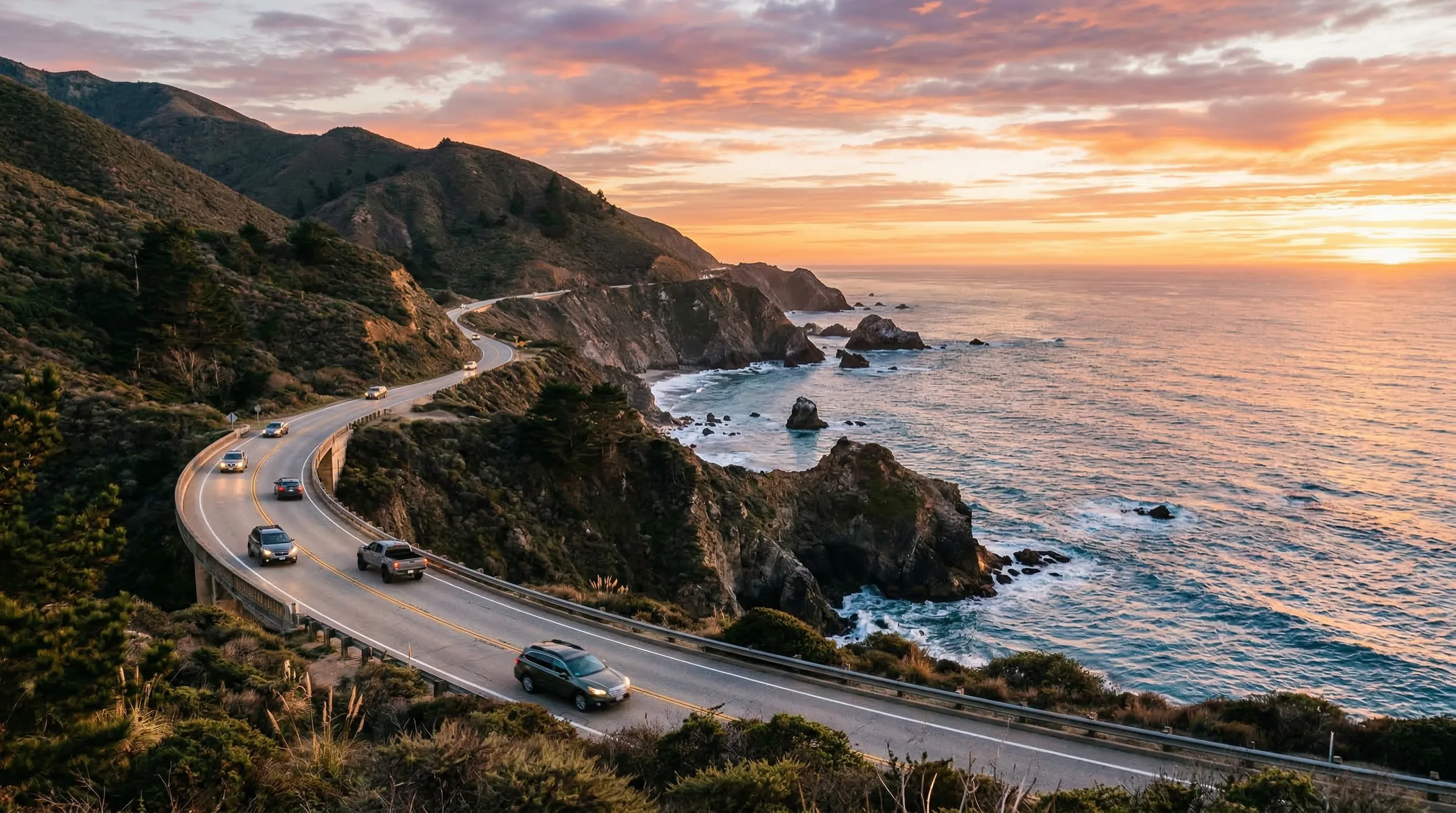
A 25 km stretch of dramatic rock formations carved by the Dades River through layers of red and orange limestone. The famous hairpin road (Tizi n'Ouano pass) is an attraction in itself. Beyond the road, hiking trails lead into side canyons with natural rock arches, slot canyons, and formations that locals call "monkey fingers" — tall, narrow rock pillars created by erosion. Technical canyoning routes exist deeper in the gorge system, accessible only with experienced guides.
Easy to Advanced (route-dependent)
March - June, September - November
From 400 MAD (full-day guided canyon hike)
Gorge drivingCanyon hikingRock climbingPhotographyMountain biking
The hairpin road is narrow and steep — drive slowly or hire a local driver. Guesthouses inside the gorge offer overnight stays from 250 MAD including dinner. Sunrise from the gorge rim is spectacular.
Activity Types & Difficulty Levels
Understand what each canyon activity involves before you book.
Gorge Walking
EasyFollowing trails along canyon floors or riverside paths. Involves walking, light scrambling, and occasional stream crossings. No ropes or harnesses needed. Suitable for families and first-timers.
Fitness: Basic — ability to walk 2-3 hours on uneven ground
Gear: Sturdy shoes, water, sunscreen
Where: Ouzoud Falls, Dades Valley, lower Ourika Valley
Waterfall Trekking
Easy to ModerateHiking to reach waterfalls, often involving river crossings, rock hopping, and short scrambles. Some sections may require using hands to pull yourself up. Swimming is usually part of the experience.
Fitness: Moderate — able to hike uphill for 1-2 hours with uneven footing
Gear: Hiking shoes with grip, water shoes for pools, dry bag
Where: Akchour, Setti Fatma, Paradise Valley
Cliff Jumping
Moderate to AdvancedJumping from rock ledges into deep natural pools. Heights vary from 2 meters (family-friendly) to 10+ meters (experienced only). Always check water depth before jumping. Never dive headfirst into natural water.
Fitness: Good — confident swimmer with comfort around heights
Gear: Swimsuit, water shoes, towel
Where: Paradise Valley, Akchour lower pools, Ourika River pools
Rappelling (Abseiling)
AdvancedDescending canyon walls and waterfall faces on ropes. Technical skill is taught on-site by guides. Drops range from 10 meters to 30 meters. The combination of height, water spray, and slippery rock demands focus and trust in your equipment.
Fitness: Strong — comfortable with exposure and sustained physical effort
Gear: All provided by guide: harness, helmet, ropes, carabiners, descender
Where: Todra Gorge, upper Akchour canyon, High Atlas routes
River Trekking (Aqua Hiking)
ModerateWalking, wading, and swimming through river-carved canyons where the trail IS the river. You follow the water downstream, navigating pools, small rapids, and underwater obstacles. Water temperatures in Atlas canyons sit between 12 C and 18 C.
Fitness: Good — strong swimmer, comfortable in moving water
Gear: Wetsuit (provided), water shoes, helmet, dry bag
Where: Todra River, Imi n'Ifri gorge, M'Goun Canyon
When to Go: Seasonal Calendar
Timing your trip right makes the difference between an epic adventure and a dangerous one.
Spring (March - May)
Peak SeasonTemperature: 18-28 C
Water: High — snowmelt feeds powerful falls
Ouzoud Falls at maximum power. Akchour pools fill to the brim. Wildflowers line canyon trails. Best time for waterfall photography.
Rivers run fast in March. Check conditions with guides before river trekking.
Summer (June - August)
Good (north) / Hot (south)Temperature: 28-42 C
Water: Moderate dropping to low
Paradise Valley at its most inviting. Akchour perfect for swimming. Early mornings ideal for Todra to beat the heat.
Temperatures above 40 C in southern gorges. Start all activities before 9 AM. Carry extra water. Some smaller falls dry up by August.
Autumn (September - November)
Peak SeasonTemperature: 16-30 C
Water: Moderate — autumn rains recharge pools
Comfortable temperatures across all regions. Fewer tourists than spring. Dades Gorge colors shift to deeper reds and oranges. Excellent for multi-day expeditions.
October and November can bring sudden heavy rains. Flash flood risk increases. Always check forecasts.
Winter (December - February)
LimitedTemperature: 5-18 C
Water: Variable — high after storms, frozen at altitude
Ouzoud Falls dramatic with heavy flow. Dades Gorge hiking possible on clear days. Fewer crowds mean solitude in the canyons.
Snow above 2,000 meters closes many Atlas routes. Water temperatures drop below 10 C. Wetsuit mandatory for any water activity. Short daylight hours limit trip duration.
Essential Gear Checklist
Guides provide technical equipment (ropes, harnesses, helmets). Everything below is your responsibility.
Water shoes with grip soles
EssentialRocks in Moroccan gorges are polished smooth. Regular hiking boots get waterlogged. Neoprene water shoes with rubber soles provide the best grip in wet canyons.
Dry bag (20-30L)
EssentialKeeps phone, wallet, camera, and dry clothes safe during river crossings and pool swims. Clip it to your harness during rappels.
Sunscreen SPF 50+
EssentialCanyon walls reflect UV light intensely. Apply waterproof sunscreen before entering the gorge and reapply after swimming. Sunburn is the most common canyoning complaint.
Quick-dry clothing
EssentialCotton absorbs water and stays cold. Synthetic or merino layers dry fast and maintain warmth. Avoid jeans in any canyon environment.
Waterproof phone case
RecommendedA sealed waterproof pouch costs from 30 MAD and lets you photograph without risking your phone. Test the seal before entering water.
Headlamp
RecommendedSome canyon sections and rock overhangs are dark. A small headlamp is lightweight and invaluable if your trip runs late.
2+ liters of water
EssentialDehydration happens fast in Moroccan heat, even when surrounded by water. River water in most gorges is not safe to drink without treatment.
First-aid basics
RecommendedBand-aids, antiseptic wipes, blister tape. Scrapes on rock are common. Guides carry first aid kits but having your own basics is wise.
Critical Safety Information
Canyon Safety Rules
Moroccan gorges are real wilderness. These rules are not suggestions — they exist because people have been hurt or killed ignoring them.
Check Weather Before Every Trip
Flash floods kill more people in Moroccan gorges than any other hazard. Check the forecast for the entire upstream watershed, not just your location. If rain is predicted anywhere in the catchment, postpone your trip.
Use Licensed Guides for Technical Routes
Morocco requires licensed mountain guides for technical canyoning. Ask to see credentials. Licensed guides carry insurance, emergency communication devices, and first-aid training. The lowest-priced option is rarely the safest.
Never Jump Without Checking Depth
Water levels in natural pools change with seasons and rainfall. A pool that was 4 meters deep last month may be 1 meter deep today. Always enter feet-first. Always have someone check the pool before you jump.
Tell Someone Your Plan
Share your route, expected return time, and guide contact with your accommodation. Mobile phone signal is spotty or absent in most Moroccan gorges. If something goes wrong, rescuers need to know where to look.
Respect Water Temperature
Atlas Mountain pools sit between 12 C and 18 C even in summer. Cold water shock causes involuntary gasping and can lead to drowning. Enter cold pools gradually. Wear a wetsuit for extended swims or any river trekking.
Know Your Limits
Turning back is not failure. If a scramble or jump feels beyond your ability, there is no shame in finding another route or sitting it out. Group pressure has led to more canyoning injuries than any technical failure.
Price Guide
What canyoning and gorge adventures cost across Morocco. Seasonal pricing can change during peak tourist months.
Local guide (Ouzoud or Ourika, half day)Group rate per person, minimum 2
From 150 MAD
Paradise Valley guided circuitLocal guide for full valley loop
From 100 MAD
Akchour waterfall trek with guideHalf-day from Chefchaouen
From 200 MAD
Todra Gorge full-day canyoningAll equipment included
From 600 MAD
Dades Gorge guided canyon hikeFull day with transport from Boumalne
From 400 MAD
Multi-day Atlas canyoning expedition2-3 days, meals and camping included
From 2,000 MAD
Technical rappelling course (half day)Instruction + equipment + 3-4 rappels
From 500 MAD
Family canyon adventure (Paradise Valley)Reduced rate, ages 6-12
From 200 MAD per child
Wetsuit rentalWhere not included with guided trip
From 80 MAD per day
Water shoe rentalAvailable at most gorge entrances
From 50 MAD per day
Boat ride (Ouzoud Falls base)Short ride to base of falls
From 20 MAD
Day trip from Marrakech (Ouzoud or Ourika)Transport, guide, lunch included
From 350 MAD
Family-Friendly Canyon Adventures
Not every gorge adventure requires ropes and harnesses. Several of Morocco's best canyon experiences are accessible to children aged 6 and older with adult supervision. The key is choosing the right location and the right level of activity.
Paradise Valley
The lower pools have gentle 1-2 meter cliff jumps that children love. Shallow wading sections between pools let kids explore safely. Pack a picnic and spend the morning in the water. A local guide (from 100 MAD) knows the safest pools for young swimmers.
Ages 6+ with supervision
Ouzoud Falls
Paved paths lead to viewpoints suitable for strollers. The boat ride to the base of the falls (from 20 MAD) thrills children without any risk. Barbary macaques in the trees add a wildlife element. The upper rim has guardrails at the main viewing platforms.
All ages
Ourika Valley (1st Cascade)
The hike to the first Setti Fatma waterfall is 30 minutes on a marked trail. Children manage it comfortably with one hand-holding section. Riverside restaurants serve lunch while kids splash in the shallow pools below the village. Stay at the first cascade — higher ones are too exposed for young hikers.
Ages 6+ with guide
How to Choose a Canyoning Guide
Ask for credentials
Licensed mountain guides in Morocco carry an official card issued by the Ministry of Tourism. Ask to see it. Unlicensed guides are common at popular spots and may lack training.
Inspect equipment
Ropes should be free of visible damage. Harnesses and helmets should be CE-certified. Carabiners should lock automatically. If gear looks worn or improvised, walk away.
Check group size
A maximum of 8 participants per guide is the standard for technical canyoning. Larger groups mean longer waits at rappel stations and less individual attention during safety briefings.
Confirm insurance
Reputable operators carry liability insurance. Ask before booking. Your own travel insurance should also cover adventure sports — standard policies often exclude canyoning. Check your policy wording before departure.
Read recent reviews
Check Google Maps, TripAdvisor, and GetYourGuide for reviews from the past 6 months. Pay attention to comments about equipment condition and guide communication skills.
Discuss the plan in advance
A good guide will explain the route, time estimate, difficulty, escape points, and weather contingency before you start. If the briefing feels rushed or vague, reconsider.
Common Questions
Frequently Asked Questions
1Is canyoning in Morocco safe for beginners?
Yes. Several gorges offer beginner-friendly routes with no technical skills required. Paradise Valley and the first Setti Fatma cascade involve straightforward walking and wading. Guided trips always include safety briefings and equipment. Choose a licensed guide and a route rated "easy" for your first time.
2What is the best time of year for canyoning in Morocco?
April to June and September to November offer the best conditions. Water levels are manageable, temperatures are comfortable (20-30 C), and gorges are not overcrowded. July and August are scorching in the south but acceptable in the Rif Mountains (Akchour). Avoid December to February in the Atlas when snowmelt raises water levels unpredictably.
3How much does a guided canyoning trip cost in Morocco?
Half-day guided trips start from 300 MAD per person for group excursions at Paradise Valley or Ourika Valley. Full-day technical canyoning at Todra Gorge costs from 600 MAD per person including equipment. Multi-day canyoning expeditions in the High Atlas range from 2,000 MAD to 5,000 MAD per person. Seasonal pricing can change during peak months.
4Do I need to bring my own equipment for canyoning?
Licensed guides provide all technical equipment: harnesses, helmets, ropes, carabiners, and wetsuits where needed. You should bring sturdy water shoes or hiking sandals with grip, a swimsuit, sunscreen, a dry bag for electronics, and at least 2 liters of water. Some operators rent water shoes for from 50 MAD.
5Can children do canyoning in Morocco?
Yes. Paradise Valley, Ourika Valley, and the lower pools of Ouzoud Falls are suitable for children aged 6 and older with supervision. Guided family trips at Paradise Valley start from 200 MAD per child. Technical canyoning with rappelling is generally restricted to ages 12 and up. Always confirm age requirements with your operator.
6How fit do I need to be for gorge hiking in Morocco?
Basic gorge walks at Ouzoud Falls or the Dades Valley require only moderate fitness and the ability to walk on uneven terrain for 2-3 hours. Technical canyoning at Todra Gorge demands good cardiovascular fitness and comfort with heights. Multi-day expeditions require strong endurance. Most operators list fitness requirements on their booking pages.
7Is cliff jumping safe at Paradise Valley?
Cliff jumping at Paradise Valley is popular but carries real risk. Jump only from established platforms where locals jump and always check water depth first. Heights range from 2 meters to 10 meters. Never jump headfirst. Injuries from hitting submerged rocks do occur when people jump at unmarked spots. A local guide costs from 100 MAD and can show you the safe jumps.
8What should I know about flash floods in Moroccan gorges?
Flash floods are the biggest danger in Moroccan canyons. They can occur even when skies are clear overhead if it rains upstream. Never camp in a gorge bed. Check weather forecasts for the entire watershed, not just your location. If water levels rise suddenly or the water turns muddy, move to high ground immediately. Licensed guides monitor conditions and carry emergency communication devices.
9Can I do canyoning independently without a guide?
Easy gorge walks at Ouzoud Falls, Ourika Valley first cascade, and Dades Valley viewpoints are safe without a guide. Technical canyoning with rappelling, cliff descents, or river crossings should always be done with a licensed guide. Self-guided technical canyoning has led to serious accidents in Todra Gorge and Akchour. Guides cost from 300 MAD per day and the investment is worth your safety.
10What is the difference between gorge hiking and technical canyoning?
Gorge hiking follows trails alongside or through a canyon, involving walking, scrambling, and occasional wading. Technical canyoning adds rappelling (abseiling) down waterfalls, swimming through pools, and using ropes to navigate vertical drops. Gorge hiking requires no equipment beyond good shoes. Technical canyoning requires harnesses, helmets, ropes, and professional guidance.
Getting There & Logistics
From Marrakech
- Ourika Valley / Setti Fatma: 60 km south, 1.5 hours by car or shared taxi from Bab Er-Rob (from 25 MAD)
- Ouzoud Falls: 150 km northeast, 2.5 hours. Day trips available from 350 MAD with transport
- Todra Gorge: 480 km east via N10, 7-8 hours. Overnight in Tinghir recommended
- Dades Gorge: 370 km east, 5-6 hours. Often combined with Todra in a 2-3 day loop
From Other Cities
- Agadir to Paradise Valley: 30 km north, 40 minutes. Grand taxis from Agadir bus station (from 15 MAD)
- Chefchaouen to Akchour: 30 km, 45 minutes by taxi (from 100 MAD for the car). Shared transport on weekends
- Ouarzazate to Dades: 115 km east, 1.5 hours along the N10. CTM buses run daily
- Errachidia to Todra: 65 km west, 1 hour. Most convenient gateway for flights from Casablanca
Renting a car gives maximum flexibility for gorge-hopping, especially along the Dades-Todra corridor. A 4x4 is only necessary for off-road tracks to remote canyons. Standard roads to all six destinations listed in this guide are paved and accessible by sedan. Fuel stations are available in Tinghir, Boumalne Dades, Azilal, and Imouzzer.
Canyon Photography Tips
Light & Timing
Canyon walls create harsh shadows midday. Shoot in the first 2 hours after sunrise or the last 2 before sunset for warm, even light. Todra Gorge is best photographed around 10 AM when sunlight reaches the canyon floor. Overcast days give the most balanced exposure for waterfall shots.
Gear Protection
Waterfall mist and river spray will reach your lens. Carry a microfiber cloth in a ziplock bag. Use a UV filter as a sacrificial front element. For action shots at Paradise Valley, a GoPro or waterproof action camera is more practical than a DSLR. A dry bag rated IPX8 protects gear during crossings.
Composition
Include a person for scale — Todra's 300-meter walls look like small cliffs without a human reference point. Use long exposures (1-4 seconds) to blur waterfall motion at Ouzoud and Akchour. Wide-angle lenses (16-24mm) capture the full height of narrow gorge walls.
Related Guides
Continue planning your Morocco adventure.
Morocco Hiking Guide
Trail routes, difficulty ratings, and Atlas Mountain trekking essentials
Morocco Rock Climbing
Todra Gorge climbing routes, Taghia canyon, and bouldering spots
Morocco Waterfalls Guide
Complete guide to every major waterfall in Morocco
Paradise Valley
Detailed guide to the pools, jumps, and trails near Agadir
Todra Gorge
Full guide to accommodation, hiking, and activities in the gorge
Morocco Adventure Sports
Surfing, paragliding, quad biking, and more outdoor pursuits
Morocco Camping Guide
Wild camping rules, campsite listings, and gear advice
Atlas Mountains Guide
Regions, passes, villages, and seasonal travel tips
Ready to Explore Morocco's Gorges?
From the towering walls of Todra to the turquoise pools of Paradise Valley, Morocco's canyons are waiting. Book a licensed guide, pack your water shoes, and step into some of the most dramatic landscapes in North Africa.